Entertainment
Spotify Paid Fan Memberships: What Africa Doesn’t Get
Spotify paid fan memberships are live in 34 markets — and no African country is on the list. What’s verified, what’s hype, and who actually benefits.

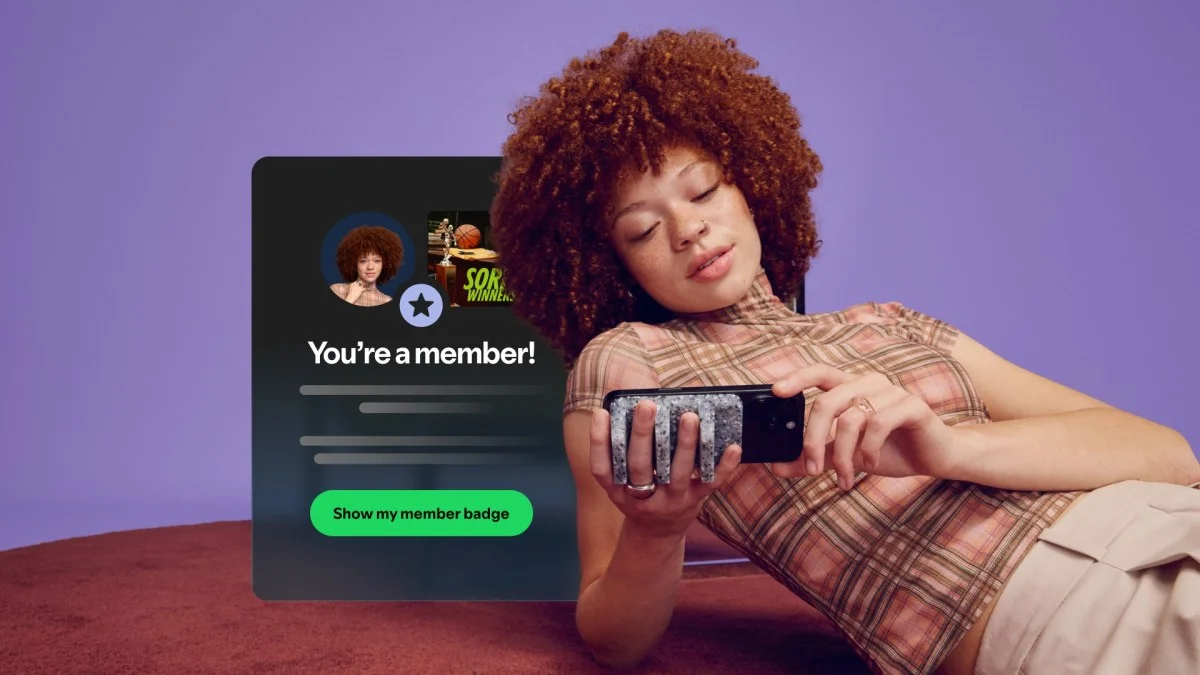
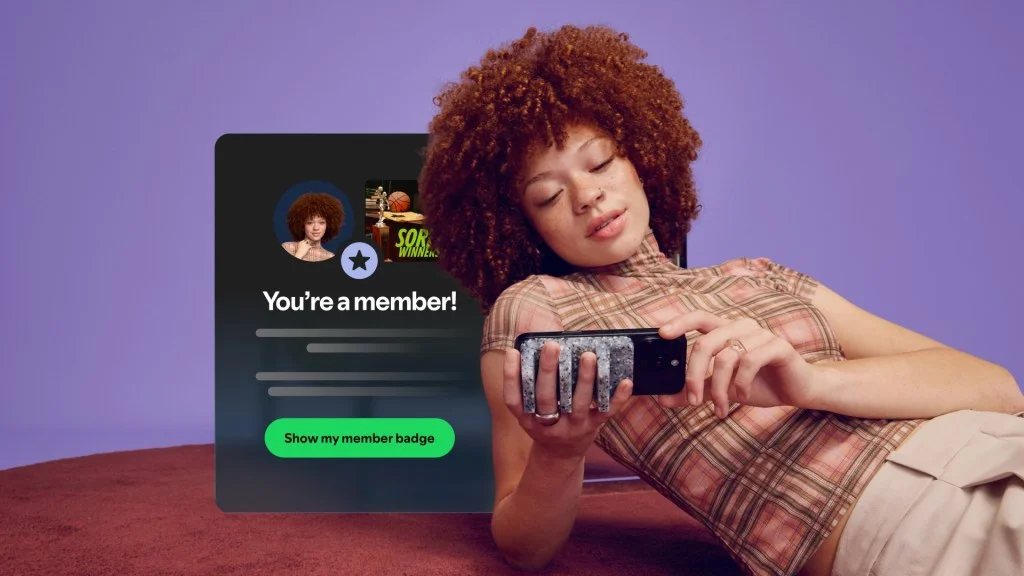
Spotify’s Memberships feature went live on Tuesday, giving podcasters across 34 markets a way to charge listeners monthly for perks that stretch past the old bonus-episode paywall. Spotify paid fan memberships are the company’s third run at creator subscriptions since 2021, and the first built around tiers, badges and free trials instead of a single locked door.
The pitch, as TechCrunch reported, is flexibility. Creators pick what sits behind the paywall: bonus audio or video, fewer ads, early access, archive access, or a mix. They set the price and bundle benefits across multiple tiers. Spotify takes 10 percent.
That is the announcement. Whether it becomes a business for anyone outside the launch roster is a separate question, and the confirmed details answer fewer of those than the framing suggests.
What Spotify Paid Fan Memberships Ship With On Launch Day
The entry bar is low, and that looks deliberate. A show qualifies if it is hosted on Spotify for Creators or Megaphone, has published three episodes, and cleared 100 listeners or viewers plus 100 consumption hours in the previous 30 days, per CNET. Three episodes and a hundred listeners is not a prestige program. It is a wide net over the long tail, which is where most podcasting lives.
Checkout runs on the web, not through in-app purchases, TechCrunch confirmed. That keeps Apple and Google out of the revenue split, but it plants an extra step between a listener hearing an offer and actually paying. The Verge notes Spotify is also letting creators port existing paywalled content over through Open Access — a quiet admission that this pitch is aimed at people already selling somewhere else.
Launch partners: The Adam Friedland Show, Making Sense with Sam Harris, The Shawn Ryan Show, The Sculpt Society, Two Hot Takes, and twelve shows from YMH Studios. The memberships CNET checked sat at $5 a month. Badges and welcome clips are promised but not live yet.
Why The 90 Percent Split Is Not Actually An Edge
Spotify’s headline number is that creators keep 90 percent of membership revenue. True, and worth saying plainly — but it is not a differentiator. Engadget points out Patreon’s platform fee is also 10 percent. On take rate, the two are identical. Spotify’s genuine advantage is discovery: the join button sits on a show page inside an app people already have open.
What Spotify has not published is any projection of what a creator earns. No average revenue per member, no conversion benchmarks, no case studies with figures attached. The claim that memberships unlock “new revenue opportunities for creators” stays promotional until one verified number exists. Podcasters should treat this as an unproven channel, not a forecast.
It also stacks on top of what already exists: ads, the Spotify Partner Program, video revenue from Premium subscribers. And it is a different product from the podcast subscription feature Spotify shipped in 2021 — same idea, new plumbing.
No African Market Appears In The 34-Country Rollout
Here is the detail most launch coverage skipped. The published country list, via Android Headlines, runs the US, UK, Canada, Australia, New Zealand, Hong Kong, Singapore and a long block of European Union states. Nigeria is not on it. Neither is South Africa, Kenya, Ghana, Egypt, Morocco or any other African market.
Spotify has not said the exclusion is permanent, and staged rollouts are normal. But as of launch, a podcaster in Lagos or Nairobi with an engaged diaspora audience has no access, no date, and no public commitment.
The gap compounds existing friction. Membership checkout is web-based, which assumes listeners pay online in the way Spotify’s current markets do. For creators outside the list, the fallback remains Patreon and its peers — same 10 percent cut, none of Spotify’s built-in audience. A 90 percent split is generous in the abstract. In markets that cannot use it, generosity is theoretical.
This reads as structural rather than scheduling. Podcasting in Lagos, Accra and Johannesburg has grown on free distribution — YouTube, WhatsApp groups, Telegram channels — where the audience never had to enter a card number. Paid memberships assume a paying habit these markets have not been given a route to build.
Verdict: Take The Cheapest Tier First
Should creators sign up? If you already publish on Spotify for Creators or Megaphone and your audience sits in one of the 34 markets, yes. The eligibility bar is low enough that testing costs nothing beyond a show-page edit and a decision about what to lock.
Start with the simplest perk you can genuinely deliver: fewer ads. It needs no extra production day and no promise you might break. Bonus video is the expensive one. Do not lead with it.
Fans should treat the member button like any other subscription prompt and read what is actually behind it. Ad-free listening plus early access is a real, small, honest trade. A badge alone is not.
For podcasters in Africa, the answer is the boring one. Spotify paid fan memberships are not available here yet, the company hasn’t officially confirmed the gap is temporary, and no timeline has been offered. Keep building the free audience. The feature will matter locally when the country list says it does.
Frequently Asked Questions
How much of the membership money do podcasters keep on Spotify?
Creators keep 90 percent of membership revenue, with Spotify taking a 10 percent cut. That matches Patreon’s platform fee, so the split is competitive but not unique.
Which countries have Spotify podcast memberships at launch?
Spotify says 34 markets, including the US, UK, Canada, Australia, New Zealand, Hong Kong, Singapore and a large group of EU countries. The published list contains no African market, and Spotify has not said whether that is permanent.
What does a podcaster need to qualify for Spotify paid fan memberships?
The show must be hosted on Spotify for Creators or Megaphone, have at least three published episodes, and clear 100 listeners or viewers plus 100 consumption hours in the previous 30 days. Memberships are purchased on the web rather than through in-app purchases.
Receive alerts for Spotify paid fan memberships and more like it.
 Follow AFRILATEST on Google News
FIRST TIME REACTIONS:
Be the first to leave us a comment – Spotify Paid Fan Memberships: What Africa Doesn’t Get, down the comment section.
JOIN US ON OUR SOCIAL MEDIA:

            About Paul Nwogo
            Paul Nwogo is an engineer, published author, and the Head Manager at AfriLatest. He has written numerous books available on Amazon covering a diverse range of topics, including health, personal finance, relationships, work ethics, and scam survival. With his technical background and passion for writing, Paul now oversees the editorial direction of AfriLatest, delivering practical, accurate, and engaging content on trending news, music, and global lifestyle topics.
            View all articles by Paul Nwogo


Fashion
Julia Fox’s Preppy Purple Look Adds a Prada Bowling Bag
Julia Fox’s preppy purple look pairs a Sofia Testino polo, purple leather skirt and reversible jacket with a 2000 Prada bowling bag. What is verified.


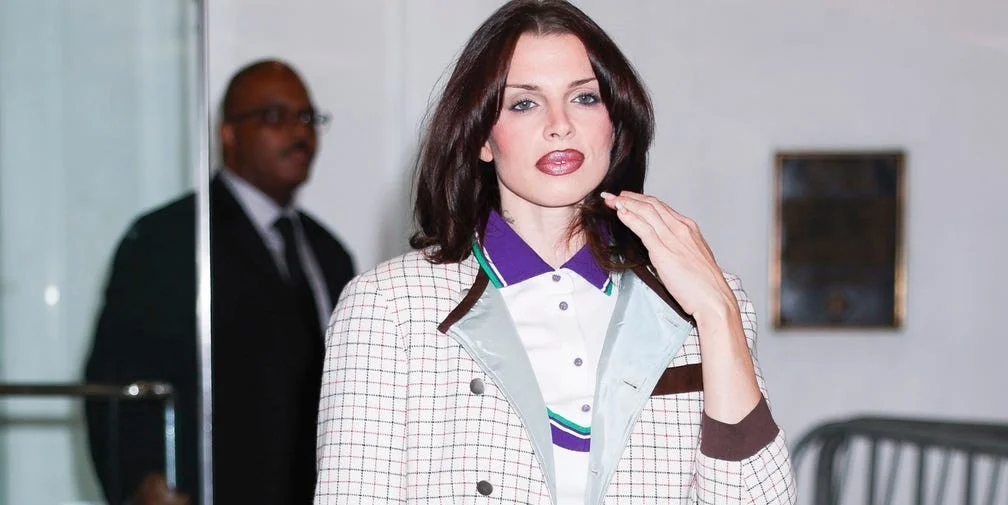
Julia Fox’s preppy purple look — an ivory polo with a purple collar and green stripe, a purple leather pencil skirt and a reversible checked jacket, all credited to the designer Sofia Testino — was photographed alongside a black-and-white geometric Prada bowling bag from the Spring/Summer 2000 collection, according to Harper’s Bazaar.
That single sentence carries almost the whole of the verified record. The report names the garments, the designer and the bag. It does not name the event, the city or the date.
For readers outside the celebrity-fashion cycle, that gap matters more than it first appears. A photograph proves what was worn. It does not prove why, where, or on whose authority the credit was assigned.

What the Julia Fox Preppy Purple Look Actually Consists Of
The top is the Air Hostess Polo: a fitted, short-sleeved ivory piece with a purple collar, a stripe of green, an elongated button placket and a rounded deep V neckline trimmed in purple and green.
The skirt is the Air Hostess Arrow Skirt, a purple leather midi pencil skirt carrying arrow motifs across the front. Over it, Fox wore the Work Woman Jacket, cut with a structured silhouette and padded shoulders. One face is cream checked wool; the reverse is pale-blue satin with contrast checked panels. Brown ribbed cuffs finish it.
She added semi-sheer black tights and periwinkle patent-leather wedges, also from Sofia Testino, and carried the Prada bag.
All of that is garment identification drawn from photographs — the strongest evidence available for a sighting of this kind, and also the narrowest. The source report publishes no price for any Sofia Testino piece. It gives no release date and no indication whether the garments are current stock, archive or custom. Neither the designer nor Fox is quoted.
A Preppy Thread Runs Through a Documented Run of Outfits
The preppy purple look did not arrive in isolation, and the surrounding record is better dated than the look itself.
On August 5, Fox attended a HIM Training Camp Creator Event in Venice, California, wearing a striped polo-shirt-cape-bodysuit hybrid and white tights printed with faux tattoos, with her pleated skirt functioning as a purse, per InStyle.
On September 10, she wore a long-sleeved crimson bodysuit with a built-in button-down peering underneath — a look Bustle described as carrying a preppy vibe — with fishnet tights, a khaki trench coat and Christian Louboutin heels retailing at $1,095.
In London, arriving at Global studios for Capital Radio, she wore a black blazer, white button-up shirt and matching tie, a pleated miniskirt and platform heels, with silver chains hung with keys and safety pins threaded through the jacket and skirt, the Daily Mail reported. That outlet gave her age as 35.
At the 2026 CFDA Fashion Awards, she wore a tulle Miss Claire Sullivan dress made using world maps, according to Harper’s Bazaar.
Those dates do not form one verified calendar. The London appearance is dated only to a Wednesday. The purple look carries no date at all. What the record does establish is that preppy is a description applied by journalists, not a category the designer or the wearer has claimed.
Why the Prada Bowling Bag Carries the Most Verifiable Weight
Of every element in the outfit, the bag is the only one the source describes as recurring: Harper’s Bazaar calls it her go-to bowling bag. That makes it the single item with a documented track record beyond one photograph.
The rest is a fresh credit. Sofia Testino is named as the designer of the polo, the skirt, the jacket and the wedges. Until the label or Fox confirms the pieces — and neither has, in the material available — the attribution rests on one outlet’s identification.
Fox has been explicit about how she regards the machinery that produces such images. Every famous person calls the paps on themselves, she told British Vogue, adding that she would never put on a Dolce & Gabbana outfit and call the paps, calling it cheesy, cringe and inherently uncool. InStyle quoted the remarks.
That quote settles nothing about this particular set of photographs. It does establish that Fox is a source with a stated position on staged visibility — a position that makes her a less neutral narrator of her own image than a press release would be.
The wider point is structural. A street-style photograph travels globally within hours, while the garment credit behind it usually traces to a single magazine caption. Outlets in Lagos, Nairobi or Accra that pick up the image inherit that thin sourcing without inheriting its caveats.
What to Watch
Three developments would move this from a photograph into a record: a statement from Sofia Testino confirming the pieces, a named event and date for the sighting, and confirmation of whether the garments are retail, archive or custom. None of the three exists yet.
The bag is the exception. A Spring/Summer 2000 Prada bowling bag is an object with a fixed origin, and its reappearance is the one part of this preppy purple look that can be checked against something other than a caption.
Until then, the useful discipline is the same one that applies to any viral image: separate what the photograph shows from what the headline asserts.
Frequently Asked Questions
What pieces made up Julia Fox’s preppy purple look?
Harper’s Bazaar identifies a Sofia Testino Air Hostess Polo in ivory with a purple collar and green trim, a purple leather Air Hostess Arrow Skirt with arrow motifs, a reversible Work Woman Jacket in cream checked wool and pale-blue satin, semi-sheer black tights and periwinkle patent-leather wedges. She carried a black-and-white Prada bowling bag from the Spring/Summer 2000 collection.
Is the event and date of the purple outfit confirmed?
No. The Harper’s Bazaar report names the garments and the designer but does not state the event, the city or the date. Other Fox appearances are dated — August 5 in Venice, California, September 10 in Los Angeles, and a London radio visit reported only as a Wednesday — but none is linked to the purple look in the available material.
Has Sofia Testino or Julia Fox confirmed the outfit credits?
Neither is quoted in the source material. The designer attribution rests on one outlet’s identification of the garments, and no price, release date or confirmation of whether the pieces are retail, archive or custom has been published.
Receive alerts for preppy purple look and more like it.
FIRST TIME REACTIONS:
Be the first to leave us a comment – Julia Fox’s Preppy Purple Look Adds a Prada Bowling Bag, down the comment section.
JOIN US ON OUR SOCIAL MEDIA:

About Rose Green
Rose Green is an entertainment and lifestyle author at AfriLatest. With a passion for storytelling, she contributes creative and thought-provoking content, capturing the imagination of readers. Rose specializes in entertainment news, celebrity updates, and lifestyle trends, sparking meaningful conversations across diverse topics.
View all articles by Rose GreenMovies & TV
The DSS Director General Award Story: A Reading Guide
Rights groups hail the DSS Director General over The Sun award. A reading guide to what the statements verify, and what stays unconfirmed.

The Centre for Public Integrity’s congratulatory statement on the DSS Director General landed in Abuja on a Saturday, signed by an executive director, and it ran on Premium Times under a promoted-content URL. That placement detail matters more than the praise itself.
The occasion: Oluwatosin Ajayi, Director-General of the Department of State Services, was conferred with The Sun’s Courage in Leadership Award. The awarding body is a Nigerian newspaper, which makes this an industry honour from a media house, not a finding by a regulator or a court. President Bola Tinubu appointed Ajayi; the Foundation for Democracy in Africa dates his tenure from August 2024.
What follows is a guide to the coverage, not to the man. The headline shape, rights group hails security chief, has become a genre in Nigerian press. Reading it well means knowing which sentences in these statements can be checked, and which cannot.

The Statements Behind The DSS Director General Commendations
One: The Sun Courage in Leadership Award. Why it matters: it is the peg everything else hangs on. Who it’s for: readers tracking how Nigerian newspapers use awards to shape security coverage. Verified: the conferment is asserted consistently across the CPI and FDA statements. Not verified: the award’s selection process, which none of the statements describe.
Two: The Centre for Public Integrity statement, carried by Premium Times. Why it matters: it makes the broadest claim in the set, that the Service has been steered away from traditional strong-arm perceptions toward intelligence-driven work. Who it’s for: policy readers. Read it knowing the piece sits in Premium Times’ promoted channel, a submitted statement rather than newsroom reporting. That does not make it false. It means no editor at that outlet vouched for it.
Three: HURIWA’s statement, published by The Guardian Nigeria. Why it matters: it is the only item here that names a specific citizen whose case was resolved, Lanre Arogundade, executive director of the International Press Centre, whose watchlist matter HURIWA says was settled. Who it’s for: media-freedom watchers.
Four: The Foundation for Democracy in Africa on Omoyele Sowore, reported by Pointblank News. Why it matters: it describes an institutional act aimed at a court, the DG asking the Federal High Court to consider halting the AAC presidential candidate’s prosecution until after the 2027 election. Who it’s for: election-law readers. The filing itself is not quoted anywhere in the statements, so the characterisation is the group’s.
Five: The Kaduna Democracy Day statements, carried by Vanguard. Why it matters: it supplies named case categories, convictions tied to the Owo St Francis Catholic Church attack and the Papiri schoolchildren abduction in Niger State, plus DSS school donations in Chikun Local Government. Who it’s for: readers who want community-level detail rather than rhetoric. A parallel statement from the Ifelodun Federation of Igboho Indigenes, reported by the Nigerian Tribune, ties the DG’s name to Sunday Igboho’s Iru Ekun Security Network in Oke-Ogun and to the release of Alhaja Kubura Aliqlas and her son Abdulmalik.
What HURIWA’s Hedged Language Admits
The most useful document here is also the most cautious. HURIWA writes of the reported review of old DSS watchlists dating back decades, reported compensation for people affected by wrongful detention, and reported reviews leading to releases. Three uses of reported inside a statement of commendation.
That is not a small thing. A rights organisation is endorsing reports it has not converted into documents, and it says so in its own text. The Arogundade case is the exception, because it names a person, and a named person can confirm or deny.
Separately, a statement from the Asiwaju Media Team, published by The Guardian Nigeria, carries a first-person account of conditions inside DSS custody: regular meals, toothbrushes and toothpaste, medical access, and the claim that bail is purely free. The passage is specific and human. It is also unattributed in the excerpt, with no name attached to the speaker describing his own detention. Vivid testimony without a named witness is not evidence. It is a lead.
Which Claims About The DSS Director General Survive Scrutiny
Sort the statements into three tiers and the picture sharpens.

Tier one: acts with paper trails. Court applications, releases, compensation payments. The Sowore request belongs here if the filing can be produced. HURIWA’s Arogundade reference belongs here if the resolution can be confirmed by Arogundade or the IPC.
Tier two: the award. Real as an event, but it certifies a newspaper’s judgement, not an audit.
Tier three: characterisations. Watershed moment. Gold standard. Paradigm shift. These are advocacy. They are allowed to be advocacy. They should not be reprinted as findings.
What is missing across every statement is arithmetic. No count of watchlist entries reviewed. No number of people compensated, no amounts paid. No figure for convictions secured. The CPI cites a string of landmark judicial victories without naming one. For a story about institutional reform, the absence of a single number is itself the finding.
The FDA statement does at least name instruments, the ECOWAS Supplementary Protocol on Democracy and Good Governance and the African Charter on Democracy, Elections and Governance. Those texts are checkable. Whether they apply to a domestic prosecution paused for electoral reasons is an argument, not a fact.
There is a sourcing pattern worth naming too. The endorsers span a newspaper, a rights writers’ association, two Kaduna civil society groups, a community federation in Oyo State, an Africa-focused democracy foundation and a media team. Breadth looks like consensus. It reads closer to a press-release circuit, where each statement draws on the same reports.
Top Pick
If you read one document from this cycle, read HURIWA’s. It names a citizen, it asks for human rights impact assessments, periodic detention reviews and citizen complaint channels, and it hedges its own claims with reported. That combination makes it auditable, which is more than most of the others manage.
The DSS Director General has an award, a stack of commendations and, by the account of one of his own endorsers, a court application any reporter can go and pull. That document, not the trophy, is where the story about the DSS Director General actually begins.
Frequently Asked Questions
What award did the DSS Director General receive?
The Sun’s Courage in Leadership Award. The conferment is referenced in statements from the Centre for Public Integrity and the Foundation for Democracy in Africa. None of the available statements describe how the award was decided.
Did HURIWA independently confirm the DSS reforms it praised?
No. HURIWA’s statement uses reported language for the watchlist review, the compensation payments and the releases. The one specific case it names is Lanre Arogundade of the International Press Centre.
What did the Foundation for Democracy in Africa say about Omoyele Sowore?
The group said DG Oluwatosin Ajayi asked the Federal High Court to consider halting Sowore’s prosecution until after the 2027 presidential election. The filing itself is not quoted in the statement, so the description is the group’s characterisation.
FIRST TIME REACTIONS:
Be the first to leave us a comment – The DSS Director General Award Story: A Reading Guide, down the comment section.
JOIN US ON OUR SOCIAL MEDIA:
About Rose Green
Rose Green is an entertainment and lifestyle author at AfriLatest. With a passion for storytelling, she contributes creative and thought-provoking content, capturing the imagination of readers. Rose specializes in entertainment news, celebrity updates, and lifestyle trends, sparking meaningful conversations across diverse topics.
View all articles by Rose GreenMovies & TV
Maxton Hall Season 3 Trailer Sets a 14-Day Countdown to the End
The Maxton Hall season 3 trailer confirms a December 9 return and a December 23 finale, but no viewership data backs the ‘international success’ claim.

The most exportable asset in the new Maxton Hall footage is not a kiss. It is a calendar.
Prime Video has released the official trailer for the third and final season of Maxton Hall — The World Between Us, and the Maxton Hall season 3 trailer does something more useful than tease a reunion: it timestamps the end of the argument. Harriet Herbig-Matten and Damian Hardung return as Ruby Bell and James Beaufort when the series comes back on December 9, 2026, per The TV Cave.
The order runs six episodes. Two land on December 9. Two more arrive each week. The series finale drops December 23. Fourteen days separate the first episode from the last. That gap is the only hard number Prime Video has attached to this season, and it is the number fans should actually plan around.

What The Maxton Hall Season 3 Trailer Actually Confirms
The trailer establishes the season’s central conflict without resolving it. According to The TV Cave, Ruby is placed directly at odds with Mortimer Beaufort, James’s father, played by Fedja van Huêt, whose determination to keep the couple apart persists into the final chapter.
The setup carries over from season two, which left Ruby falsely implicated in a relationship with a teacher. Her place at Maxton Hall is under threat. Her Oxford ambition is slipping. James stands beside her as the pair try to uncover the truth and clear her name, and the source notes that the closer they get to answers, the more tangled the situation becomes.
Two production facts are confirmed. The season adapts Mona Kasten’s novel Save Us, closing out the trilogy of source books. Sonja Weißer returns as Lydia, alongside the established ensemble. The series is a German-language production made for a global platform, and Prime Video is hosting the trailer through its own channels Prime Video.
What the trailer withholds is the outcome. The TV Cave’s published copy trails off mid-sentence at the exact question of whether Ruby and James end up together, which means any specific ending currently circulating online is unconfirmed. Treat definitive finale spoilers as invention until December 23.

Six Episodes And The Missing Viewership Ledger
The source describes Maxton Hall as a major international success for Prime Video. No audience figure accompanies that description in the material reviewed, and that absence is worth naming plainly.
Theatrical releases publish a box office number on Sunday morning. Streaming premieres publish a press release, and occasionally a chart position for a fixed measurement window. Neither is present here. Without disclosed hours viewed, completion rates, or a territory-by-territory ranking, the phrase “major international success” is a platform assertion rather than an audited result. That does not make it false. It makes it unverifiable from the public record.
Budget context is equally absent. No per-episode or season cost appears in the source material, so claims about the show’s cost-to-return ratio, its profitability, or its value relative to other Prime Video originals cannot be tested. Any figure circulating without a named origin is guesswork.
This matters for African and global fans who use streaming performance as a proxy for whether a show will be renewed, extended, or spun off. For a series already announced as ending, the metric is moot. The finale is happening regardless of the numbers.
Why Three Drop Dates Beat One For A Final Season
The schedule is the strategy. Six episodes across three drop dates hold a title in recommendation feeds for a fortnight and give social conversation three ignition points instead of one. A single bulk drop exhausts a fandom’s attention in a weekend. A staggered rollout converts patience into repeat visits.

For a final season, that calculation carries extra weight. Endings are the hardest product a romance series sells, because the audience arrives already braced for disappointment. Two episodes at a time lets viewers argue about Ruby’s choices in the gap between drops, which is precisely the behaviour that keeps a title visible without new marketing spend.
The risk runs the other way. Audiences trained on binge drops may simply wait until December 23 and consume all six episodes in one sitting, which would flatten the schedule’s advantage entirely. The bet, stated plainly, is that this fandom will not wait. Nothing in the source material confirms or denies that assumption.
The trailer’s craft choices support the retention plan. It withholds the resolution, foregrounds the parental antagonist rather than the couple’s reconciliation, and ends on pressure rather than relief. That is a trailer built to sell six weeks of argument, not one weekend of satisfaction.
A Note On What The Evidence Supports
The verified record is narrow and clean: a December 9, 2026 premiere, six episodes, a December 23 finale, Herbig-Matten and Hardung leading, van Huêt as Mortimer, Weißer as Lydia, and an adaptation of Save Us. Everything beyond that line — critical reception, audience size, awards prospects, whether the ending satisfies — sits outside what has been confirmed.
The Industry Takeaway
For fans, the Maxton Hall season 3 trailer is a promise with a deadline attached, and the deadline is the useful part. For the industry, the rollout is a reminder that a finale is a scheduling problem before it is a storytelling problem.
Fourteen days from December 9 to December 23 is the whole of the confirmed arithmetic. The trailer sells a fight for Ruby. Prime Video is selling something narrower and more measurable: a fortnight in which nobody stops talking about it. Whether that translates into the success the platform claims depends on numbers the platform has not published, and on an ending the trailer deliberately refuses to show.
Frequently Asked Questions
When does Maxton Hall season 3 premiere?
December 9, 2026, on Prime Video. The first two of six episodes arrive that day, with two more released each week and the series finale set for December 23, 2026.
Is the Maxton Hall season 3 trailer the final season?
Yes. Prime Video has billed the third season as the show’s final chapter, adapting Mona Kasten’s novel Save Us to close out Ruby and James’s story.
Does the trailer reveal whether Ruby and James end up together?
No. The trailer establishes the conflict with Mortimer Beaufort and the fallout from season two, but withholds the outcome. Any detailed ending circulating online is unconfirmed until the December 23 finale.
FIRST TIME REACTIONS:
Be the first to leave us a comment – Maxton Hall Season 3 Trailer Sets a 14-Day Countdown to the End, down the comment section.
JOIN US ON OUR SOCIAL MEDIA:
About Rose Green
Rose Green is an entertainment and lifestyle author at AfriLatest. With a passion for storytelling, she contributes creative and thought-provoking content, capturing the imagination of readers. Rose specializes in entertainment news, celebrity updates, and lifestyle trends, sparking meaningful conversations across diverse topics.
View all articles by Rose Green-
 Car Reviews2 weeks ago
1955 Chevy Bel Air Restomod: What SEMA Really Proves
-
Savings & Investing3 weeks ago
Hidden Medicare Fees Draining Your Retirement Savings
-
Car Reviews4 weeks ago
Ford Bronco ORV Package: $18,995 Ownership Reality Check
-
JAMB & WAEC4 weeks ago
JAMB Admission Process: What Changed And What Is Still Talk
-
Movies & TV4 weeks ago
Silo Season 1 Ending Explained: What the Showrunner Said
-
Movies & TV3 weeks ago
Wizkid Starboy Desire Ft Banky W Shaydee: Fact Or Fan Fiction?