
Business & Economy
Insult As Treason And Other Nigerian Idi Amin Dada Stories By Festus Adedayo
Insult As Treason And Other Nigerian Idi Amin Dada Stories By Festus Adedayo


Festus Adedayo
Two pieces of literary works – Williams Stevenson’s thriller, Ninety Minutes at Entebbe and the film, The Last King of Scotland (2006) – plot the graph of the gradual emergence of despots. They were both x-rays of Ugandan despot, Idi Amin Dada of Uganda. Stevenson’s was an account of the June 27, 1976 hijack of an Air France Flight 139, hijacked by terrorists and flown to the Entebbe Airport, Uganda and the July 4, 1976 reprisal codenamed Operation Thunderbolt, by a hundred Israeli commandos who, within 90 minutes, killed Ugandan guerillas and freed 103 hostages.
The Entebbe crisis was one of the first indicators of the huge scandal that Idi was to the African continent. He had given the terrorists ample support, making it the first time in history that a national leader would unabashedly back terrorists.
The Last King of Scotland on its own was a historical drama adapted from a 1998 novel written by Giles Foden with the same title. Screenwriters, Peter Morgan and Jeremy Brock adapted it from a story of a Scottish medic who left Scotland to Uganda and was recruited as physician to Dada, the character of which was acted by Forest Whitaker. The film also speaks of Dada’s cruelty, how he gradually morphed into sadism due to the disposition of the Ugandan system and the machinery of state that was either too lax or too condescending to embrace a tyrant.
The world was to see more of Dada. Born in 1925 of the Kakwe tribe, northwest Uganda, though half educated, his towering height of 6 feet 4 inches egged him on. The British military in Uganda as an army of occupation at this time particularly felt intrigued by Amin’s sheer hippopotamus height and size. When he thus joined theKing’s African Rifles in 1945 as an assistant cook, he rose through the ranks. He was a key force in quelling the 1952-1956 famed Mau-Mau rebellion and as he was commissioned in 1961, he garnered reputation for cruelty and bravery in equal proportion. Gradually, he began to unfold, until 1971 when he overthrew President Milton Obote and unleashed one of the cruelest regimes in African history, speculated to have murdered 300,000 Ugandans. He eliminated tribal members different from his in the army, opposition members, activists and the clergy and had a uniquely horrendous pattern of feeding his victims’ fleshes to the crocodiles in the Nile river. In 1978, however, invading Tanzanian Army stormed Uganda and Dada fled into exile in Saudi Arabia and died in 2003 of organ failure.
Idi Amin Dada
 The author, Festus Adedayo
I went into this famous low moment of the African continent to demonstrate that despots are made by the system and not necessarily themselves. So when last Thursday, the story sieved in that the police in the Katsina home state of President Muhammadu Buhari had arrested a 70-year old man who had “insulted” Buhari and the state governor, Aminu Masari, the story of Dada sieved into my subconscious, jarring my nerves. Lawan Isa, according to the state police spokesperson, Gambo Isa, of Gafai Quarters, Katsina town, was arrested in the company of two others – Bahajaje Abu, 30, and Hamza Abubakar, 27 – having “conspired and insulted President Muhammadu Buhari and Governor Aminu Masari.” Isa said that Izala had made a “confessional statement” wherein he had given explanation of how he tongue-lashed the two Katsina-born public officials because his cows were rustled, with the shepherd who tended the cows being killed by suspected armed bandits.
In the confessional statement, he was quoted to have said: “I’m tormented with what happened in the village. While on my way back I met Bahajaje Abu (man who filmed the incident) asking me about the government, I told him that I withdrew my support because of what happened with my cows, I am now left with nothing, that is how I became emotional and started the insult.” Their arrest was said to have been ordered by the Katsina State Police Commissioner, Sanusi Buba.
Many analysts had submitted that Nigeria was too arid and hostile to despotism to allow an Idi Amin Dada to reincarnate on her soil. However, 1994 proved these pundits wrong as Nigeria minted a sadistic variant of the “Butcher of Uganda” in the goggled Sani Abacha. Journalists and opposition to his rule generally disappeared without trace and he relished inflicting pain on those who had hurt his ego. Ever since, the country has had a breather from naked despotism.
Studies of the sociology and psychology of despotism reveal that this sadism of the ruler begins to creep in when he begins to harbour a feeling of personal invincibility, becomes too egotistic and develops a skin that is easily bruised by public criticisms. While it could even be countenanced in a maximum rule like that of Abacha, despotism is an anathema to democracy and vilification of citizens for criticizing public officials is alien to the constitution. The major tenet of democratic rule is to query the efficacy or the subsistence of the claim of victory of opinion by a side. What democracy proposes is a beautiful tapestry that is woven of opinions which consist of different shapes, colors and contours. Thus, when you begin to see a democratic rule that is allergic to public criticisms, harangues holders of opinions that differ from its and preaches a monolithic viewpoint, then, as the holy writ says, know ye that autumn is nigh.
While claiming to be at home with public criticisms, Nigeria under Buhari has advertised its fascination with manacles. Last year, Abubakar Idris, known as Abu Hanifa Dadiyata, a social media personality, was said to have been abducted on Friday, August 2, by heavily armed men in the midnight as he was about to drive into his Barnawa, Kaduna residence. At about midnight, while driving into his residence at Barnawa, Dadiyata, said to be a social media influencer who was loyal to the Kwankwasiyya movement, was apprehended. He was said to be critical of the Buhari government and the All Progressives Congress (APC) government of Nasir el-Rufai. Even as his whereabouts is enveloped in nocturnes, there are claims that operatives of the Department of State Services (DSS) masterminded the Gestapo-like abduction. Whether Dadiyata is alive or had been silently butchered is yet unknown.
Cross River State’s Ben Ayade had ordered the arrest of Agba Jalingo, publisher of CrossRiverWatch, an online newspaper. He was arrested at 2pm on August 22, 2019, by men of the Federal Special Anti-Robbery Squad (FSARS) of the Nigerian police at his residence in Lagos. They were reported to have earlier invaded the Lagos bakery of his wife, Violet where, according to the reports, they “seized the phones of all staff present and ordered them to show to them Jalingo’s residence.” On August 30, Jalingo was charged with treason, terrorism, cultism and public disturbance in an Abuja Federal High Court and for “working with the #RevolutionNow movement”— brainchild of human rights activist and Publisher of Sahara Reporters, Omoyele Sowore. He was also alleged to be planning to “’undemocratically’ force the government of Ayade to end through violent means.” He had reportedly criticized Ayade of manifest corruption.
The fate of many of those who have fallen prey to the intolerance of Nigerian government, either at the state or federal level, is indescribable. They are allegedly, according to an Amnesty International report, “tortured and pressured to write confessional statements, which were used to prosecute them in court.” AI also claimed that they are slammed “indiscriminate charges such as ‘defamation’, ‘terrorism’ and ‘cyberstalking’… ‘kidnapping’, criminal trespass and theft of state documents (while) many of the journalists were prosecuted under the Cybercrime Act and Terrorism (Prevention) (Amendment) Act 2013, alongside other laws.”
While the Buhari government cleverly distances self from the tortuous paths of citizens freely expressing their views in the states and who were ostensibly suffocating under the tyranny of their state governments, citing federal bar from so doing by the constitution, it bears own fang in further cruel manner. It is interesting that when Buhari wanted to slam a lockdown on Lagos and Ogun State recently, a contravention of the tone and tenor of federalism, he didn’t think twice about it but cites same jejune provision when it comes to intervening in the release of unjustifiably imprisoned victims of his fellow Idi Amin Dadas in the states. Same last year, the Buhari government filed charges against Sowore for hatching a protest against it and “insulting” Buhari. Though no chains are around Sowore’s feet as he walks Abuja free, according to the tyrannical tone of his bail, he is clearly manacled and in jail.
The most recent victims of government’s intolerance and naked despotism are Gambo Isa, Bahajaje Abu, and Hamza Abubakar, who had the effrontery of “insulting” the Fuhrer and an Idi Amin Dada still in his diapers, Muhammadu Buhari and his minion, Masari. The police are ostensibly abetting this naked display of crude power-mongering.
If one may ask, since when did it become a crime or an offence to insult a holder of political office? For eating the people’s food free, collecting fat salaries, riding in posh cars purchased from our collective patrimony, living free in mansions that belong to the Nigerian state and for rapaciously bleeding our national purse, holders of political offices are deemed to have lost their privacy and right to be peeved by public singe of their actions. If such scrutiny is defamatory, public officials have the right to go to the court. Today, the Cybercrime Act and Terrorism (Prevention) (Amendment) Act 2013 have become fecund façade that government hides to unleash pristine and brutish intolerance on its citizens. To charge three Nigerian citizens for breach of the provisions of Cyber Crime Act, simply because they told Buhari and Masari that their alleged acts of not taking care of their interests was obtuse, a duty they both swore on oath to undertake at their swearing-in, is reminiscent of the cruelty and inhumaneness of Idi Amin Dada. Or, what do you think?
Eighty gun salutes for the GOC, Ibadan Media Division
There are two General Officers Commanding (GOCs) in Ibadan, the capital of Oyo State. While the 2 Division of the Nigerian Army, based in Ibadan, has been an active division since the Nigerian civil war, with a current GOC, the other GOC is Mr. Felix Adenaike. As I wrote Adenaike’s name, I was tempted to prefix it with “Chief,” a crime whose punishment, many of those who are close to Adenaike know, is summary anger of the media chief. The Ibadan media GOC was 80 years old on April 22.
Adenaike, one of the surviving grandfathers of Nigerian journalism, was given the sobriquet of GOC on account of his no-nonsense managerial tendencies while he held forte as Daily Sketch’s General Manager/ CEO and Editor-in-Chief and Editor-in-Chief of the Nigerian Tribune. He was a disciplinarian whose life was discipline personified. He strictly pursued and stuck with the hallowed principles of journalism and couldn’t suffer fools gladly. Anyone who fell prey to his fine tooth-comb with which he scrutinized the newspapers under him for infractions sang the acrid song that Judas sang on his way to Aceldama. He couldn’t stand willful obstruction of the ethics of journalism or chivalrous murder of the god of grammar in the newspapers under his charge.
The next time you meet Adenaike, the first thing you will notice is that he will willfully regale you with the fine days of journalism and the dross on our hands today. He is one of the two surviving members of the tripod, that comprised himself, Peter Ajayi (may God rest his soul) and Segun Osoba, who Chief Obafemi Awolowo named The Three Musketeers, a deference to the trinity of their professionalism.
As Adenaike clocks 80 years on earth, help say eighty hearty cheers to the General Officer Commanding of the Nigerian Media, Ibadan Command.
The rebirth of Ayinla Omowura
My book on the late Yoruba Apala music maestro, Ayinla Wahidi Yusuff, popularly known as Ayinla Omowura, will be out on Wednesday, May 6, 2020. Entitled Ayinla Omowura: Life and Times of an Apala Legend, it is a 536-page book which documents the life and music of this famed musician, undoubtedly one of the most profound and original Yoruba musicians since Nigerian post-colonial history. Incidentally, that day marks the 40 years of his stab on the head with a glass mug in a beer parlour in Abeokuta, Ogun State, precisely on May 6, 1980.
The book is not a hagiography on Omowura. I documented his profound musicality, his famed violence, drug usage and rascality, as well as his unexampled voice and musical talent. The book reveals a lot about the late musician who has refused to die in the hearts of the people of Southwest Nigeria and on the West Coast. My friends, those who admire my writing, lovers of culture in general, should endeavor to have a copy of the book which incidentally is my first attempt at intruding into the world of book authors. This weekend on my social media handles, I will announce bookstores where the book can be bought. I assure you, it will be worth your while.
MORE@AFRILATEST
JOIN US ON FACEBOOK










Business & Economy
Nigeria Startup Funding Hits $635m: Who Actually Gets Paid
Nigeria startup funding hit $635m in nine months of 2026, but four deals made up 69%. What the figure means for costs, jobs and small firms.

Nigeria startup funding reached $635 million in the first nine months of 2026, 2.6 times the $247 million raised in the same period of 2025 and the highest January-to-September total recorded since 2022, according to data from Africa: The Big Deal reported by BusinessDay. The country took 37 percent of capital raised by startups headquartered in individual African countries, its largest share since 2021. That is a capital-markets number. It is not a revenue number, and the distance between the two is where Nigerian workers, savers and small firms actually live.
Four transactions accounted for $440 million of the $635 million: Moove ($250 million), Flutterwave ($100 million), Jumia ($50 million) and Yellow Card ($40 million), roughly 69 percent of the national total. The source material discloses no revenue, gross margin, burn rate or profit figure for any of the four. A $250 million raise is a claim on future cash flows, not evidence of present ones.
Why The Lead Changed Hands

Nigeria did not win by accelerating alone. Kenya raised $201 million, down 73 percent year-on-year, and South Africa fell 58 percent to $182 million. Egypt held at $445 million, up 10 percent. Max Cuvellier Giacomelli of Africa: The Big Deal identified Nigeria’s resurgence as the major geographic development in the continental market, with capital arriving even as several other leading ecosystems recorded declines.
Kenya’s figure carries a footnote. Spiro, the electric motorcycle company that raised $345 million, is classified as pan-African in the database and is therefore not counted as Kenyan funding. Even with that adjustment, Kenya’s funded-venture count fell 32 percent to 45. Egypt recorded 40 and South Africa 34, declines of 29 and 36 percent. Both were the lowest January-to-September tallies since tracking began in 2021.
Nigeria Startup Funding Doubled, But The Company Count Barely Moved
Seventy-seven Nigerian startups raised at least $100,000 in the nine months, against 70 a year earlier. The Nigeria startup funding total rose 2.6-fold; the count of funded companies rose about 10 percent. Nigeria was the only one of Africa’s four largest markets to record an increase in funded ventures, and that is worth stating. It is not the same thing as a broader market.
Logistics and transport took $780 million against fintech’s $760 million, 36 percent of the continental total, up from seven percent a year earlier. Spiro and Moove supplied approximately three-quarters of it. Strip them out and logistics startups would have raised roughly $185 million, in line with prior years, according to Africa: The Big Deal. Fintech still led on company count, with 80 ventures.

The 18 Percent Alternative Every Founder Competes Against
Nigeria startup funding data rarely sits next to the government securities market. It should. In the week to October 16, the average Treasury bill yield stood at 18.23 percent and the average FGN bond yield at 16.43 percent, with two-year paper jumping 142 basis points to 17.50 percent, according to the Financial Markets Dealers Association’s weekly report covered by BusinessDay’s markets desk. System liquidity rose 69.39 percent to N6.283 trillion and yields still climbed.
That matters well beyond the bond market. A naira investor who can collect 18.23 percent from the sovereign on a one-year bill must believe a startup will return considerably more before taking illiquid equity. A bank holding government paper at that yield has little commercial reason to underwrite a trader’s working capital. Neither fact is a founder’s fault. Both shape who gets money and who is told to come back later. At the October 14 auction the Debt Management Office allotted N269.06 billion against a reduced N450 billion offer and rejected the bulk of demand for the 364-day bill, so even the sovereign declined to borrow on all the terms investors wanted.
What A Round Actually Delivers To Customers
One South African example separates capital from revenue cleanly. Happy Pay launched Happy Ads, which charges retailers only when a campaign produces a completed sale. During the pilot it generated more than ZAR 100 million ($6.1 million) in merchant sales, 268 million impressions and an average return on ad spend of 20 times, according to FollowICT. Those are merchants’ sales, not Happy Pay’s revenue, and no profit figure was published. But the pricing ties the company’s income to an outcome a shopkeeper can verify.
At the other end of the ladder, a Meta AI Academy pitchathon in Kenya drew more than 426 applications; the two winners, Neural Labs Africa and Me-Nasoma, received $5,000 each. A $440 million top four and a $5,000 equity-free prize sit in the same industry.
Who Wins

The headline belongs to the four companies that raised and to the promoters of the ecosystem. Measurable gains for everyone else are narrower. Startups with at least one woman co-founder numbered 86, or 28 percent of funded ventures, and took 8.9 percent of continental funding. Their median round was $240,000 against $750,000 for teams with at least one male co-founder. Women-only founding teams raised $16 million, under one percent of the total. Giacomelli’s analysis attributes this to capital concentrating in large rounds, which leaves smaller cheques scarce.
Outside the four largest markets, 106 ventures in 19 countries raised $260 million, down 29 percent from 133 ventures a year earlier. Senegal fell from $153 million to $5 million. Ghana dropped 58 percent to $21 million. Tanzania’s $53 million leaned on a single $50 million debt facility for NALA. Nigeria’s official exchange rate closed the period at N1,332.31 per dollar, with reserves at $55.089 billion, so dollar-denominated raises convert into a great deal of naira on paper and a great deal of obligation in practice.
Nigeria startup funding holds the continental lead for now, a real shift after three years behind Kenya. The test is not whether the $635 million survives December. It is whether the 73 companies outside the top four turn capital into revenue, whether an 18.23 percent risk-free alternative stops crowding them out of local credit, and whether next year’s list can be built without one $250 million cheque propping it up.
Frequently Asked Questions
How much did Nigerian startups raise in the first nine months of 2026?
Nigeria’s startups raised $635 million between January and September 2026, 2.6 times the $247 million recorded in the same period of 2025, according to Africa: The Big Deal data reported by BusinessDay. Four companies, Moove, Flutterwave, Jumia and Yellow Card, accounted for $440 million, or about 69 percent of the total.
Does the $635 million figure mean Nigerian startups earned that money?
No. Funding raised is capital committed by investors, whether equity or debt, and it must eventually be repaid or converted into returns. The source data discloses no revenue or profit figures for the companies involved, so the total measures investor appetite rather than sales or earnings.
Why does the government bond market matter to startup funding in Nigeria?
Average Treasury bill yields stood at 18.23 percent and average FGN bond yields at 16.43 percent in the week to October 16, 2026, per the Financial Markets Dealers Association. That risk-free naira return sets the bar any startup investment must beat and gives banks a reason to prefer sovereign paper over lending to small businesses.
 Follow AFRILATEST on Google News
FIRST TIME REACTIONS:
Be the first to leave us a comment – Nigeria Startup Funding Hits $635m: Who Actually Gets Paid, down the comment section.
JOIN US ON OUR SOCIAL MEDIA:

            About Paul Nwogo
            Paul Nwogo is an engineer, published author, and the Head Manager at AfriLatest. He has written numerous books available on Amazon covering a diverse range of topics, including health, personal finance, relationships, work ethics, and scam survival. With his technical background and passion for writing, Paul now oversees the editorial direction of AfriLatest, delivering practical, accurate, and engaging content on trending news, music, and global lifestyle topics.
View all articles by Paul NwogoBusiness & Economy
UK Retail Sales: Why The 0.8% Headline Is Misread
UK retail sales rose 1.3% y/y in September, not 0.8%. The 0.8% is a US monthly figure. What nominal sales data hides about margins and shoppers.
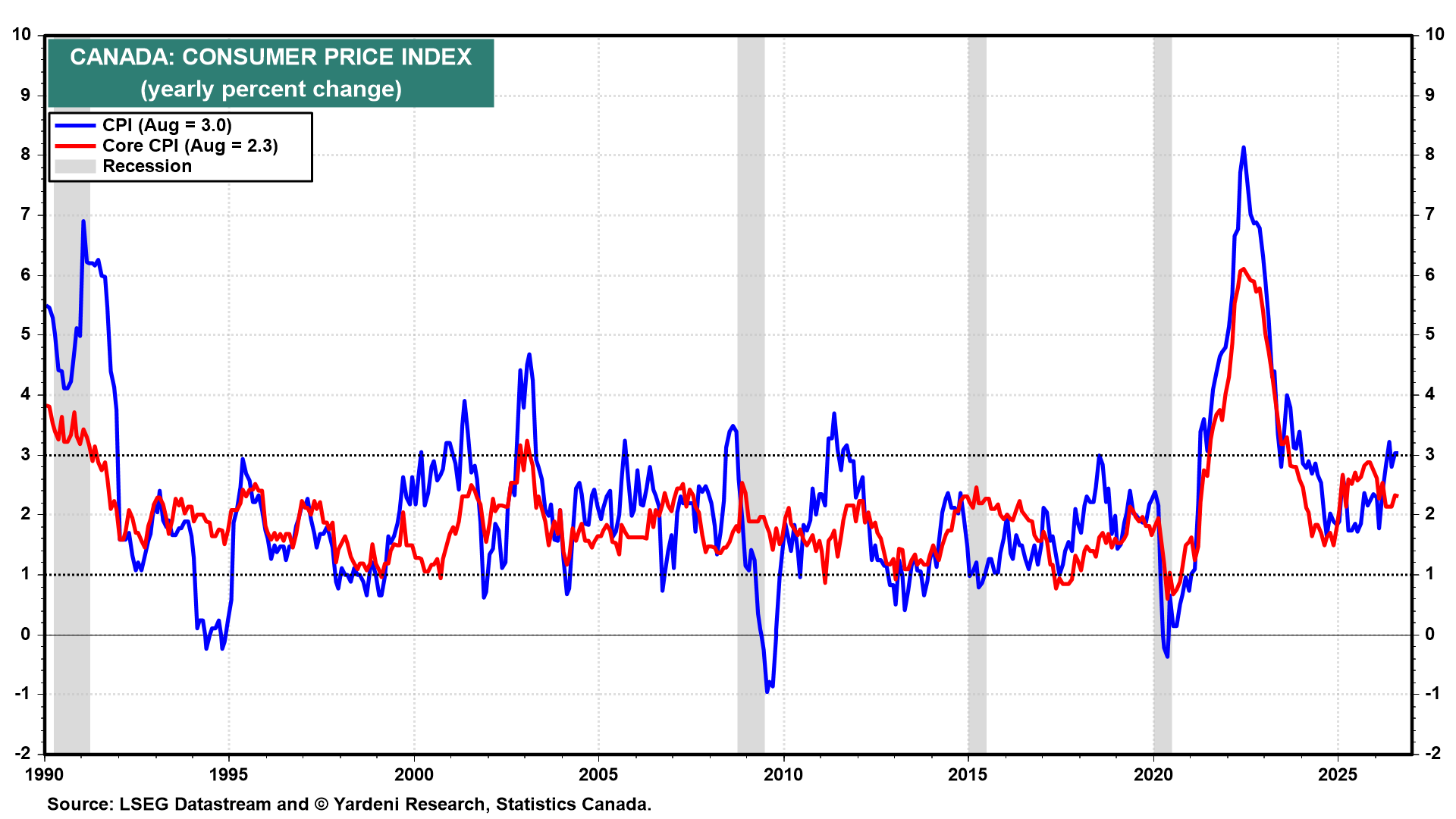
Any reader who saw UK retail sales described as rising 0.8% year on year in September was handed two errors folded into one sentence. Britain’s own monitor, the British Retail Consortium’s September survey, recorded a 1.3% year-on-year increase, led by health and beauty. A 0.8% rise does exist in the September data. It is American, and it is measured month on month.
The US Census Bureau reported that retail sales rose 0.8% in September after a revised 1.3% gain in August, beating the 0.3% consensus tracked by FactSet, as AP reported. Strip out petrol stations and the gain collapses to 0.2%.
Both figures are nominal. Neither is adjusted for inflation. That omission is the entire story.
Where The 0.8% Comes From And Why It Isn’t British
Petrol stations did the lifting. US gas station business rose 6.4% in September, and the average price of regular gasoline hit $4.33 a gallon, according to AAA, up from under $3 before renewed fighting in the Middle East. Michael Pearce, chief US economist at Oxford Economics, wrote that “the large jump in headline retail sales in September was almost entirely due to rising gasoline prices.”
Producer prices confirm the direction. Final demand PPI rose 1.3% on the month in September, taking the annual rate to 6.3%, the highest since December 2022, according to ForexTraders. Energy rose 10.8% and accounted for over 80% of the broad increase, with gasoline up 20.3%. Consumer prices rose 3.7% year on year, up from 3.4% in August, the biggest monthly jump in five months.
The American 0.8% is therefore largely a fuel bill, not a shopping spree. Furniture and home furnishings stores rose 1.3%, electronics and appliances 0.6%, online retailers 0.3%. Clothing and accessories were flat. Restaurants, the only services category in the report, rose 1.1%. Employers added just 29,000 jobs in the same period, which makes the spending look less like confidence and more like necessity.
UK Retail Sales Grew 1.3% Under A Budget Cloud
Britain’s September was not a demand story either. The BRC monitor described a period defined by waiting: households holding back ahead of the October budget and the tax rises it might bring, with a consumer already pressed by a cost-of-living squeeze and rising energy costs. Health and beauty carried the growth.
The inflation backdrop is unforgiving. UK CPI was 3.1% year on year in August with core at 2.6%. September’s reading was expected to climb to 3.4%, above the Bank of England’s 3.0% forecast, as Newsquawk noted in its week-ahead preview, with fuel, airfares and an unwinding of seasonal activity pushing prices higher. Input producer prices were up 8.2% year on year in the second quarter.
The September flash PMI for UK manufacturing sat at 52.1, still in expansion. But the survey described subdued demand, rising prices and weaker business activity, with technology the single bright spot. Any sign of second-round inflation effects would tilt the Monetary Policy Committee toward a November hike. Governor Andrew Bailey speaks on Wednesday. UK retail sales, measured in units rather than pounds, likely fell.
What Volume Declines Mean For Retailers In Lagos
Nigeria’s retail market runs on different plumbing but the same arithmetic. Most trade passes through informal markets and kiosks that never file a sales return, so published figures capture a thin formal slice: supermarkets, fuel forecourts, pharmacy chains. In an economy where transport and diesel generator costs feed straight into shelf prices, a nominal increase tells a retailer almost nothing about whether more goods left the shelf.
The same test applies to UK retail sales comparisons. Divide the cash increase by the price increase. If the answer is below one, the business is shrinking while the till looks busier. Retailers reporting in naira carry an added distortion, because exchange-rate movement can lift the top line while volumes fall.
Who Wins When Sales Rise And Shoppers Don’t
Fuel retailers and energy suppliers win first, because revenue rises with the price of the thing they sell. Discount formats and health-and-beauty chains win next. Discretionary goods lose: US clothing was flat despite a headline beat, and furniture’s 1.3% gain is smaller than price increases in the same categories.
Natalie Kotlyar, who leads BDO’s retail and consumer products practice, warned against reading the US report as evidence of consumer strength. With inflation running above 3% and gas prices high, part of this gain is simply higher prices, and many shoppers are leaning on savings and promotions to stretch their budgets,” she said. Strong sales alongside paychecks that fail to keep pace cannot last, she added, so retailers must protect margins and keep inventory flexible into November and December.
The policy read is muddled. Odds of a 25 basis point Fed hike at the 27-28 October meeting fell to 17% from 22% despite hot inflation, while December hike odds rose. Fed Chair Kevin Warsh declined to signal: “I don’t prejudge meetings,” he said at the IMF and World Bank annual meetings in Bangkok.
For UK retail sales, the practical instruction for operators is to stop quoting the cash number. Pearce still expects consumer spending to run at a 3.3% annualised pace in the third quarter, but he sees momentum fading into the holiday season as higher prices bite. A retailer that budgets on the headline will order too much stock and protect too little margin. One that budgets on volume will do the opposite. In a quarter where fuel rather than shopping drove the number, that is the only defensible position.
Frequently Asked Questions
Did UK retail sales rise 0.8% year on year in September?
No. The British Retail Consortium’s September monitor recorded a 1.3% year-on-year increase, led by health and beauty. The 0.8% figure is the US Census Bureau’s month-on-month retail sales increase for September, a different economy and a different time frame.
Why does the 0.8% US retail sales figure overstate consumer demand?
Because it is not adjusted for inflation and petrol stations did most of the work. Gas station business rose 6.4% in September as the average price of regular gasoline reached $4.33 a gallon. Excluding gas stations, US retail sales rose just 0.2% on the month.
What should retailers in Nigeria and the UK watch instead of the headline sales number?
Volume. Divide the cash increase by the price increase. If the result is below one, the business is selling fewer goods even though revenue looks higher. UK CPI was 3.1% in August and expected at 3.4% in September, so a 1.3% cash gain is a real-terms decline.
FIRST TIME REACTIONS:
Be the first to leave us a comment – UK Retail Sales: Why The 0.8% Headline Is Misread, down the comment section.
JOIN US ON OUR SOCIAL MEDIA:
About Paul Nwogo
Paul Nwogo is an engineer, published author, and the Head Manager at AfriLatest. He has written numerous books available on Amazon covering a diverse range of topics, including health, personal finance, relationships, work ethics, and scam survival. With his technical background and passion for writing, Paul now oversees the editorial direction of AfriLatest, delivering practical, accurate, and engaging content on trending news, music, and global lifestyle topics.
Business & Economy
Nigeria Startup Funding Lead: Capital Is Not Revenue
Nigeria startup funding leads Africa again, but the $635m headline measures capital raised, not revenue. Spectrum, power and skills decide what sticks.

Tech Outlook 2027, a technology foresight platform led by the National Information Technology Development Agency and delivered through SATH Foundation Africa, met in Lagos on Tuesday, October 20, with an agenda that had little to do with term sheets. Its subject was whether Nigeria can convert access to technology into domestic capability: data centres, connectivity, computing, skills. That question sits directly beneath the headline that Nigeria startup funding has reclaimed Africa’s lead, with press reports putting raised capital at $635 million.
The distinction matters more than the ranking. Capital raised is a flow of investor money into a company. Revenue is money a customer hands over for something they need. The two figures move on different clocks, and only one of them survives a downturn.
A Platform Built Around Constraints

Tech Outlook 2027 is not an accelerator and writes no cheques. It is a policy and foresight exercise, designed to help Nigeria anticipate emerging technology trends and translate them into strategic decisions. Its public output at the Lagos session was a list of constraints rather than a list of winners.
Ushaseer Tembe, lead for Technology and AI, spoke on behalf of Iyinoluwa Aboyeji. He argued that Nigeria has shown it can adapt existing technologies to local needs, but that the next phase requires stronger infrastructure and local talent to sustain AI businesses. He named data centres, connectivity, computing infrastructure, cloud platforms, models and applications as the layers Nigeria must assess to decide where it can build independence, and where economic value can be captured domestically.
The uncomfortable part is what that implies for the Nigeria startup funding headline. Money raised by a Lagos fintech or a Yaba software shop is not evidence that a product is priced correctly, that customers renew, or that the business covers its own power bill. On a continent where network operators are squeezed, those are not abstract questions.
What Nigeria Startup Funding Cannot Buy
The clearest evidence comes from the GSMA’s report on spectrum policy in Africa. African operators hold an average of 570 MHz of mobile spectrum below 7 GHz, about 24 percent less than the global average of 750 MHz, while paying more for it relative to revenue: 0.82 percent of revenue per 100 MHz against 0.66 percent elsewhere.
Average revenue per user across Africa fell by about 49 percent in real terms between 2015 and 2025, according to the GSMA report as covered by BusinessDay. Operators must carry roughly 160 percent more mobile data traffic between 2025 and 2030 while earning less per gigabyte.
For a startup, this is the ground floor. Average mobile download speeds in Africa stood at just over 27 Mbps in 2025, against 98 Mbps in the rest of the world. Users consumed about 3 GB per connection monthly, against 14 GB elsewhere. Only 28 percent of Africa’s population used mobile internet on their own devices in 2025, even though mobile broadband coverage reached 92 percent of the population.
That last number is the one founders should tape to the wall. About 64 percent of the continent’s population lives inside coverage and does not use mobile internet, because devices, data, electricity and digital skills remain out of reach. A product with polished onboarding and no paying user at the bottom of the pyramid is a demo, not a business.
The Burn Rate Nobody Funds
Labour is usually a startup’s largest line item, and the labour market is being squeezed from both ends. In Kwara, the state branch of the Nigerian Medical Association says doctors are losing between N30,000 and N50,000 from their monthly pay to unexplained deductions. Suleiman Rotimi, the NMA state chairman, disclosed the cuts at a news conference in Ilorin marking the 2026 Physicians’ Week, themed “Securing the Future of Medicine in Nigeria.”
Rotimi put Nigeria’s doctor-to-patient ratio at roughly 1 to 9,000 and warned that sub-standard wages, excessive cuts and manpower deficits are driving burnout and emigration, with conditions worse in rural Kwara. The state government’s response is not recorded in the BusinessDay report.
This is not a startup story on its face. It is one underneath. Skilled professionals whose net pay is unpredictable do not form the stable middle class that buys subscriptions, holds savings products, or stays with a fintech app through a bad month. Engineers watching public-sector pay erode price their own risk higher. Companies that cannot hire reliably cannot hold a delivery promise, and churn climbs quietly while the funding announcement stays loud.
Adoption Is Not Absorption
The Lagos session returned repeatedly to the gap between buying software and changing how work is done. Tembe said organisations need to “adopt AI at a native level,” arguing they should measure whether embedding the technology improves processes or increases revenue, not how many pilots they ran.
Itoro Emembolu, a faculty member at Lagos Business School, said the central challenge is not access to technology or talent but the ability of organisations to absorb and use technology effectively. She named leadership, communication and resistance to organisational change as the barriers, and called for investment in change management.
Read that against a Nigeria startup funding announcement and the arithmetic gets uncomfortable. Capital buys pilots. Absorption buys revenue. The first is available at a press conference. The second takes quarters.
What To Measure Instead
The GSMA offers a usable scorecard for reform: track new spectrum allocations, capital expenditure, infrastructure deployment, network speeds and service availability, and monitor internet adoption separately because coverage does not make devices and data affordable. The same discipline applies to Nigeria startup funding.
Ask what share of raised capital converted into paid contracts and renewals. Ask what the business spends each month on electricity and bandwidth. Ask how many customers stayed past the first billing cycle. None of these appear in a funding total, and all of them decide whether the company is still trading in three years.
The projected rewards from reform are real but conditional. The GSMA estimates that spectrum changes could add more than $120 billion in cumulative economic output across Africa between 2026 and 2035, bring an additional 50 million people within 4G coverage and 170 million within 5G, and lift average download speeds by 30 to 50 percent. The report labels these projected outcomes, not guaranteed gains. They hold only if lower costs turn into network investment rather than into margin.
Data governance carries the same weight. Professor Manasoghe, who led discussions on security, privacy and trust, pointed to fragmented databases, unnecessary collection of personal information and weak transparency around breaches as threats to public confidence in digital services, raising questions about compliance with the Nigeria Data Protection Act’s data minimisation principle. Firms that build on shaky identity systems inherit the cost of that shakiness.
Therein lies the test for Nigeria startup funding. The country has reclaimed the continental lead in capital raised. Whether that becomes revenue depends on spectrum, electricity, data governance and the willingness of executives to change how their companies actually work. Tech Outlook 2027’s contribution is to make that dependency explicit, and to move the argument from how much was raised to what it bought.
Frequently Asked Questions
Does Nigeria’s startup funding lead mean startups are profitable?
No. Funding raised is investment capital entering a company. Revenue is money earned from customers. The source material provides no revenue figures for Nigerian startups, so the funding lead says nothing on its own about profitability, renewals or cash flow.
Why does mobile spectrum policy matter to Nigerian startups?
Most Nigerian digital products reach customers through mobile networks. The GSMA reports African operators hold about 570 MHz of spectrum below 7 GHz versus a global average of 750 MHz, and face roughly 160 percent data traffic growth between 2025 and 2030, which affects speed, coverage and the cost of serving users.
What happened to doctors’ pay in Kwara?
Suleiman Rotimi, chairman of the NMA’s Kwara State branch, disclosed unexplained monthly deductions of between N30,000 and N50,000 from doctors’ salaries during a news conference in Ilorin for the 2026 Physicians’ Week. He called for the deductions to be reversed. The state government’s response is not recorded in the source report.
What should investors track instead of funding totals?
Paid contracts, customer renewal rates, monthly spend on electricity and bandwidth, and whether raised capital produced revenue. The GSMA recommends tracking spectrum allocations, capital expenditure, network speeds and service availability, and measuring internet adoption separately from coverage.
Receive alerts for Nigeria startup funding and more like it.
FIRST TIME REACTIONS:
Be the first to leave us a comment – Nigeria Startup Funding Lead: Capital Is Not Revenue, down the comment section.
JOIN US ON OUR SOCIAL MEDIA:

About Paul Nwogo
Paul Nwogo is an engineer, published author, and the Head Manager at AfriLatest. He has written numerous books available on Amazon covering a diverse range of topics, including health, personal finance, relationships, work ethics, and scam survival. With his technical background and passion for writing, Paul now oversees the editorial direction of AfriLatest, delivering practical, accurate, and engaging content on trending news, music, and global lifestyle topics.
View all articles by Paul Nwogo
-
 Startups1 month ago
What a Successful Dangote Refinery IPO Really Says
-
Health and Fitness2 weeks ago
Curly Hair Hydration: 5 Proven Steps That Actually Work
-
Tech & Gadgets3 weeks ago
Apple Watch and AirPods Fall Deals: Save $120 Today
-
Trending Entertainment News2 weeks ago
Taylor Swift Joins Beatles as Only Acts With 100 Weeks at No. 1
-
World News1 month ago
Carney Calls U.S. Tariffs a Miscalculation as Canada Retaliates
-
Football1 month ago
South Carolina vs Alabama: Tide Roll to 35-10 Halftime Lead
-
University Admissions1 month ago
UNILAG 2026/2027 Admission: Direct Entry & Post-UTME Guide
-
Football1 month ago
Mexico vs Colombia 2026: Márquez Debut Ends in Defeat














Dorcas Babalola
May 4, 2020 at 2:15 am
May God help us
Mgbemena chukwuemeka
May 7, 2020 at 8:25 am
God is our strength
Mgbemena chukwuemeka
May 7, 2020 at 8:27 am
Be prayerful
Anyanwu Bright
May 7, 2020 at 2:46 pm
Although the write up was long.
God is the king
David Elobisi
May 24, 2020 at 9:48 am
All our heart and motion are known by God ,may God see us through