
Business & Finance
Insult As Treason And Other Nigerian Idi Amin Dada Stories By Festus Adedayo
Insult As Treason And Other Nigerian Idi Amin Dada Stories By Festus Adedayo


Festus Adedayo
Two pieces of literary works – Williams Stevenson’s thriller, Ninety Minutes at Entebbe and the film, The Last King of Scotland (2006) – plot the graph of the gradual emergence of despots. They were both x-rays of Ugandan despot, Idi Amin Dada of Uganda. Stevenson’s was an account of the June 27, 1976 hijack of an Air France Flight 139, hijacked by terrorists and flown to the Entebbe Airport, Uganda and the July 4, 1976 reprisal codenamed Operation Thunderbolt, by a hundred Israeli commandos who, within 90 minutes, killed Ugandan guerillas and freed 103 hostages.
The Entebbe crisis was one of the first indicators of the huge scandal that Idi was to the African continent. He had given the terrorists ample support, making it the first time in history that a national leader would unabashedly back terrorists.
The Last King of Scotland on its own was a historical drama adapted from a 1998 novel written by Giles Foden with the same title. Screenwriters, Peter Morgan and Jeremy Brock adapted it from a story of a Scottish medic who left Scotland to Uganda and was recruited as physician to Dada, the character of which was acted by Forest Whitaker. The film also speaks of Dada’s cruelty, how he gradually morphed into sadism due to the disposition of the Ugandan system and the machinery of state that was either too lax or too condescending to embrace a tyrant.
The world was to see more of Dada. Born in 1925 of the Kakwe tribe, northwest Uganda, though half educated, his towering height of 6 feet 4 inches egged him on. The British military in Uganda as an army of occupation at this time particularly felt intrigued by Amin’s sheer hippopotamus height and size. When he thus joined theKing’s African Rifles in 1945 as an assistant cook, he rose through the ranks. He was a key force in quelling the 1952-1956 famed Mau-Mau rebellion and as he was commissioned in 1961, he garnered reputation for cruelty and bravery in equal proportion. Gradually, he began to unfold, until 1971 when he overthrew President Milton Obote and unleashed one of the cruelest regimes in African history, speculated to have murdered 300,000 Ugandans. He eliminated tribal members different from his in the army, opposition members, activists and the clergy and had a uniquely horrendous pattern of feeding his victims’ fleshes to the crocodiles in the Nile river. In 1978, however, invading Tanzanian Army stormed Uganda and Dada fled into exile in Saudi Arabia and died in 2003 of organ failure.
Idi Amin Dada
 The author, Festus Adedayo
I went into this famous low moment of the African continent to demonstrate that despots are made by the system and not necessarily themselves. So when last Thursday, the story sieved in that the police in the Katsina home state of President Muhammadu Buhari had arrested a 70-year old man who had “insulted” Buhari and the state governor, Aminu Masari, the story of Dada sieved into my subconscious, jarring my nerves. Lawan Isa, according to the state police spokesperson, Gambo Isa, of Gafai Quarters, Katsina town, was arrested in the company of two others – Bahajaje Abu, 30, and Hamza Abubakar, 27 – having “conspired and insulted President Muhammadu Buhari and Governor Aminu Masari.” Isa said that Izala had made a “confessional statement” wherein he had given explanation of how he tongue-lashed the two Katsina-born public officials because his cows were rustled, with the shepherd who tended the cows being killed by suspected armed bandits.
In the confessional statement, he was quoted to have said: “I’m tormented with what happened in the village. While on my way back I met Bahajaje Abu (man who filmed the incident) asking me about the government, I told him that I withdrew my support because of what happened with my cows, I am now left with nothing, that is how I became emotional and started the insult.” Their arrest was said to have been ordered by the Katsina State Police Commissioner, Sanusi Buba.
Many analysts had submitted that Nigeria was too arid and hostile to despotism to allow an Idi Amin Dada to reincarnate on her soil. However, 1994 proved these pundits wrong as Nigeria minted a sadistic variant of the “Butcher of Uganda” in the goggled Sani Abacha. Journalists and opposition to his rule generally disappeared without trace and he relished inflicting pain on those who had hurt his ego. Ever since, the country has had a breather from naked despotism.
Studies of the sociology and psychology of despotism reveal that this sadism of the ruler begins to creep in when he begins to harbour a feeling of personal invincibility, becomes too egotistic and develops a skin that is easily bruised by public criticisms. While it could even be countenanced in a maximum rule like that of Abacha, despotism is an anathema to democracy and vilification of citizens for criticizing public officials is alien to the constitution. The major tenet of democratic rule is to query the efficacy or the subsistence of the claim of victory of opinion by a side. What democracy proposes is a beautiful tapestry that is woven of opinions which consist of different shapes, colors and contours. Thus, when you begin to see a democratic rule that is allergic to public criticisms, harangues holders of opinions that differ from its and preaches a monolithic viewpoint, then, as the holy writ says, know ye that autumn is nigh.
While claiming to be at home with public criticisms, Nigeria under Buhari has advertised its fascination with manacles. Last year, Abubakar Idris, known as Abu Hanifa Dadiyata, a social media personality, was said to have been abducted on Friday, August 2, by heavily armed men in the midnight as he was about to drive into his Barnawa, Kaduna residence. At about midnight, while driving into his residence at Barnawa, Dadiyata, said to be a social media influencer who was loyal to the Kwankwasiyya movement, was apprehended. He was said to be critical of the Buhari government and the All Progressives Congress (APC) government of Nasir el-Rufai. Even as his whereabouts is enveloped in nocturnes, there are claims that operatives of the Department of State Services (DSS) masterminded the Gestapo-like abduction. Whether Dadiyata is alive or had been silently butchered is yet unknown.
Cross River State’s Ben Ayade had ordered the arrest of Agba Jalingo, publisher of CrossRiverWatch, an online newspaper. He was arrested at 2pm on August 22, 2019, by men of the Federal Special Anti-Robbery Squad (FSARS) of the Nigerian police at his residence in Lagos. They were reported to have earlier invaded the Lagos bakery of his wife, Violet where, according to the reports, they “seized the phones of all staff present and ordered them to show to them Jalingo’s residence.” On August 30, Jalingo was charged with treason, terrorism, cultism and public disturbance in an Abuja Federal High Court and for “working with the #RevolutionNow movement”— brainchild of human rights activist and Publisher of Sahara Reporters, Omoyele Sowore. He was also alleged to be planning to “’undemocratically’ force the government of Ayade to end through violent means.” He had reportedly criticized Ayade of manifest corruption.
The fate of many of those who have fallen prey to the intolerance of Nigerian government, either at the state or federal level, is indescribable. They are allegedly, according to an Amnesty International report, “tortured and pressured to write confessional statements, which were used to prosecute them in court.” AI also claimed that they are slammed “indiscriminate charges such as ‘defamation’, ‘terrorism’ and ‘cyberstalking’… ‘kidnapping’, criminal trespass and theft of state documents (while) many of the journalists were prosecuted under the Cybercrime Act and Terrorism (Prevention) (Amendment) Act 2013, alongside other laws.”
While the Buhari government cleverly distances self from the tortuous paths of citizens freely expressing their views in the states and who were ostensibly suffocating under the tyranny of their state governments, citing federal bar from so doing by the constitution, it bears own fang in further cruel manner. It is interesting that when Buhari wanted to slam a lockdown on Lagos and Ogun State recently, a contravention of the tone and tenor of federalism, he didn’t think twice about it but cites same jejune provision when it comes to intervening in the release of unjustifiably imprisoned victims of his fellow Idi Amin Dadas in the states. Same last year, the Buhari government filed charges against Sowore for hatching a protest against it and “insulting” Buhari. Though no chains are around Sowore’s feet as he walks Abuja free, according to the tyrannical tone of his bail, he is clearly manacled and in jail.
The most recent victims of government’s intolerance and naked despotism are Gambo Isa, Bahajaje Abu, and Hamza Abubakar, who had the effrontery of “insulting” the Fuhrer and an Idi Amin Dada still in his diapers, Muhammadu Buhari and his minion, Masari. The police are ostensibly abetting this naked display of crude power-mongering.
If one may ask, since when did it become a crime or an offence to insult a holder of political office? For eating the people’s food free, collecting fat salaries, riding in posh cars purchased from our collective patrimony, living free in mansions that belong to the Nigerian state and for rapaciously bleeding our national purse, holders of political offices are deemed to have lost their privacy and right to be peeved by public singe of their actions. If such scrutiny is defamatory, public officials have the right to go to the court. Today, the Cybercrime Act and Terrorism (Prevention) (Amendment) Act 2013 have become fecund façade that government hides to unleash pristine and brutish intolerance on its citizens. To charge three Nigerian citizens for breach of the provisions of Cyber Crime Act, simply because they told Buhari and Masari that their alleged acts of not taking care of their interests was obtuse, a duty they both swore on oath to undertake at their swearing-in, is reminiscent of the cruelty and inhumaneness of Idi Amin Dada. Or, what do you think?
Eighty gun salutes for the GOC, Ibadan Media Division
There are two General Officers Commanding (GOCs) in Ibadan, the capital of Oyo State. While the 2 Division of the Nigerian Army, based in Ibadan, has been an active division since the Nigerian civil war, with a current GOC, the other GOC is Mr. Felix Adenaike. As I wrote Adenaike’s name, I was tempted to prefix it with “Chief,” a crime whose punishment, many of those who are close to Adenaike know, is summary anger of the media chief. The Ibadan media GOC was 80 years old on April 22.
Adenaike, one of the surviving grandfathers of Nigerian journalism, was given the sobriquet of GOC on account of his no-nonsense managerial tendencies while he held forte as Daily Sketch’s General Manager/ CEO and Editor-in-Chief and Editor-in-Chief of the Nigerian Tribune. He was a disciplinarian whose life was discipline personified. He strictly pursued and stuck with the hallowed principles of journalism and couldn’t suffer fools gladly. Anyone who fell prey to his fine tooth-comb with which he scrutinized the newspapers under him for infractions sang the acrid song that Judas sang on his way to Aceldama. He couldn’t stand willful obstruction of the ethics of journalism or chivalrous murder of the god of grammar in the newspapers under his charge.
The next time you meet Adenaike, the first thing you will notice is that he will willfully regale you with the fine days of journalism and the dross on our hands today. He is one of the two surviving members of the tripod, that comprised himself, Peter Ajayi (may God rest his soul) and Segun Osoba, who Chief Obafemi Awolowo named The Three Musketeers, a deference to the trinity of their professionalism.
As Adenaike clocks 80 years on earth, help say eighty hearty cheers to the General Officer Commanding of the Nigerian Media, Ibadan Command.
The rebirth of Ayinla Omowura
My book on the late Yoruba Apala music maestro, Ayinla Wahidi Yusuff, popularly known as Ayinla Omowura, will be out on Wednesday, May 6, 2020. Entitled Ayinla Omowura: Life and Times of an Apala Legend, it is a 536-page book which documents the life and music of this famed musician, undoubtedly one of the most profound and original Yoruba musicians since Nigerian post-colonial history. Incidentally, that day marks the 40 years of his stab on the head with a glass mug in a beer parlour in Abeokuta, Ogun State, precisely on May 6, 1980.
The book is not a hagiography on Omowura. I documented his profound musicality, his famed violence, drug usage and rascality, as well as his unexampled voice and musical talent. The book reveals a lot about the late musician who has refused to die in the hearts of the people of Southwest Nigeria and on the West Coast. My friends, those who admire my writing, lovers of culture in general, should endeavor to have a copy of the book which incidentally is my first attempt at intruding into the world of book authors. This weekend on my social media handles, I will announce bookstores where the book can be bought. I assure you, it will be worth your while.
MORE@AFRILATEST
JOIN US ON FACEBOOK






Business & Finance
Naira Rebounds Against Dollar: What N1,382 Really Costs You
The naira rebounds against dollar at N1,382.18 on the official window, but the black market held at N1,420. What that N38 gap costs households.


The naira rebounds against dollar headlines returned on Wednesday, and the underlying numbers are real. Central Bank of Nigeria data quoted the dollar at N1,382.18 at the Nigerian Foreign Exchange Market, against N1,383.08 on Tuesday, a gain of 90 kobo for the local currency. BusinessDay reported the move alongside improved liquidity and rising external reserves.
The rate most Nigerian households actually pay did not move at all. The parallel market held at N1,420 per dollar, unchanged from the previous day. The gap between the two windows narrowed by exactly one naira, to N38 from N37.
That is the whole story in two numbers. A wholesale market improved slightly. A retail price stood still.
What The Naira Rebounds Against Dollar Headline Actually Promises
The word rebound implies a turning point and a cheaper dollar. Direction did change. Cost barely did. Ninety kobo on a N1,382 dollar is 0.065 percent, or N900 on every $1,000 converted at the official window.
The liquidity behind the move was also uneven. Deals at the NFEM rose 28.62 percent to 346 on July 14 from 269 on July 13, while turnover climbed 11.78 percent to $613.58 million from $548.94 million, per the same CBN data. Over at the interbank segment, deals fell 17.86 percent to 115 on Wednesday from 140 on Tuesday, and turnover dropped 49.92 percent to $121.73 million from $243.09 million. Wednesday’s NFEM turnover and deal figures were not yet published at the time of reporting, so the extent of the rebound on the day itself remains unmeasured.
A household reading the headline is being shown one window. The invoice, the school fee payment and the travel allowance are usually priced off another.
Fees And Spreads Are Where The Household Cost Hides
The N38 gap between N1,382.18 and N1,420 works out at roughly 2.7 percent of the parallel rate. On $2,000 of embassy or tuition-related demand, that is about N76,000 of difference between the two quotes. On $500, it is about N19,000.
That gap is not fixed. A separate BusinessDay report put the spread at N34, or 2.5 percent, on a day when the official rate closed at N1,371.82, a gain of N14.84. In that same report, external reserves had fallen 2.16 percent to $48.94 billion as of April 7, 2026, from $50.02 billion on March 11, 2026. The premium widens and narrows with reserve flows, not with the headline.
Currency choice matters as much as the dollar rate. Ripples Nigeria recorded the naira at N1,366.79 against the dollar, up N6.46, with the pound at N1,875 from N1,880, the Canadian dollar flat at N1,100, and the euro at N1,615 from N1,610, a loss of N5. A parent paying British fees caught a small gain that day. A parent paying euro fees did not.
Reliability Check: Reserves At $51.87 Billion Are A Buffer, Not A Counter Price
Nigeria’s external reserves reached $51.87 billion as of July 14, 2026, a 17-year high and a 37.81 percent increase from $37.64 billion a year earlier. Analysts at Quest Merchant Bank noted reserves rose $1.9 billion to $51.5 billion in June 2026, the second consecutive month of accretion after drawdowns in March and April tied to external debt servicing. The bank put import cover at 14.4 months of merchandise imports, or 9.9 months including services.
The buffer explains why the official rate has been steadier. It does not guarantee the daily quote. DMarketforces reported the spot rate at N1,355.8036 after the CBN sold roughly $1 billion to authorised dealers, with interbank turnover jumping 428 percent to $362.551 million from $68.660 million. In the same period, Coronation’s research arm put weekly FX inflows at $807.6 million, down 67 percent from $2.48 billion the week before, the lowest in at least five weeks.
For regional context, South Africa’s international liquidity position fell $2.2 billion to $71.3 billion in the same reporting window, while Egypt’s net external reserves rose about $2 billion to $55.1 billion. Nigeria is not the only country whose reserve line moves the currency conversation.
Inside the CBN itself, the tone is measured rather than triumphant. MPC member Muhammad Sani Abdullahi wrote that exchange rate pressures had remained contained, citing improved market liquidity, reduced speculative positioning and adequate external buffers. Murtala Sabo Sagagi put reserves at $49.49 billion as of May 15, 2026, covering about 9.04 months of goods and services. Mustapha Akinkunmi noted the naira traded at N1,371.04 per dollar on May 15, more than N15 stronger than the January 2026 average.
Verdict: A Wholesale Move, Not A Household Discount
Measured day on day, 90 kobo. Measured week on week, the naira appreciated N10.74, or 0.78 percent, to N1,370.19 from N1,380.93. The rebound is real but small, and its size depends entirely on which window and which date the reader picks.
The practical conclusion for household budgeting is straightforward. The official rate functions as a clearing figure between banks and authorised dealers; the source material does not specify which retail channels pass it through to individuals at cost. The parallel quote of N1,420 is the number that shows up at the bureau de change counter. Planning at the parallel rate and treating any official-window improvement as upside is arithmetic, not a forecast.
This is general education about how the two windows relate. It is not advice for any specific person’s circumstances.
Is It Safe To Use The Official Rate For Planning?
If the naira rebounds against dollar again next week, the same arithmetic will apply: a few kobo or a few naira at the top, while the retail rate does the damage. Households with dollar obligations due in 30 to 90 days carry the spread risk, and at N38 the spread on $2,000 is N76,000. Watch the parallel quote, the reserve line and the weekly inflow figure. Those three numbers, not the headline verb, decide what a dollar costs at the counter.
Frequently Asked Questions
What rate did the naira actually close at when it rebounded?
It depends on the date cited. CBN data reported by BusinessDay put the dollar at N1,382.18 on Wednesday versus N1,383.08 on Tuesday, a 90 kobo gain. A separate BusinessDay report covering a different session showed N1,371.82, a gain of N14.84. A weekly reading showed N1,370.19 on Friday versus N1,380.93 the previous Friday. Each figure carries its own timestamp and should not be blended.
Why did the black market rate stay at N1,420 while the official rate moved?
The two windows clear different demand. The official NFEM window is where banks and authorised dealers transact under CBN supply, and its rate moved 90 kobo. The parallel market, where bureaux de change and street traders quote, held flat at N1,420. The gap narrowed by one naira to N38.
Does a stronger official naira mean school fees and travel costs fall?
Not automatically. The official quote is a wholesale clearing rate, and the source material does not specify which retail channels pass it to individuals at cost. Households buying dollars at the parallel counter face the N1,420 quote, where a N38 spread on $2,000 equals roughly N76,000. Movements in the pound and euro can also run opposite to the dollar on the same day.
 Follow AFRILATEST on Google News
FIRST TIME REACTIONS:
Be the first to leave us a comment – Naira Rebounds Against Dollar: What N1,382 Really Costs You, down the comment section.
JOIN US ON OUR SOCIAL MEDIA:

About Paul Nwogo
Paul Nwogo is an engineer, published author, and the Head Manager at AfriLatest. He has written numerous books available on Amazon covering a diverse range of topics, including health, personal finance, relationships, work ethics, and scam survival. With his technical background and passion for writing, Paul now oversees the editorial direction of AfriLatest, delivering practical, accurate, and engaging content on trending news, music, and global lifestyle topics.
View all articles by Paul NwogoSavings & Investing
Nigeria’s Fragmented Crypto Regulation Raises Investment Fears
Nigeria’s fragmented crypto regulation now has a coordinating council. What the filings, flows and gaps mean for investors in 2026.
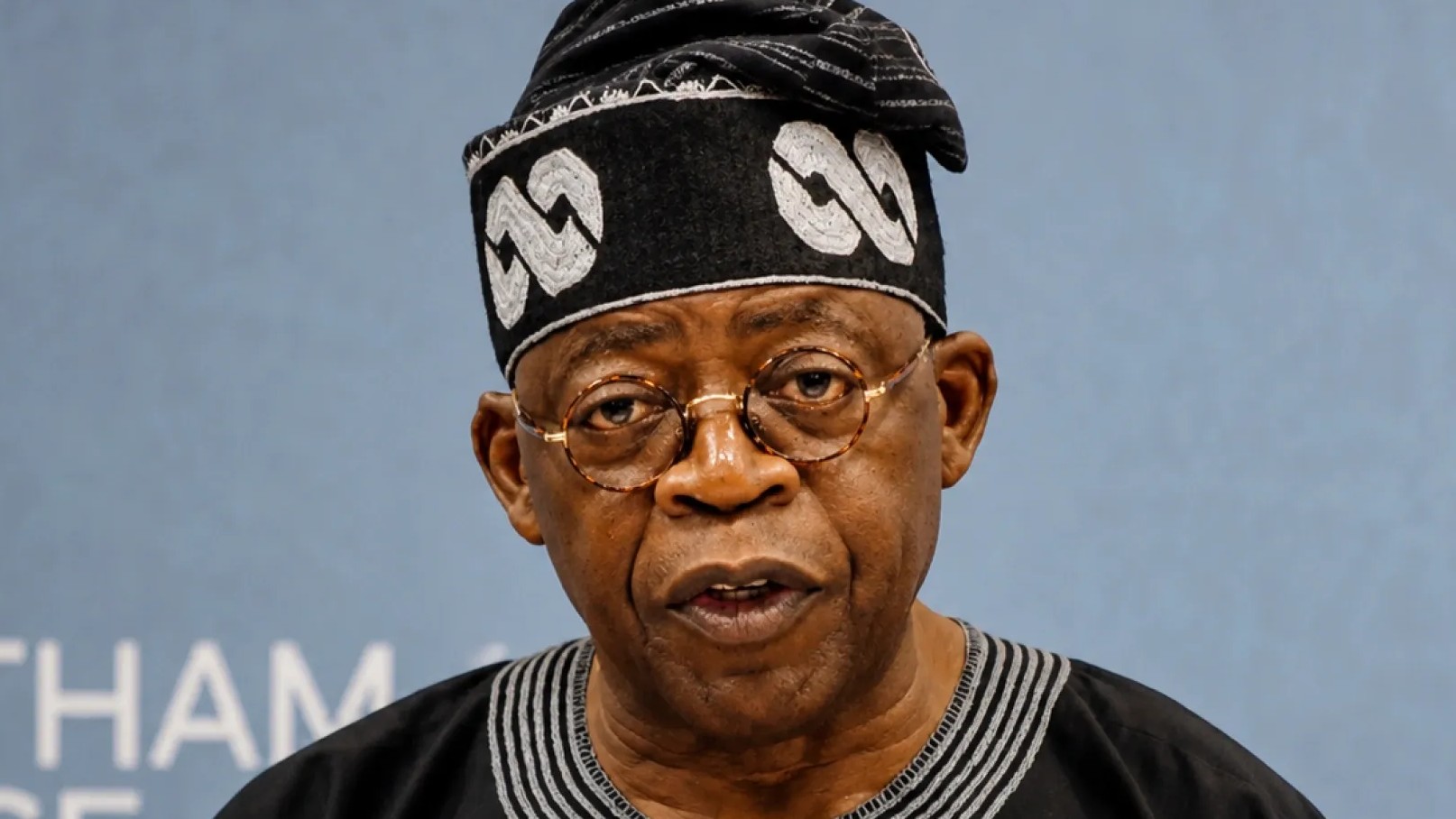
On 17 July 2026, President Bola Ahmed Tinubu signed the Presidential Executive Order on Virtual Assets Coordination, 2026. The order creates a Virtual Asset Council and places the Central Bank of Nigeria, the Securities and Exchange Commission, the Federal Inland Revenue Service and other institutions inside one framework covering the issuance, trading and taxation of virtual assets. Nigeria’s fragmented crypto regulation is the specific problem the order was written to address.
Read it as a coordination document. It changes which agency talks to which, and under what heading. It does not set a price, a yield, or a floor beneath any token.
What The 2026 Executive Order Actually Changes

The council holds a mandate covering strategic policy direction, coordination among the agencies, and work with the Attorney-General on a harmonised legal and institutional framework. Capmad reports that federal authorities frame the goal as closing loopholes used by fraudulent operators. A parallel set of measures applies Nigeria’s tax laws to virtual assets, so gains and income from crypto are treated with more certainty for taxpayers and service providers.
The history explains the urgency. The CBN instructed banks in 2021 to close accounts linked to crypto platforms. In 2023 it shifted towards oversight, issuing a framework for virtual asset service providers. Between those two positions, activity moved to peer-to-peer platforms that no comprehensive rule covered, a sequence Guardian Nigeria traces through successive CBN and SEC circulars dating to 2017.
The IMF had already recommended a joint monitoring framework across monetary, market and anti-money-laundering authorities. Its staff noted that supervision remained fragmented and that information sharing between agencies was limited.
Risk, Diversification, Liquidity And Minimum Ticket Sizes
Risk sorts into four buckets, and it belongs before any discussion of upside.

Issuer and credit risk. A tokenised bond is still a promise from a borrower. Recording that promise on a blockchain does not make the borrower solvent.
Technology and settlement risk. Nigeria’s digital securities platform runs issuance, trading, clearing and settlement on infrastructure supplied by Canadian firm Blockstation. Cutting days out of settlement cuts counterparty exposure. It does not cut the possibility of an operational failure.
Regulatory risk. Nigeria’s recent record includes a directive that closed bank accounts. An executive order can be revised, and the Virtual Assets White Paper meant to fix the long-term trajectory is still in preparation.
Diversification. One tokenised instrument from one SME is a single credit, not a portfolio. Fractional ownership widens access to a holding; it does not spread default risk across issuers.
Liquidity. Near-instant settlement is not a deep order book. NASD listed 46 securities as of May. Thin trading means an exit can move the price.
Minimum investment. The source material does not publish minimum ticket sizes for the September digital securities offering. Fractional ownership is described as lowering entry barriers, which implies small units, but no figure has been disclosed. Until an offer document states a minimum, treat ‘low minimum’ as unverified.
Nigeria’s Fragmented Crypto Regulation Meets A Tokenised Market
The SEC has approved trading of tokenised shares and bonds on the NASD OTC Securities Exchange, with a first public offering of digital securities scheduled for early September. Licensed brokers continue to execute trades under SEC supervision, and the exchange says SMEs are the primary audience. Acting CEO Chinwendu Ekeh calls the platform a faster, lower-cost pathway to market financing.
Why SMEs. A May 2025 Stears study found that only about 4% of Nigeria’s estimated 40 million MSMEs have access to formal bank credit. Tokenised issuance offers a route for companies too small or too early-stage for a main listing.
The scale question. NASD’s market capitalisation more than doubled in 2025 to ₦2.12 trillion, roughly $1.56 billion, from ₦1.03 trillion the year before. That is real growth from a small base.
The legal perimeter. The Investments and Securities Act 2025 gives the SEC authority over digital assets that qualify as securities, while the CBN keeps oversight of payment systems. cNGN, a naira-backed stablecoin, was issued under that Act. Financial Nigeria reports the Virtual Assets Council is chaired by the CBN.
What The Verified Figures Show, And What They Omit
Nigeria ranks among the world’s largest digital-asset markets by volume, with annual flows estimated at around $59 billion over a recent period, according to IMF staff cited in the presidential communication.
Ivorypay reported processing more than $80 million in cryptocurrency payments over the preceding year and onboarding over 9,000 merchants across several African markets by the time its Duffle app launched in Nigeria in April 2025. Those are volume and merchant counts. They are not revenue, margin or default figures, and none were disclosed.
Charles Olanrewaju, head of operations at Ivorypay, described the operational constraint plainly: ‘The product can be shared, but the operation underneath it cannot.’ On automation his rule is: ‘automate the rule, keep a person on the exception.’ The Guardian Nigeria account of his work makes the same point about licensing and settlement differences across borders.
Continental direction. The Nairobi Securities Exchange signed a memorandum with Tether in July to pilot tokenisation and instant settlement. The Central Bank of West African States convened regulators, bankers and academics in Dakar in May. South Africa’s Financial Sector Conduct Authority has been reviewing tokenised-asset frameworks.
What is missing. For all the coordination, Nigeria’s fragmented crypto regulation still lacks a published fee schedule for tokenised trades, a date for the White Paper, and an enforcement record for the Council. Days before the executive order, the communications minister suspended new cross-cutting rules from the NCC, NITDA and NDPC pending a consolidated digital governance framework, a reminder that the wider rulebook is also in motion.
Verdict: A Framework, Not A Recommendation
The order removes one category of risk: the chance that two regulators issue conflicting instructions to the same business. Market, credit, technology and liquidity risk sit exactly where they were.
Nigeria’s fragmented crypto regulation is being assembled into something with an address and a chair. That is progress for disclosure. It is not evidence of a return, and no agency statement reviewed here promises one. The documents worth watching are the September NASD offer document, the Virtual Assets White Paper, and the Council’s first enforcement actions.
This article is information, not personal financial advice. Any position in digital assets or tokenised securities should follow independent reading of the offer document, an honest assessment of your time horizon and capacity to absorb loss, and, where appropriate, guidance from a licensed professional.
Frequently Asked Questions
Does the 2026 executive order make crypto investing in Nigeria safe?
No. It creates a Virtual Asset Council to coordinate the CBN, SEC, FIRS and other agencies, and it adds tax clarity. Market volatility, issuer default, technology failure and thin liquidity are unchanged. Coordination reduces one kind of regulatory risk, not investment risk.
What is the minimum amount needed to buy tokenised securities on NASD?
No minimum has been published in the source material. Fractional ownership is described as lowering entry barriers, which suggests small units, but investors should wait for the September offer document before assuming any figure.
How liquid is the NASD digital securities market?
Settlement is near-instant on the blockchain platform, but settlement speed and liquidity are different things. NASD listed 46 securities as of May, a small universe where an exit can move prices.
FIRST TIME REACTIONS:
Be the first to leave us a comment – Nigeria’s Fragmented Crypto Regulation Raises Investment Fears, down the comment section.
JOIN US ON OUR SOCIAL MEDIA:
About Paul Nwogo
Paul Nwogo is an engineer, published author, and the Head Manager at AfriLatest. He has written numerous books available on Amazon covering a diverse range of topics, including health, personal finance, relationships, work ethics, and scam survival. With his technical background and passion for writing, Paul now oversees the editorial direction of AfriLatest, delivering practical, accurate, and engaging content on trending news, music, and global lifestyle topics.
View all articles by Paul NwogoBusiness & Finance
Jensen Huang Scandal: Nvidia’s $250bn Governance Test
The Jensen Huang scandal took about $250bn off Nvidia’s value in a day. What the filings, export rules and Megaspeed’s $4bn chip buying actually show.

Nvidia lost roughly $250 billion of market value on Monday, the first trading session after the company disclosed an investigation into chief executive Jensen Huang’s affair with a businesswoman U.S. intelligence has assessed as a Chinese operative. The Jensen Huang scandal is now a governance event priced in dollars, and the dollars are specific.
According to Forbes, Nvidia shares were down 5.5% at 1:30 p.m. EST after falling as much as 7% premarket, cutting market capitalisation from $4.5 trillion at Friday’s close to $4.24 trillion. Huang’s personal net worth fell $7.4 billion to $154.7 billion inside the first half hour of trading, moving him from No. 8 to No. 10 in the Forbes billionaire ranking, below Berkshire Hathaway’s Warren Buffett and Oracle’s Larry Ellison. He briefly lost top-ten standing altogether when the stock opened more than 7% lower, a $10.3 billion swing. Nvidia was the only Magnificent Seven stock down premarket.
The second number is $4 billion. That is the estimated value of Nvidia chips bought in Asia by Megaspeed International, a Singapore-based company where Alice Huang served as a director from March to November 2023, according to CNN. One figure is a mark-to-market reaction. The other is a documented flow of restricted hardware through a single intermediary. That distinction matters more than the affair.

What The Jensen Huang Scandal Cost Shareholders
The board’s response came on Sunday: a committee of independent directors plus outside counsel, tasked with reviewing all available information. The same statement said directors had “no reason to believe that either national security or NVIDIA secrets were compromised.” Read that carefully. “No reason to believe” is an absence of evidence, not a finding of innocence, and Nvidia published it before the investigation had produced anything.
Huang admitted the affair in a statement carried on Nvidia’s own newsroom and said he supported the probe. PC Gamer called the venue unusual for a company of this size, and the outlet is right: Nvidia is a $4.5 trillion business whose products sit inside government data centres. Its CEO’s private life became a disclosure event because it intersected with export-controlled hardware.
Nvidia’s earlier line, given to The New York Times before the story broke, was that Jensen Huang’s interactions with Ms. Huang were “not unusual or unexpected,” because meeting customers is part of the job. That defence holds only if Alice Huang was an ordinary customer.
Why Megaspeed Sits At The Centre Of The Chip Trade

CNN reported that U.S. Customs and Border Protection travel records identify Alice Huang as a 43-year-old Chinese citizen named Huang Le. Chinese social media and career databases show a journalist at state television who moved into finance, with four years in media and eight in securities, including stints at HSBC and Citic Securities.
Megaspeed is the part worth following. Corporate records in Singapore show the company was incorporated in 2015 as 7Road International, a Chinese video game developer. After the name change it became one of the largest buyers of Nvidia chips in Asia, with more than $4 billion in purchases by some analyst estimates, and records indicate it took funding from Alibaba.
None of that is illegal on its face. Buying GPUs is not a crime. But the Jensen Huang scandal is, at bottom, a supply-chain story, and supply chains are auditable in a way that private relationships are not.
The rules have moved repeatedly. PC Gamer traced the arc: the U.S. blocked ASML’s chipmaking machines, then wrote thresholds using weighted teraflops and adjusted peak performance in 2023, then watched Nvidia and AMD build China-only parts such as the RTX 4090D, RTX 5090 D and H20 to stay under the line. Blackwell, Nvidia’s newest architecture, remains restricted. Gina Raimondo, then commerce secretary, warned that if a chip were redesigned around a cut line that enabled AI, she would control it the very next day.
Trump, The FBI And The Rules That Decide Who Gets A GPU
The political layer is now live. The BBC reported Trump told reporters the FBI is looking into the affair, after saying he had asked Huang directly: “Did you have any idea she was a spy? He said ‘I had no idea she was a spy’ and I really believe him.” The FBI declined to comment.
Beijing rejected the allegations through its foreign ministry, calling them “entirely groundless, speculative and intended to smear and malign China.” Per the BBC, Secretary of State Marco Rubio sent a memo to senior Washington officials in spring warning that Huang was in a close relationship with a Chinese spy, and U.S. intelligence briefed Trump about a year ago without action being taken.

Here is the contradiction worth holding onto: the same administration that eased export controls on pared-back chips like the H20 and MI308, per PC Gamer, is now running a counterintelligence inquiry into the CEO whose company makes them. Policy toward Nvidia is being set by two hands at once.
What Buyers In Nigeria And Across Africa Should Take From It
African developers and cloud providers do not get a vote in this. Access to AI compute in Lagos or Nairobi is shaped by U.S. licensing decisions and by which intermediaries are cleared to move hardware across borders, not by local demand. When a $4 billion buyer in Singapore turns into a counterintelligence question, scrutiny moves upstream, to end-use checks, customer files and the paperwork that sits between a chip and the person renting it.
To be precise about what the record shows: none of the four reports cited here documents new restrictions on Nigerian or African buyers, and Nvidia has not announced any change to sales channels. What the Jensen Huang scandal has not done is change a single published export rule. The evidence of direct harm to African customers is absent. The evidence of structural exposure is not, because a market that rents compute instead of owning it inherits every compliance shock at the top of the chain.
Who Wins
Apple does, narrowly. Nvidia ended Monday at $4.24 trillion, further behind a company it has been trading the title of most valuable public company with. The rest of the Magnificent Seven avoided the drawdown entirely. Trump keeps a tech adviser he says he believes. Huang keeps his job but not his rank.
The losers are measurable. Roughly $250 billion in market value, a 5.5% single-session fall, and a board investigation that published a conclusion before publishing a finding. The Jensen Huang scandal will be remembered as the moment a chip company’s customer relationships stopped being a sales matter and became a national security file, and the market repriced that in half an hour.
Frequently Asked Questions
How much market value did Nvidia lose after the Jensen Huang scandal broke?
About $250 billion, according to the BBC. Forbes put the shares down 5.5% at 1:30 p.m. EST on Monday, cutting market capitalisation from $4.5 trillion at Friday’s close to $4.24 trillion.
What is Megaspeed International and why does it matter?
Megaspeed is a Singapore-registered company, originally incorporated in 2015 as Chinese video game developer 7Road International. CNN reported it became one of the largest buyers of Nvidia chips in Asia, with more than $4 billion in purchases by some analyst estimates, and that Alice Huang was a director from March to November 2023.
Has Nvidia admitted any security breach?
No. Nvidia’s board said it had no reason to believe that national security or Nvidia secrets were compromised, and commissioned a committee of independent directors and outside counsel to investigate. That is a statement of belief, not a completed finding.
FIRST TIME REACTIONS:
Be the first to leave us a comment – Jensen Huang Scandal: Nvidia’s $250bn Governance Test, down the comment section.
JOIN US ON OUR SOCIAL MEDIA:
About Paul Nwogo
Paul Nwogo is an engineer, published author, and the Head Manager at AfriLatest. He has written numerous books available on Amazon covering a diverse range of topics, including health, personal finance, relationships, work ethics, and scam survival. With his technical background and passion for writing, Paul now oversees the editorial direction of AfriLatest, delivering practical, accurate, and engaging content on trending news, music, and global lifestyle topics.
View all articles by Paul Nwogo-

 Car Reviews2 weeks ago
1955 Chevy Bel Air Restomod: What SEMA Really Proves
-
Savings & Investing3 weeks ago
Hidden Medicare Fees Draining Your Retirement Savings
-
Car Reviews4 weeks ago
Ford Bronco ORV Package: $18,995 Ownership Reality Check
-
JAMB & WAEC4 weeks ago
JAMB Admission Process: What Changed And What Is Still Talk
-
Movies & TV4 weeks ago
Silo Season 1 Ending Explained: What the Showrunner Said
-
Movies & TV3 weeks ago
Wizkid Starboy Desire Ft Banky W Shaydee: Fact Or Fan Fiction?











Dorcas Babalola
May 4, 2020 at 2:15 am
May God help us
Mgbemena chukwuemeka
May 7, 2020 at 8:25 am
God is our strength
Mgbemena chukwuemeka
May 7, 2020 at 8:27 am
Be prayerful
Anyanwu Bright
May 7, 2020 at 2:46 pm
Although the write up was long.
God is the king
David Elobisi
May 24, 2020 at 9:48 am
All our heart and motion are known by God ,may God see us through