World News
US Navy Fired Expired Munitions in Iran War, Cao Says
Acting Navy Secretary Hung Cao told senators the US Navy used expired munitions in the Iran war by recoding them. What is confirmed, what is disputed.

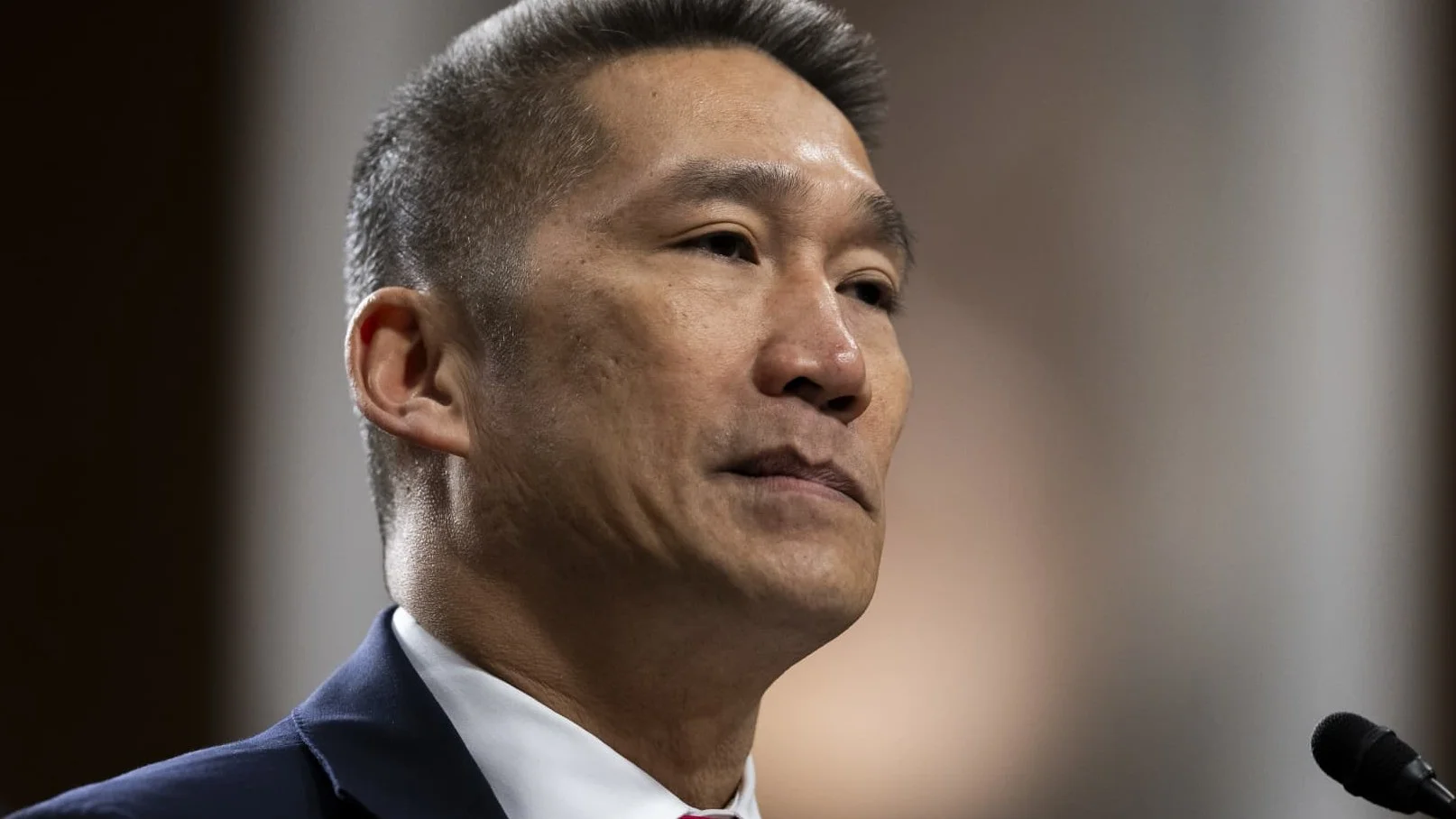
The US Navy fired expired munitions during its war with Iran after changing the ammunition condition codes that had marked them as unusable, the service’s acting top civilian official told senators on Tuesday.
Acting Navy Secretary Hung Cao disclosed the practice at his Senate Armed Services Committee confirmation hearing, answering a question from Sen. Deb Fischer, a Nebraska Republican, about whether the Navy was striking the right balance between expensive precision weapons and cheaper ones that can be produced in mass numbers.
“A lot of the munitions we used in Epic Fury, we were able to recode those,” Cao said, using the operation’s name. “They were Code Echo, Code Foxtrot, which means they’re expired.”

According to a Defense Logistics Agency manual, codes Echo and Foxtrot denote materiel that is currently unserviceable but can undergo limited restoration or repair. In plain terms, the Navy reclassified stock that had been written off, then fired it.
Cao, a retired Navy captain and former explosive ordnance disposal officer, compared the process to stretching food. “I came from a poor family,” he said. “Things like bread, doesn’t expire. You just rub some water on it and microwave for 15 seconds, and it’s good to go.”
What he did not say matters as much as what he did. Cao did not identify which munitions were recoded, how many were fired, or what fraction failed. Those gaps remain open, and no Navy document released so far fills them.
What Hung Cao Told The Senate About Expired Munitions
The disclosure, first reported by Business Insider and carried by CNBC, is the clearest on-the-record confirmation that nearly nine months of war have drawn US stockpiles down to the point where written-off inventory is being returned to service.

That sits awkwardly against statements from President Donald Trump. In August, after The New York Times reported that missile and interceptor supplies had fallen to dangerous levels, Trump wrote on Truth Social that the US had “massive amounts of ‘munitions,’ especially of certain types,” adding that “large amounts are being manufactured and shipped to the U.S. as needed.” The same month, chief Pentagon spokesman Sean Parnell told the Times the military had “everything required to strike at the time and place of the president’s choosing.” In an October interview with Time magazine, Trump called shortage reporting “mostly fake news,” while conceding some ammunition supplies were “a little bit lower.
The White House did not immediately respond to a request for comment, according to The Daily Beast.
A September Pentagon Inspector General report cited findings from the Office of the Under Secretary for Acquisition and Sustainment that wartime munitions expenditures had produced “strategic inventory shortfalls and revealed industrial base bottlenecks for munitions resupply.” That is a government document, not an anonymous leak, and it predates Cao’s testimony.
It also puts the recoding of expired munitions in a narrower frame than the bread analogy suggests. Restoring written-off stock is a stopgap. It does not rebuild a production line.
Why Expired Munitions And Production Numbers Tell Different Stories
Cao offered his own counterargument at the hearing: industrial capacity is expanding. He said Tomahawk cruise missile output had risen from roughly 125 a year “when I was in uniform” to “well above 60 every month” now, an annualised rate above 720. He said the military was also working to raise SM-6 production and bring in additional ammunition manufacturers.
Both claims can be true at once. Output can be climbing while current stocks remain thin, and a recoded missile is still a missile drawn from a finite magazine.
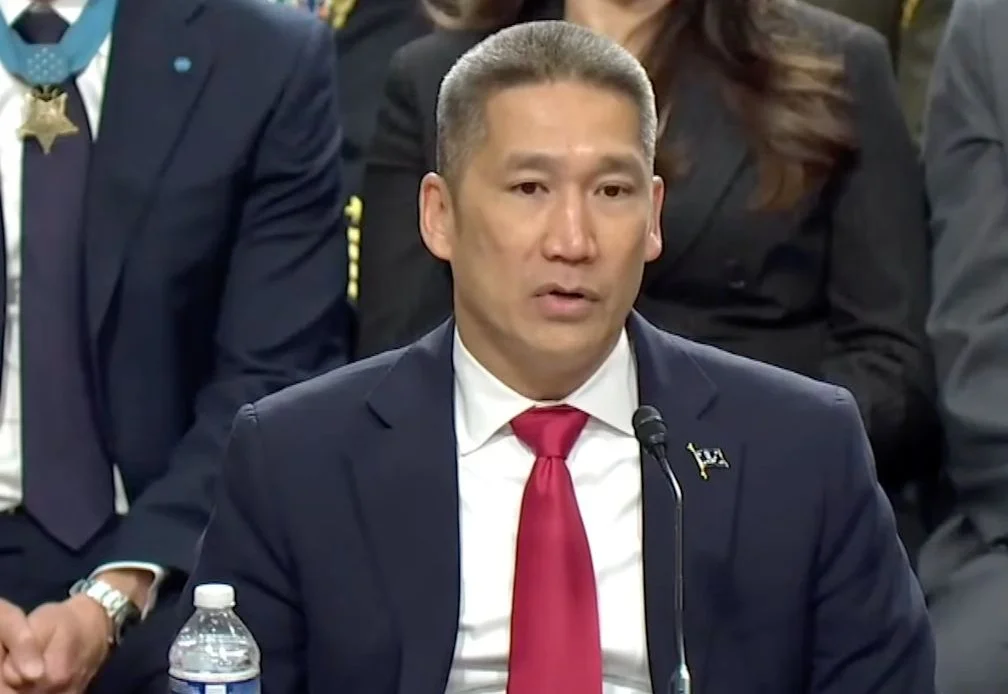
Senators pressed from other directions. Sen. Jack Reed, a Rhode Island Democrat, noted that “for the first time in many years, the United States has no forward-deployed carrier in the Pacific at this moment.” Cao acknowledged the war was “stressing our naval resources,” and said the Navy was accelerating unmanned surface vessels to relieve the 17 destroyers supporting the blockade of Iran’s ships.
The money is visible too. Cao appeared to agree with Sen. Elizabeth Warren’s estimate of roughly $32.5 million a day to sustain the blockade on Iranian ports. He told the committee the destroyer USS Gonzalez had a week of rations remaining, against his stated preference of never going below two weeks, while insisting ships had never run out of food. Asked by Sen. Mark Kelly about reports of sailors losing 45 pounds, Cao said food preferences might not suit some personnel. Kelly responded on X that “losing 45 pounds is more serious than just not liking the food.”
On mental health, Cao described eight suicide attempts across the USS Abraham Lincoln carrier strike group as “eight suicide mitigations” because personnel had intervened. Sen. Kirsten Gillibrand called the term an “insult.”
The Africa Angle That The Hearing Did Not Address
For African and global audiences, the most concrete link sits in reporting that surfaced around the hearing rather than in Cao’s testimony itself. The Wall Street Journal reports that the Navy can revive expired munitions but that a portion retain technical issues, and that refurbished Tomahawk missiles were used in last year’s US strikes on Islamic militants in Nigeria, with several of the missiles later found intact in civilian areas, as summarised by Yahoo News.
That detail has not been confirmed by the Navy, and Cao did not address it. If accurate, it shifts the recoding question from a budget argument into a reliability and civilian-harm argument. A missile that fails to detonate is not merely an accounting line. It is unexploded ordnance in a populated place, and a weapon that did not perform as designed.
It also matters for partners. Governments that host or depend on US security guarantees have an interest in whether American precision stock is deep enough to sustain a long campaign, and whether what remains is fully serviceable. The hearing produced no answer on either count.
What To Watch On Expired Munitions And The Iran War
Three tests follow from the disclosure. First, whether the Navy releases the condition-code data Cao described, converting a verbal admission into an auditable record. Second, whether the Senate demands it before confirming him; Cao needs an exemption because he left the military less than seven years ago. Third, whether the September inspector general finding is followed by a resupply plan with dates rather than rates.
Cao pledged that the entire Department of the Navy would achieve a clean financial audit by the end of the fiscal year, a standard the Pentagon has failed nine consecutive times, according to Reuters. The gap between pledges and verified output is the story. On expired munitions, the public record now holds one sworn admission, one inspector general finding, and a set of unanswered questions about what was fired, how much of it worked, and what is left.
Frequently Asked Questions
What did the acting Navy Secretary say about expired munitions?
Hung Cao told the Senate Armed Services Committee that the Navy recoded munitions marked Code Echo and Code Foxtrot, which he said means they are expired, and fired them during Operation Epic Fury against Iran. He did not say which munitions or how many were used.
What do condition codes Echo and Foxtrot mean?
A Defense Logistics Agency manual cited in reporting describes codes Echo and Foxtrot as materiel that is currently unserviceable but could undergo limited restoration or repair.
How does this compare with what the White House said about weapons stockpiles?
President Donald Trump said in August on Truth Social that the US had massive amounts of munitions and in October told Time that shortage reports were mostly fake news, while conceding some ammunition supplies were a little bit lower. The White House did not immediately respond to a request for comment on Cao’s testimony.
 Follow AFRILATEST on Google News
FIRST TIME REACTIONS:
Be the first to leave us a comment – US Navy Fired Expired Munitions in Iran War, Cao Says, down the comment section.
JOIN US ON OUR SOCIAL MEDIA:

About Clare Dominic
Clare Dominic is the Editor at AfriLatest. With a background in journalism and a passion for storytelling, she oversees the editorial process to ensure content is accurate, engaging, and relevant. Clare works closely with contributors to maintain the highest standards of journalistic integrity across all news, sports, and lifestyle coverage.
View all articles by Clare Dominic



World News
What’s in the Air You Breathe: Smog, Dust and Plastic
The air you breathe indoors carries microplastics; outdoors it carries smog. What the evidence confirms, what is only estimated, and who pays for the monitors.

What’s In The Air You Breathe: Two Crises, One Set Of Lungs
Two measurements, taken months apart on different continents, describe the same act.
Ahead of winter, air quality monitors recorded an Air Quality Index above 350 in several parts of New Delhi, a level classed as hazardous and tracked through IQAir, the monitoring platform cited by Al Jazeera. Separately, a French research team sampling three apartments in Toulouse found an average of more than 500 plastic fragments in one cubic metre of indoor air, and more than 2,200 inside the cabins of two cars.
The first number arrives as a public emergency. The second arrives as lifestyle advice about laundry. Both describe the air you breathe, and the distance between them is largely administrative. It reflects which instruments are deployed, where they are deployed, and who is expected to act on the results.
What The Air You Breathe Actually Contains
Air is mostly nitrogen and oxygen. The trouble sits in the remainder. Monitoring stations track six main pollutants, among them ozone, nitrogen dioxide and particulate matter, and the worst of them is PM2.5, particles 2.5 micrometres or less across, roughly 30 times thinner than a human hair and small enough to pass deep into the lungs and into the bloodstream.
The World Health Organization links outdoor and household air pollution to about seven million premature deaths worldwide each year, according to the Al Jazeera analysis. The strongest associations are with stroke, heart disease, chronic obstructive pulmonary disease, lung cancer and pneumonia. Exposure during pregnancy has been linked to premature birth and low birth weight.
Plastic forms a second, far less regulated layer. Most airborne microplastics come from textiles: clothing, upholstery, curtains, bedding. They are released by friction and heat, which is why tumble dryers do it so efficiently. A 2021 study comparing indoor and outdoor air in China found concentrations eight times higher indoors. In developed countries, people spend about 90% of their lives inside.

There is a biological layer underneath all of it. Stephan Schuster, research director at the Singapore Centre for Environmental Life Sciences Engineering at Nanyang Technological University, estimates a person inhales about 10,000 litres of air a day, and that this can carry a million microorganisms, bacteria and fungi, Illumina reports. His laboratory sequences airborne DNA from samples of less than half a nanogram.
Why Smog Gets Policy And Microplastics Get Behavioural Advice
The difference in remedy is stark, and it tracks the difference in diagnosis.
For smog, the sources are structural and attributable. India’s Ministry of Environment, Forest and Climate Change attributes 23% of Delhi’s winter pollution to vehicles and 20% to biomass burning, including farm stubble fires. Geography does the rest. The Indo-Gangetic Plain, which stretches across parts of Pakistan, northern India, Nepal and Bangladesh, is hemmed in by the Himalayas, with weak winter winds and a shallow layer of air, so pollution has nowhere to go. Winter also inverts the atmosphere: a warm layer sits on cooler air near the ground and traps it. The remedies proposed are municipal and regional, from low-emission zones to car-free days to fuel bans.
For indoor microplastics, the remedy is personal. “Microplastics are everywhere, and there’s no way you can avoid them,” Dana Barr, an exposure science professor at Emory University in Atlanta, told the BBC. “But there are ways that you can significantly reduce your exposure over time, and it’s mostly from behavioural change.”
The steps are concrete enough. Wash fuller loads and wash less often. Fit a washing-machine filter, which can cut up to 90% of microfibres from wastewater. Dry clothes outside when weather and access allow. Buy natural fibres, with the honest caveat that cotton requires substantially more water to produce than synthetics.
That advice is real and it works at the margin. It is not the same as closing a coal plant.

What Is Confirmed, What Is Estimated, And What Is Still Unmeasured
The figures on airborne microplastics carry heavier uncertainty than the headlines suggest, and the reliable habit is to separate the two.
Confirmed: microplastics are present in indoor air, and indoor concentrations exceed outdoor ones in the studies conducted so far. Jeroen Sonke, a biogeochemist at the French National Center for Scientific Research, used Raman microscopy to reach particles down to one micrometre for the first time, the size range that penetrates deepest into the lungs.
Estimated within wide ranges: one study found an individual in the US could be inhaling up to 22 million micro- and nanoplastics a year. Sonke’s team calculated that an infant may inhale between 19,000 and 75,000 particles a day in the 1 to 10 micrometre range, and an adult between 28,000 and 108,000. Those calculations rest on samples drawn from three apartments and two car cabins, and were taken largely in stagnant air.
Contested: the measurement itself. “There’s no gold standard approach for measuring microplastics, and there may never be,” Douglas Walker, an associate professor of environmental health at Emory College, told the BBC. Standard microscopes bottom out at around 20 micrometres. Scientists’ own clothing sheds into their samples. Even the coating on latex gloves has been found to influence results.
For smog, the data is denser and the intervention results are measured rather than modelled. Within three months of London’s Ultra Low Emission Zone launching in 2019, nitrogen dioxide at roadside monitoring sites in central London fell 19.6%, according to a University of Birmingham study. Paris held its first car-free day in September 2015; nitrogen dioxide fell by up to 40% in some areas, according to the monitoring agency Airparif. Krakow replaced more than 25,000 coal and wood-burning heating devices before banning solid fuels for home heating in September 2019, and average annual PM2.5 fell 40% between 2010 and 2021, a 2025 study found.
The African City Missing From The List
IQAir’s ranking of the 50 most polluted cities in 2025 places all of them in Asia, with 42 in India and Pakistan. Loni, on the outskirts of Delhi in Uttar Pradesh, topped the list at an average PM2.5 of 112.5 micrograms per cubic metre, more than 22 times the WHO recommended limit. Hotan in China, Byrnihat and New Delhi followed. The four Chinese cities named are in Xinjiang, where desert dust is a major source.
No African city appears. The Al Jazeera analysis does not state how many African cities were assessed, so the ranking cannot be read as evidence that African air is clean. It is a statement about where monitors are, and about how little is documented of the air you breathe across a continent of more than a billion people.
That gap matters because the region’s cities tend to combine the two exposures the sources treat separately: outdoor particulate from vehicles, generators and industry, and indoor particulate from cooking fuel. The WHO’s seven million figure counts both.
The analysis has to be explicit here. The absence of African metros from a pollution league table is a data question, not a health finding. The interventions with the strongest measured results, in London, Paris and Krakow, all sit in cities with dense monitoring networks and the enforcement capacity that follows from them.
The Big Picture
The practical overlap between the two literatures is narrower than it looks. For smog, the advice is a well-fitting N95 or similar mask outdoors, windows closed on high-pollution days, a HEPA purifier running indoors, and no strenuous exercise outside when the index spikes. Some of that carries over to indoor particles. None of it touches the source.
What the evidence supports is a hierarchy. Where monitors are dense and combustion is the driver, the measured gains came from regulation. Where exposure is diffuse and consumer-driven, the measured gains come from filters, laundry habits and material choices. The air you breathe does not recognise that distinction. The institutions that measure it do.
Frequently Asked Questions
What is PM2.5 and why is it considered the most harmful pollutant?
PM2.5 is particulate matter 2.5 micrometres or less in diameter, about 30 times thinner than a human hair. It travels deep into the lungs and can pass into the bloodstream, reaching organs including the heart and brain. The World Health Organization links outdoor and household air pollution to about seven million premature deaths a year.
Can household habits really reduce microplastic exposure?
Partly. Researchers point to fuller laundry loads, washing clothes less often, washing-machine filters that can cut up to 90% of microfibres from wastewater, drying clothes outside, and choosing natural-fibre garments. Emory’s Dana Barr describes the effect as significant over time but rooted in behavioural change, which is a different lever from regulating combustion.
Why were no African cities on the 2025 list of the 50 most polluted cities?
IQAir’s 2025 ranking placed all 50 cities in Asia, with 42 in India and Pakistan. The Al Jazeera analysis does not state how many African cities were assessed, so the absence reflects the reach of monitoring networks rather than evidence of clean air. It is a data gap, not a health finding.
FIRST TIME REACTIONS:
Be the first to leave us a comment – What’s in the Air You Breathe: Smog, Dust and Plastic, down the comment section.
JOIN US ON OUR SOCIAL MEDIA:
About Clare Dominic
Clare Dominic is the Editor at AfriLatest. With a background in journalism and a passion for storytelling, she oversees the editorial process to ensure content is accurate, engaging, and relevant. Clare works closely with contributors to maintain the highest standards of journalistic integrity across all news, sports, and lifestyle coverage.
View all articles by Clare DominicWorld News
New Zealand Jails Man In Trade-Based Money Laundering Case
New Zealand jailed a man for laundering drug proceeds via used-car exports to Nigeria, its first trade-based money laundering prosecution.

A New Zealand court has sentenced a 46-year-old man to three years and four months in prison for laundering the proceeds of drug crime through a second-hand vehicle export business that shipped cars and spare parts to Nigeria. The Auckland District Court handed down the sentence on Friday after the man pleaded guilty to three money laundering charges and one representative charge of knowingly providing false export information. The case is the first prosecution to arise from a trade-based money laundering investigation by New Zealand Customs, and that detail carries more weight than the prison term itself.
The defendant was not named in the account published by Galaxy TV. A co-defendant is still facing court proceedings, so the file is not closed.
How Operation Ozark Moved Money From Auckland To Nigeria

Customs codenamed the inquiry Operation Ozark. It ran between November 2020 and April 2024 and, according to investigators, used a second-hand vehicle and spare parts business to disguise cash linked to drug offences. Cash allegedly tied to drug activity bought used vehicles and parts inside New Zealand. Those goods left the country in 101 separate shipments to Nigeria, were sold there, and the proceeds were deposited into an overseas business account.
Customs put the traced total at no less than NZ$459,600 transferred to Nigerian bank accounts. A joint search of the man’s Auckland home by Customs and police turned up at least NZ$100,000 in cash. The paperwork was rigged as well: false export declarations understated the value of some vehicles and gave incorrect manufacturing years in others.
The same operation, run with international partners, intercepted 12 packages containing about 22.6 kilogrammes of methamphetamine and 34 grammes of cocaine. The parcels were stopped both inside New Zealand and overseas. Customs describes what it uncovered as an alleged international drug trafficking network. The published account does not state what charges, if any, followed from those seizures.
Why Trade-Based Money Laundering Is Harder To Police Than Cash
Nigel Barnes, acting manager of Customs investigations, described a closed loop. “Operation Ozark exposed an international cycle of offending, involving drugs destined for New Zealand, criminal funds used to buy goods here, vehicles and parts exported to Nigeria, and the proceeds deposited into overseas accounts,” he said. “Profit is the lifeblood of transnational and serious organised crime.”
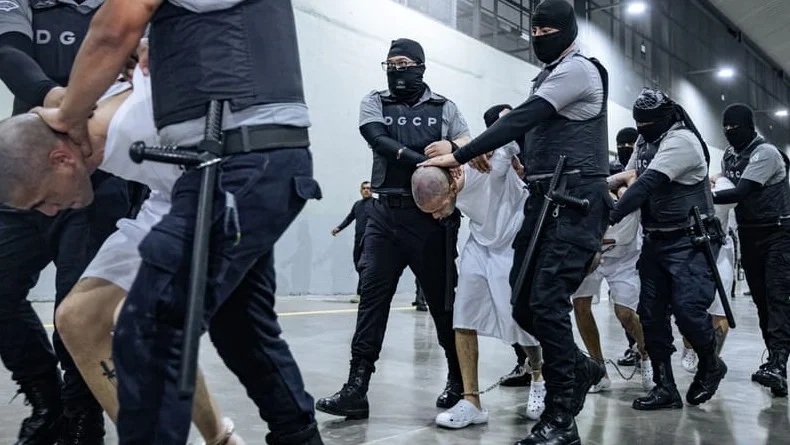
The structural problem is visibility. Bulk cash crossing a border is a physical event that dogs, scanners and bank reporting can catch. A container of used cars is an ordinary commercial event. Trade-based money laundering hides the value inside the invoice rather than the cargo. That is why the false declarations matter: understating a vehicle’s value is not a clerical slip here, it is the mechanism. Barnes said Customs relies on trade records, border information and financial intelligence, alongside domestic and international partners, to find the anomalies.
Not everything about the scheme is public. The available account does not explain how the New Zealand and Nigerian sides of the invoicing reconciled, nor whether the vehicles sold in Nigeria at a genuine market price or at an inflated one designed to shift value. Those gaps matter to anyone trying to copy the detection method.
One Launderer Jailed While Washington Pardoned A Crypto Founder
The contrast with the United States is stark. As BBC reported, President Donald Trump pardoned Changpeng Zhao, founder of Binance, who was sentenced to four months in prison in April 2024 after pleading guilty to violating US money laundering laws. Binance itself pleaded guilty and was ordered to pay $4.3bn after a US investigation found it helped users bypass sanctions.
“Binance turned a blind eye to its legal obligations in the pursuit of profit,” then-Treasury Secretary Janet Yellen said when the plea was announced in 2023. “Its wilful failures allowed money to flow to terrorists, cybercriminals, and child abusers through its platform.” White House Press Secretary Karoline Leavitt called Zhao’s prosecution “an overly prosecuted case by the Biden administration” and said Trump had used his constitutional authority to correct overreach.
The pardon drew objections from inside the president’s own coalition. Palantir co-founder Joe Lonsdale wrote that Trump had been “terribly advised” and that “it makes it look like massive fraud is happening around him in this area”. Senator Elizabeth Warren called the decision a “kind of corruption”. Asked about it, Trump appeared not to know who Zhao was, asking: “Are you talking about the crypto person?” He later said the pardon came at the “request of a lot of good people.
Set the two cases side by side and the enforcement picture is uneven. An operator who moved a few hundred thousand dollars through used cars goes to prison in Auckland. The founder of the world’s largest crypto exchange, whose company paid a multibillion-dollar penalty over sanctions and money laundering failures, receives a presidential pardon. Both outcomes sit within the law. Only one is likely to deter.

What Nigeria’s End Of The Chain Still Leaves Open
The New Zealand case establishes flow in one direction: drugs into New Zealand, criminal cash into vehicles, vehicles into Nigeria, proceeds into an overseas account. What it does not establish is what happened at the Nigerian end. The published account does not say whether Nigerian authorities were asked to trace the NZ$459,600, whether the receiving accounts were frozen, or whether anyone in Nigeria faces investigation. No Nigerian agency is quoted in the file.
Nigeria features in other drug enforcement files. Pakistan’s Anti-Narcotics Force said it arrested 20 Nigerian nationals in Islamabad and Rawalpindi and recovered 4.432 kilogrammes of cocaine, methamphetamine and cannabis, according to Galaxy TV. Those are allegations, and two of the suspects were already on bail in an earlier narcotics case. The two files are unrelated. The parallel is narrower: destination and transit countries in Africa carry a larger share of the enforcement burden than the casework usually reflects.
The Bigger Picture
The recorded detail here is small — one man, NZ$459,600, 101 shipments, three years and four months. The mechanism it documents is not small. Trade-based money laundering turns ordinary trade routes into return channels for criminal cash, and it scales wherever customs agencies lack the data-matching capacity to test declared values against real ones.
New Zealand’s answer so far is prosecution plus intelligence sharing. Whether that reduces reoffending is a separate question. DW reported that the Serco-run prison in Auckland claims a 13.6% two-year reoffending rate, against 34% for government-run prisons, a figure that speaks to what happens after sentencing rather than during investigation. The trade-based money laundering case secures the conviction. It does not answer whether the accounts in Lagos were ever examined, and that omission is where the next chapter of this story sits.
Frequently Asked Questions
What was the New Zealand man sentenced for?
A 46-year-old man was sentenced at Auckland District Court to three years and four months in prison after pleading guilty to three money laundering charges and one representative charge of knowingly providing false export information. Customs said cash linked to drug offences bought used vehicles and parts in New Zealand, which were exported to Nigeria and sold, with proceeds deposited into an overseas business account.
How much money was traced in Operation Ozark?
New Zealand Customs said at least NZ$459,600 was transferred to Nigerian bank accounts across 101 shipments between November 2020 and April 2024. A joint search of the man’s Auckland home by Customs and police also found at least NZ$100,000 in cash.
Why is this called trade-based money laundering?
Because the value was moved through legitimate commercial shipments rather than bulk cash. Falsified export declarations understated vehicle values and gave incorrect manufacturing years, so the invoice rather than the cargo carried the hidden value. Customs said this was its first prosecution arising from a trade-based money laundering investigation.
FIRST TIME REACTIONS:
Be the first to leave us a comment – New Zealand Jails Man In Trade-Based Money Laundering Case, down the comment section.
JOIN US ON OUR SOCIAL MEDIA:
About Clare Dominic
Clare Dominic is the Editor at AfriLatest. With a background in journalism and a passion for storytelling, she oversees the editorial process to ensure content is accurate, engaging, and relevant. Clare works closely with contributors to maintain the highest standards of journalistic integrity across all news, sports, and lifestyle coverage.
View all articles by Clare DominicWorld News
Jamaica vs Mexico: Marquez Winless Run Hits Five
Jamaica vs Mexico ended 3-2 in Kingston, leaving Rafael Marquez winless in five matches and the Reggae Boyz a draw from the Nations League semifinals.

Rafael Márquez is the head coach of Mexico’s national team, and five matches into the job he does not have a win. Jamaica beat Mexico 3-2 at the National Stadium in Kingston on Saturday, a result that leaves the Reggae Boyz needing only a draw in Tuesday’s return leg in Monterrey to reach the CONCACAF Nations League semifinals, per the Associated Press match report. The Jamaica vs Mexico quarterfinal has stopped being a formality.
The scoring sequence is documented and not in dispute. Jesús Gallardo’s own goal put Jamaica ahead in the 28th minute, Renaldo Cephas doubled the lead in the 46th, and Richard King converted a penalty in the 63rd. Gilberto Mora pulled one back in the 70th and Julián Quiñones scored in the 81st.
The defeat extended Mexico’s winless run to five matches under Márquez, who replaced Javier Aguirre after the World Cup. The AP report describes it as one of the worst managerial starts in the history of the Mexican national team.

What The Jamaica vs Mexico First Leg Confirmed
Three claims about this tie sit in different evidentiary categories, and the distinction matters more than the scoreline.
The result is confirmed: a 3-2 home win, five goal events, a two-goal lead cut to one. The lineups are confirmed, published before kickoff by World Soccer Talk — both sides in a 4-3-3, Jahmali Waite in goal for Jamaica, Raúl Rangel for Mexico, Rudolph Speid and Márquez in the technical areas.
The forecast is not. Sports Illustrated predicted Jamaica 0-1 Mexico, reasoning that “the talent disparity is simply too significant to ignore.” That was a projection, not a fact, and Kingston answered it.
SI also documented Jamaica’s injury list in detail: goalkeeper and captain André Blake, winger Leon Bailey and striker Bailey Cadamarteri were all unavailable, along with Dearai Gray, Kevon Lambert and Tyreece Campbell. The depleted squad won anyway. A structural explanation that fails on the night is not an explanation; it is a hypothesis with a bad record.
Continuity Was The Whole Point Of Márquez’s Appointment
Márquez arrived with a defender’s credibility — a former Barcelona centre-back — and two years inside the setup as Aguirre’s assistant. That tenure ended with a Round of 16 exit against England at the World Cup.
Nine of the eleven Mexican starters from that England defeat were back in the XI on Saturday. The retention was deliberate, and it is the most revealing fact in the tie. A coach promoted from within inherits institutional knowledge and the unresolved problems of the previous cycle in the same package.
The team sheet showed what Márquez trusted: Rangel behind Israel Reyes, César Montes, Johan Vásquez and Gallardo; Mora, Luis Romo and Érik Lira in midfield; Santiago Giménez, Roberto Alvarado and Quiñones up front. Montes, Mora and Quiñones had all returned from injury, according to SI, which framed their availability as the tie’s decisive boost. Two of the three scored. Mexico still lost.
Why Kingston Travels Beyond Concacaf
The historical record favored Mexico heavily and honestly. SI noted El Tri had won 23 of 29 Jamaica vs Mexico meetings and was unbeaten in the last six before Saturday. That is verified history. It also carried no predictive weight once the match started.
For audiences in Africa and elsewhere outside the region, the mechanism is familiar. Regional heavyweights get described in the language of inevitability — bigger squad pool, stronger league exports, deeper tournament habit — and that language is mistaken for a result. Jamaica’s squad is a counter-example with a paper trail: Anderson at Blackpool, Clarke at Walsall, Cephas at Qarabağ, Dixon scoring in the Serbian league. None of that reads as a side that should beat Mexico 3-2. All of it describes a team organized enough to do it.

Jamaica has not qualified for a World Cup since France ’98 and sits at No. 66 in the rankings. Those numbers are accurate and, on this evidence, insufficient.
What Monterrey Requires, And What The Record Leaves Open
The second leg of the Jamaica vs Mexico tie is scheduled for Tuesday, Nov. 17, at Estadio Monterrey, per the Star-Telegram’s tournament guide. Jamaica advances with a draw. Mexico must win by two goals to take the tie outright; a one-goal Mexico win levels the aggregate, and the published previews reviewed for this article do not specify whether extra time or penalties follow. That procedural detail is missing from the record and should not be assumed.
The aggregate winner meets the United States or Haiti in the semifinals, with the U.S. leading that tie 6-0 after the first leg. The semifinal is set for SoFi Stadium in Inglewood, California, in March.
Mexico entered as the defending Nations League champion, having won the 2024-25 edition; the U.S. has taken three of the four tournaments played. That is the standard against which Márquez will be measured, and it is a standard set by a previous squad.
Legacy, Or Five Matches
Márquez’s coaching legacy now depends on a two-goal margin in Monterrey. Win by two and the Kingston defeat becomes an away leg absorbed; win by one and the tie goes somewhere the published record does not describe; fail to win and the argument that a promoted assistant could convert a World Cup squad into a contender reduces to a five-match sample with no victories in it.
The Jamaica vs Mexico return leg will not settle whether Márquez is a good coach. It will settle whether the continuity project gets a second window to prove anything at all.
Frequently Asked Questions
Who won the Jamaica vs Mexico Nations League quarterfinal first leg?
Jamaica won 3-2 at the National Stadium in Kingston, per the Associated Press. Goals came from a Jesús Gallardo own goal in the 28th minute, Renaldo Cephas in the 46th and a Richard King penalty in the 63rd, with Gilberto Mora and Julián Quiñones replying for Mexico.
What does Mexico need in the second leg in Monterrey?
Mexico must win by two goals to advance outright. A one-goal win levels the aggregate, and the published previews reviewed do not state whether extra time or penalties would follow. Jamaica advances with a draw.
Is Rafael Márquez still without a win as Mexico coach?
Yes. The Kingston defeat extended Mexico’s winless run to five matches under Márquez, who succeeded Javier Aguirre after the World Cup. The AP described it as one of the worst managerial starts in the Mexican national team’s history.
FIRST TIME REACTIONS:
Be the first to leave us a comment – Jamaica vs Mexico: Marquez Winless Run Hits Five, down the comment section.
JOIN US ON OUR SOCIAL MEDIA:
About Clare Dominic
Clare Dominic is the Editor at AfriLatest. With a background in journalism and a passion for storytelling, she oversees the editorial process to ensure content is accurate, engaging, and relevant. Clare works closely with contributors to maintain the highest standards of journalistic integrity across all news, sports, and lifestyle coverage.
View all articles by Clare Dominic-

 Car Reviews2 weeks ago
1955 Chevy Bel Air Restomod: What SEMA Really Proves
-
Savings & Investing3 weeks ago
Hidden Medicare Fees Draining Your Retirement Savings
-
Car Reviews4 weeks ago
Ford Bronco ORV Package: $18,995 Ownership Reality Check
-
JAMB & WAEC4 weeks ago
JAMB Admission Process: What Changed And What Is Still Talk
-
Movies & TV4 weeks ago
Silo Season 1 Ending Explained: What the Showrunner Said
-
Movies & TV3 weeks ago
Wizkid Starboy Desire Ft Banky W Shaydee: Fact Or Fan Fiction?