Nigeria News
How to Invest in Nigeria: What Three Signed Deals Change
How to invest in Nigeria, read through the records: a $700bn mining framework, a deep offshore tax order and $5.79bn in World Bank-mobilised finance.


Dele Alake is Nigeria’s Minister of Solid Minerals Development, and the file he carries is the country’s most direct investment pitch. On the sidelines of the United Nations General Assembly in New York, Alake announced that Nigeria and the United States had signed an agreement to “deepen” American investment in Nigerian mining. The document was signed on the Wednesday; he announced it on the Thursday, as DW reported.
For anyone asking how to invest in Nigeria, that signature is the clearest new signal in the mining file. Alake put a number on the estate: mineral resources valued at about $700 billion. The framework’s stated scope covers geological data and exploration, mineral development and processing, infrastructure, and technical capacity.
What it does not do is name a single project. Alake said the agreement “would be used to identify viable projects,” which is an admission that the list does not yet exist. No disbursement figure was published either.
How to Invest in Nigeria Mining Begins With a Framework, Not a Cheque
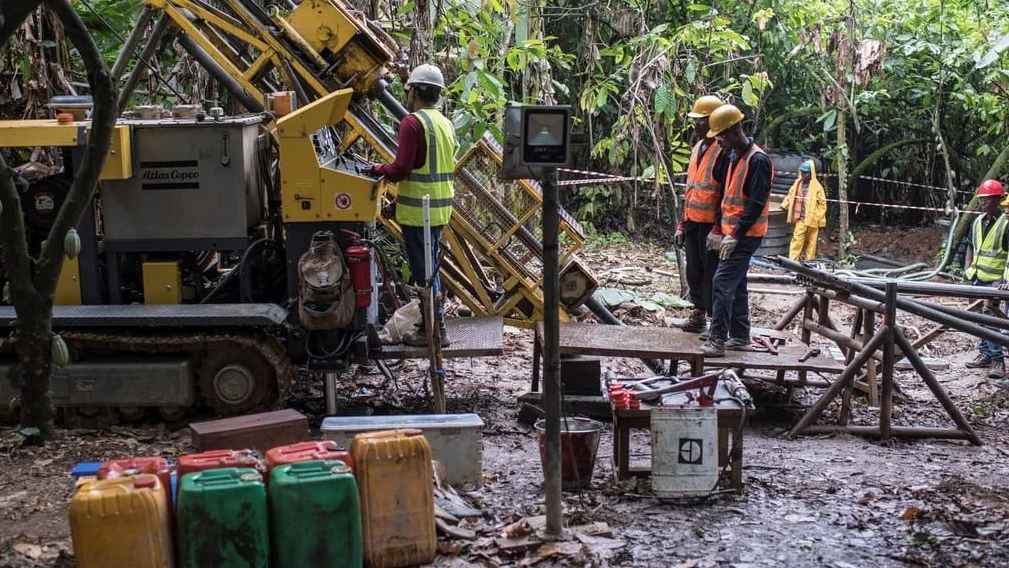
Nigeria’s known deposits include lithium, gold, tin, gemstones, iron ore and phosphate. Lithium carries the sharpest commercial edge because it feeds the battery supply chains behind the global energy transition. Most of these minerals have until now left the country as raw ore.
“Nigeria cannot remain a source of raw materials while others capture most of the value,” Alake said. “We want more local processing, quality jobs, stronger skills and greater opportunities for Nigerian businesses.”
That is the policy claim, and the affected parties are specific: artisanal and industrial miners, refining firms that would need reliable power and feedstock, and host communities that carry the ground-level cost of extraction. DW reported that Nigeria’s mining sector remains mired in safety and environmental concerns. That sentence describes operating risk no signature removes, and it matters more to a plant manager than the $700 billion valuation does.
The Deep Offshore Order Trades Negotiation for Eligibility Rules
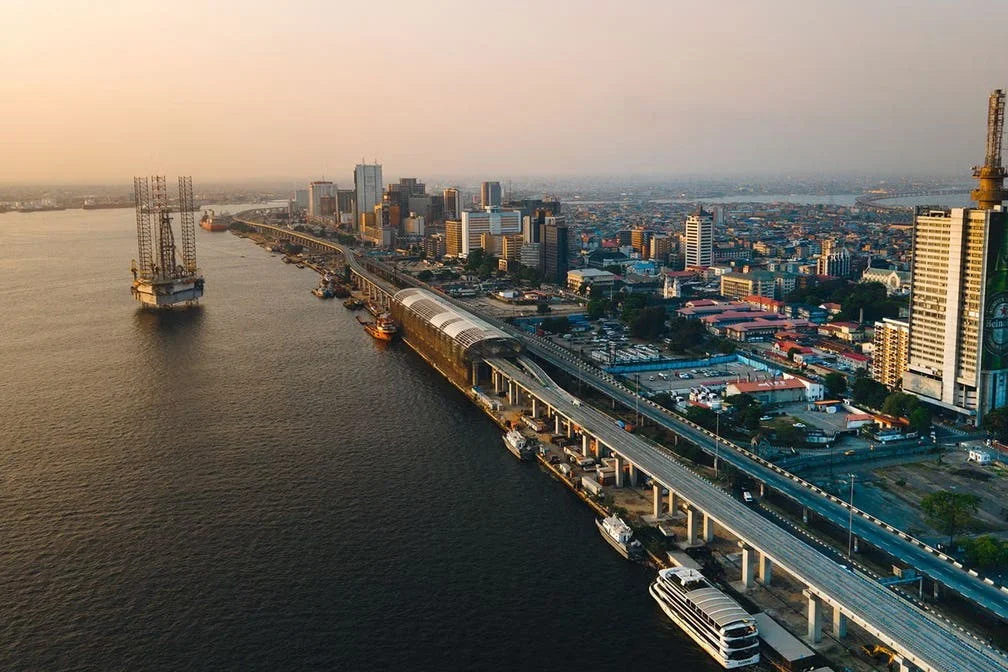
Mining is not the only file that moved. On August 11, 2026, President Bola Ahmed Tinubu approved the Deep Offshore Oil and Gas Projects Incentives (Tax Remission) Order, 2026, according to a State House statement issued by his special adviser on information and strategy, Bayo Onanuga.
The order is designed to unlock up to US$50 billion in deep offshore investment and restart capital-intensive developments stalled for decades, beginning with the roughly US$10 billion Bonga South West project. The mechanism is the part that matters: it replaces project-by-project negotiations with published eligibility criteria, and it enables NNPC Limited to amend eligible Production Sharing Contracts.
Olu Arowolo-Verheijen, the President’s special adviser on oil and gas, said projects qualifying under the framework will “maximise execution within Nigeria wherever commercially and technically feasible,” pointing to engineering, fabrication, marine logistics and technical services.
Tinubu framed the reform around certainty. “The countries that attract long-term investment are not necessarily those with the greatest natural resources,” he said. “They are the ones that provide the greatest certainty.”
That claim is testable, and the test is a final investment decision on Bonga South West. An order creates eligibility. A sanction creates spending.
Where the Smaller Cheques Are Actually Moving
The most documented capital flows in the Nigerian investment case are not in minerals at all. The World Bank Group reported mobilising up to $5.79 billion in private financing in fiscal year 2026, and its Nigeria components are itemised.
The Fostering Inclusive Finance for MSMEs in Nigeria program, known as FINCLUDE, pairs a $500 million package from the International Bank for Reconstruction and Development and the International Development Association with risk-sharing tools. It targets more than 250,000 micro, small and medium enterprises, with 30 percent of financing directed to women-led businesses, and is expected to mobilise nearly $1.89 billion in private financing while supporting an estimated 850,000 direct and indirect jobs, per the World Bank.
In agriculture, IFC mobilised $1.02 billion for Dangote Industries and $282.5 million for Indorama through refinancing and syndicated financing. The two projects hold an aggregate production capacity of 6.8 million metric tons per year of fertiliser and reach more than 10 million smallholder farmers. In telecoms, IFC anchored a $1.2 billion bond issuance by IHS Towers, drawing more than $1.1 billion from private investors.
Downstream, the movement is physical rather than contractual. Fynefield Petroleum, a subsidiary of Rainoil Limited, opened three filling stations — on Ikot Ekpene/Umuahia Road, on Inyang Street in Calabar, and on Ikom/Obudu Road — and received recognition on November 11 from the Cross River State Commissioner for Commerce and Industry, Dr Abigail Duke Orok, ThisDay reported. General Manager Harold O’Neill said the award “further strengthens our resolve to deepen our contributions to Nigeria’s energy sector.”
Three stations are not a national trend. They are a data point about where private capital still goes readily: distribution assets with fast cash cycles and visible demand.
The Evidence Test for How to Invest in Nigeria
For a household or a business, the practical answer to how to invest in Nigeria is that the entry points now arrive with documents attached, and the documents differ in strength. Mining has a signed framework, a $700 billion valuation and no published project list. Deep offshore has eligibility criteria and one named first project. MSME finance has a $500 million package, a 30 percent women-led target and a defined intermediary structure.
That gap between an order and a disbursed naira is where the announcements separate from the outcomes. Fynefield’s stations are open and trading. Bonga South West is not yet sanctioned. Alake’s $700 billion describes what is in the ground, not what has been committed to it.
Frequently Asked Questions
What did the Nigeria-US mining agreement actually commit to?
Nigeria’s Minister of Solid Minerals Development, Dele Alake, said the framework covers geological data and exploration, mineral development and processing, infrastructure, and technical capacity. He said it would be used to identify viable projects. No project list or funding amount was published with the announcement.
Who is affected by the Deep Offshore Tax Remission Order, 2026?
The order, approved by President Bola Ahmed Tinubu on August 11, 2026, replaces project-by-project negotiations with transparent eligibility criteria and enables NNPC Limited to amend eligible Production Sharing Contracts. It is aimed at unlocking up to US$50 billion in deep offshore investment, starting with the roughly US$10 billion Bonga South West project.
Which parts of Nigeria’s investment case have documented money behind them?
The World Bank Group reported mobilising up to $5.79 billion in private financing in fiscal year 2026. That includes a $500 million IBRD and IDA package under FINCLUDE for more than 250,000 MSMEs, $1.02 billion mobilised for Dangote Industries and $282.5 million for Indorama, and a $1.2 billion IHS Towers bond issuance that drew more than $1.1 billion from private investors.
 Follow AFRILATEST on Google News
FIRST TIME REACTIONS:
Be the first to leave us a comment – How to Invest in Nigeria: What Three Signed Deals Change, down the comment section.
JOIN US ON OUR SOCIAL MEDIA:

About Rosabella Eboh
Rosabella Eboh is an author at AfriLatest. With a passion for writing and a flair for creativity, she contributes original content and unique perspectives to the platform. Rosabella focuses on human-interest stories, cultural trends, and in-depth feature reporting.
View all articles by Rosabella Eboh
Nigeria News
N31.5trn OMO Maturities Test Nigeria’s Rate Cuts
N31.55trn in OMO maturities hits Nigeria’s banks in Q4 2026. FMDA data explains why the CBN’s 350bp cut left lending rates at 29-35%.

The Central Bank of Nigeria walks into the final quarter of 2026 holding two numbers it has not reconciled. Its benchmark policy rate sits at 23 percent after a 350-basis-point cut at the September Monetary Policy Committee meeting. At the same time, N31.55 trillion of its own Open Market Operations bills fall due before the year closes.
The Financial Markets Dealers Association, in its November 2026 report State of Nigeria’s Financial Markets Q3 2026, calls those OMO maturities the single largest liquidity event of the quarter. The figure sits alongside N5.43 trillion in maturing Treasury bills, N1.76 trillion in Federal Government bond coupons and N217.5 billion in corporate commercial paper obligations.
What happens next turns less on the September announcement than on one operational choice: how much of that cash the CBN rolls over, and how much it lets sit in the banking system.
The Stance Behind The OMO Maturities
The central bank’s current position is looser than it was three months ago. September’s meeting cut the Monetary Policy Rate to 23 percent and lowered the Standing Deposit Facility rate from 22 percent to 20 percent. The Standing Lending Facility sits at 23.5 percent, leaving a corridor of 3.5 percentage points.
The banking system did not tighten into that cut. Average daily liquidity was N4.40 trillion in the third quarter, down from N4.86 trillion in the preceding quarter but still a surplus. The FMDA expects that surplus to hold overnight rates near the 20 percent deposit rate through the fourth quarter. A cash shortage would push them toward 23.5 percent instead.
The Cut That Never Reached The Loan Desk
Something verifiable did happen after the easing. Almost nothing changed at the lending desk. Average maximum lending rates across several sectors stood between 29 percent and 35 percent in October, the month after the cut.
That gap is the part of the story the headline rate hides. A trader financing stock, or a small firm borrowing for equipment, does not transact at 23 percent. They transact at whatever their bank quotes, and those quotes barely moved.
Two forces hold them up. The first is sterilisation. If the CBN absorbs the maturing cash through fresh auctions, interbank liquidity shrinks and money market rates stay put. The second is the federal government’s own appetite for naira debt.
Why N31.5trn In OMO Maturities Sets The Q4 Price
Treasury bill yields already show where investors think rates are heading. The 364-day stop rate fell from a peak of 17.70 percent in July to 15.89 percent at the September 23 auction, and held that level on November 11. Its true yield of roughly 18.9 percent sits below the 20 percent SDF rate, meaning buyers accepted a thinner return for liquid paper.
The scale of the OMO maturities is what makes the rollover call consequential. Allow a large share of that N31.55 trillion to stay in circulation and demand for government securities and equities firms up. Sterilise it aggressively and the cash available to financial institutions falls, slowing any decline in money market rates.
The fiscal side is not waiting. Net domestic borrowing reached N20.32 trillion by September 30, or 110 percent of the government’s N18.4 trillion full-year plan. It then sold N3.52 trillion in bonds during October and November. That supply competes directly with the CBN’s effort to pull yields down, and it caps how far bond yields can fall even as liquidity returns.
Equities absorbed part of the overflow. The Nigerian Exchange All-Share Index gained 9.5 percent in the third quarter, taking its year-to-date return to 61.4 percent at the end of September. Market capitalisation rose 10.9 percent to N163.1 trillion. The rally is domestically funded: domestic investors accounted for 92.9 percent of equity transactions in Q3, while foreign participation slipped to 7.1 percent from 11.3 percent in the previous quarter. Pension funds, with assets of N31.8 trillion in August and N17.8 trillion in federal government securities, remain the deep pocket that could shift allocation if yields keep sliding.

Naira, Reserves And The 2027 Election Calendar
The currency has not been a passive observer. The naira appreciated 3.8 percent on the official market to N1,329.16 per dollar at the end of September. Renewed dollar demand weakened it in November, and the FMDA recorded the parallel-market premium widening to 5.4 percent in early November.
External reserves fell by $508 million between October 30 and November 18, to $54.71 billion. The report flags the January 2027 election as a point where foreign portfolio investors could raise dollar demand.
Confidence is a separate variable, and it can move faster than any auction. On 1 September 2026 a false claim that OPay was shutting down its Nigerian operations spread online, urging customers to withdraw their money. The fintech, which says it has almost 50 million customers, held a press conference the next day; chief operating officer Dotun Daniel Adekunle said transactions were running normally and management had taken no decision to close (BBC Pidgin). A payment company is not a bank, but the episode showed how quickly a rumour can move money through this system.
For households, the two price signals point in opposite directions. Dangote Petroleum Refinery cut its petrol gantry price to N1,070 per litre through consortium marketers, down N60 from the N1,130 announced on November 18 and the lowest since July (BusinessDay). Fuel costs are easing. Credit costs are not.
What The OMO Maturities Will Tell Us By December
The FMDA lists four things to watch: the rollover of OMO maturities, the direction of Treasury bill yields, foreign portfolio flows and the planned launch of the repo market. It also expects progress on a non-deliverable forwards market before year-end, with swaps and options prepared for a possible first-quarter 2027 launch.
For a manufacturer paying 30 percent on working capital, none of that is abstract. September’s decision changed the central bank’s stated price of money. Whether the OMO maturities are rolled over or released will decide what that money actually costs in the first quarter of 2027.
The report itself sets the frame: the fourth quarter will be shaped by three competing forces, the CBN’s liquidity management, the government’s borrowing appetite and the naira’s ability to withstand renewed foreign exchange demand. Two of those three sit outside the central bank’s control.
Frequently Asked Questions
How much is maturing in Nigeria’s financial markets in Q4 2026?
The FMDA puts OMO maturities at N31.55 trillion, alongside N5.43 trillion in Treasury bills, N1.76 trillion in Federal Government bond coupons and N217.5 billion in corporate commercial paper obligations.
Did the September 2026 rate cut lower borrowing costs for Nigerian businesses?
Not measurably. The Monetary Policy Rate was cut by 350 basis points to 23 percent in September, but average maximum lending rates across several sectors were still between 29 percent and 35 percent in October.
Why do OMO maturities matter for the naira and equities?
How the CBN handles the maturing bills decides how much cash stays in the banking system. A large rollover release could firm up demand for government securities and equities, while aggressive sterilisation limits cash for financial institutions. The FMDA also flags foreign portfolio dollar demand ahead of the January 2027 election as pressure on the naira.
FIRST TIME REACTIONS:
Be the first to leave us a comment – N31.5trn OMO Maturities Test Nigeria’s Rate Cuts, down the comment section.
JOIN US ON OUR SOCIAL MEDIA:
About Rosabella Eboh
Rosabella Eboh is an author at AfriLatest. With a passion for writing and a flair for creativity, she contributes original content and unique perspectives to the platform. Rosabella focuses on human-interest stories, cultural trends, and in-depth feature reporting.
View all articles by Rosabella EbohNigeria News
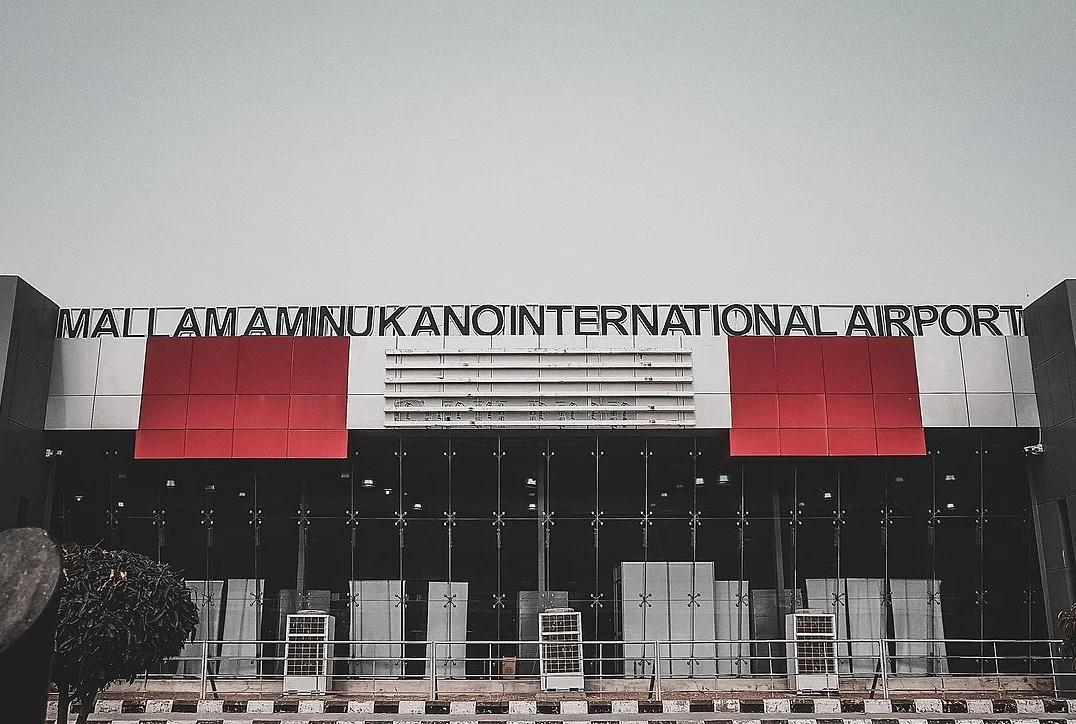
Mallam Aminu Kano International Airport: Drugs, Cash, Runway
Mallam Aminu Kano International Airport seized 580,000 unregistered medicines, undeclared cash and cannabis in separate raids. What the records confirm.

Nigeria Customs officers at the Mallam Aminu Kano International Airport have handed more than 580,000 unregistered medicines to NAFDAC, the food and drug regulator. For a reader in Kano, that is not a customs statistic. It is the gap between a foreign factory floor and the shelf of a chemist in Sabon Gari.
The Kano/Jigawa Area Command of the Nigeria Customs Service said the consignment was intercepted on 9 June 2026 at the SAHCO Shed of the airport. A joint examination with the National Agency for Food and Drug Administration and Control confirmed the products carried no mandatory registration or certification for importation and distribution in Nigeria.
According to Punch, the haul comprised 575,440 tablets of various medicaments, 5,415 injections, 1,075 bottles of eye drops and 243 inhaler canisters. The handover took place at the Customs House in Bompai, Kano, with Acting Area Controller Deputy Comptroller Usman Adamu signing off and NAFDAC’s Azik Kanadi, an assistant director in the Ports Inspection Directorate in Kano, receiving.
What The Handover Document Does And Does Not Establish
The confirmed facts are narrow and specific: the date of interception, the pharmacy-level breakdown of the consignment, the joint Customs-NAFDAC examination, and the transfer of custody. Those are on the record in the service’s own statement posted on its X account.
What is not on the record is equally important. Neither account names the country of origin, the manufacturer, the importer of record, or the flight the goods arrived on. No arrest was announced. NAFDAC has not said whether the items will be destroyed, returned to sender, or tested for substandard composition.
Adamu warned importers and distributors to desist, and said the command would intensify surveillance. Kanadi said drugs that have not gone through regulatory evaluation pose serious health risks. Both are commitments about future conduct, not findings about this consignment.
Why Mallam Aminu Kano International Airport Keeps Appearing In Seizure Files
Look at the enforcement record across agencies and a pattern holds. The airport is not only a passenger gateway. It is a filter, and its busiest filter lane faces Saudi Arabia.
The Guardian reported on 11 March 2026 that the same Kano/Jigawa command intercepted an outbound traveller with $106,500 and another with 134,256 Saudi Riyals, both undeclared. Adamu described that as a money-laundering offence under Nigerian law and said the exhibits and suspects were handed to the EFCC for prosecution. A separate outbound passenger was stopped on 18 February 2026 with 22.80kg of silver metal bars concealed in baggage and no export document, an act Customs said breached Section 55(f) of the NCS Act 2023.
The National Drug Law Enforcement Agency has worked the same corridor. Its statement, carried by The Nigerian Voice, records the interception of Fatimah Ahmad on 16 October during outward clearance of an Ethiopian Airlines flight to Jeddah via Addis Ababa. A search found 511.75 grams of cannabis concealed in a gallon of palm oil. Her cousin, Abubakar Yahaya, was arrested at the airport car park after she told investigators he gave her the gallon. That claim is an allegation, untested in court.
Two cautions belong here. The NDLEA release gave dates without a stated year, which leaves the timeline unverifiable against this year’s calendar. And the agency’s Kano State command separately seized 30,100 tramadol tablets on the Zaria-Kano Road on 13 October; no public document links that land haul to any airport consignment, and it should not be presented as if one does.
The structural difference is worth stating plainly. Lagos ports handle volume, mostly containerised cargo cleared through manifests. Kano handles people, and people carry. Concealment inside a palm oil gallon or a traveller’s baggage defeats manifest-based screening entirely, which is why body-carried seizures cluster at airports on the Umrah and Hajj route.
Inside The N46 Billion Runway Approval
On the infrastructure side, the record is an announcement, not a completed project. At the commissioning of the remodelled and upgraded Muhammadu Adamu Dankabo Domestic Terminal, Aviation Minister Festus Keyamo said President Bola Tinubu had approved N46 billion for the resurfacing and reconstruction of the airport’s second runway.
According to Channels Television, Keyamo also said upgrade work on the Hajj Terminal had begun, with contractors on site. FAAN Managing Director Olubunmi Kuku and board chairman Abdullahi Ganduje spoke at the same event. Kano’s Commissioner for Transport, Haruna Isa Dederi, represented Governor Abba Kabir Yusuf.
An approval is not a contract award, a mobilisation date, or a finished runway. The minister’s statement on the Hajj Terminal is a government claim not independently verified in any of these accounts. None of the four reports mentions new scanning or detection capacity at the airport, which is the equipment the seizures above actually test. Upgrading a terminal and resurfacing a runway make flying more comfortable. They do not, on their own, make a suitcase of tramadol easier to find.
What To Watch
Three dates matter. First, whether NAFDAC publishes the destruction or disposal record for the 580,000 items and names an importer. Second, whether the EFCC files charges in the undeclared currency case, or whether it quietly joins a file. Third, whether the N46 billion runway contract is advertised, awarded and dated, or remains a line in a speech.
The test of the Mallam Aminu Kano International Airport upgrade is not the terminal’s floor tiles or the length of the runway but the number of 2026 seizure records that cannot be produced in 2027. Until the enforcement agencies publish outcomes as reliably as they publish catches, the airport’s most documented function will remain the interception of what passes through it.
Frequently Asked Questions
How many unregistered medicines were seized at Mallam Aminu Kano International Airport?
The Nigeria Customs Service said the consignment exceeded 580,000 items: 575,440 tablets of various medicaments, 5,415 injections, 1,075 bottles of eye drops and 243 inhaler canisters. It was intercepted on 9 June 2026 at the SAHCO Shed and later handed to NAFDAC.
Were criminal charges announced in the Kano airport seizures?
No charges were announced in the pharmaceutical case. In the separate undeclared currency case, Customs said suspects and exhibits were handed to the EFCC for prosecution, but no filing has been publicly confirmed.
Has the N46 billion Kano airport runway project started?
Only the presidential approval was announced, by Aviation Minister Festus Keyamo. No contract award, mobilisation date or completion timeline was disclosed in the reports, so the project should be treated as approved, not implemented.
FIRST TIME REACTIONS:
Be the first to leave us a comment – Mallam Aminu Kano International Airport: Drugs, Cash, Runway, down the comment section.
JOIN US ON OUR SOCIAL MEDIA:
About Rosabella Eboh
Rosabella Eboh is an author at AfriLatest. With a passion for writing and a flair for creativity, she contributes original content and unique perspectives to the platform. Rosabella focuses on human-interest stories, cultural trends, and in-depth feature reporting.
View all articles by Rosabella EbohNigeria News
Bayelsa CP Seeks Joint Action on Gender-Based Violence
Bayelsa’s police commissioner wants agencies, traditional rulers and NGOs to fight gender-based violence together. Here is what the Yenagoa workshop did and did not commit to.

Can one workshop in Yenagoa change how Bayelsa State handles gender-based violence? The state police command put that question to a room of stakeholders on Wednesday, and the honest answer from the available evidence is: not by itself.
The Gender Unit of the Bayelsa State Criminal Investigation Department convened a one-day stakeholders’ workshop at the Command Officers’ Mess in Yenagoa under the theme “Together, We Can Stop Gender-Based Crimes in Bayelsa State,” Punch reported. The Commissioner of Police, Ajao Adewale, used the platform to argue that gender-based violence is a human rights violation that cannot be left to the police alone.
That framing is the substance of the story. A police commissioner in the Niger Delta publicly conceding that his command cannot police its way out of violence against women and girls marks a shift in emphasis for a region whose security conversations are usually dominated by oil theft, militancy and cult violence.
What The Workshop Actually Committed To
Adewale described gender-based violence as “a grave violation of human rights and our collective humanity,” adding that “the abuse or destruction of a woman’s dignity undermines the foundation of our families and society.” He invoked the adage attributed to Dr James Emman Kwegyir Aggrey, “If you educate a woman, you educate a nation,” and argued that “a crime against a woman is a crime against humanity.”
On enforcement, the commissioner reaffirmed the command’s commitment to the prevention, investigation and prosecution of gender-based crimes, and promised that victims and survivors would be treated with “dignity, compassion and professionalism” while perpetrators are brought to justice.
Those are commitments of intent, not implemented policy. The Punch account lists no new unit, no dedicated hotline, no funding line, no survivor support fund and no deadline. Adewale asked participants to “translate the resolutions and recommendations of the workshop into practical measures” — language that implies resolutions existed, though none were published in the report. Whether a communique was issued is not stated in the source material.
Who Was In The Room, And Why It Matters
The attendance list is the most concrete part of the record. Representatives came from the Ministry of Women, Children Affairs and Social Development — including the Director of Women Affairs, Mrs Atotu Yemi Nyinawemi — alongside the National Agency for the Prohibition of Trafficking in Persons, the International Federation of Women Lawyers, civil society organisations, traditional rulers and non-governmental organisations.
Each seat carries a different lever. NAPTIP’s presence connects domestic violence to trafficking. FIDA’s connects it to legal representation and prosecution. Traditional rulers were in the room because Adewale directly urged the public to “reject harmful traditional practices” — a demand that only carries weight if the custodians of custom are part of the enforcement, not the resistance.
The commissioner also urged citizens to break the culture of silence around sexual and gender-based violence and to encourage victims to speak out and seek justice. The workshop itself featured lectures, presentations and deliberations on prevention and response strategies.
How Other Jurisdictions Structure The Same Fight
The comparison is instructive because it shows what a follow-through mechanism looks like. In South Africa, The Witness reported that the Midlands Liquor Traders Association hosted a gender-based violence dialogue and a peaceful picket at Imbali J Unit ahead of the 16 Days of Activism for No Violence Against Women and Children, which runs from November 25 to December 10.
Association treasurer Mazwi Buthelezi framed the liquor industry as bearing direct responsibility for safer communities, with discussions covering responsible alcohol consumption and road safety. A trade body named itself part of the problem and put its own members on the hook.
In Canada, Peninsula News Review reported that the Women’s Empowerment Alliance for Violence Elimination will hold a community walk in Victoria on December 6, 2026, starting at Centennial Square at 4 p.m. and proceeding to the legislature lawn. Organisers are offering 200 flameless remembrance candles to registered participants, first come, first served, with check-in from 3:30 p.m.
The date is not arbitrary. December 6 marks the National Day of Remembrance and Action on Violence Against Women, commemorating the 14 women murdered at École Polytechnique in Montréal on December 6, 1989 — a mass shooting in which the gunman specifically targeted women. The federal government designated the day in 1991.
Set the two against Yenagoa. The South African and Canadian examples attach gender-based violence work to a fixed calendar, a named organiser, a stated budget of candles or a specific venue and time. The Bayelsa workshop produced a theme, a lecture programme and a call for stakeholders to act, but no announced follow-up date in the reporting.
The Wider Contest Over The Word Gender
There is a global dimension worth flagging. While a Nigerian state command builds an operational category called gender-based violence, the United States federal government has moved in the opposite lexical direction.
According to KFF, an executive order directs every federal agency and employee, when administering or enforcing sex-based distinctions, to “use the term ‘sex’ and not ‘gender’” in all applicable policies and documents, defines sex as an immutable biological classification, and rescinds Biden-era orders including the establishment of the White House Gender Policy Council. Parts of the order were paused by court injunctions, and litigation continued into 2026.
That matters for Nigerian and African practitioners who rely on international funding, guidance and data. A category can be operational in Yenagoa and contested in Washington at the same time, and the vocabulary gap has practical consequences for how programmes are funded and how surveys count victims.
The Attribution Problem In The Bayelsa Record
Accountability reporting requires knowing who holds the office. On that, the Nigerian coverage is inconsistent.
A Guardian Nigeria report on a Nigeria Police Trust Fund training programme in the state names the Bayelsa State Police Commissioner as Iyama Daniel, later rendered as CP Iyamah, speaking on behalf of Inspector-General Kayode Egbetokun at an event themed “Integrated Mental Health, Trauma-Informed Care and Emergency Response.” The same report describes the commissioner hosting the Commander of Operation Delta Safe, Rear Admiral OBF Oladipo, and component commanders from the Army, Navy, Air Force, DSS, NSCDC, Correctional Service, Immigration, the Defence Intelligence Agency and the NDLEA.
The Punch report on the gender workshop names Ajao Adewale as commissioner. Neither account explains the discrepancy, which may reflect a change of command or an error in one of the reports. This article does not resolve it, and readers should treat the name of the sitting commissioner as unresolved until the command clarifies.
The same Guardian report adds a relevant operational detail: the police leadership in the state is simultaneously pushing mental health and trauma-informed care training for officers, arguing that officers who are “mentally sound and emotionally balanced” serve the public with professionalism, empathy and restraint. That is directly relevant to how gender-based violence complaints are handled at the counter, and it is arguably more consequential than any workshop theme.
What To Watch
Three markers will show whether Wednesday’s meeting moved beyond talk. First, whether the command publishes the workshop resolutions it asked participants to implement. Second, whether a follow-up session is scheduled before the 16 Days of Activism window opens on November 25. Third, whether the command states how many gender-based violence cases it received, charged or prosecuted in Bayelsa this year — a figure absent from the source material.
Until those appear, the Yenagoa workshop stands as a declaration of intent. The commissioner’s central claim — that gender-based violence is a collective responsibility and not a police matter alone — is correct, and it is also the easiest part of the job to say out loud.
Frequently Asked Questions
What did the Bayelsa police commissioner actually ask for?
Commissioner of Police Ajao Adewale called for stronger collaboration among government agencies, traditional rulers, civil society organisations and other stakeholders to tackle gender-based violence and protect women and girls in Bayelsa State. He spoke at a one-day workshop in Yenagoa organised by the Gender Unit of the State Criminal Investigation Department.
Did the workshop produce new policy or funding?
No new unit, hotline, funding line or deadline was announced in the reporting. The commissioner reaffirmed the command’s commitment to prevention, investigation and prosecution, and asked participants to translate the workshop’s resolutions into practical measures, but the resolutions themselves were not published.
Why is there confusion over who the Bayelsa police commissioner is?
Two Nigerian outlets name different officers. Punch identifies Ajao Adewale as commissioner at the gender workshop, while a Guardian Nigeria report on a separate police training event names Iyama Daniel, later rendered CP Iyamah. Neither report explains the discrepancy, which may reflect a change of command or a reporting error.
Receive alerts for gender-based violence and more like it.
FIRST TIME REACTIONS:
Be the first to leave us a comment – Bayelsa CP Seeks Joint Action on Gender-Based Violence, down the comment section.
JOIN US ON OUR SOCIAL MEDIA:

About Clare Dominic
Clare Dominic is the Editor at AfriLatest. With a background in journalism and a passion for storytelling, she oversees the editorial process to ensure content is accurate, engaging, and relevant. Clare works closely with contributors to maintain the highest standards of journalistic integrity across all news, sports, and lifestyle coverage.
View all articles by Clare Dominic-

 Car Reviews2 weeks ago
1955 Chevy Bel Air Restomod: What SEMA Really Proves
-
Savings & Investing3 weeks ago
Hidden Medicare Fees Draining Your Retirement Savings
-
Car Reviews4 weeks ago
Ford Bronco ORV Package: $18,995 Ownership Reality Check
-
JAMB & WAEC4 weeks ago
JAMB Admission Process: What Changed And What Is Still Talk
-
Movies & TV4 weeks ago
Silo Season 1 Ending Explained: What the Showrunner Said
-
Movies & TV3 weeks ago
Wizkid Starboy Desire Ft Banky W Shaydee: Fact Or Fan Fiction?