Health and Fitness
Charlamagne tha God on Mental Health: 7 Daily Habits
Charlamagne tha God on mental health shares his daily routine for anxiety: meditation, grounding, self-care, and free therapy access.


Charlamagne tha God on mental health is not a celebrity endorsement. It is a practical routine you can start today. The radio host and author of “Shook One: Anxiety Playing Tricks on Me” has panic attacks that sent him to the emergency room thinking he was having a heart attack. Doctors told him his heart was fine. He was diagnosed with anxiety in his 30s.
His response was not a secret supplement or a $500 wellness retreat. It was a set of daily habits that cost almost nothing. Here is the routine, broken down like a fitness plan for your mind.
Warm-Up: Name What You Feel

Before you can manage anxiety, you have to recognize it. Charlamagne told Verywell Mind that even after his diagnosis, “I didn’t know what to do with it.” No one gave him a treatment plan. He had to figure it out.
Your warm-up is simple: pay attention. When your chest tightens or your thoughts race, write it down. Name the feeling. That is the first rep. You are building the muscle of self-awareness. Without it, you cannot train the rest.
Main Routine: The Daily Practice
Meditation. Charlamagne says meditation is key, but he could not do it for years. “I could never quiet my brain enough to actually get into meditation,” he said. He started at the end of 2020, during the pandemic, when being forced to stay still taught him what quiet time looks like. Start with five minutes. Sit. Breathe. When your mind wanders, bring it back. That is the whole workout.
Self-care that is not Instagrammable. Before one interview, Charlamagne had a haircut and a mani-pedi. He calls that self-care. Other days it is zoning out to music, unplugging from social media, or exercising. None of it requires a spa membership.
Good conversation. He is specific about this. “You got to be cognizant of the people that make your energy go up and the people that make your energy go down,” he says. Spend more time with the first group. Entertaining conversations, he says, can be empowering.
Grounding. Charlamagne loves walking barefoot in his yard in summer. He hugs trees. He puts his forehead against them. “It makes me feel better and it gets me back to a good place,” he says. Research on grounding is still ongoing, but the principle of getting outside and slowing down is sound.
Cool-Down: Unplug and Reflect
Social media is not neutral. Charlamagne described our relationship with phones and platforms as “verbally abusive relationships.” His advice: “You got to constantly weed out your garden.” That means unfollowing accounts that make you feel worse. Muting people who drain you. Taking hours off your phone.
His cool-down is also about honesty. He says, “You can’t heal what you don’t reveal.” That means telling someone you trust what you are actually going through. Not the polished version. The real one.
Frequency: How Often
This is not a once-a-week routine. Charlamagne treats mental health as daily work. Meditation, even briefly. Movement. Checking in with your energy. A conversation that feeds you. Grounding when you can. The point is consistency, not intensity.
If you have panic attacks that feel like heart attacks, see a doctor first. Rule out physical causes. Then find a therapist. Charlamagne credits psychotherapy for helping him address trauma, anxiety, and depression.
Where to Get Help If You Cannot Afford It
Charlamagne knows therapy is expensive. That is why he founded the Mental Wealth Alliance in 2019. The nonprofit aims to raise $100 million over five years to train Black therapists, teach mental health literacy in schools, and provide free therapy to more than 10 million Black Americans.
He also points to Black Men Heal in Philadelphia, an organization providing free therapy for men. He found it through an Instagram article and was struck by the model: psychiatrists and therapists donate their time, and donations pay them. “They have helped a lot of different people,” he says.
Every October 10, World Mental Health Day, his organization hosts a free event streamed on YouTube. People hear from mental health professionals at no cost. “It’s a free event because I feel those type of resources and that type of information should be free,” he says.
What to Do Today
Pick one thing. Five minutes of meditation. A walk outside without your phone. A text to a friend who lifts you up. A search for a sliding-scale therapist in your area.
Charlamagne did not plan to become a mental health advocate. Taraji P. Henson told him he already was one. His response was to embrace it. You do not need a platform to do the same. You just need to start.
How to Know It Is Working
You will know the routine is working when you catch yourself before the spiral. When a panic attack comes and you recognize it for what it is. When you can name your feeling instead of being consumed by it. When you have one person you can call and tell the truth to.
Charlamagne says he is no expert. He is just a person who decided to share his story. That is the whole plan. Share yours, and let someone share theirs back.
Frequently Asked Questions
What mental health condition does Charlamagne tha God have?
Charlamagne has been diagnosed with anxiety. He wrote about his struggles in his 2018 book “Shook One: Anxiety Playing Tricks on Me.” He experienced panic attacks that felt like heart attacks and was diagnosed in his 30s.
What daily habits does Charlamagne tha God use for his mental health?
He meditates, practices self-care like haircuts and mani-pedis, zones out to music, unplugs from social media, exercises, spends time with people who lift his energy, and grounds himself in nature by walking barefoot or being near trees.
What is the Mental Wealth Alliance?
The Mental Wealth Alliance is a nonprofit Charlamagne founded in 2019. It aims to raise $100 million over five years to train Black therapists, teach mental health literacy in schools, and provide free therapy to more than 10 million Black Americans. It hosts a free event every World Mental Health Day on October 10.
Related Articles
- Femi Adebayo’s Euphoria 360 Hub: Game-Changer or Hype?
- Nigeria AI Hub: 44% of Firms Already Use AI
- Vanguard Mental Health Summit 2026: Youth Plan That Works
- DWTS Tour 2027: 60 Cities, 11 Pros, MSG Debut
- Nigeria’s AI Infrastructure Gap: How to Close It
 Follow AFRILATEST on Google News
FIRST TIME REACTIONS:
Be the first to leave us a comment – Charlamagne tha God on Mental Health: 7 Daily Habits, down the comment section.
JOIN US ON OUR SOCIAL MEDIA:

Health and Fitness
Premature Ejaculation Treatment: Exercise vs Dapoxetine
A 54-study review and a 2026 meta-analysis weigh premature ejaculation treatment: pelvic floor training and running against dapoxetine’s side effects.

Premature Ejaculation Treatment Shifts Toward Physical Therapy As Drug Limits Mount
Physical therapy and structured exercise are emerging as credible premature ejaculation treatment options, but a 2026 meta-analysis found the drug dapoxetine still acts faster, and the non-drug evidence rests on six small trials.
The meta-analysis, published in The Journal of Sexual Medicine and led by researchers at the University of Seville in Spain, pooled six studies from the past decade covering 416 participants. It found dapoxetine produced significantly greater increases in intravaginal ejaculatory latency time, or IELT, the measured interval between penetration and ejaculation, than rehabilitation-based therapy, with a large effect size that held across the included trials.
The same analysis recorded a second result with harder practical consequences. Between 70% and 89% of patients stop drug treatment within the first year, the authors reported, driven by adverse effects and cost. Dapoxetine, a selective serotonin reuptake inhibitor taken one to three hours before sex, carries documented side effects including nausea, dizziness, fatigue, diarrhoea and insomnia.
That gap between performance in a trial and persistence in real life sits at the centre of the argument now unfolding in urology and men’s health journals.
A 49-Year Record, Three Turning Points
The published evidence base for premature ejaculation treatment moves in three identifiable steps, and none of them settles the question.
In 2011, a Cochrane review of four studies covering 253 men found insufficient evidence to support behavioural therapy, even as its authors argued that psychological support mattered for sustaining results after medication stopped. The review’s lead author, Tamara Melnik of the Federal University of Sao Paulo in Brazil, said at the time that “there is a consensus that psychological aspects are very important to ensure success and maintenance of the results after discontinuation of medication.”
In 2023, a review published in Trends in Urology and Men’s Health examined 54 studies involving 3,485 participants published over 49 years. Led by Lee Smith, professor of public health at Anglia Ruskin University, it reported that physical activity appeared as beneficial as drugs without the associated side effects. It cited one small study in which running for 30 minutes five times a week had as much effect as dapoxetine, and another in which pelvic floor exercises performed three times daily for three months lifted median time to ejaculation from one minute to three minutes.
The 2026 meta-analysis then ranked the drug ahead on speed, while describing physical therapy as delivering clinically meaningful benefits without significant adverse events, according to the review published in The Journal of Sexual Medicine.
Why Premature Ejaculation Treatment Evidence Remains Thin
The definitional problem is measurable. The 2026 authors described clinical premature ejaculation as an IELT of one minute or less, accompanied by loss of control and distress, and estimated up to 75% of men experience the condition at some point in life. The 2023 Anglia Ruskin review put prevalence anywhere between 30% and 83% of men, while earlier reporting on the Cochrane findings cited up to 30% of men worldwide.
That spread is not noise. It reflects the absence of a consensus gold standard, which the 2023 authors flagged directly, alongside a reluctance in some cultures to report the problem, a factor that shapes study design and recruitment.
Geography compounds it. None of the evidence streams examined here reports country-level findings for African populations. The 2023 review describes 3,485 participants from across the world without a regional breakdown, and its summary is available through reporting on the Anglia Ruskin review. The 2026 meta-analysis pooled 416 people across six studies and warned of considerable heterogeneity in techniques and drug dosages. No African trial site is identified in either.
For health systems where patients pay at the point of care, the discontinuation figure matters more than the efficacy ranking. A therapy abandoned by seven to nine patients in ten within a year delivers little population-level benefit, regardless of how it performs in a controlled comparison.
The mechanism under review is anatomical. Esther M. Medrano-Sanchez, a physiotherapist in the Department of Physiotherapy at the University of Seville and a co-author of the 2026 paper, told Univadis Spain, part of the Medscape Professional Network, that studies show pelvic floor dysfunction in these patients is “often characterized by hypertonicity, which not only leads to a lack of muscle relaxation but also to muscle weakness,” reducing control of the ejaculatory reflex.
The approaches reviewed included pelvic floor training with strengthening exercises and biofeedback, plus yoga, breathing and stretching, electrostimulation and acupuncture. None of the six studies reported clinically significant adverse effects linked to physical therapy.
The combination question produced the most actionable finding. Several trials showed patients receiving both physical therapy and medication achieved greater IELT improvements than those receiving either alone, suggesting dapoxetine delivers rapid symptom relief while rehabilitation builds control over the medium term.
Guidance for patients remains broad. A clinical overview of self-management options notes there is no permanent cure, and describes pelvic floor exercises, contracting the muscles used to interrupt urine flow and holding for five seconds, as a low-risk option, while cautioning that a 2019 systematic review found the underlying studies of low-to-moderate quality. It also lists topical lidocaine applied 20 to 30 minutes before sex and washed off 5 to 10 minutes before, thicker or numbing condoms, and the squeeze technique.
Supplement claims are weaker. A 2019 review linked low magnesium to the condition, but the zinc evidence rests on a 2023 study of 20 male rats exposed to lead, from which conclusions for humans cannot be drawn.
What To Watch
Three signals will define the next phase of this debate.
The first is trial scale. The 2026 authors called for larger studies, and the 2023 reviewers made the same request for exercise-based protocols before any clinical recommendation can harden.
The second is regulatory status. At the time of the 2011 Cochrane reporting, no drug was approved by the US Food and Drug Administration for the condition, forcing off-label prescribing; the sources reviewed here do not state approval positions in African markets, and that gap is itself worth tracking.
The third is cost. A 2011 estimate put behavioural therapy at up to $125 per session for an eight-session course, a figure that has not been reassessed in any of the material reviewed, and one that determines whether the cheapest evidence-based option is in fact affordable.
Until one of those signals moves, the premature ejaculation treatment debate will keep circling the same conclusion: exercise and pelvic floor work look promising, drugs work faster, and almost nobody has tested either at the scale the condition’s prevalence demands.
Frequently Asked Questions
Is there a permanent cure for premature ejaculation?
No. The clinical overview reviewed here states that some medical treatments may help but there is no permanent cure, and that people may learn to control ejaculation and improve sexual satisfaction through exercise, topical products, condoms and technique. Physical activity appeared as beneficial as drugs in one 2023 review, while a 2026 meta-analysis found dapoxetine still increased ejaculation latency more.
How effective are pelvic floor exercises for premature ejaculation?
One study cited in the 2023 Anglia Ruskin review found that performing pelvic floor exercises three times a day for three months increased the median time taken to ejaculate from one minute to three minutes. A 2019 systematic review described the exercises as appearing effective but rated the included studies low to moderate in quality, and the 2026 meta-analysis pooled only six studies with 416 participants and warned of considerable heterogeneity.
What are the side effects of dapoxetine?
Dapoxetine, a selective serotonin reuptake inhibitor taken one to three hours before sex, is associated with nausea, dizziness, fatigue, diarrhoea and insomnia. The 2026 meta-analysis reported that between 70% and 89% of patients discontinue pharmacological treatment within the first year, citing adverse effects and cost as the drivers.
Receive alerts for premature ejaculation treatment and more like it.
FIRST TIME REACTIONS:
Be the first to leave us a comment – Premature Ejaculation Treatment: Exercise vs Dapoxetine, down the comment section.
JOIN US ON OUR SOCIAL MEDIA:

About Paul Nwogo
Paul Nwogo is an engineer, published author, and the Head Manager at AfriLatest. He has written numerous books available on Amazon covering a diverse range of topics, including health, personal finance, relationships, work ethics, and scam survival. With his technical background and passion for writing, Paul now oversees the editorial direction of AfriLatest, delivering practical, accurate, and engaging content on trending news, music, and global lifestyle topics.
View all articles by Paul NwogoHealth and Fitness
Heart Pain vs Chest Pain: How Doctors Tell Them Apart
Heart pain vs chest pain: doctors explain the clues that separate cardiac pain from muscle pain, and the moment to stop guessing and get help.

You want a straight answer to one question: is the pain in my chest my heart, or a muscle? The honest version comes first. You cannot always tell on your own, and no checklist, article or symptom quiz will settle it for you.
What you can do is learn the pattern that separates the two, understand where the medical evidence is strong and where it is still thin, and know the exact point at which guessing stops being an option.
Heart pain vs chest pain is a triage problem before it is a vocabulary problem. Get it wrong in one direction and you lose a night’s sleep. Get it wrong in the other and you lose heart muscle.

Why The Stakes Are Higher Than The Argument Suggests
Chest pain sends more than 6.5 million Americans to emergency rooms every year, according to Prevention, and a review in JAMA names it the most common symptom of acute heart problems, including heart attacks. The American Heart Association describes heart disease as the leading killer of both men and women, responsible for one in three women’s deaths each year.
The global figures are harder to argue with. WHO estimates cited by NDTV put cardiovascular disease at 19.8 million deaths in 2022, roughly 32% of all global deaths, with 85% of those caused by heart attack and stroke.
Notice the difference in the quality of that evidence. Population mortality data is replicated, consistent and strong. Symptom description, the part patients actually use at 2am, rests on clinical experience and cohort studies. Doctors are not guessing when they describe cardiac pain, but they are not working from the same certainty either.
How Doctors Separate Heart Pain vs Chest Pain In The First Minutes
Most cardiac pain begins when blood flow to the heart is reduced or blocked, usually by fatty plaques in the coronary arteries. The resulting lack of oxygen produces angina. When it appears on exertion and eases with rest or medication such as nitroglycerin, doctors call it stable. When it is new, worsening, or does not settle, they call it unstable, and that is a different conversation.
The sensation matters less than the shape of it. Cardiac pain is typically pressure, tightness, squeezing or heaviness rather than a sharp stab. It may travel to the arm, shoulder or jaw. It often worsens with exertion or stress and, this is the part people miss, it often comes and goes rather than sitting there constantly.
Cardiac pain usually brings company: sweating, breathlessness, fatigue, dizziness. Pericarditis, an inflammation around the heart, has its own signature, worse lying down and better sitting up.
What Muscle Pain Does That Cardiac Pain Rarely Does
Muscle pain is the common alternative, and it has habits of its own. Hard or unfamiliar effort tears chest muscle fibres, and delayed onset muscle soreness arrives a day or two later. Costochondritis, inflammation of the cartilage around the rib joints, can follow exercise or a long stretch of coughing. About one in three people who see a doctor for pain around the chest or ribs have it, according to Cleveland Clinic figures cited in the Prevention report.
The practical clue is reproducibility. With musculoskeletal pain, the patient can usually point to one spot that is tender when pressed. Twisting, lifting, reaching overhead, coughing or a deep breath can set it off. It lasts hours or days, and it improves with rest, ice, heat and anti-inflammatory drugs such as ibuprofen or naproxen.
That clue is useful. It is not a clearance certificate, and doctors treat it as one clue among several rather than a verdict.

The Evidence Gap That Makes Women And Diabetics Harder To Read
Women and people with diabetes frequently do not follow the textbook script. Their cardiac pain can surface as upper-abdomen discomfort that reads like indigestion, or as an ache or burning in the shoulder, arm or back. Cardiologists are moving away from calling this atypical, because the label minimises it.
The harder problem is the silent heart attack. Cardiologists estimate that about half of myocardial infarctions produce no clear symptoms, an estimate drawn from studies including ARIC and published in JAMA and Circulation, and these are often found months later as scars on the heart. Women, older adults and people with diabetes carry more risk. In diabetes, nerve damage can blunt the body’s pain signalling.
This is the uncomfortable part of the heart pain vs chest pain question. The people least likely to feel the classic warning include many of those at highest risk.
Standard testing has a documented blind spot. Research from NYU Langone, reported by ABC News, found that 38% of women with heart attacks had plaque that did not show on a standard angiogram. Between 40,000 and 100,000 women a year in the United States have heart attacks with arteries that look clear. That study dates from 2011 and centres on intravascular ultrasound. It is a real finding, not yet routine practice everywhere. Read it as a warning against false reassurance, not as a new protocol.
A Step-By-Step Way To Handle The First Ten Minutes
Step one: start a clock. Note when the pain began and whether it is constant or intermittent.
Step two: describe the sensation out loud, in your own words. Pressure and squeezing belong in one column. Sharp, pinpoint, movement-triggered pain belongs in another.
Step three: check for company. Sweating, breathlessness, nausea, dizziness or pain spreading to the jaw, arm or back moves this into emergency territory.
Step four: press gently on the tender spot. If you find one, note it, but do not let it end your assessment, especially if you have diabetes, high blood pressure, a smoking history or a family history of heart disease.
Step five: act on risk, not on certainty. Any new or unexplained chest pain lasting more than a few minutes, or that does not go away, needs medical assessment. Severe pain, pain that travels, or pain with breathing difficulty, nausea or lightheadedness is an emergency. Calling an ambulance instead of driving yourself means assessment can begin on the way.
Mistakes That Cost Time
Waiting for the elephant. The crushing elephant-on-the-chest sensation is real, but it is not the only presentation, and it is not the one most often dismissed.
Self-treating and going back to bed. Antacids and painkillers can quiet indigestion and muscle strain. They can also mask a cardiac event for hours.
Assuming a clear test closes the file. No single test is perfect. ECG, troponin blood tests, stress testing and imaging build the picture together.
Assuming youth is protection. Pre-test probability rises with age, diabetes, high blood pressure, smoking and previous heart events. It never falls to zero.
What To Do Today, Before The Next Episode
The first step costs nothing. Write down your risk factors, including blood pressure, blood sugar, smoking and family history, and identify the nearest facility that can run an ECG at any hour. Across much of Africa that facility is not a cardiologist’s office. It may be a general hospital two towns away. Knowing the route in advance removes the worst variable from a bad night.
Heart pain vs chest pain will not sort itself out through careful reading. The skill worth building is not diagnosis. It is speed of decision. Start tonight by writing down those risk factors and the address of the nearest 24-hour ECG, then keep the note where you can find it in the dark.
Frequently Asked Questions (heart pain vs chest pain)
Can I rule out a heart attack by pressing on my chest to find a tender spot?
No. Reproducible tenderness at a specific spot suggests a musculoskeletal cause such as costochondritis or delayed onset muscle soreness, and doctors do use it as a clue. But it is one clue among several. Cardiologists weigh it alongside the type of sensation, whether the pain travels to the arm, shoulder or jaw, whether it comes with sweating, breathlessness or dizziness, and your underlying risk factors. Any new or unexplained chest pain lasting more than a few minutes still needs medical assessment.
Why do women and people with diabetes get different heart attack symptoms?
Their cardiac pain often does not follow the classic crushing pattern. It can appear as upper-abdomen discomfort that feels like indigestion, or as an ache or burning in the shoulder, arm or back. In diabetes, nerve damage can reduce the body’s ability to send pain signals, which raises the odds of a silent heart attack. Cardiologists are moving away from calling these presentations atypical because the label plays down how common and how serious they are.
If my ECG or angiogram is normal, is my chest pain definitely not cardiac?
Not definitely. No single test is perfect. Research from NYU Langone found that 38% of women who had heart attacks carried plaque that did not show up on a standard angiogram, and an estimated 40,000 to 100,000 women a year in the US have heart attacks with arteries that look clear on that test. Doctors combine ECG, troponin blood tests, stress testing and imaging to build a fuller picture, and persistent symptoms deserve a second conversation rather than reassurance alone.
Receive alerts for heart pain vs chest pain and more like it.
FIRST TIME REACTIONS:
Be the first to leave us a comment – Heart Pain vs Chest Pain: How Doctors Tell Them Apart, down the comment section.
JOIN US ON OUR SOCIAL MEDIA:
About Paul Nwogo
Paul Nwogo is an engineer, published author, and the Head Manager at AfriLatest. He has written numerous books available on Amazon covering a diverse range of topics, including health, personal finance, relationships, work ethics, and scam survival. With his technical background and passion for writing, Paul now oversees the editorial direction of AfriLatest, delivering practical, accurate, and engaging content on trending news, music, and global lifestyle topics.
View all articles by Paul NwogoHealth and Fitness
Ric Flair Health Update: What Blood Clots Really Mean
Ric Flair health update: what the Tampa fall, the leg blood clot and the eye injury actually establish, and the clot warning signs worth acting on.

A 77-year-old man falls while crossing a street outside a bar in Tampa. He cuts his head and opens a cut around his eye. An ambulance takes him to hospital. Hours earlier, he had told his fans he had a blood clot in his leg and that his doctors had capped his travel at three to four hours.
That is roughly the whole of what is known. Everything else in circulation — the concussion question, the prognosis, the wrestling joke — is reported second-hand, posted by family, or inferred by strangers. If you want to know what the Ric Flair health update actually means, the work starts with sorting the confirmed from the assumed.
Step One: Separate What Is Confirmed From What Is Reported
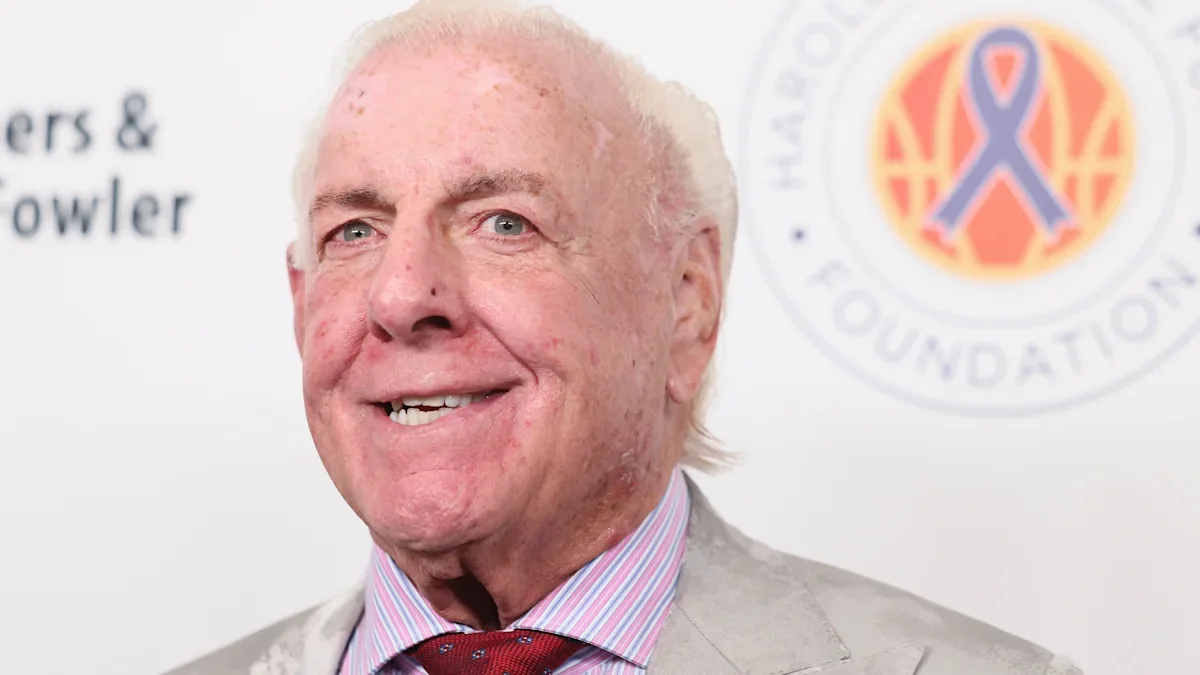
The confirmed record is short and specific. Ric Flair, born Richard Morgan Fliehr, is 77 and retired from active wrestling in 2022. He fell on Friday outside Wagamama, a bar and restaurant in Tampa, Florida. He cut his head and his eye bled extensively. Emergency crews took him to Tampa General Hospital, where, by his own account, staff dealt with him until 4:30am. TMZ first reported the fall and published photographs of him on the ground.
Everything beyond that carries a qualifier. The possible concussion is a reported possibility, not a disclosed diagnosis. No hospital statement has been released. No physician has spoken publicly. The closest thing to a clinical assessment is his daughter’s post on X: “Not my dad telling the doctor he fell bc of warrior dropping him on his head…(ps: he’s going to be ok).”
That is family reassurance, not a medical report. Charlotte Flair is a WWE star, not her father’s doctor. Her sentence deserves reading twice, because much of the internet read it once and turned it into a prognosis.
What The Ric Flair Health Update Confirms, And What It Does Not
The blood clot is the part Flair confirmed himself, in his own voice, before the fall. In an Instagram post cancelling a Seattle convention appearance, he wrote that his doctors had limited his travel to three to four hours because of a clot in his leg, and that Seattle fell outside that range. He described blood clots as “extremely serious” and potentially life-threatening, referenced NFL quarterback Jalen Hurts’ clots in the lungs, and said he was scheduled for a procedure to strip the affected vein.
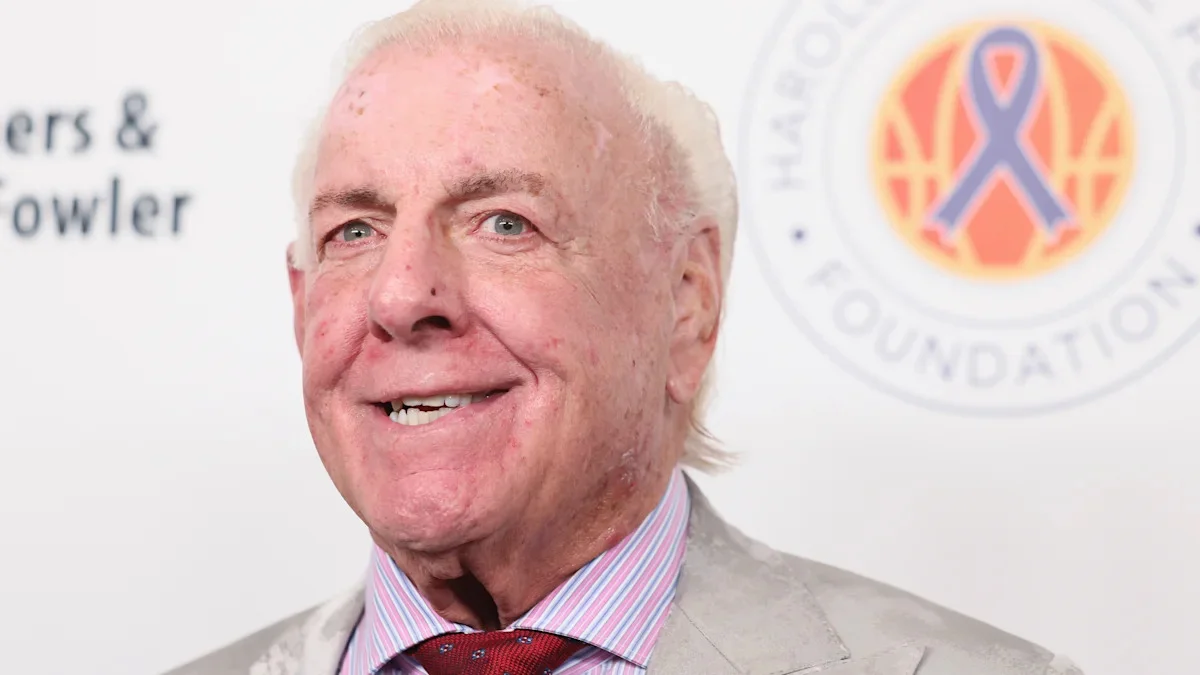
That is a patient describing his own care. It is specific — a named procedure, a stated travel restriction, a stated reason — and it is credible. It is still not a discharge summary.
What the update does not establish is causation. Nothing in the public record says the clot caused the fall. A 77-year-old man with a bleeding eye injury, crossing a street in Florida, has many reasons a fall could happen. Blood thinners, often prescribed for exactly this kind of clot, make a cut bleed more, but no one has said Flair is taking them. Treat the fall as an event under investigation, not as a symptom of a diagnosis you have already reached.
How To Act On A Blood Clot Story Without Self-Diagnosing
Flair’s own framing is the useful part, and it is unusually disciplined for a celebrity statement. He announced no cure. He sold nothing. He said his doctors limited his travel and that he intended to follow that advice. People reported the sequence of events in full, including his line that blood clots are “not something to take lightly.”
Three things in that are worth borrowing.
Travel length is a medical variable, not a scheduling one. The three-to-four-hour cap was a restriction set for one patient. It is not a rule for everybody, and it is not a licence to ignore your own doctor.
A leg clot and a lung clot belong in the same conversation. Flair made that link himself when he brought up Hurts.
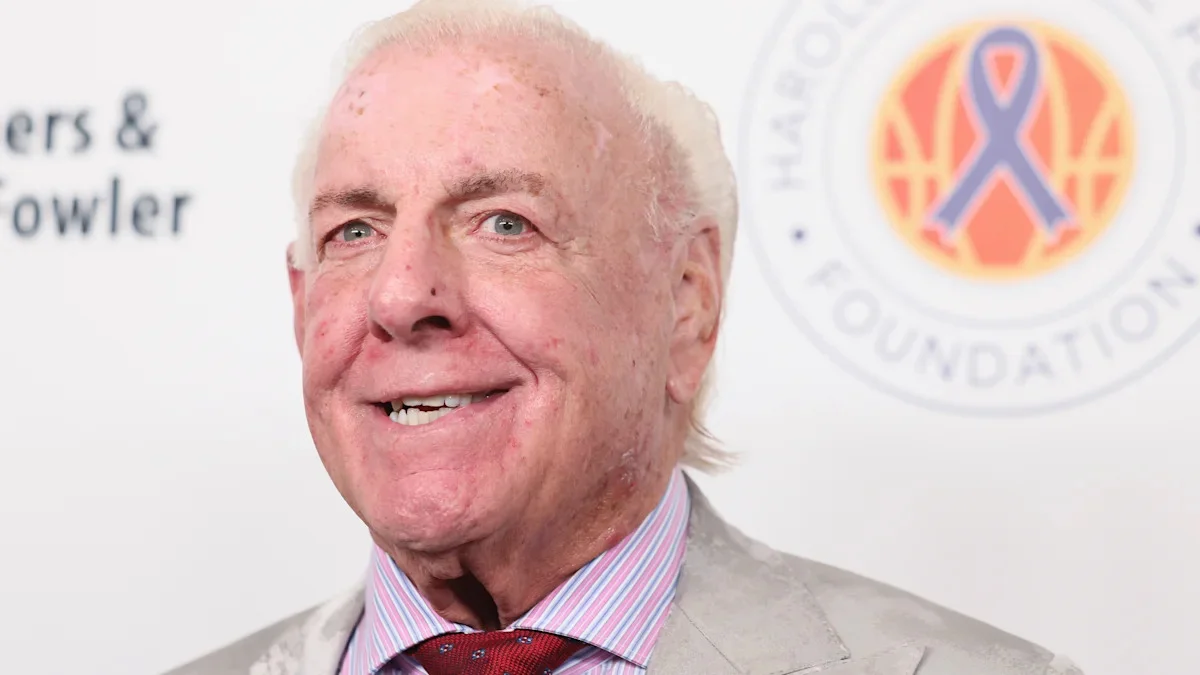
A procedure is not the end of the story. Stripping the affected vein addresses that vein. It does not remove the follow-up appointment, the medication review, or the need to move differently on long journeys.
For readers in Lagos, Nairobi or Accra, the practical parallel is distance. A Lagos-to-London flight runs well past six hours. So does Lagos to Dubai. If you have been diagnosed with a clot, or are being investigated for one, the length of your flight is something to raise with a clinician before you book, not after you land.
Public health guidance converges on a simple position: unexplained swelling, pain, warmth or redness in one leg, or sudden breathlessness or chest pain, needs same-day medical attention. In Nigeria that means a hospital with doppler ultrasound and a doctor who will take a travel history — not a pharmacy counter. Ask for the referral if the first clinician waves you off.
Then the harder discipline: accepting that a patient saying “I will be okay” is a statement of intent. Flair also wrote, in the eyepatch selfie post covered by Fox News, that he is “focused on my healing and recovery right now.” That is what a person says on day two. It is not a prognosis, and it should not be repeated as one.
His medical history is not small. He spent weeks in intensive care in 2017 after an intestinal rupture, part of it in a medically induced coma. He disclosed skin cancer in 2025 for the second time in three years, then announced months later that he was cancer-free. A 77-year-old body carrying that record, plus a clot, plus a facial injury, deserves a slow recovery and a clear discharge plan.
The Mistakes That Turn A Health Update Into Bad Advice
The first mistake is treating a reported possibility as a diagnosis. “May have sustained a concussion” and “has a concussion” are different sentences with different consequences, and only one of them has been reported here.
The second is assuming one visible event explains another. The fall does not confirm the clot. The clot does not explain the fall.
The third is skipping the boring part — the follow-up, the medication, the changed travel plan — in favour of the dramatic part.
The fourth is the supplement aisle. Nothing in the public record of Flair’s care involves a remedy you can buy, and a headline is not a prescription.
Read properly, this is a story about a man following medical advice and then having a bad accident anyway. That is not a contradiction. It is what risk looks like at 77, and it is why the Deadline account of him thanking hospital staff at 4:30 in the morning reads less like drama and more like an ordinary night in a trauma bay.
Your First Step Today
The Ric Flair health update should prompt a booking, not a comment thread. If you are over 60 and flying long-haul this year, or if you have a leg that has been swollen for a week and you keep meaning to mention it, make the appointment. Ask specifically about clot risk and about how long you should sit still on a plane. That conversation takes fifteen minutes. The alternative kept Flair in Tampa General until half past four in the morning.
Frequently Asked Questions
Did Ric Flair have a concussion from the fall?
It has been reported as a possibility, not confirmed. TMZ reported that he may have sustained a concussion after cutting his head and eye outside a Tampa restaurant. No hospital statement or physician statement has been released, so a concussion remains unconfirmed in the public record.
What is the blood clot in Ric Flair’s leg?
Flair described it himself as a blood clot in his leg that led his doctors to limit his travel to three to four hours. He said he was scheduled for a procedure to strip the affected vein. He has not disclosed a formal diagnosis name publicly, so any specific medical label beyond what he said is speculation.
When should leg swelling or breathlessness be treated as urgent?
Public health guidance treats unexplained swelling, pain, warmth or redness in one leg, and sudden breathlessness or chest pain, as reasons for same-day medical attention. Do not wait for a celebrity case to normalise the symptom. In Nigeria, ask for a facility with doppler ultrasound and a clinician who will take a travel history.
FIRST TIME REACTIONS:
Be the first to leave us a comment – Ric Flair Health Update: What Blood Clots Really Mean, down the comment section.
JOIN US ON OUR SOCIAL MEDIA:
About Paul Nwogo
Paul Nwogo is an engineer, published author, and the Head Manager at AfriLatest. He has written numerous books available on Amazon covering a diverse range of topics, including health, personal finance, relationships, work ethics, and scam survival. With his technical background and passion for writing, Paul now oversees the editorial direction of AfriLatest, delivering practical, accurate, and engaging content on trending news, music, and global lifestyle topics.
View all articles by Paul Nwogo-

 Startups1 month ago
What a Successful Dangote Refinery IPO Really Says
-
Health and Fitness2 weeks ago
Curly Hair Hydration: 5 Proven Steps That Actually Work
-
Tech & Gadgets3 weeks ago
Apple Watch and AirPods Fall Deals: Save $120 Today
-
University Admissions1 month ago
UNILAG 2026/2027 Admission: Direct Entry & Post-UTME Guide
-
Trending Entertainment News2 weeks ago
Taylor Swift Joins Beatles as Only Acts With 100 Weeks at No. 1
-
Football1 month ago
South Carolina vs Alabama: Tide Roll to 35-10 Halftime Lead
-
World News1 month ago
Carney Calls U.S. Tariffs a Miscalculation as Canada Retaliates
-
Football1 month ago
Mexico vs Colombia 2026: Márquez Debut Ends in Defeat