Entertainment TV & Film
Daisy Ridley Paramount+ Series: What’s Confirmed, What Isn’t
Daisy Ridley Paramount+ series Voyage to the Bottom of the Sea is ordered, not dated. What the trades confirm, and what to stream while you wait.

Daisy Ridley’s Submarine Series Is Confirmed. The Streaming Plan Is Not.
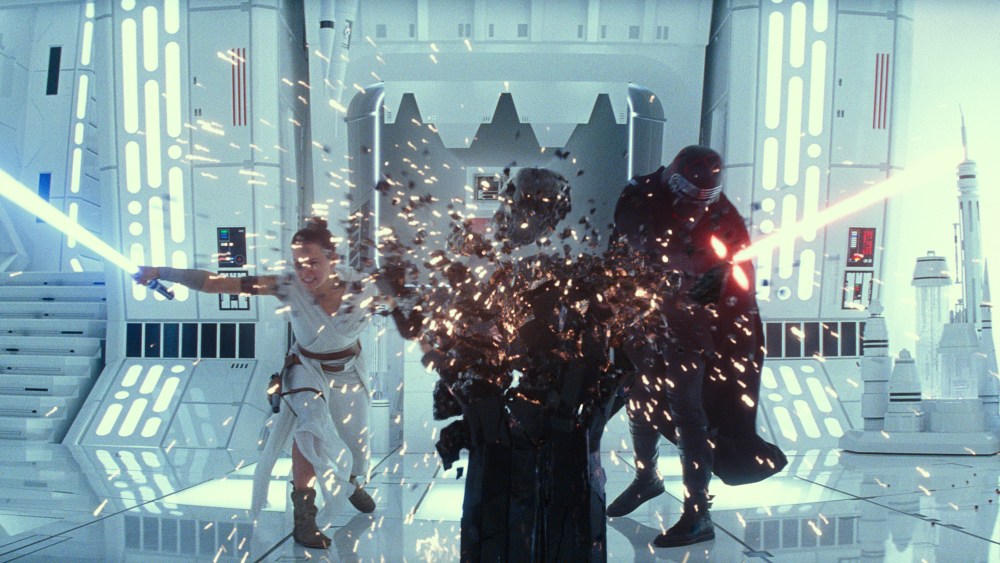
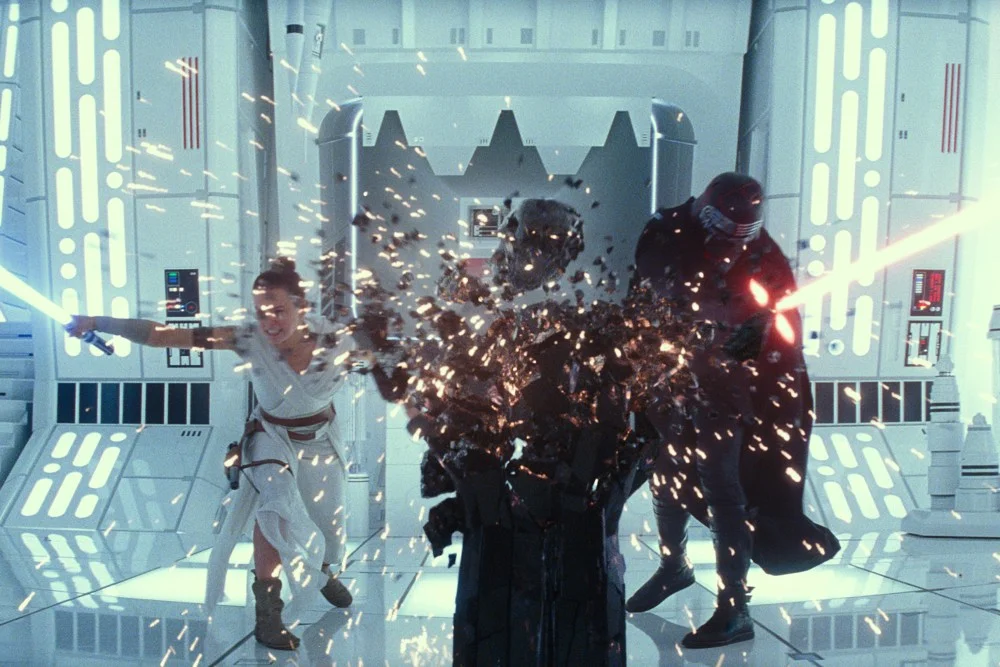
The Daisy Ridley Paramount+ series is real, and that remains the most precise thing anyone can say about it today. Paramount+ has ordered an eight-episode reimagining of Voyage to the Bottom of the Sea, with Ridley starring as ocean scientist Lee Crane and executive producing, Variety reported. Akiva Goldsman writes and executive produces. Matt Shakman directs and executive produces. Legendary Television produces with the Irwin Allen estate, which controls the 1961 feature film and the 1964-68 ABC series both versions draw from.
Everything else is quieter. No premiere date. No confirmed launch market, for Africa or anywhere else. And the two trade reports do not describe the project’s stage in identical language, which matters more than it sounds.
What The Daisy Ridley Paramount+ Series Order Actually Confirms
Deadline’s October 2026 report placed the show in development, with a writers’ room underway and no episode order attached in that account. Deadline also noted the project had been in the works for months, before the recent changes at Paramount+ parent Skydance. Variety’s report describes an eight-episode order. Both can be true in sequence: a room starts, an order follows, trades publish on different days. Neither report gives a production start. Read “ordered” as the current state and “filming” as unconfirmed.
The verified detail that carries real weight is the double credit. Ridley is not only starring. She is executive producing, alongside Goldsman, Shakman and Jon Jashni, with Derek Thielges as co-producer.
That is a different career move than the one her filmography has been making. Since the Skywalker trilogy closed, her features have been small and director-driven: Magpie, Sometimes I Think About Dying, We Bury the Dead, the Clive Owen two-hander Cleaner. Noticed in some cases, seen by few in all of them. She has worked in television before, on Casualty, Mr. Selfridge, Toast of London and Younger, but never as the lead and never with a producer’s title on a genre tentpole.
The premise is doing the rest of the work. Lee Crane is pulled into a classified government program after a catastrophic Arctic expedition kills her twin sister. At the centre sits the USS Seaview, a retro-futuristic submarine found entombed in ice, marked with symbols from a history that shouldn’t exist, and it powers up only when Lee steps aboard. From there: a pressure-cooker crew, government power brokers, undersea missions, an erased chapter of human history, Atlantis.
Note the name. Lee Crane existed in the original ABC series, which starred Richard Basehart and David Hedison. The trade reports do not specify which roles those two actors played, so any claim of a clean one-to-one inheritance is guesswork. What is documented is the structural change: a name from the old show now anchors the new one, and a woman carries it.
Why A Submarine Show Makes Sense For Paramount+ Right Now
Look at where Paramount+ actually sits in the audience tables. In Nielsen’s multiplatform numbers for the first five weeks of 2026, Landman was the most-watched series in the country across linear and streaming, at 14.08 million viewers. It was also the only Paramount+ title in the top 20. The Pitt on HBO Max drew 7.60 million, Fallout on Prime Video 7.46 million, Bridgerton on Netflix 11.32 million, per Variety’s tally.
One mass-audience original is a thin bench for a service competing against rivals with deeper slates. Voyage is a rational response: pre-sold IP, a filmmaker-grade writer in Goldsman, a director in Shakman whose WandaVision run proved he can hold an odd genre premise together, and a lead who arrives with a globally recognised face. Goldsman’s Star Trek: Strange New Worlds credit also tells you he knows how to run franchise television without breaking it.
The risk is the same as the pitch. Atlantis, erased histories and a chosen-one submarine are a lot of mythology to land in eight episodes. The setup leans hard on destiny, since the boat powers up only for her, and destiny is the cheapest kind of stakes. The show will live or die on whether the crew feels like people or like lore delivery.
The Watchlist: Three Titles To Queue While You Wait
Voyage to the Bottom of the Sea (Paramount+, announced, undated). Why it’s worth tracking: Goldsman and Shakman together, on material with a built-in sixty-year fanbase. Who it’s for: Star Wars loyalists following Ridley, and anyone who liked the claustrophobic command-deck tension of submarine thrillers. Caveat: no date means no date.
Landman (Paramount+). Why it’s worth watching now: it is the platform’s ceiling, 14.08 million multiplatform viewers in five weeks, and the clearest available benchmark for what Voyage will be measured against. Who it’s for: viewers who want to see what a Paramount+ hit actually looks like before deciding whether the submarine show has room.
The original Voyage to the Bottom of the Sea (1961 feature, 1964-68 ABC series). Why it’s worth watching: it is the source text, and the new show’s title, submarine and lead character name all come from it. Who it’s for: completists who want to see how much the reimagining keeps. Streaming availability for the originals varies by market and is not confirmed in either trade report.
Top Pick
Voyage to the Bottom of the Sea is the pick, with the caveat the announcement itself invites: the Daisy Ridley Paramount+ series has a star, a showrunner-grade writer, a director and eight episodes, and it does not have a date. That is not a reason to dismiss it. It is a reason to file it correctly, as a production story rather than a viewing appointment, and to watch whether the next announcement is a start date or a casting notice. The second one tells you far more.
Frequently Asked Questions (Daisy Ridley Paramount+ series)
Has Voyage to the Bottom of the Sea been officially ordered by Paramount+?
Variety reported an eight-episode order. Deadline, writing earlier, described the project as in development with a writers’ room underway. Neither report gives a production start date or a premiere date, so the honest position is that the show is ordered per Variety and not yet scheduled.
Is Daisy Ridley only acting in the series?
No. She stars as Lee Crane and also executive produces, alongside Akiva Goldsman, Matt Shakman and Jon Jashni. Derek Thielges is co-producer and Legendary Television produces with the Irwin Allen estate.
When can viewers in Africa watch it?
No launch date or market rollout has been announced in either trade report. Paramount+ availability differs by country, so the only responsible guidance is to check local listings once a premiere is confirmed.
 Follow AFRILATEST on Google News
FIRST TIME REACTIONS:
Be the first to leave us a comment – Daisy Ridley Paramount+ Series: What’s Confirmed, What Isn’t, down the comment section.
JOIN US ON OUR SOCIAL MEDIA:

About Rose Green
Rose Green is an entertainment and lifestyle author at AfriLatest. With a passion for storytelling, she contributes creative and thought-provoking content, capturing the imagination of readers. Rose specializes in entertainment news, celebrity updates, and lifestyle trends, sparking meaningful conversations across diverse topics.
View all articles by Rose Green

Entertainment TV & Film
Silo Season 1 Ending Explained: What the Showrunner Said
Silo season 1 ending explained through verified showrunner interviews: why the finale leaned forward, and what Season 3 later confirmed.

Most people who finish the first season of Apple TV’s Silo go looking for one thing: a straight answer about that final shot. Search “silo season 1 ending explained” and the results arrive with total confidence. They disagree with each other, and many were written before anyone who makes the show had spoken on the record.
The verifiable account is narrower, and it begins with showrunner Graham Yost. In an interview with Deadline timed to the Season 3 finale, Yost described the first season’s closing beat in plain terms: the audience was left asking whether Juliette Nichols, played by Rebecca Ferguson, would live or die. His own read was dry. Ferguson’s face was on the poster, so she was probably going to survive.
That is the whole of the Season 1 cliffhanger as the show’s creator frames it. Not a code to crack. A held breath.
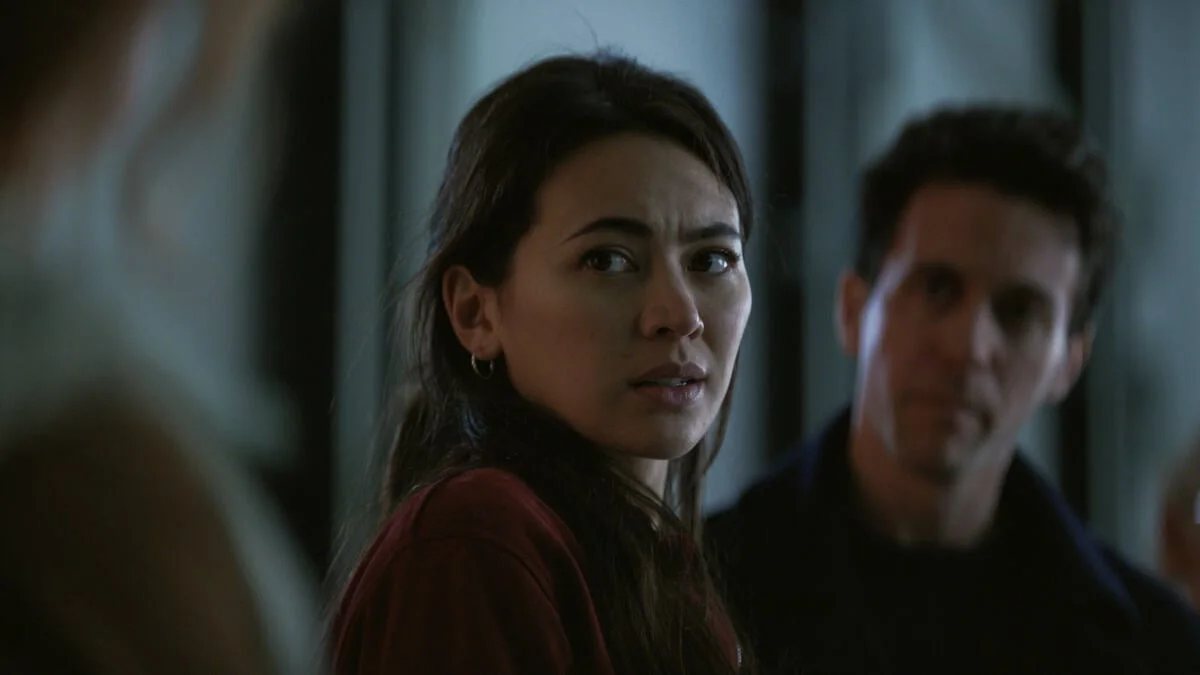
Why Most Silo Season 1 Ending Explained Posts Miss The Point
Yost draws a line between his show and the cliffhanger habit. Season 2, he told Deadline, ended with Juliette and Bernard (Tim Robbins) burning up in an airlock, then cut to two characters the audience had never met. A Pez dispenser in that final scene told viewers it was an origin story. Leaning forward, he called it. That approach “really became our thing.”
So the Season 1 finale was never built to be solved by a viewer with a pause button. It was a handoff. The answers were meant to arrive years later, and in Season 3 they largely did.
The plan itself predates production. Yost recalled a writers’ mini-room in early 2020 where author Hugh Howey, whose novels the series adapts, told them the architects of the silos are “not perfect” and that “things don’t work perfectly, but they do have this plan.” Yost described the series as an exercise in finding out what that plan is and how it has been carried out.
Season 3’s structure made the handoff visible. Yost said he proposed splitting one oversized script into episodes 9 and 10, and the writers’ room “revolted,” throwing things at a screen, because the split meant uniting the two timelines that had run in parallel all season: Juliette’s in Silos 17 and 18, and the Before Times thread with journalist Helen Drew (Jessica Henwick) and engineer-turned-politician Daniel Keene (Ashley Zuckerman). The cost was building Silo 1 a season early. “We had Nicole Northridge and her incredible team doing production design,” Yost said.
He was blunt about the alternative. Ending the season on the bomb, he argued, would have made Silo “a cliffhanger show,” and that is not what the first two seasons did.
What The Season 3 Finale Actually Confirmed
The Season 3 finale, titled “Troy” and written by Fred Golan, delivered the mechanism behind the whole silo system. Daniel wakes in Silo 1 under the name Troy, cryogenically preserved alongside Senator Thurman (Laura Innes) and others after a nuclear detonation near the newly built silos in Atlanta, Georgia.
Variety reports that Juliette regains her memories in the finale and declares war on Silo 1, after her team caps the safeguard — a pipe that would otherwise have flooded Silo 18 with toxic gas and killed nearly 10,000 residents. The alliance behind that move, among Juliette, Camille Sims (Alexandria Riley), Robert Sims (Common), Knox (Shane McRae), Shirley (Remmie Milner) and Sheriff Billings (Chinaza Uche), was described by Yost as tentative and uneasy.
Two details in that finale reach backwards. First, the memory wipe is real. Yost confirmed the founders remove memory and issue new names while preserving skills, and he cited an Oliver Sacks case to illustrate it: a patient with severe short-term memory loss who could still play an entire piano concerto. In Daniel’s case a residue survives. “The persistence of memory is love,” Yost said. “It’s Helen.”
Second, the voice in the vault is not a machine in the way viewers assumed. Yost said The Algorithm is ultimately a person speaking, filtered through an AI construct so that it sounds identical in every silo’s contact room. And the rulebook known as The Pact, Mashable reported, was drafted by Anna Thurman and Dr. Crnkovich — with help. “To be honest, AI wrote it,” Crnkovich says in episode 9. “We just did some editing.”
Where Confirmed Fact Ends And Fan Theory Begins
Some points are on the record. Others are silent, and the gap is where recaps blur.
Confirmed on screen: the silos were engineered for a nuclear strike. A tour guide in episode 9 tells Helen that Silo 18 was built to withstand a 30-megaton explosion as close as two miles. Confirmed by the showrunner: memory alteration, new identities and retained skills are all part of the founders’ design, and the architects knew something was coming.
Not confirmed: who launched the weapon. Episode 8 has trillionaire Per Stensen (Colin Hanks) insisting Iran and the United States are at war over Iranian nanoweapons, and he separately treats nanotechnology as the primary threat to humanity. Neither establishes responsibility for the blast, and Mashable noted the question remains unanswered.
Also not confirmed: bloodlines. Mashable raised the possibility that Helen, pregnant during the Before Times thread, could be an ancestor of present-day Silo 18 residents. The publication labelled that a guess, and it should be read as one.
This matters because of how the show is consumed. New Season 3 episodes dropped each Friday, per Mashable, which means recaps published within hours frequently preceded any public comment from the showrunner. That is how a reasonable theory gets filed as a plot summary, and it is why the Season 1 finale still generates confident, contradictory readings years after it aired.
What Season 4 Will And Will Not Settle
Yost has been explicit about the shape of the final season: “Season 4 is war.” He has also been coy about the nuclear question, deflecting a direct query about whether the bomb was part of the founders’ plan.
The honest state of play is this. A silo season 1 ending explained properly is not a list of reveals. It is a record of what the makers have said on the record, what the episodes have shown, and what remains open. Season 1 ended on a held breath. Seasons 2 and 3 explained why the breath was being held. Season 4 decides what happens when it is released.
Frequently Asked Questions
What actually happens at the end of Silo Season 1?
According to showrunner Graham Yost, the first-season finale leaves the audience asking whether Juliette Nichols, played by Rebecca Ferguson, survives. Yost described the ending as a deliberate lean forward rather than a puzzle to be decoded, and noted that Ferguson’s presence on the poster made her survival the expected outcome.
Does Silo Season 3 explain the Season 1 ending?
Season 3 confirms several mechanisms the earlier seasons only hinted at. Yost confirmed that the founders remove memories and assign new names while preserving skills, and that the voice known as The Algorithm is a person speaking through an AI filter. The Season 3 finale also shows Daniel Keene waking in Silo 1 as Troy.
Has Silo revealed who launched the nuclear bomb?
No. Episode 8 includes Per Stensen’s claim that Iran and the United States are at war over Iranian nanoweapons, but neither that episode nor the finale establishes who was responsible for the detonation. Yost declined to confirm whether the bomb was part of the founders’ plan.
FIRST TIME REACTIONS:
Be the first to leave us a comment – Silo Season 1 Ending Explained: What the Showrunner Said, down the comment section.
JOIN US ON OUR SOCIAL MEDIA:
About Rose Green
Rose Green is an entertainment and lifestyle author at AfriLatest. With a passion for storytelling, she contributes creative and thought-provoking content, capturing the imagination of readers. Rose specializes in entertainment news, celebrity updates, and lifestyle trends, sparking meaningful conversations across diverse topics.
View all articles by Rose GreenEntertainment TV & Film
Ryan Castro Explains Why La Villa Hit No. 1
Ryan Castro explains why La Villa came from a Kapo party, not a studio plan — and how a 1973 Jamaican riddim carried it to No. 1 on Latin Airplay.

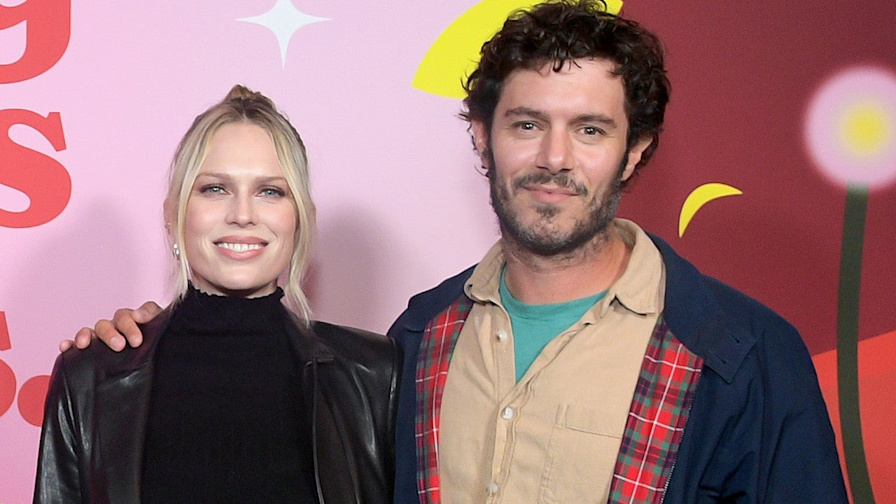
Ryan Castro’s “La Villa,” his collaboration with Kapo, reached No. 1 on Billboard’s overall Latin Airplay chart dated April 11, and the Colombian singer says the song started at a party rather than in a writing room.
“‘La Villa’ was born from a real vibe, from a party with Kapo, all organic, nothing forced,” Castro told Billboard. “When music comes out like that, big things happen.”
That is the artist’s own account of how the track came together. It cannot be independently verified and should be read as testimony, not documentation. The chart movement is a different category of fact: “La Villa” climbed 2-1 with 8.8 million audience impressions in the week ending April 2, a 15% gain, according to Luminate figures published by Billboard.
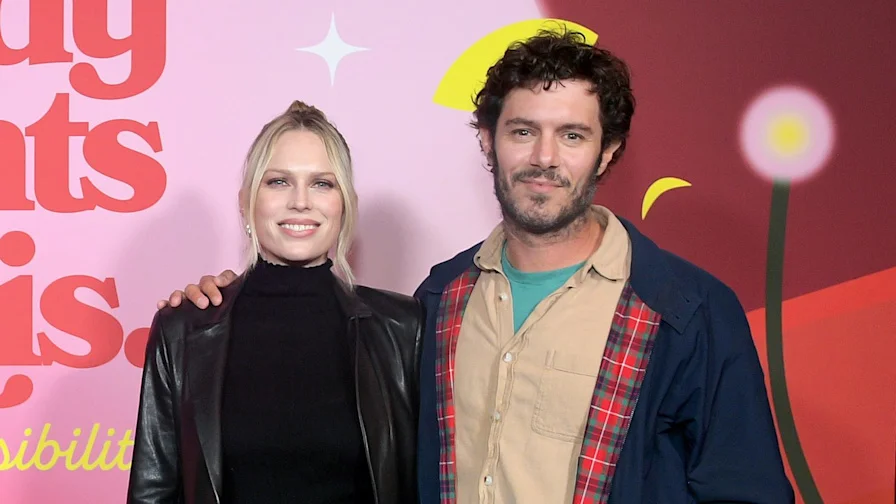
It was Castro’s first No. 1 on that list. Producer Gangsta earned his first as well. Kapo, the third voice on the record, collected his fourth, following “Imagínate” with Danny Ocean, “Más Que Tú” with Ozuna and “Luna” with Wisin.
Why Ryan Castro Says La Villa Started At A Kapo Party
Castro’s explanation is specific about method, not just mood. He describes a record that followed a social gathering instead of preceding one — a distinction that matters in a genre where writing camps and playlist-driven A&Ring are standard practice.
Gangsta, born Pedro Juan de la Ossa Medrano, gave a parallel account to Billboard. “It is an honor to reach this No. 1, not just as a producer but also as a standout artist,” he said. “This is a song that, like all our music, was born genuinely and with strong musical identity because it combines the best of two genres: dancehall and Afrobeat, which we call Afro dancehall.”
Two people involved in the record describing the same process is stronger evidence than either alone. Neither account explains the commercial result. That requires the chart data and the song’s architecture.
The Riddim Under La Villa, Traced To Jamaica
Billboard’s breakdown of the track’s construction is the most concrete evidence available. La Villa interpolates the melody of Sister Nancy’s 1982 dancehall record “Bam Bam.” That song’s chorus was itself drawn from a 1966 track of the same name by Byron Lee and the Dragonaires featuring Toots and The Maytals. Both sit on the “Stalag Riddim,” the heavily sampled reggae rhythm created for Ansell Collins’ 1973 instrumental “Stalag 17,” produced by Winston Riley.
The lineage runs from Kingston to Medellín across five decades. It also runs through West Africa. Gangsta’s “Afro dancehall” label places the record inside a wider commercial convergence between Afrobeats, dancehall and Latin urban music — a convergence he has worked repeatedly, producing Kapo’s “Ohnana” (No. 2, November 2024), “Uwaie” (No. 5, March 2025) and the Castro-Kapo pair-up “Dónde” (No. 8, January).
The label is a producer’s description, not a formal genre classification. No chart authority defines “Afro dancehall.” Treat it as marketing shorthand resting on a real sonic foundation.
For African listeners, the useful point is structural rather than sentimental. A Jamaican riddim recorded in 1973, filtered through a 1982 Sister Nancy vocal, became the melodic spine of a song that spent six weeks atop Billboard’s Argentina Hot 100 and Colombia Hot 100 between January and April. The rhythm travelled first. The chart success arrived later, in Spanish, through a Colombian production chain.
What Castro Owed Curaçao
Castro, born Bryan David Castro Sosa and now 32, was working this territory before it became commercially fashionable. In an interview with Complex, he credited Curaçao, where he moved with his mother at 13 and returned at 20 to make music.
“Living on an island made me have more of that [sound] in my blood, in my body,” he said. His signature “AWOO” yell comes from Papiamento, the Creole language of the Dutch Caribbean. He calls it “what’s up” — “like a greeting, but from the street.”
The tour staging follows the same geography. Billboard reported that the set is built to resemble an island, splitting the show between Medellín and Curaçao.
Reaction And The Next Confirmed Step
The industry response is measurable. La Villa earned Castro his first two Latin Grammy nominations: Best Urban Performance for the track, and Best Urban Music Album for “Omertà,” his joint project with J Balvin. Nominations are not awards, a distinction routinely blurred in coverage of Latin music’s awards cycle.
Live, the escalation is documented rather than projected. Castro played Palladium Times Square in 2023, New Jersey’s Prudential Center in 2024 and Brooklyn’s Barclays Center in 2025. The Barclays date sold nearly 12,000 tickets and grossed $880,000, according to Billboard Boxscore. He headlines Madison Square Garden for the first time on Dec. 12, followed by Miami’s Kaseya Center on Dec. 19, Consequence reported. Presale opens Sept. 29 via Ticketmaster, with general sale Sept. 30.
What To Watch
Castro has confirmed a new album is coming, but has not announced a title or release date. He has described it as reggaeton-heavy with “sentimental songs,” and has released “Mentira” with Feid and “La Sapió” as previews. Announced intent is not released product; nothing about the record’s sound is confirmed until it ships.
Three questions remain open. Whether the Grammy nominations convert into a win. Whether the Madison Square Garden date fills — the arena is larger than any venue he has headlined in the United States, and the Barclays gross is the only public benchmark so far. And whether the next album keeps the dancehall spine that made La Villa work, or trades it for the balladry he says is coming.
The party story will keep being retold. The riddim is the part anyone can check.
Frequently Asked Questions
Why does Ryan Castro say La Villa was born at a party?
Castro told Billboard the song came from “a real vibe, from a party with Kapo, all organic, nothing forced.” Producer Gangsta gave a matching account, describing the track as born genuinely with a strong musical identity. Both statements are the participants’ own testimony; no independent record of the session has been published.
What sample does La Villa use?
La Villa interpolates the melody of Sister Nancy’s 1982 dancehall record “Bam Bam.” That chorus was itself inspired by a 1966 track of the same name by Byron Lee and the Dragonaires featuring Toots and The Maytals. Both draw on the “Stalag Riddim,” created for Ansell Collins’ 1973 instrumental “Stalag 17,” produced by Winston Riley.
How big was La Villa commercially?
It hit No. 1 on Billboard’s overall Latin Airplay chart dated April 11, with 8.8 million audience impressions in the week ending April 2, up 15% per Luminate. It also spent six weeks atop the Billboard Argentina Hot 100 and Colombia Hot 100 between January and April, and earned Castro his first Latin Grammy nomination.
FIRST TIME REACTIONS:
Be the first to leave us a comment – Ryan Castro Explains Why La Villa Hit No. 1, down the comment section.
JOIN US ON OUR SOCIAL MEDIA:

About stephen Douglas
Stephen Douglas is a gaming and entertainment author at AfriLatest. With a background in social media management and community building, he covers the latest trends in the gaming industry, esports, and digital culture. Stephen creates engaging content that keeps readers connected and informed about the games and entertainment they love.
View all articles by stephen DouglasEntertainment TV & Film
Meekah Spinoff Review: Moonbug’s Album and Netflix Push
Meekah spinoff review: Moonbug’s 20-track Dance with Meekah album, the Netflix launch and the YouTube push, sorted into verified facts and hype.
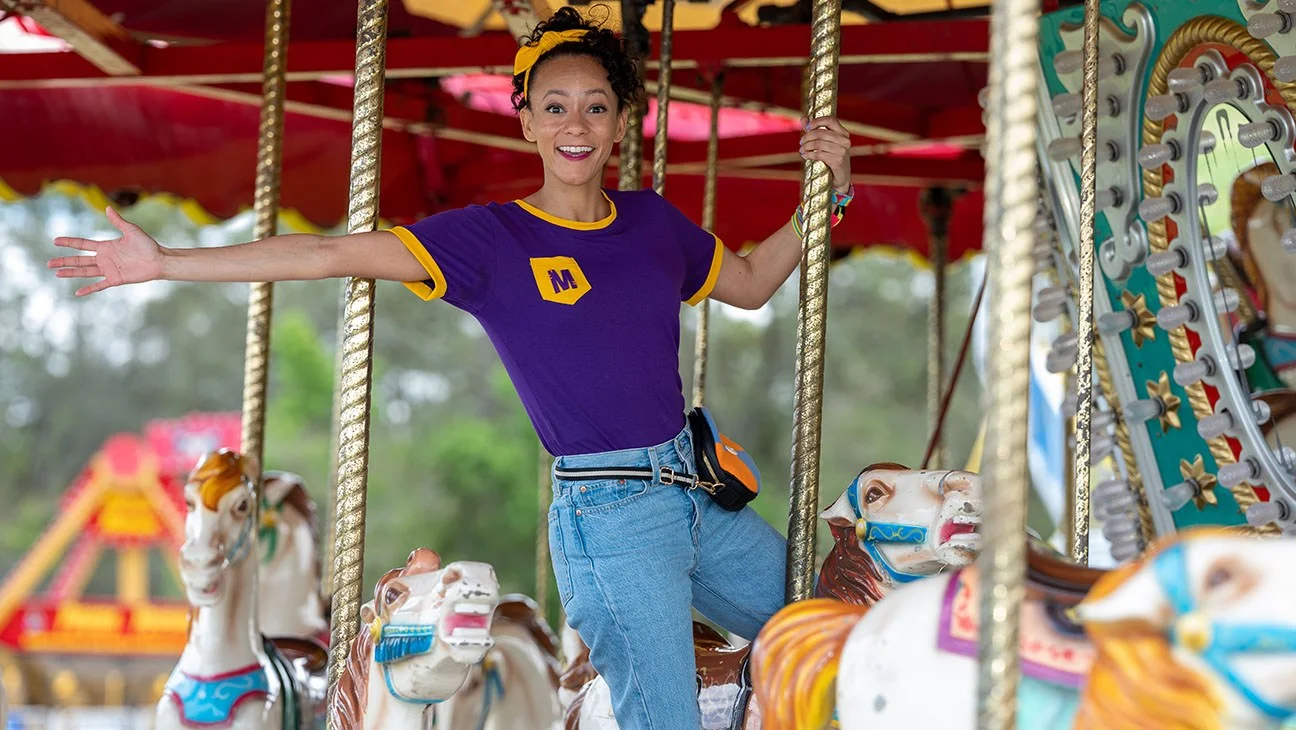
The Meekah spinoff landed the way most preschool franchises land now: not as one show, but as a staggered rollout across YouTube, Netflix, streaming music and retail shelves. Moonbug Entertainment confirmed the pieces at different points, months apart. That is exactly why this rollout needs a scorecard more than a press release.
Treat the whole package as a release and review it like one. What holds up is the volume of output. What doesn’t is the paperwork around it — and the paperwork is where parents get burned.
What The Meekah Spinoff Actually Confirms
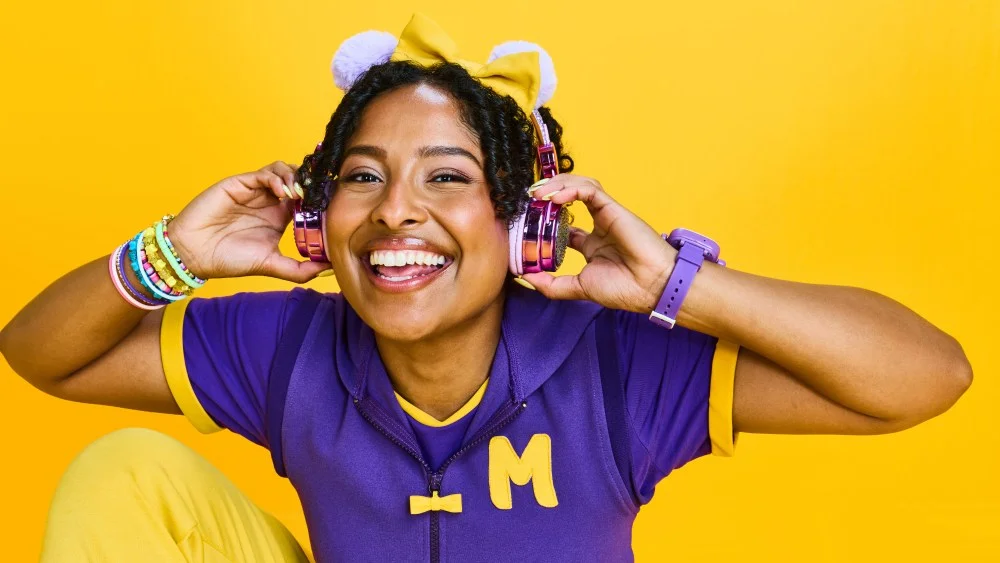
Start with the verified spine. Meekah first appeared on the Blippi YouTube channel in October 2021 as Blippi’s best friend. Her own channel, Blippi’s Buddies: Meekah, launched in spring and cleared 500,000 subscribers. Content featuring her has passed 650 million views since 2021. Andy Yeatman, Moonbug’s managing director for the Americas, put a number on the character’s pull: episodes featuring Meekah see a “double-digit increase in viewers.”
Those are the strongest figures in the entire package, and they all predate the Netflix deal. That matters. The Meekah spinoff is not a bet on an unknown; it is a promotion of a character already outperforming the parent show’s baseline.
The Netflix side is a live-action series launching Dec. 1 in English-, Spanish- and Portuguese-speaking territories, per C21Media and The Hollywood Reporter. Moonbug describes it as Meekah planning, tinkering and crafting her way out of problems.
The corporate context explains the rush. Blippi was created by actor Stevin John in 2014 and acquired by Moonbug in 2020; the channel now sits at 25.3 million subscribers, per Deadline. Candle Media, the Blackstone-backed rollup led by Kevin Mayer and Tom Staggs, bought Moonbug at a $3 billion valuation. A $3 billion valuation needs more than one face.
Dance With Meekah: Reviewing A 20-Track Album By Its Rollout
Here the Meekah spinoff gets genuinely interesting as music. “Dance with Meekah” is a 20-track album that launched in September on Spotify, Apple Music and Amazon Music, per License Global. It pairs original music with her versions of classic preschool songs.
Twenty tracks is a real commitment. Most character-brand albums are six songs and a karaoke version. The catch: no tracklist, no producer credits, no songwriting detail has been confirmed in any of the trade coverage reviewed here. The album was announced as one line item in a merchandising paragraph — sandwiched between a T-shirt and a Halloween costume.
The standout, as far as anyone can verify, is “Happy Place.” That is the Meekah-led music video Moonbug dated to Nov. 2, per Variety. A second video, “Bubble Pop,” is planned. Without hearing the record, “Happy Place” is the only track the company has put its name and a date behind.
Where The Meekah Spinoff Lands For African Viewers
The territory list is the part African audiences should read closely. Netflix carries the series in English-, Spanish- and Portuguese-speaking markets. Nigeria, Kenya, Ghana and South Africa fall inside that first bucket. Francophone West Africa — Senegal, Côte d’Ivoire, Mali — does not, on the language terms as stated.
So the Meekah spinoff splits the continent along language lines, which is how most streaming catalogues already behave. The YouTube channel is the equaliser. It is free, it is already at 500,000 subscribers, and Variety dates its premiere to Nov. 7 with episodes running roughly 15 minutes every other Saturday.
That 15-minute runtime is the most Africa-relevant design choice in the package. Short episodes stream cheaply on mobile data. A 20-track album streams cheaper still. The Netflix half is the expensive half, and Moonbug built a free door right next to it.
The Casting Question The Meekah Spinoff Hasn’t Settled
Two trade outlets name two different performers. The Hollywood Reporter and License Global both identify the character as played by Kaitlin Becker. Variety’s report names Lauren Vaz. This hasn’t been officially confirmed by Moonbug or Netflix in the material reviewed.
That is not a small footnote. A preschool brand selling a doll and a Halloween costume is selling a face. If the trades cannot agree on who wears it, the merchandising line — the Meekah T-shirt on Amazon in December, a Disguise costume, a Jazwares doll — is being built on a detail nobody has nailed down publicly.
The dates wobble too. Netflix says Dec. 1; Variety says a Nov. 7 YouTube premiere. Both can be true if they describe different platforms, but no source states that plainly. Treat the calendar as unconfirmed until Moonbug publishes one.
The Learning Claims, Weighed
Moonbug says the series uses its UCLA-backed learning principles, aimed at ages 3-6, with movement described as “big, clear and safe for preschoolers to try at home.” Lizzy Easterday, senior director of creative, says the goal is kids feeling “part of it” rather than watching.
That is promotional language, and it should be filed as such. The verifiable part is the format: Meekah models checking for space and getting help from grown-ups. Safety-modelling is a design choice a parent can actually observe in an episode. The UCLA framing is a claim, not evidence.
Verdict
Should fans listen? Yes — and start with “Happy Place.” It is the only Meekah music with a confirmed title and a confirmed date. If the album holds up, the rest of the Meekah spinoff gets a lot easier to defend, and the merchandise can follow on the strength of the songs instead of the schedule.
For African parents, the free YouTube channel is the honest entry point into the Meekah spinoff, not the Netflix launch. And keep one eye on the credits page. A franchise this good at volume should be better at receipts.
Frequently Asked Questions
When does the Meekah spinoff launch on Netflix?
Moonbug and Netflix trades report a Dec. 1 launch in English-, Spanish- and Portuguese-speaking territories. Variety separately reports a Nov. 7 premiere on the Meekah YouTube channel. Both could be accurate if they describe different platforms, but no source has stated that plainly, so the calendar remains unconfirmed.
Is Dance with Meekah a real album?
Yes. It is a 20-track album that launched in September on Spotify, Apple Music and Amazon Music, mixing original music with Meekah’s versions of classic preschool songs. No tracklist or producer credits have been officially confirmed in the coverage reviewed.
Will the Meekah spinoff be available in Africa?
The Netflix series is confirmed for English-, Spanish- and Portuguese-speaking territories, which includes Nigeria, Kenya, Ghana and South Africa but not francophone West Africa. The Meekah YouTube channel, which is free and already has 500,000 subscribers, is the more accessible route for most African viewers.
Receive alerts for Meekah spinoff and more like it.
FIRST TIME REACTIONS:
Be the first to leave us a comment – Meekah Spinoff Review: Moonbug’s Album and Netflix Push, down the comment section.
JOIN US ON OUR SOCIAL MEDIA:
About stephen Douglas
Stephen Douglas is a gaming and entertainment author at AfriLatest. With a background in social media management and community building, he covers the latest trends in the gaming industry, esports, and digital culture. Stephen creates engaging content that keeps readers connected and informed about the games and entertainment they love.
View all articles by stephen Douglas-

 Startups4 weeks ago
What a Successful Dangote Refinery IPO Really Says
-
Health and Fitness1 week ago
Curly Hair Hydration: 5 Proven Steps That Actually Work
-
Trending Entertainment News2 weeks ago
Taylor Swift Joins Beatles as Only Acts With 100 Weeks at No. 1
-
World News4 weeks ago
Carney Calls U.S. Tariffs a Miscalculation as Canada Retaliates
-
Tech & Gadgets2 weeks ago
Apple Watch and AirPods Fall Deals: Save $120 Today
-
Football4 weeks ago
Mexico vs Colombia 2026: Márquez Debut Ends in Defeat
-
University Admissions4 weeks ago
UNILAG 2026/2027 Admission: Direct Entry & Post-UTME Guide
-
Fintech4 weeks ago
OPay No Dey Comot Nigeria: How to Verify Fintech News