Black Celebrities
Elodie Gave Birth at 32 Weeks: The Tech That Saved Her Son
Elodie gave birth at 32 weeks after a crash killed her unborn son Remi. Here’s how genomic testing and AI are changing prenatal care in 2024.


Elodie Aldridge was 34 weeks pregnant when a four-wheel-drive allegedly ran a stop sign and slammed into her Ford Territory near Shepparton East on October 20, 2022. The crash killed her unborn son, Remi, and left Elodie with a snapped femur, a broken wrist, and catastrophic internal bleeding. She was airlifted to Melbourne, where surgeons removed Remi and fought to save her life.
Elodie gave birth at 32 weeks in a previous pregnancy — a detail that matters because it shows her body had already been through the wringer before this crash. That earlier birth, in a different context, produced a living child. This time, at 34 weeks, the outcome was different. Remi had a birth certificate, a death certificate, and a Transport Accident Commission claim. But under Victorian law, he was not considered a person. The driver, Chrystle Olivia Kemp, 26, was charged with dangerous driving causing the death of five-year-old Savannah Kemp and dangerous driving causing injury to Elodie. She could not be charged over Remi’s death.
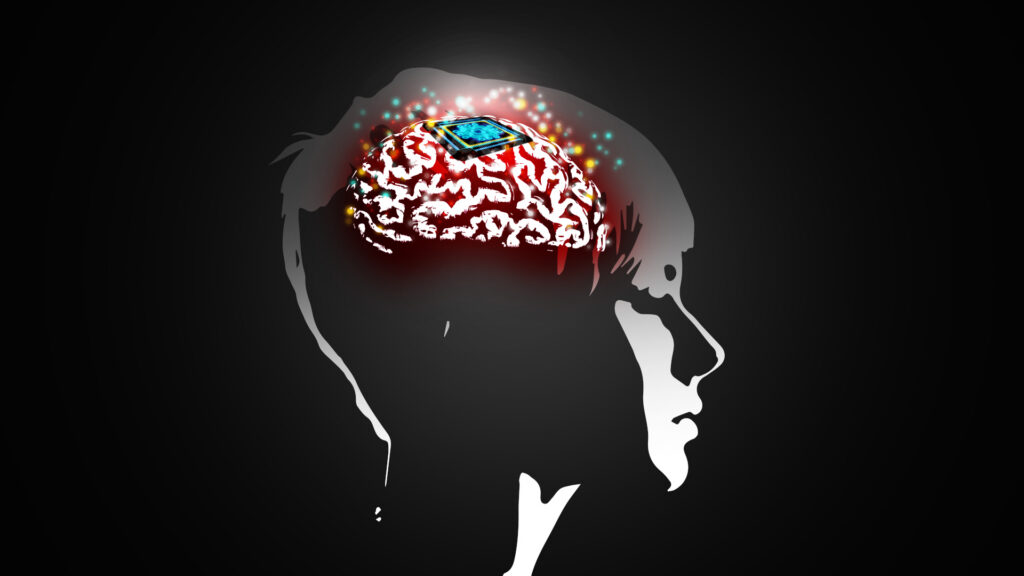
That legal gap is now the center of a push to change Victoria’s laws. But the story also sits at the intersection of two technological shifts in prenatal and neonatal care: genomic sequencing that can spot rare diseases in newborns, and AI-assisted tools that help doctors counsel families through the worst moments of their lives.
Why Elodie Gave Birth At 32 Weeks Matters For Prenatal Tech
When Elodie woke in the ICU, her husband Andrew had to tell her three times that Remi had died. “I didn’t want to believe it,” she said. They spent three days with their son before he was taken away. A small wooden box with his ashes now sits on their TV cabinet in Katunga, next to a framed imprint of his feet.
The Aldridges are pushing the Allan government to introduce a law similar to Zoe’s Law in NSW, which since 2021 recognizes unborn children at 20 weeks or more as victims of crime. Brodie Donegan fought 12 years for that law after a drug-affected driver ran her over on Christmas Day 2009 while she was 32 weeks pregnant with her daughter Zoe. “Zoe counted towards the road toll in NSW that year,” Donegan said. “The glaring gap was that she just wasn’t recognised in the court proceedings.”
Heather Douglas, a law professor at the University of Melbourne, warns that any Victorian law would need clear safeguards for reproductive rights. “Understanding the fetus as separate from the mother is also problematic,” she said. That tension is real. But the Aldridges say the current situation leaves them without closure. “He was alive in my belly; he was ready to come,” Elodie said. “I cannot understand why he’s not considered a baby.”
What Genomics England Is Doing For Newborns Right Now
While Victoria debates its laws, the UK is quietly rolling out a massive genomic testing program that could change how parents understand their baby’s health before symptoms appear. The Generation Study, led by Genomics England with NHS England, has signed up more than 1,000 families in Hull and East Yorkshire alone since January. Nationally, it aims to sequence the whole genomes of 100,000 newborns.
The test uses blood samples normally taken from the umbilical cord after birth. It looks for more than 200 rare genetic conditions, including spinal muscular atrophy and metachromatic leukodystrophy. Early diagnosis means earlier NHS treatment, monitoring, and support. “Early diagnosis, support and treatment can be crucial in slowing the progression of disease or improving quality of life,” said Sarah Collins, research lead midwife at Hull Women and Children’s Hospital.
The study does not replace the heel prick test, which still screens for ten conditions. But it could detect hundreds more treatable diseases in the first years of life. For parents like Jodie and Jack, who signed up with baby Hazel Rae, the appeal is simple: knowing sooner.
How AI And Autopsy Data Could Prevent The Next Tragedy
The technology that might have helped Elodie and Andrew is not just about genes. It is also about data. A 2022 ProPublica investigation published by Undark found that in about one-third of stillbirths, the cause of death is never determined. Placental exams were performed or planned in only 65 percent of stillbirths in 2020. Autopsies were done in less than 20 percent.
That is a massive gap in the data. Without autopsies and placental exams, doctors cannot learn why babies die. “It’s hard to reduce the rate of stillbirth if we don’t understand why they all happen,” said Dr. Jessica Page, a maternal-fetal medicine specialist at University of Utah School of Medicine.
AI tools are starting to fill that gap. Researchers are training models on placental pathology images and genomic data to flag patterns that human pathologists might miss. The goal is not to replace doctors but to give them faster, more accurate answers. For families like the Aldridges, those answers could mean the difference between a future pregnancy that ends in a living child and one that ends in another wooden box.
Dr. Karen Gibbins knows that difference personally. After her son Sebastian was stillborn at 27 weeks in 2018, an autopsy revealed a rare disease caused by her antibodies attacking his liver. When she became pregnant again, she started weekly antibody infusions. At 32 weeks, she began bleeding heavily, and her doctor delivered her baby immediately. Everett cried when he was born. “If we had not had that autopsy,” Gibbins said, “my third child would have died as well.”
What To Watch Next
Victoria’s parliament will decide whether to follow NSW and recognize unborn children as victims of crime. The Aldridges will keep pushing. “It will not change our scenario,” Andrew said, “but it might help someone else one day.”
On the tech side, watch three things. First, whether the Generation Study hits its 100,000-baby target and whether the NHS expands whole genome sequencing beyond the study. Second, whether AI pathology tools get regulatory approval for stillbirth evaluations. Third, whether the US federal government starts covering autopsies after stillbirth, which experts say should be viewed as a continuation of maternal care.
The tools are not magic. They will not bring Remi back. But for the next Elodie — the next mother who gave birth at 32 weeks in a previous pregnancy and then faces a crash, a stillbirth, or a rare genetic disease — better data and faster diagnosis might mean a different ending.
If you are pregnant or have recently given birth, ask your hospital whether placental exams and genomic testing are available. If you are in the UK, ask your midwife about the Generation Study. If you are in Victoria, call your MP and ask where they stand on Zoe’s Law. The technology exists. The laws and the funding are what lag behind.
Frequently Asked Questions
What happened to Elodie Aldridge’s baby Remi?
Remi died in utero at 34 weeks after a four-wheel-drive allegedly ran a stop sign and crashed into Elodie’s car near Shepparton East on October 20, 2022. Elodie was seriously injured and airlifted to Melbourne, where surgeons removed Remi. He had birth and death certificates but was not considered a person under Victorian law.
What is the Generation Study and how does it help newborns?
The Generation Study is a UK research program led by Genomics England and NHS England. It uses whole genome sequencing on blood from the umbilical cord to test newborns for more than 200 rare genetic conditions. Over 1,000 families in Hull and East Yorkshire have signed up. Early diagnosis allows for earlier NHS treatment and support.
Why are autopsies after stillbirth so important?
Autopsies and placental exams can determine the cause of death in many stillbirths, which helps doctors counsel parents about future pregnancy risks. A ProPublica investigation found that autopsies were performed in less than 20 percent of stillbirths in 2020. Without them, about one-third of stillbirth causes remain unknown.
Related Articles
- Nigeria US Health Compact: 5 Steps to Demand Transparency
- Deli Meat Health Risks: How to Limit It to Once a Week
- The Cold Song: Nordic Noir Gets an Emotional Twist
- AI in Africa: 5 Takeaways From the 11th Nigeria Innovation Summit
- Herbal Remedies: Aishat Alagbo’s Safety Warning for Nigerians
 Follow AFRILATEST on Google News
FIRST TIME REACTIONS:
Be the first to leave us a comment – Elodie Gave Birth at 32 Weeks: The Tech That Saved Her Son, down the comment section.
JOIN US ON OUR SOCIAL MEDIA:

Black Celebrities
Balmain Resort 2027 Debuts on Anya Taylor-Joy in SoHo
Anya Taylor-Joy wore Balmain Resort 2027 in New York on July 16, 2026. What the sources confirm, what they only claim, and what stays unverified.


Anya Taylor-Joy walked through SoHo in New York on July 16, 2026 in a purple satin bra, a cropped green cardigan and a floral velvet midi skirt, the earliest public sighting of Balmain Resort 2027, a collection that by one account had not yet reached a runway.
The actress was on a press tour for Lucky, her heist crime-thriller miniseries. According to Harper’s Bazaar, she was the first to wear an ensemble from the forthcoming line, and the outing marked its first public appearance. Yahoo News reported the same look the same day and attributed the debut to Vogue.
The date and the weekday reconcile without strain: July 16, 2026 falls on a Thursday, which is what the coverage says. That is the part everyone agrees on. The rest needs separating.

What The Balmain Resort 2027 Sighting Actually Confirms
Both magazines agree on the architecture of the outfit. A bikini-style bra with ribbed pleating sat under a shrunken, cropped cardigan with chunky gold buttons, worn open. The skirt was a velvet floral jacquard midi with a front slit and a knee-grazing hem. On her feet, yellow open-toe mules. Her hair was straightened and side-parted, her eyelids touched with blue-gray shadow.
They diverge on specifics. Harper’s Bazaar describes a fuchsia satin bra; Yahoo calls it vibrant purple. The cardigan is olive-green in one account and pear-green in the other. Yahoo puts her Tiffany & Co. jewellery at $4,750 and lists a bean necklace and diamond hoop earrings. Harper’s Bazaar describes an Elsa Peretti Bean pendant on a black silk cord, gold hoops and a matching bracelet, and attaches no total.
The disagreement is small but instructive. Colour naming is editorial shorthand. The $4,750 figure is a magazine’s estimate of retail value, not a house-confirmed price, and neither source says who supplied it.
One detail both outlets record and neither develops: on the same day, Taylor-Joy also wore a metallic sleeveless dress from Ferragamo’s Resort 2027 collection, valued by Yahoo at $18,250 in matching Tiffany jewellery. Two Resort 2027 wardrobes from two houses, worn hours apart, during a single promotional push.

Vogue’s Review And The Designer Behind The Line
Vogue’s collection page for Balmain Resort 2027 carries no mention of Taylor-Joy. It is a review of the clothes, and it attributes the pre-spring collections, including the house’s first menswear, to Antonin Tron.
Tron framed the two wardrobes as a single conversation. “For me, the men’s and the women’s, they are kind of like one entity,” Vogue quotes him. “I really want the men and women to be able to talk to each other.” He described pre-collection as room to explore “a bit more the casual side of Balmain.”
The review lists embroidered surfaces, treated denim and snakeskin jacquards crossing between the men’s and women’s rails, alongside cropped flight jackets, satin tailoring, sheer lurex blouses, washed denim and biker leathers. Tron said the collection was shot in Joshua Tree, carrying over a desert theme from his previous runway show.
He also pushed back on how luxury is policed. “For me, this thing with sexiness is also a class thing,” Vogue quotes him, describing Balmain as a space to articulate sexuality rather than apologise for it. That framing explains the styling on display: micro cardigans over exposed bras, skirts dissolving into asymmetric ruffle, embellished surfaces that read as sun-weathered rather than pristine. The distinction between dressing up and dressing down is deliberately left unresolved.
Notably, the review never confirms that a pre-spring garment appeared on a public street before the collection itself was shown.
Why “First To Wear” Is A Claim, Not A Recorded Fact

The assertion that Taylor-Joy was first rests on magazine characterisation. Harper’s Bazaar says so directly. Yahoo routes the point through Vogue, but Vogue’s own collection review, as published, does not name her. Neither outlet cites a Balmain statement, a lookbook record, or a house spokesperson.
Naming compounds the confusion. Vogue files the collection as Resort 2027; Harper’s Bazaar files it as Pre-Spring 2027. Both describe the same work. Readers searching one term will miss coverage filed under the other, and archive searches will split the record.
Yahoo’s phrasing adds a timing detail worth isolating. The ensemble, it says, has not even hit the runway yet. Taken at face value, a pre-collection piece reached public view through a street sighting before any presentation of the collection itself. That reverses the usual order of show, then press, then shop floor. It also means the first public image of this line was a paparazzi frame, not a runway photograph.
Context for that sequence is not speculative. Taylor-Joy wore Balmain’s Fall/Winter 2026 collection last April, according to Harper’s Bazaar, which calls the practice something of a tradition for her. A repeat wearer of a house is a reliable early-window outlet for it.
The African Market Gap The Coverage Does Not Address
None of the three sources states where Balmain Resort 2027 will be sold, when it will reach stores, or what it will cost. That silence is not incidental.
For readers in Lagos, Nairobi, Accra or Johannesburg, the published record contains no distribution information at all. No stockist list. No regional launch. No pricing in any currency. Any claim that the collection is available, or coming to, an African market would be unsupported by the material in hand, and should be treated as speculation until a retailer or the house says otherwise.
The only commercial numbers in the coverage are the Tiffany & Co. valuations attached to the jewellery, and the two outlets do not reconcile them.
What To Watch
Three things. First, whether Balmain itself confirms Taylor-Joy as the first person to wear the collection, or whether that remains a magazine’s characterisation. Second, when the house schedules a presentation for the pre-spring line, and whether the menswear debut is shown alongside the womenswear as Tron’s comments suggest. Third, any retail or distribution announcement, the element every source so far has left out.
Until one of those lands, the verified core of the Balmain Resort 2027 story is narrow. One actress. One Thursday in July. One outfit in SoHo. And two magazines that agree on the silhouette but not on the shade.
Frequently Asked Questions
Who designed Balmain Resort 2027?
Vogue’s review attributes the pre-spring collections, including the house’s first menswear, to Antonin Tron, and quotes him describing the men’s and women’s lines as ‘kind of like one entity.’ The review does not give the date the collection will be presented.
When did Anya Taylor-Joy first wear Balmain Resort 2027?
She wore an outfit from the collection in SoHo, New York, on July 16, 2026, a Thursday, while promoting her miniseries Lucky. Harper’s Bazaar reports it was the collection’s first public appearance; that claim has not been confirmed by Balmain in the source material.
Is Balmain Resort 2027 available to buy, including in Africa?
No source examined states pricing, stockists, or a retail date for any region, including Africa. The only commercial figures reported are Tiffany & Co. jewellery valuations attached to the outfit, and the two magazines give different numbers.
FIRST TIME REACTIONS:
Be the first to leave us a comment – Balmain Resort 2027 Debuts on Anya Taylor-Joy in SoHo, down the comment section.
JOIN US ON OUR SOCIAL MEDIA:

About Rose Green
Rose Green is an entertainment and lifestyle author at AfriLatest. With a passion for storytelling, she contributes creative and thought-provoking content, capturing the imagination of readers. Rose specializes in entertainment news, celebrity updates, and lifestyle trends, sparking meaningful conversations across diverse topics.
View all articles by Rose GreenBlack Celebrities
Hailey Bieber PMDD Diagnosis Followed Son Jack’s Birth
Hailey Bieber’s PMDD diagnosis came about six months after son Jack Blues was born. She told WWD the condition lacks research and open conversation.


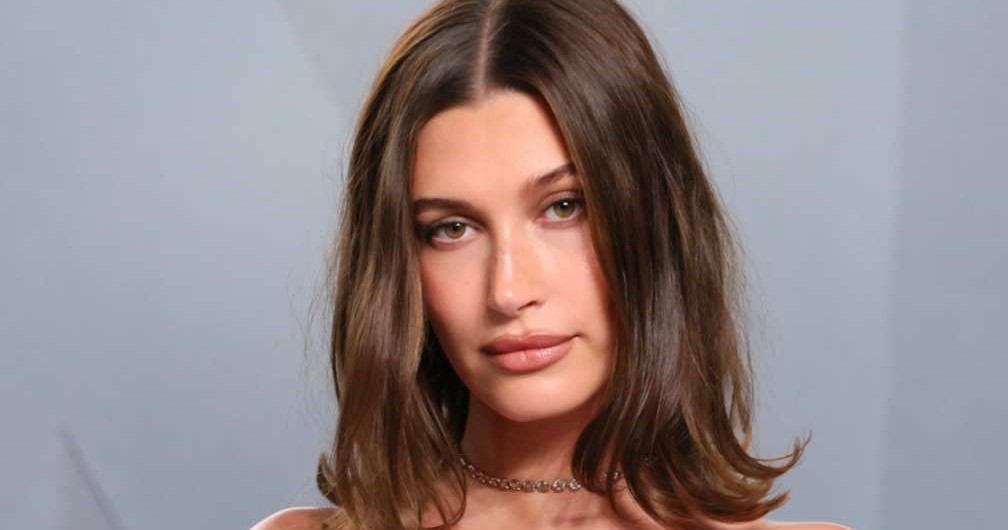
Hailey Bieber was diagnosed with premenstrual dysphoric disorder roughly six months after giving birth to her son, Jack Blues, and says the condition remains thinly researched and rarely discussed in public. The Hailey Bieber PMDD diagnosis was set out in an interview with Women’s Wear Daily published on Oct. 30, and first disclosed months earlier on the SHE MD podcast.
“After I had my son, I struggled with [PMDD] a bit, and there’s just not a lot of conversation or research around it,” Bieber, 29, told WWD.
Jack Blues, her first child with Justin Bieber, was born on Aug. 22, 2024, according to People. Six months after that date falls in early 2025. No outlet has published a precise diagnosis date, and Bieber has not named the clinician who made the diagnosis.
What Is Confirmed And What Is Her Account
Two categories of information sit inside this story, and they do not carry equal weight.
Confirmed: the WWD interview exists and was published Oct. 30. Confirmed: Bieber said on the SHE MD podcast that she was diagnosed about six months postpartum, that the symptoms were more severe than the premenstrual syndrome she had experienced before pregnancy, and that they eased once her period began and improved gradually over time.
Her account, not independently verified: everything about severity. “You’re like, ‘Why does it feel like my whole entire life is gonna end?’” she said on the podcast. “You just have all these swirling thoughts and feelings, and just everything feels like the biggest deal in the world.”
On the same podcast she was blunter than in the WWD interview. “It sucks. It is also dangerous, and it should be taken seriously,” she said, according to Yahoo Entertainment.

The clinical definition is not in dispute. Johns Hopkins Medicine describes PMDD as a chronic condition causing severe emotional, behavioral and physical symptoms in the week or two before menstruation, subsiding once the period starts. The Office on Women’s Health, cited by People, notes symptoms can include intense mood changes, irritability, depression or anxiety.
Secondary reports do not agree on every date. One Yahoo Entertainment account places the SHE MD appearance in March. A separate Yahoo piece says May. The March date appears in more of the coverage, including Us Weekly, which described the WWD interview as coming two years after Jack’s birth. No primary transcript or episode date appears in any of the reports reviewed.
Why The Hailey Bieber PMDD Diagnosis Matters Beyond Hollywood
The sentence carrying the most weight is not about symptoms. It is about the research gap.
“There’s so much that happens when you are pregnant, during childbirth,” she said in the WWD interview. “There’s so many things that happen leading up to having a child.”
Her commercial interest followed the statement. Rhode, the beauty brand she founded, announced a $5 million, three-year partnership with the Foundation for Women’s Health, described by Yahoo as the brand’s largest philanthropic investment to date. The money is directed at medical research, education and care in what the reporting calls historically underfunded areas. It is an announced three-year pledge, not a completed grant, and no recipient institutions have been named.
For readers outside North America and Europe, the coverage leaves an obvious hole. All five reports reviewed for this article anchor their clinical definitions in United States institutions, Johns Hopkins and the Office on Women’s Health. None cites a prevalence figure for sub-Saharan Africa, an African clinician, or a study conducted on the continent. That absence does not prove PMDD is under-diagnosed in Africa. It proves the reporting does not establish the question either way, and that a global audience is being handed a US-framed condition without a global evidence base.

PMDD is diagnosed on cyclical behavioural criteria, which is precisely the kind of presentation that gets missed where menstrual health already carries stigma and consultation time is short. A celebrity disclosure travels faster than a prevalence study. It does not replace one.
Reaction And Prior Health History
The disclosure is not isolated. In 2022 Bieber was hospitalised for what the coverage describes as a stroke or ministroke, and later underwent a patent foramen ovale closure procedure to close a hole in her heart, a defect she said she was born with. She has described that episode as making her “a little bit extra hyper-aware” of her body.
TMZ reported that Bieber also said on the SHE MD podcast that she has a uterine septum, a condition associated with higher miscarriage and infertility risk. That detail does not appear in the WWD interview coverage and has not been corroborated elsewhere in the reports reviewed.
Her own explanation for speaking publicly is modest. “Conversation, for me personally, makes me feel less alone,” she said. “When we can identify with each other and have conversations relating to each other and talking about the things we’re dealing with and struggling with, I do think it makes it feel like less of a lonely journey.”
What To Watch
Three things will decide whether this becomes more than a celebrity health item.
First, whether the Rhode commitment produces named research grants in underfunded regions or stays inside existing US funding channels. The announcement gives a figure and a duration. It does not yet give a destination.
Second, whether clinicians in Africa and other low- and middle-income regions answer with prevalence data. Until someone publishes it, the global version of this story will keep citing Baltimore and Washington for a condition that affects women everywhere.
Third, whether the Hailey Bieber PMDD diagnosis moves other public figures to describe what they experienced rather than only that they experienced it. That is the one claim in the story a reader can actually test.
Frequently Asked Questions
When was Hailey Bieber diagnosed with PMDD?
Bieber said she was diagnosed about six months after giving birth to her son Jack Blues, who was born on Aug. 22, 2024, per People. That places the diagnosis in early 2025. No outlet has published an exact diagnosis date.
Where did Hailey Bieber first discuss her PMDD?
She first disclosed it on the SHE MD podcast, which most reports date to March, though one Yahoo Entertainment account says May. She restated it in a Women’s Wear Daily interview published Oct. 30.
What has Rhode committed to women’s health research?
Rhode announced a $5 million, three-year partnership with the Foundation for Women’s Health covering medical research, education and care in underfunded areas. It is an announced pledge; no recipient institutions have been disclosed.
FIRST TIME REACTIONS:
Be the first to leave us a comment – Hailey Bieber PMDD Diagnosis Followed Son Jack’s Birth, down the comment section.
JOIN US ON OUR SOCIAL MEDIA:

About Xavier Catherine
Xavier Catherine is the Technology Lead at AfriLatest. With a background in computer science and a focus on innovation, he oversees the platform's technology infrastructure. Xavier also contributes reporting on AI, gadgets, and cybersecurity, ensuring AfriLatest remains secure, reliable, and user-friendly.
View all articles by Xavier CatherineBlack Celebrities
Celebrity Traitors Final Predictions: Ex-Players On Tactics
Celebrity Traitors final predictions from ex-players Judy and Roxy Wilson, Theo Mayne and Alex Oleksy, plus what the evidence actually supports.


The Celebrity Traitors finale airs on BBC One at 20:00 GMT on Friday, and the loudest argument around it is not about who deserves the prize. It is about whose Celebrity Traitors final predictions deserve a hearing. Three kinds of claim are in circulation: first-hand testimony from people who sat in the castle, format and scheduling details confirmed by the broadcaster, and a thick fog of confident guesswork. Only two of those three survive a fact check.
The former players have been unusually willing to talk. Their accounts agree with each other, which is more than can be said for the punditry.
The Tactics Ex-Players Actually Confirm

Judy Wilson, 61, from Doncaster, holds the least enviable record in the show’s history: first player banished from the castle in series four. Her explanation of how the vote formed is the most useful tactical detail anyone has offered this season.
“They’ve got nothing to go off, so obviously people are all going to jump on the same bandwagon,” she told the BBC. “I had to go down gracefully.”
Her daughter Roxy, 33, who was adopted by Judy at five and survived 11 episodes before the traitors murdered her, described the same mechanism from the inside: “When you’re in there, your version of the truth becomes the truth, and nobody can tell you otherwise. You’re in your own echo chamber.”
Two players, separate exits, identical diagnosis. That is what corroboration looks like, and it is worth more than any theory built out of screen time.
Roxy also supplied the season’s cleanest piece of gameplay evidence. She had been backing Joanne McNally, a faithful, who was then banished by her fellow faithful on Thursday. A faithful bloc removing one of its own, late, is not a twist. It is the format working exactly as designed — and it is the single most repeatable pattern in the game.

Theo Mayne, 31, who played a faithful in the first UK series in 2022, put the mental load plainly: “It’s hard to use your brain because you’re just always thinking about, am I going to be murdered?” He added that “the game is like a big turning cog”, and he is tipping Maya to “go all the way”.
Jessie Roux, 30, from Hull, remembers the temperature dropping at the round table. “When all of us had our different rules, the air just went cold.” Alex Oleksy, 32, went further: “It turns you so paranoid, it’s unreal… It’s like having a pot on the boil.”
Why Celebrity Traitors Final Predictions Split Along Evidence Lines
The Mirror’s halfway assessment at episode five got several things on record that can be checked against the broadcast. Maya Jama is a traitor and has played it well, to the point that Amol, murdered at her first opportunity, said: “I love her and hate her.” Professor Hannah Fry became a traitor, and the paper’s read is that her obvious cleverness now makes her a banishment target rather than a murder one. James Blunt has been wrong at nearly every turn, by his own admission. Leigh-Anne Pinnock holds a key that gives the traitors a 25% chance of failure on a kill — a confirmed mechanic, not gossip.
Then there is the airtime theory: that players featured most heavily are about to be cut, because producers want to drain them while they still can. The Mirror itself calls the reasoning “not very scientific”. It is also unfalsifiable. Any exit can be retro-fitted to fit it, which makes it a mood rather than a method.
The same discipline applies to small details. Series labels around this franchise are easy to mix up — the BBC’s copy places Judy’s original run in series four, while syndicated versions of the same interview package label the current celebrity run series two. Anyone quoting numbers from this week’s coverage should check which show they belong to first.
Where The Confident Calls Fall Apart
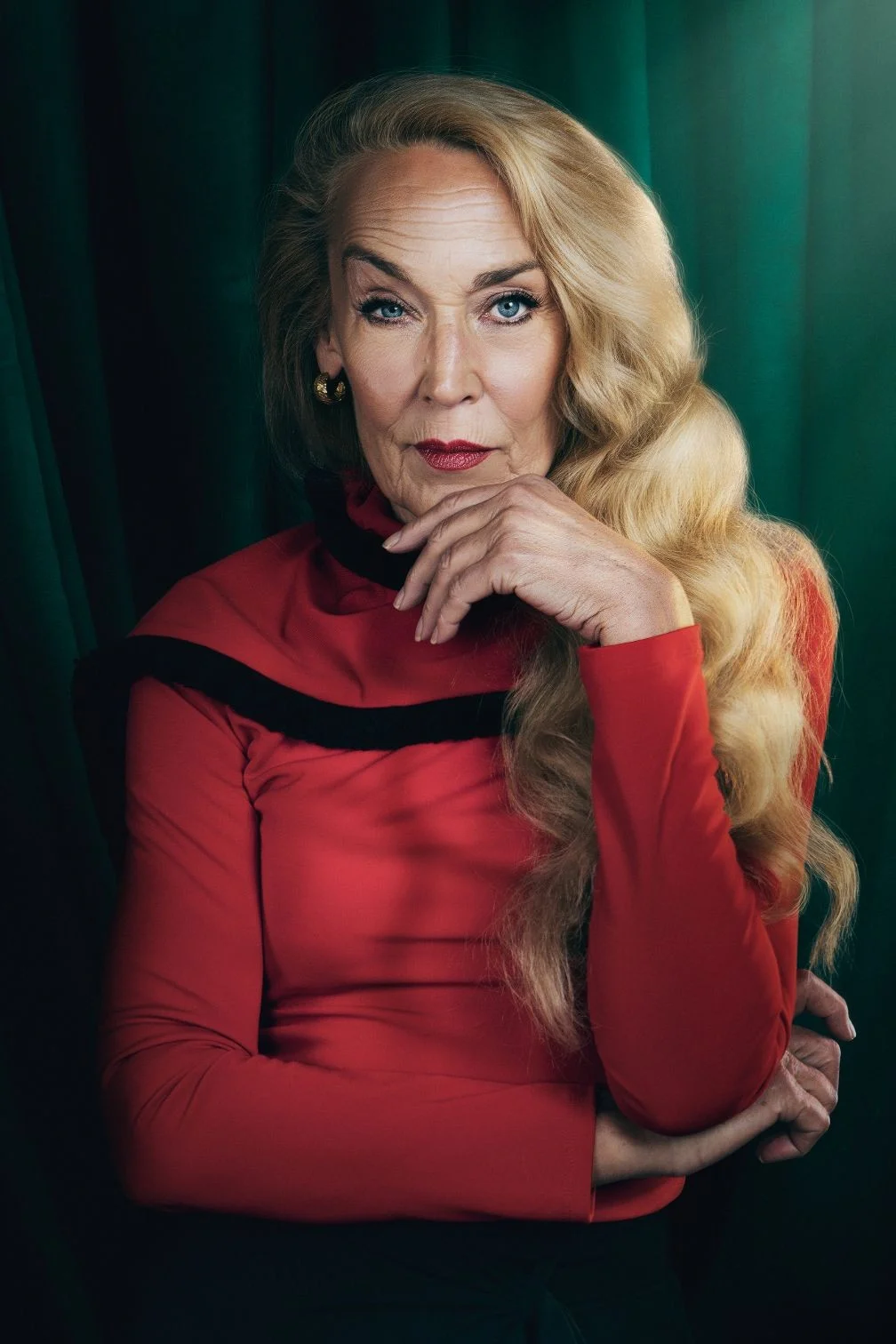
Three separate ex-players tip Maya Jama. That consensus feels like evidence. It is not. Judy, Theo and Jessie are watching the same edited episodes as everyone else, plus clips. Living in the castle teaches you how the pressure feels, not how the endgame resolves.
The proof is Roxy. She was in the building, she read the room for 11 episodes, and her pick was banished two days before the final. Insight into the experience and accuracy of prediction are separate skills, and most Celebrity Traitors final predictions circulating this week keep confusing the two.
Oleksy’s sharpest line is a character note rather than a forecast: “James Acaster is such a reluctant traitor! We’ve seen all different kinds of traitors, but I don’t think we’ve seen one that played quite like James.” That tells you what the season feels like. It does not tell you the result, and it should not be filed as if it does.
What is verifiable is the audience. Headrow House in Leeds is screening the final, plus a repeat of the semi-final for anyone who missed Thursday, from 18:00 — ticketed but free to attend. Two Thirds Beer Co in Sheffield is showing it too. Owner Ben Stubbs said the last final drew a “brilliant” response: “We weren’t quite sure what to expect.”
That is a measurable shift. A parlour-game format has become a night out, with venues booking their evening around a 20:00 GMT broadcast. Yahoo Entertainment carries the same interview package, but the pub screenings are the part of this story that is hardest to argue with.
The Verdict
Celebrity Traitors final predictions should be graded by their inputs, not their confidence. Testimony from banished and murdered players is solid, and it consistently describes a game where votes snowball and paranoia does the traitors’ work for them. Broadcaster-confirmed scheduling and format mechanics are solid. Airtime theories and gut calls from people watching clips are not, however many people repeat them in the same week.
Anyone asking what to queue up first should start with Roxy Wilson on the Joanne McNally banishment, then the Mirror’s episode five notes on Hannah Fry. Those two pieces together explain why the faithful keep losing the numbers — and they will tell you more about Friday night than any confident winner claim doing the rounds tonight.
Frequently Asked Questions
When is The Celebrity Traitors finale on?
The finale airs on BBC One at 20:00 GMT on Friday, according to the BBC. Some venues, including Headrow House in Leeds, are screening it from 18:00 with a repeat of the semi-final beforehand.
Who are the ex-players tipping to win?
Judy Wilson, Theo Mayne and Jessie Roux have all said they are backing Maya Jama. That is a read from watching the broadcast, not insider knowledge of the endgame, and Roxy Wilson’s similar confidence in Joanne McNally did not hold.
Is the airtime theory about who gets eliminated reliable?
No. The theory holds that heavily featured players are about to be cut, but the Mirror, which reported it, describes the reasoning as not very scientific. It cannot be tested, because any exit can be explained after the fact.
Receive alerts for Celebrity Traitors final predictions and more like it.
FIRST TIME REACTIONS:
Be the first to leave us a comment – Celebrity Traitors Final Predictions: Ex-Players On Tactics, down the comment section.
JOIN US ON OUR SOCIAL MEDIA:

About stephen Douglas
Stephen Douglas is a gaming and entertainment author at AfriLatest. With a background in social media management and community building, he covers the latest trends in the gaming industry, esports, and digital culture. Stephen creates engaging content that keeps readers connected and informed about the games and entertainment they love.
View all articles by stephen Douglas-

 Car Reviews2 weeks ago
1955 Chevy Bel Air Restomod: What SEMA Really Proves
-
Startups2 months ago
What a Successful Dangote Refinery IPO Really Says
-
Health and Fitness1 month ago
Curly Hair Hydration: 5 Proven Steps That Actually Work
-
Savings & Investing3 weeks ago
Hidden Medicare Fees Draining Your Retirement Savings
-
Tech & Gadgets1 month ago
Apple Watch and AirPods Fall Deals: Save $120 Today
-
Health and Fitness1 month ago
9 Best Hair Thickening Shampoos for Men in 2026
-
University Admissions2 months ago
UNILAG 2026/2027 Admission: Direct Entry & Post-UTME Guide
-
Football2 months ago
South Carolina vs Alabama: Tide Roll to 35-10 Halftime Lead