
Tech & Gadgets
SynthID Detector: How to Spot AI Fakes in 3 Steps
Learn how to use Google’s SynthID Detector to check if images, videos, or audio are AI-generated. Step-by-step guide plus limitations.


You want to know if that viral image or video in your feed is real. Google’s SynthID Detector gives you a free way to check — but only for content made with certain AI tools. Here’s how to use it, what it can and can’t do, and why it matters more than ever.
What SynthID Detector Actually Does
SynthID Detector is a free tool that checks whether an image, video, or audio file was created or edited with AI. It works by scanning for an invisible watermark that Google’s DeepMind unit has been embedding in AI-generated content since 2023. Google says it has watermarked more than 180 billion images and videos, plus the equivalent of 240,000 years of audio.

The detector now sits inside Google Search, the Gemini app, and Chrome. It handles over one million verification requests a day. You can also use the dedicated website at synthid.com.
But there’s a catch. SynthID Detector only recognizes content carrying Google’s watermark or one from its listed partners: OpenAI, NVIDIA, and Kakao. Apple is expected to join. Anything made with tools outside that ecosystem leaves no watermark SynthID can read.
How to Check an Image, Video, or Audio File
Step 1: Go to synthid.com. You’ll need to sign in with a Google, OpenAI, or Apple account. This is to stop bad actors from using the detector to train watermark-removal scripts.
Step 2: Drag and drop your file into the browser box. SynthID handles JPGs, high-res HEIC files, MP4 videos, and uncompressed WAV audio.
Step 3: Read the result. If SynthID finds a watermark, there’s a good chance the content was created or edited using a participating AI system. If it doesn’t find one, that does not automatically mean the content is authentic. It could still be AI-generated by a system that doesn’t use SynthID.
The site won’t break down which exact parts of an image were edited. It gives a fast binary answer. You’re capped at around ten checks per day per user.
You can also use the Gemini app. Just ask “Is this AI-generated?” after uploading an image. According to The Verge, video and audio verification will come “soon,” and Google intends to expand the functionality into Search.
What SynthID Detector Can’t Do
SynthID Detector is not a universal AI lie detector. It only confirms if an image was made with Google’s AI or a partner’s AI. It cannot tell you if an image was made with a non-Google program.
A CNET test found that Gemini correctly identified an AI-generated image of Ken Paxton and Donald Trump on a golf course with Grimace — but then hallucinated a fake backstory about the original photo. The tool got the AI part right but invented details.
Gizmodo ran a similar test. They uploaded a Grok-generated image to SynthID.com. The response: “SynthID was not detected. It is unlikely that this media was made with AI from a SynthID partner.” That’s a hedge, not a definitive answer. Gizmodo notes that people may check SynthID, see no watermark, and wrongly assume the content is real.
Meta has its own AI detection software, and a Reuters investigation found it sometimes fails to flag content created with Meta’s own tools. No detector is perfect.
Why This Matters for Nigeria’s 2027 Election
Nigeria is 18 months from its next major election cycle. AI-generated political content is already well documented. In July 2025, an AI-generated image showed Peter Obi sharing tea with Sani Abacha — a dictator who died in 1998. Fact-checkers confirmed it was fabricated. A TikTok video falsely claimed President Bola Tinubu was critically ill after being poisoned. A 2024 deepfake suggested Tinubu promised fuel at ₦100 per litre; it reached about 89,000 views before being debunked.
Ahead of the 2023 elections, a manipulated audio clip falsely implied Atiku Abubakar, Ifeanyi Okowa, and Aminu Tambuwal were coordinating electoral fraud. Fact-checkers found it was stitched together from unrelated clips.
According to TechBuild Africa, SynthID Detector only recognizes AI content that carries Google’s watermark or one from its listed partners. Open-source generators, cheap mobile apps, and AI tools built outside the Google-OpenAI-NVIDIA circle leave no watermark. The tool also launches only in English, limiting its reach in a country where political content moves in Hausa, Yoruba, Igbo, Pidgin, and dozens of other languages.
Nigeria isn’t unprepared. INEC established an Artificial Intelligence Division in May 2025. The Center for Collaborative Investigative Journalism built ElectionWatch to track misinformation on TikTok and Telegram. FactCheckAfrica’s MyAIFactChecker supports Hausa, Yoruba, and Swahili, though it can’t yet verify deepfake audio, images, or video.
A Dubawa investigation found that approximately 75 percent of Nigerians encounter misleading content online, and 68 percent admit to having believed and acted on it.
Tips for Using SynthID Detector Effectively
Don’t treat a “no watermark detected” result as proof of authenticity. It only means SynthID didn’t find a watermark from a partner. The content could still be fake.
Cross-check with other tools. Ask Gemini, Grok, or Microsoft Copilot. But remember they can be wrong too. Gizmodo found that Grok said a fake Elon Musk image was authentic, and Copilot said there wasn’t enough evidence either way.
Look for visible signs. Google adds a small, visible, sparkle-shaped watermark to its AI content, but it’s easy to miss when scrolling. AI images often have plastic sheen, weird hands, or mismatched shadows.
Report suspicious content. Platforms are getting better at flagging AI-generated content automatically, but they’re not there yet. The onus is still on users to confirm for themselves.
The Bottom Line
SynthID Detector is a real advancement. It’s free, fast, and handles over a million requests a day. For images made with Google’s AI or a partner’s AI, it gives you a quick confirmation. But it’s not a silver bullet. It won’t catch content from open-source tools, obscure mobile apps, or non-partner AI systems — the exact tools most likely to be used for political manipulation in Nigeria and elsewhere.
Your next step: bookmark synthid.com and use it before you share that suspicious video. Then ask yourself: if SynthID doesn’t detect a watermark, does that mean it’s real? Not necessarily. Treat it as one piece of evidence, not the whole answer.
Frequently Asked Questions
Can SynthID Detector tell me if any image is AI-generated?
No. It only detects AI content that carries Google’s SynthID watermark or one from its partners like OpenAI, NVIDIA, and Kakao. If it finds no watermark, the content could still be AI-generated by a non-partner tool.
Is SynthID Detector free to use?
Yes. You can use synthid.com for free, but you need to sign in with a Google, OpenAI, or Apple account. There’s a limit of about ten checks per day per user.
What file types does SynthID Detector support?
It handles JPGs, high-res HEIC files, MP4 videos, and uncompressed WAV audio. Google says video and audio verification in Gemini will come soon.
Related Articles
- Natanael Cano Postpones Mexico Tour: Refunds & Health Focus
- Quartz Countertops Banned in California: What You Must Know
- Pixel 11 owners still waiting on Android 17 QPR1
- Apple Watch and AirPods Fall Deals: Save $120 Today
- Prime Big Deal Days Fitness Deals: 50% Off Top Gear
 Follow AFRILATEST on Google News
FIRST TIME REACTIONS:
Be the first to leave us a comment – SynthID Detector: How to Spot AI Fakes in 3 Steps, down the comment section.
JOIN US ON OUR SOCIAL MEDIA:





AI & Technology
OpenAI AI Agents Finish 46% of Research Tasks: What It Means
OpenAI AI agents complete 46% of two-to-four-hour research tasks. What the report proves, what it hides, and what it really costs Nigerian teams.


OpenAI AI agents are software processes that carry out multi-step research work — launching training runs, reading results, writing code — with nobody stepping in, and the company now says they finish 46% of tasks that would take a human two to four hours.
That number comes from an internal report published on November 18, and it is the most useful thing OpenAI has released about agents this year. Not because 46% is impressive, but because it is specific. It can be checked, argued with, and priced. A launch video cannot.
The catch sits one line below the headline. In March, the same measure read 23%. The improvement is real on paper. But OpenAI’s own write-up concedes that the task mix changed over those seven months, which means stronger models and better decisions about what to delegate could both explain the jump. A rising number measured against a moving set of tasks is a trend, not a proof.

What the OpenAI AI Agents Report Actually Measures
The report splits work by human hours and by task type, which is where it earns its keep. On assignments needing four to eight human hours, success climbed from 13% to 35%. On assignments needing two to four hours, it went from 23% to 46%.
Then the jagged edge appears. Between August and October, agents completed 69% of communication tasks and 58% of analysis tasks against 43% of build tasks. At task level, monitoring a training run scored 79%, answering technical questions 72%, launching a training run 35%, building evaluation or reinforcement-learning environments 29%, and writing code for inference and serving stack 25%.
That last figure is the one to read twice. The cheap, checkable work is already automated. The expensive, judgment-heavy work is not. Anyone who has tried to hand an agent an open-ended engineering problem in Lagos or Nairobi will recognise the pattern: fast first draft, expensive cleanup.
Where the Agents Fail, and Why That Matters More
OpenAI interviewed 10 researchers and surveyed 101. The complaints were consistent and specific: poor research taste, weak sense of code quality, an inability to separate good data from bad. One pretraining researcher said they still had better research taste than the models but had no confidence that would last. Others described piles of what they called AI slop.
The company also recorded what happens when agent output goes unchecked. On October 6 it released mathematical results from an internal model; the next day, three manuscripts were withdrawn after a sign error undermined an argument, and fourteen others were revised.
This is the part vendors usually leave out. According to TechRadar’s account of the report, apparently completed assignments frequently contain mistakes that require substantial human correction. Supervised agents are fast in the direction you chose. Unsupervised agents are equally fast in a direction nobody chose.
The Cost Line Nobody in Lagos Should Copy
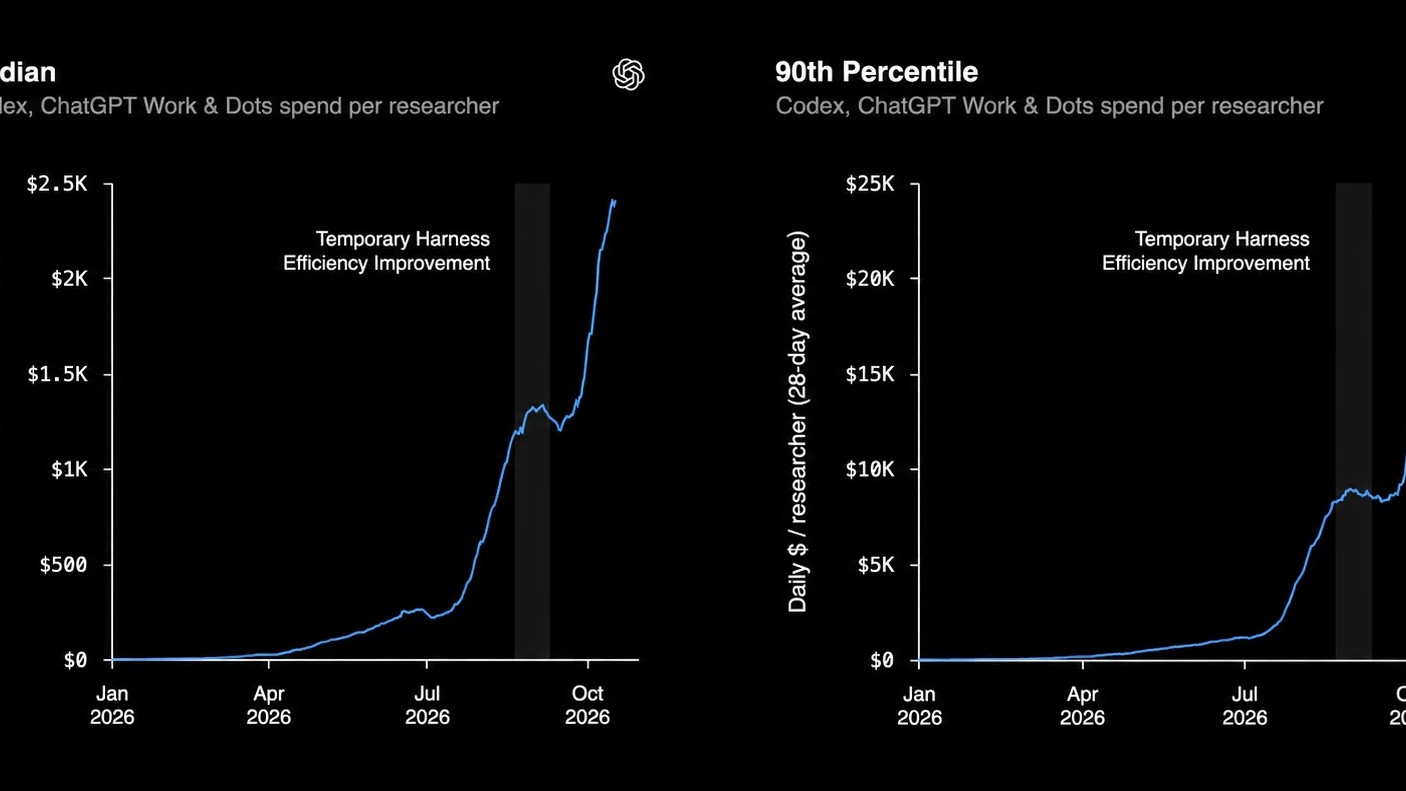
The spending numbers are the ones that will get screenshotted. Median daily agent spend per researcher reached $2,400 in October, up 62% from $1,500 in September. At the 90th percentile it hit $23,000, more than double September’s $11,000. Runtime averaged 5.7 agent workdays per researcher per day, an elevenfold increase.
For a Nigerian team, that is not a price list. Those figures are OpenAI’s own valuation of internal usage at API list prices — what the tokens would have cost at published rates — not a subscription anyone sells. No local pricing tier, naira billing or usage cap appears in the report. Reading the $2,400 as a monthly plan is a category error.
The survey result is stranger. Asked what they would trade for three months of frontier coding agents, the median of 101 researchers offered 40% of their team’s headcount, or 30% of team compute. Staff were also asked to name what agents do not do well, and the answers clustered around problem selection — deciding which question is worth asking.
Privacy and governance get thinner treatment. The published report does not set out data retention, residency or access terms for agent-generated work. That gap matters most in markets where client data crosses borders by default.
How to Use This Without Believing the Headline
Treat the 46% as a ceiling measured on a favourable task mix, then test it on your own work. Give an agent a bounded, verifiable job — monitoring a pipeline, summarising a test run, drafting a changelog — and score the output before it touches production. The categories with documented high success are precisely the ones where a reviewer can check the result cheaply.
Alternatives behave differently, and their numbers are not interchangeable. Anthropic’s own assessment put Claude at the helm of 26% of its AI research and development work in August, up from under 1% in February, using a different definition of what leading a task means. An external METR assessment published November 5 estimated that AI assistance had lifted benchmark improvement to 1.9 times the historical rate, with a confidence interval of 1.5 to 2.8, while conceding the study was not a controlled experiment and that much of the evidence had been redacted.
Even OpenAI’s headline progress metric is not a clean comparison. Its internal capabilities index rose 16.4 points a year since August 2025; Epoch AI measured 14 points a year since late 2024 on a different benchmark mix. Different rulers, similar direction. That is worth noting before anyone claims one lab is definitively ahead.
The honest reading is that OpenAI AI agents have become a real productivity tool for narrow, checkable work and remain a supervised intern for everything else. The report itself concludes that humans remain a core part of the AI research loop, and chief economist Aaron Chatterji wrote that the company needs to share data regularly so outsiders can draw their own conclusions. That invitation is the correct test: not the press release, but whether the published numbers hold up when other people rerun them.
Who should use it: teams with a defined pipeline, a reviewer with authority to reject output, and a dollar budget they can watch daily. Who should not: anyone assuming the 46% transfers to open-ended research, client-facing delivery or regulated data, or anyone who mistakes a self-reported internal metric for a product guarantee. Judge OpenAI AI agents by the corrections their output still needs — that number, not the headline, tells you what you are actually buying.
Frequently Asked Questions
Do OpenAI AI agents really complete nearly half of research tasks on their own?
On OpenAI’s own internal measure, agents completed 46% of delegated tasks estimated at two to four hours of human work in October, up from 23% in March. The report itself notes the task mix changed over that period, so better models and better delegation choices could both explain the gain. The figure covers OpenAI’s research work, not general business tasks.
Does $2,400 a day mean I need that budget to use coding agents?
No. That figure is OpenAI’s valuation of its own researchers’ agent usage at API list prices — what the tokens would have cost at published rates. It reflects very heavy internal use, with the top 10% of users at $23,000 a day. Ordinary usage is billed per token at whatever rate your provider charges, and the report describes no local pricing tier.
What are OpenAI AI agents still bad at?
The report is specific. Writing inference and serving code hit 25% autonomous success, building evaluation and reinforcement-learning environments 29%, and launching training runs 35%. Researchers also flagged weak research taste, poor code quality judgement and difficulty telling good data from bad, which is why close supervision remains necessary.
FIRST TIME REACTIONS:
Be the first to leave us a comment – OpenAI AI Agents Finish 46% of Research Tasks: What It Means, down the comment section.
JOIN US ON OUR SOCIAL MEDIA:

About Xavier Catherine
Xavier Catherine is the Technology Lead at AfriLatest. With a background in computer science and a focus on innovation, he oversees the platform's technology infrastructure. Xavier also contributes reporting on AI, gadgets, and cybersecurity, ensuring AfriLatest remains secure, reliable, and user-friendly.
View all articles by Xavier CatherineAI & Technology
AI Agents Misread Data: What SAP’s Platform Really Fixes
AI agents misread data across company boundaries when ‘Priority’ means two things. A practical review of SAP Business AI Platform’s knowledge graph and limits.

AI agents misread data even when every field is correct. SAP Business AI Platform is SAP’s attempt to fix that: a governed environment that gives agents a knowledge graph of customers, suppliers, products and processes, an ontology that pins down what each term means, and an audit trail on every action taken.
The failure it targets is documented. Writing for TechRadar Pro, Exalate co-founder and CEO Francis Martens describes an agent syncing Jira and ServiceNow that assumes “Priority” means the same thing in both systems. It draws inferences from that assumption, syncs them, and a Priority 1 incident misses its SLA. The affected teams never find out, because the agent reported the ticket as handled. The output was plausible.
Why AI Agents Misread Data That Is Technically Correct

Martens’ diagnosis is the sharpest contribution in the current debate. When agents produce a wrong answer, the reflex is to grant more permissions: read more fields, more records, more systems. That treats context as volume. It is not. Context is interpretation: what a field in one system means in another, how workflow states map to each other, how two tools define the same word. That knowledge lives in the relationship between connected systems, and it differs for every deployment.
SAP’s research chief makes a compatible argument from the other end of the stack. Yaad Oren, Global Head of Research and Innovation at SAP Labs U.S., argues that retrieving data with a customer’s name and total amount is not enough. An agent needs the connections around that customer: how many sales orders, their satisfaction rate, how many delayed shipments, which manufacturing plant the orders came from. Without them, a valid invoice gets blocked, because the invoice itself does not reveal the vendor’s parent company or the credit arrangements that apply.
What SAP Business AI Platform Actually Does
The clearest worked example in SAP’s material is the word “invoice.” One department means a customer payment, another a travel reimbursement, a third a supplier bill. A knowledge graph can link every invoice in a company and still leave an agent with contradictory signals. The ontology is what forces one meaning across systems and carries it into every agent that queries the graph.
The second example is operational. SAP calls it a “parked document”: catering invoices waiting to be split across budgets after a company event, stalled because the controller is on parental leave. An agent without process context reads that as a serious delay. An agent with context reads it as an exception and leaves it alone. Oren’s point is that the same data supports opposite decisions depending on whether the agent knows who is missing and why.

Underneath, SAP argues general-purpose language models are the wrong tool for tables. Its answer is RPT-1.6 (Relational Pre-trained Transformer) and TabPFN-3.5 Plus from Prior Labs, SAP’s frontier AI lab, built for missing values, mixed data types and high-cardinality fields. A tabular orchestration capability in AI Core handles context selection and data access at runtime so predictions can enter production workflows rather than stay in a notebook.
The platform is organised in four layers: models that read relational data, the platform layer holding graphs, semantics and governance, agents that act across finance and supply chain, and the user interface. SAP’s claim is that the platform layer is the one that matters, because a finance agent and a supply chain agent can then reason from the same representation of a customer instead of rebuilding it separately. Governance sits there too: agents run under provisioned identities with scoped permissions, and the audit trail records who acted, under what authorisation, and what was done.
That last detail carries more weight than the demos. A bad answer can be ignored. A wrongly blocked payment or rejected order hits a supplier the same day.
The Evidence Gap Buyers Should Notice
The long VentureBeat article making SAP’s case is labelled “Presented by SAP.” It is a sponsored post, not independent reporting. The technical reasoning stands on its own logic, and Oren’s examples are concrete. But no benchmark, error rate, deployment count or named customer appears in the material, and no third party has tested the claims there.
Pricing is also missing. SAP did not publish BAIP costs, implementation timelines or regional availability in the material reviewed. For a Lagos or Nairobi mid-market firm, those are the first questions, not the last. An agent platform priced for a European enterprise budget is not automatically viable for a distributor running a support desk and an ERP that disagree about what “open” means. Ask for local-currency quotes, data residency terms and a reference customer before signing anything. Features beyond the knowledge graph, ontology and tabular orchestration were not fully confirmed in the source material.
Wipro’s Alternative: Less Frontier Model, More Orchestration

Wipro’s Hari Shetty, Chief Strategist and Technology Officer, describes a different architecture in a separate TechRadar Pro interview: an orchestration layer over a mix of frontier and smaller enterprise-specific models. His argument is that most enterprise tasks do not need a frontier model. A smaller model grounded in the right data is cheaper, easier to govern and better suited to the domain. Wipro has set up an AI-Native Business and Platforms Unit around that bet.
Shetty also supplies the measurement rule that cuts through vendor noise. Agent counts reveal little, because there is no consistent way to define an agent: one organisation calls ten functions ten agents, another bundles the same capability into one. The better measure is work completed against a business outcome, such as fewer missed SLAs, faster reconciliation or better fraud detection. He cites an industry report putting 40% of large organisations at active agentic-AI scaling, and another finding that only 13% of employees feel rewarded for reinventing their work with AI when results are not immediate. Both numbers point at the same constraint. It is organisational, not model capability.
Who Should Use It, And Who Should Wait
SAP Business AI Platform suits organisations already running SAP across finance and supply chain, with processes that span systems and staff who can own the ontology and keep it current. The value is real when the alternative is an agent quietly blocking invoices.
It is a poor fit for a small firm with two or three SaaS tools and no data steward. A written mapping rule and a weekly human reconciliation will be cheaper. It is also a poor fit for any buyer who needs published pricing before a board decision, because there isn’t any.
The test is not how many agents a vendor ships. It is whether AI agents misread data less often after deployment, and whether anyone can prove it with an audit trail. On that measure, SAP has described the right problem and a specific mechanism. The proof is still owed.
Frequently Asked Questions (AI agents misread data)
Why do AI agents misread data that is already accurate?
Because accuracy is not the same as meaning. As Exalate CEO Francis Martens explains, an agent syncing Jira and ServiceNow can assume ‘Priority’ means the same thing in both systems and act on that assumption. The records are correct; the interpretation is wrong, and a Priority 1 incident then misses its SLA without anyone noticing.
Does giving an AI agent more permissions fix cross-system errors?
No. More permissions increase data volume, not context. What the agent lacks is the mapping between systems: how a field in one tool corresponds to its counterpart in another, and how workflow states line up. That mapping is specific to each company’s setup and has to be defined, usually through a knowledge graph and a shared ontology.
How much does SAP Business AI Platform cost?
SAP has not published pricing for BAIP, nor implementation timelines or regional availability, in the material reviewed. Buyers should request local-currency quotes, data residency terms and a reference customer before committing. Independent testing of the platform’s claims was also not available at the time of writing.
FIRST TIME REACTIONS: (AI agents misread data)
Be the first to leave us a comment – AI Agents Misread Data: What SAP’s Platform Really Fixes, down the comment section.
JOIN US ON OUR SOCIAL MEDIA:
About Xavier Catherine
Xavier Catherine is the Technology Lead at AfriLatest. With a background in computer science and a focus on innovation, he oversees the platform's technology infrastructure. Xavier also contributes reporting on AI, gadgets, and cybersecurity, ensuring AfriLatest remains secure, reliable, and user-friendly.
View all articles by Xavier CatherineAI & Technology
Scout Motors AI Training: Earpieces, Hype and Reality
Scout Motors AI training puts an AI assistant in factory workers’ earpieces. What it actually does, what it costs, and where the evidence stops.

Scout Motors AI training, as the company describes it, means a new factory hire learns a parts-picking sequence in minutes with an AI voice in their ear instead of a binder and a written test. That is the pitch. What has actually been shown is narrower, and nobody outside Blythewood, South Carolina has tested it.
The framing is deliberate. “AI training” normally means teaching a model. Scout says it is doing the reverse: using AI to hire, onboard and teach the people who will build its trucks. CEO Scott Keogh made the case at a reporters’ roundtable at the company’s still-under-construction plant, as CNET reported.
That roundtable is the entire public record. No product name, no price, no pilot data, no third-party evaluation.

What Scout Motors AI Training Actually Does On The Line
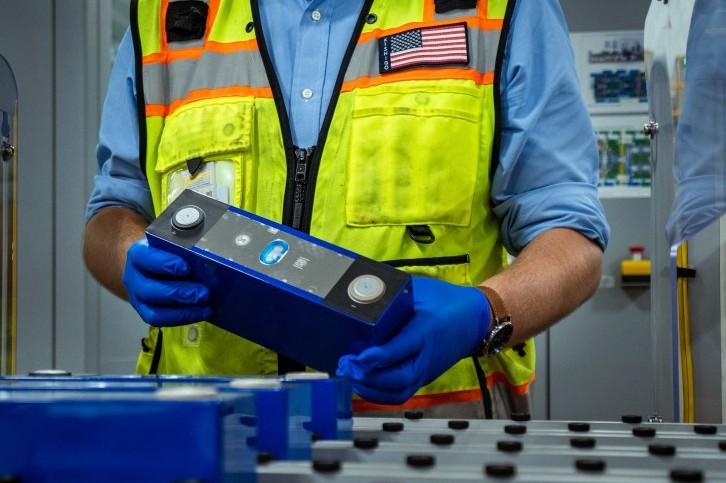
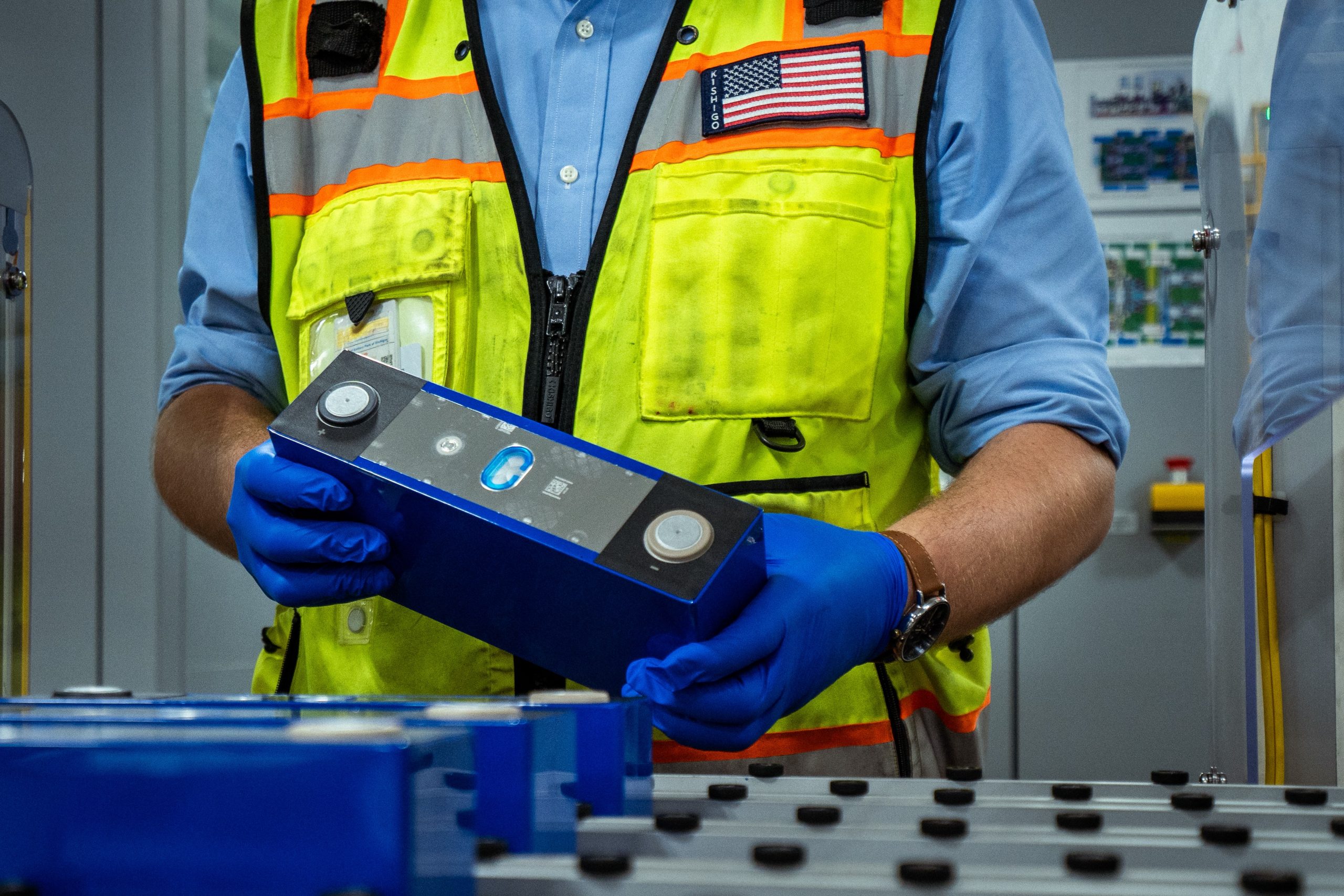
Keogh breaks manufacturing into a set of fundamental tasks and builds the AI around teaching each one. His example is parts picking: a worker walks to 12 boxes, pulls 12 parts, confirms they are in the right sequence and checks them for defects. The earpiece talks the worker through that sequence in real time, adapting the instructions as they go.
The loop is repetition. Keogh says a worker runs the cycle about 15 times, gets faster and better each pass, then moves down the task line to the next skill. “We can train that within minutes,” he said.
Scout Motors AI training has a second layer before any of that starts. Todd Johnson, vice president of manufacturing, says new hires’ backgrounds are fed into a system that suggests where each person fits: a former forklift driver steered toward logistics, someone without final assembly experience toward the body shop, a painter placed as a painter. Training data then feeds back in to tune hiring and placement.
Where The Evidence Runs Out
Three things are missing, and all three decide whether this is a real advance or a good story.
Cost is undisclosed. Scout has not said what the earpieces cost per worker, whether the software is licensed or built in-house, or what the running cost is once the plant approaches its designed rate of around 40 vehicles an hour. CNET’s factory tour put the Blythewood investment above $2 billion plus a $300 million supplier park. There is no line item for training technology.
Independent testing is absent. Every performance claim comes from the company making it. No published time-to-competence figure, no defect rate, no comparison against a control group trained the old way.
And the reporter on the ground was openly unconvinced. CNET’s Antuan Goodwin wrote that parts picking “doesn’t sound like the sort of task you’d need an AI system to help with,” and that the placement logic “sounded a lot like common sense.” Scout’s executives partly agreed, arguing the benefits grow as tasks get more complex. That is the honest state of it: a plausible internal tool with an unproven edge.
A Company That Publishes Demand Data But Not Training Data
The contrast is worth holding onto. Scout has been precise about reservations: more than 160,000 holders, roughly 87% of whom picked the Harvester range-extended configuration over the pure electric version, which is why the company flipped its launch order and will ship the extended-range trucks first. Those are checkable numbers with commercial consequences.
On training, the numbers are adjectives. Fast, efficient, more productive. For a system the company says will shape how quickly the factory ramps, that asymmetry is the story.
Privacy And Placement Are The Undemoed Risk
Feeding a new hire’s work history into a model that recommends where they should work is a hiring decision made by software. Scout has not described any audit, appeal route or bias testing for that step, and has not said how long background data is kept or whether a worker can see what the system concluded about them.
None of that makes the system wrong. It makes it unaudited, and placement models have a way of reproducing whatever patterns sit in the data they learn from.
The Alternatives Are Unglamorous And Available Now
Instruction binders and classroom sessions are what Scout says it replaced. Shadowing a senior worker on the line costs a trainer’s hours but needs no hardware. Recorded video walkthroughs of a task can be shot on a phone. None of these claim to be adaptive; all of them can be measured.
The fair comparison for any plant is not AI versus nothing. It is AI versus the method already running, judged on hours-to-competence and defect rates.
What This Would Take In Nigeria
Scout’s plant sits in a region without a large pool of experienced automotive workers, which is the stated reason placement software matters there. The same logic applies to industrial clusters around Lagos, Ogun and Aba, where employers routinely hire people with adjacent rather than direct experience. Scout pledged more than 4,000 local jobs when it broke ground, and that is the scale at which a training method stops being a novelty.
But an earpiece is a harder tool than a tablet. It needs continuous audio, speech recognition that handles local accents, and a floor quiet enough to hear over. Scout’s body shop runs more than 750 robots across 5,000 weld points. The company has not said which languages or accents the assistant supports, or how it performs under that noise. Until it does, the Nigerian relevance is a hypothesis, not a plan.
Who Should Use It
Scout should, as an internal pilot with published metrics: time-to-competence against a control group, defect rates, and a written rule on what the placement model is allowed to see.
Everyone else should wait. No version of this is on sale. No independent test exists. By Scout’s own timeline the plant is 80% to 95% built, validation runs through 2027, and the first customer deliveries of the Traveler Harvester begin in early 2028. A manufacturer weighing AI earpieces today is being asked to buy a demo.
The useful test for Scout Motors AI training is not whether the earpiece sounds impressive in a roundtable. It is whether a worker trained on it in 2027 is measurably faster, and no less safe, than one trained with a binder a year earlier. Publish that, and the claim earns its weight.
Frequently Asked Questions
What is Scout Motors’ AI earpiece training system?
It is an internal tool Scout Motors says it uses to onboard factory workers. An AI assistant in an earpiece talks a trainee through a task in real time, such as pulling 12 parts from 12 boxes in the correct sequence. Scout says workers repeat a cycle about 15 times and then move to the next skill.
Can other manufacturers buy the Scout AI training earpieces?
No. Scout has not announced a product, a price, or any commercial availability. The system was described by CEO Scott Keogh at a press roundtable at the company’s Blythewood, South Carolina plant, and no independent testing data has been published.
Is there proof the AI earpiece trains workers faster than classroom methods?
Not publicly. Scout claims the method is more productive than binders and classroom sessions, but has released no time-to-competence figures, defect rates, or control-group comparisons. The only outside assessment so far came from a CNET reporter who observed that the example task did not obviously require AI.
Receive alerts for Scout Motors AI training and more like it.
FIRST TIME REACTIONS:
Be the first to leave us a comment – Scout Motors AI Training: Earpieces, Hype and Reality, down the comment section.
JOIN US ON OUR SOCIAL MEDIA:
About Xavier Catherine
Xavier Catherine is the Technology Lead at AfriLatest. With a background in computer science and a focus on innovation, he oversees the platform's technology infrastructure. Xavier also contributes reporting on AI, gadgets, and cybersecurity, ensuring AfriLatest remains secure, reliable, and user-friendly.
View all articles by Xavier Catherine-

 Car Reviews2 weeks ago
1955 Chevy Bel Air Restomod: What SEMA Really Proves
-
Savings & Investing4 weeks ago
Hidden Medicare Fees Draining Your Retirement Savings
-
JAMB & WAEC4 weeks ago
JAMB Admission Process: What Changed And What Is Still Talk
-
World News4 weeks ago
Sheinbaum No Proof Maduro: Mexico’s Test of US Evidence
-
Movies & TV4 weeks ago
Wizkid Starboy Desire Ft Banky W Shaydee: Fact Or Fan Fiction?
-
Trend politics4 weeks ago
How 24-Hour Online Scrutiny Is Running Out Leaders