AI & Technology
Hurricane Isaias: How AI Models Tracked the Storm
Hurricane Isaias became the first Atlantic hurricane of the season. Learn how AI models like Google DeepMind tracked it and how to use them.


Hurricane Isaias became the first Atlantic hurricane of the 2026 season, and it gave weather forecasters a real test of something new: AI models that predict where storms go. If you want to understand how these tools work and how to use them yourself, this guide walks you through the exact workflow forecasters used.
What you need to know first
You do not need a meteorology degree to follow along. But you do need three things: access to public forecast data, a basic understanding of what track models output, and the ability to compare multiple sources instead of trusting just one.
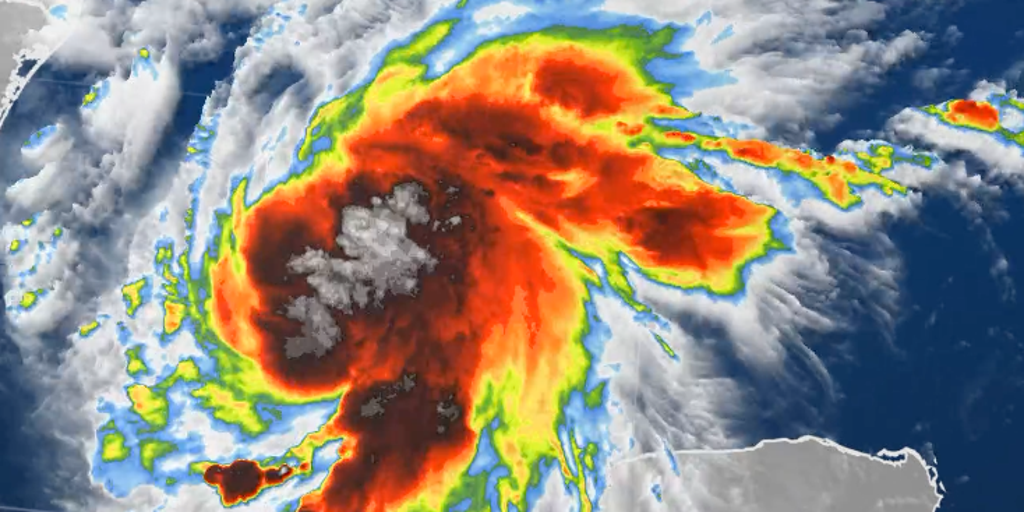
The National Hurricane Center publishes advisories every few hours. These include the forecast cone, wind speeds, and warnings. You can find them at weather.com or directly through the NHC.
Step 1: Pull the current storm data
Start with the NHC’s latest advisory. For Hurricane Isaias, the 5 p.m. ET update showed a Category 2 storm with 100 mph sustained winds, located about 325 miles south of the mouth of the Mississippi River. It was moving northeast at 12 mph.
Write these numbers down. You will compare them against what the models predict over the next 24 to 48 hours.
Step 2: Check what the AI models are saying
This is where things get interesting. According to NBC News, forecasters at the National Hurricane Center faced a dilemma earlier this week. Traditional models disagreed on how sharply Isaias would turn north. Some kept it farther west toward Louisiana. Others pushed it east toward Florida.
Google DeepMind’s AI model predicted the storm would develop into a hurricane and veer eastward. By Thursday morning, forecasters leaned more heavily on that AI track, calling it one of the best performing guidance models this year.
Step 3: Compare AI output against conventional models
Do not just look at one model. Pull up the GFS, the European model, and the AI track side by side. In Isaias’s case, the AI model outperformed conventional forecasts for both track and intensity last year, according to analysis by Brian McNoldy at the University of Miami.
That does not mean AI is always right. It means you should weight it heavily but not exclusively.
Step 4: Translate the forecast into local impact
The NHC’s forecast cone for Isaias showed the center coming ashore anywhere from eastern Mississippi to the western Florida Panhandle. But Jamie Rhome, NHC deputy director, warned that the exact landfall point matters less than people think.
The hazards start coming ashore long before the center crosses land. For Isaias, that meant storm surge of 5 to 7 feet from Ocean Springs, Mississippi, to Indian Pass, Florida. Rainfall of 6 to 10 inches, with up to 15 inches locally. And a Level 3 out of 4 flash flood risk for Mobile, Alabama, and the western Florida Panhandle.
Step 5: Act on the data
If you are in the path, use the forecast to make decisions. Florida Governor Ron DeSantis said it plainly: “If you are in the Panhandle, assume that you are going to lose power.”
Evacuation orders were issued for Dauphin Island in Alabama, plus Walton, Okaloosa, Escambia, and Franklin counties in Florida. If you are in one of those zones, the data says leave.
Tips for using AI weather models
First, check the timestamp. AI models update frequently, but not all platforms show the latest run. Second, look at the ensemble. One AI run is a data point; the full ensemble is a trend. Third, cross-reference with official warnings. The NHC’s hurricane warning for Isaias stretched from Ocean Springs, Mississippi, to the Bay/Gulf County line in Florida. That is the ground truth.
The result
By Thursday evening, Isaias was still a Category 2 hurricane with 100 mph winds. Forecasters expected additional strengthening through early Friday before some weakening near landfall. The storm was tracking closer to the AI-based predictions than the conventional ones.
For anyone watching this storm, the lesson is clear: AI models are now part of the forecasting toolkit. They are not replacing human meteorologists, but they are changing how quickly and accurately we can predict where a hurricane goes.
What to try next
If you want to follow future storms the same way, bookmark the NHC site, find a platform that displays AI model output, and practice comparing the two. Start with the next named storm. Check the AI track against the official forecast. See how they differ. Over a few storms, you will get a feel for when AI adds value and when it does not.
Hurricane Isaias was the first real test of AI’s prediction prowess this season. It will not be the last.
Frequently Asked Questions
What category was Hurricane Isaias when it made landfall?
Hurricane Isaias was forecast to make landfall as a Category 1 or potentially a Category 2 hurricane late Friday or early Saturday. It had sustained winds of 100 mph as of Thursday evening.
Did AI models predict Hurricane Isaias better than traditional models?
According to NBC News, Google DeepMind’s AI model predicted Isaias would develop into a hurricane and veer eastward. Forecasters leaned more heavily on that track, calling it one of the best performing guidance models this year.
Which areas were under evacuation orders for Hurricane Isaias?
Mandatory evacuation orders were issued for Dauphin Island in Alabama, plus Walton, Okaloosa, Escambia, and Franklin counties in Florida. Voluntary evacuations were issued for parts of Santa Rosa, Bay, and Wakulla counties.
Related Articles
- Pixel 11 owners still waiting on Android 17 QPR1
- Apple Watch and AirPods Fall Deals: Save $120 Today
- Prime Big Deal Days Fitness Deals: 50% Off Top Gear
Receive alerts for Hurricane Isaias and more like it.
 Follow AFRILATEST on Google News
FIRST TIME REACTIONS:
Be the first to leave us a comment – Hurricane Isaias: How AI Models Tracked the Storm, down the comment section.
JOIN US ON OUR SOCIAL MEDIA:





AI & Technology
ChatGPT vs Gemini Voice: What Actually Works in 2026
ChatGPT vs Gemini voice modes compared by tier, task and privacy cost — what Live Dictation and Gemini Live actually change for users.


If the choice between ChatGPT and Gemini comes down to voice, the buying question is narrow: which tool lets you finish a real task without touching a keyboard, on the plan you can actually afford? Everything else — the demo reels, the sounds-human comparisons — is marketing. A ChatGPT vs Gemini decision made on demo audio is a decision made on nothing.
The documentation that matters landed in a short window. OpenAI shipped Live Dictation, which transcribes as you speak instead of waiting for you to stop, and removed the 10-minute recording cap. According to The Verge, it rolled out globally across web, desktop, iOS and Android, on all plans. OpenAI’s own announcement covers the conversational side: GPT-Live, a full-duplex voice model that listens and speaks at the same time.
Two different products. Most coverage blurs them.

The Real ChatGPT vs Gemini Question Is Access Tier, Not Hype
ChatGPT’s voice work splits into two engines. Standard Voice is the free default: it converts speech to text, processes it with GPT-4o or GPT-4o mini, then speaks the reply — which is why it lags. Advanced Voice uses natively multimodal models, picks up tone and pace, and responds in real time. Free accounts get a daily preview of Advanced Voice, not unlimited access. CNET’s hands-on review is explicit about that split.
Then there is dictation, which is not voice mode at all. Dictation is a typing replacement: you speak, the transcript lands in the prompt box, you edit it, you send. Voice mode is a conversation. CNET also notes that Gemini Live already handles interruption — you can talk over it and it keeps up — while Claude’s voice mode sits in beta on mobile with on-screen bullet points, and Perplexity’s assistant answers spoken questions and launches apps on command.
That is the honest state of the field. The features exist across four products. The differentiator is what each vendor publishes about limits.
Free Tier: Where The Demonstrable Gains Actually Sit

The strongest evidence in the ChatGPT vs Gemini comparison is unglamorous. A free ChatGPT account now gets live dictation with no 10-minute ceiling, a toggleable live transcript, and an editable prompt box before sending. That is a change a user can measure: a 12-minute recorded note used to require chunking into pieces. Now it does not.
CryptoBriefing’s rollout report dates the start to November 18, 2026, and confirms the upgrade is not paywalled. Record mode — the meeting and voice-note transcriber — stays in beta and limited to Plus, Enterprise, Edu, Business and Pro workspaces. So the free tier gets faster transcription but not the workspace-grade recorder.
For a Nigerian user on a metered connection, that distinction carries weight. Live dictation streams audio as you speak rather than uploading a finished clip, and continuous streaming is not the cheap option on prepaid data. The practical test is a three-minute voice note on your own SIM, not a review written from fibre.
Gemini’s free positioning cannot be judged to the same standard from the available material. CNET documents Gemini Live’s conversational behaviour. It does not document a Google equivalent to the editable live transcript, or a published dictation time limit. Readers should treat that gap as unverified, not as proof of absence.
Paid Tier: GPT-Live, Delegation And What It Does Not Fix
Paid ChatGPT users get GPT-Live, rolled out as GPT-Live-1 and GPT-Live-1 mini, with GPT-5.5 running in the background. When a request needs web search or deeper reasoning, GPT-Live delegates it and keeps talking while the answer is prepared.
OpenAI’s published evaluations put GPT-Live-1 ahead of Advanced Voice Mode on GPQA, BrowseComp and an internal τ³-Voice Telecom variant, and ahead on human preference across matched 5–10 minute conversations. Those are vendor-run tests, one of them on a customised internal variant. They are evidence of direction, not independent proof.
What none of it fixes: voice mode runs on the same language model as typed ChatGPT, so it hallucinates the same way. CNET says it plainly — double-check anything important. A confident spoken answer about a drug dosage or a contract clause carries the same risk as a typed one, with less visual friction to catch it.
Privacy And The Cost Of Talking Out Loud
Dictated audio stays tied to the user’s chat history and follows OpenAI’s existing data policies. Translation: a voice memo naming a client, a price or a medical detail becomes a chat record. Anyone who would not type it should not say it.
OpenAI has added SynthID watermarking to supported audio generated through ChatGPT Voice and the API, and opened API access to its provenance verification tool so organisations can check whether an audio file came from OpenAI’s models. That matters in markets where cloned-voice fraud is a live concern — but it covers generated audio, not the transcription of a human speaking.
One disclosure worth flagging: Ziff Davis, CNET’s parent company, filed a lawsuit against OpenAI in April alleging copyright infringement in training and operating its systems. CNET published that alongside its recommendation. Readers can weigh it.
Verdict: Which One To Pick Today
Top pick is ChatGPT, on documented grounds rather than preference. Two independent outlets confirm the same facts: live transcription across web, desktop, iOS and Android; every plan including free; the 10-minute cap gone; an editable transcript before sending. That is a specific, checkable improvement to a specific task.
Runner-up is Gemini Live, and the position comes with a caveat. CNET credits it with genuine interrupt-and-keep-up conversation. But Google’s plan structure, dictation limits and transcript editing are not confirmed in the material reviewed here, so the ChatGPT vs Gemini verdict stays provisional on the Gemini side. Test Gemini Live against your own workload before assuming parity in either direction.
Treat adoption numbers with the same caution. OpenAI says more than 150 million people talk to ChatGPT weekly through Voice and Dictation. CryptoBriefing reports roughly 250 million weekly voice and dictation users by early November 2026, up from over 150 million in July. Two figures that do not reconcile — directional, not precise.
The ChatGPT vs Gemini buying rule stands. Name the version, test one identical task on both, check where the audio goes, and ignore any comparison that opens with how natural the voice sounds. On that test, ChatGPT currently wins the documented case — and a documented win is the only kind worth paying for.
Frequently Asked Questions
Is ChatGPT Live Dictation the same thing as ChatGPT Voice mode?
No. Voice mode is a spoken back-and-forth conversation with the AI. Live Dictation is a typing replacement: you speak, the transcript appears in the prompt box, you edit it before sending. CNET and The Verge both treat them as separate tools serving different jobs.
Do free ChatGPT users get the new dictation features?
Yes, for dictation. Reporting confirms the Live Dictation upgrade, including the removal of the 10-minute recording limit, reaches all plans including the free tier on web, desktop, iOS and Android. Advanced Voice conversations remain a paid feature, with free accounts limited to a daily preview.
How does Gemini Live compare on dictation?
Only partly verifiable. CNET confirms Gemini Live handles interruption well, letting you talk over it. A Google equivalent to the editable live transcript or a published dictation time limit is not confirmed in the available material, so that gap should be treated as unverified rather than as proof Gemini lacks it.
FIRST TIME REACTIONS:
Be the first to leave us a comment – ChatGPT vs Gemini Voice: What Actually Works in 2026, down the comment section.
JOIN US ON OUR SOCIAL MEDIA:

About Xavier Catherine
Xavier Catherine is the Technology Lead at AfriLatest. With a background in computer science and a focus on innovation, he oversees the platform's technology infrastructure. Xavier also contributes reporting on AI, gadgets, and cybersecurity, ensuring AfriLatest remains secure, reliable, and user-friendly.
View all articles by Xavier CatherineAI & Technology
AI Data Centres Face Backlash: The 2026 Vote Count
AI data centres lost 40 of 41 local ballot votes in the 2026 US midterms. What the verified record shows on costs, timelines and siting risk.


The tool under review is AI data centres, buildings that draw grid power to train and serve models, and the specification sheet towns are being asked to sign has a hole in it. The benefits arrive as projections. The costs arrive as line items on the electricity bill.
That gap turned into a political liability in the November 2026 US midterms. Of 41 local ballot measures on data centre restrictions across 10 states, voters rejected the industry’s position in every one except Harwood, North Dakota, according to Ballotpedia’s count reported by CNBC. Ohio alone carried 21 of them.
CNN’s voter poll found about a quarter of voters called AI and data centres “crucial” to their vote, behind cost of living and corruption. Asked whether they wanted data centres built in their own community, those same voters opposed it by roughly 3 to 1.

Read the two numbers together and this is not an anti-AI wave. It is a siting fight, and the industry is losing it at the level where siting is actually decided.
What AI Data Centres Actually Deliver, And What They Don’t
The strongest pro-industry argument in the reporting comes from Dan Diorio of the Data Center Coalition, who told CNN that residents of Loudoun County, Virginia, are seeing tax relief from the local data centre boom. He also conceded the industry has to show it better: “People need to see it and feel it.”
No figure accompanied the claim, and no independent look at Loudoun’s rate bill was cited. The same reporting notes Virginia politics have been reshaped by spiking electricity costs tied to data centre demand. A trade group saying residents are better off is a press release. A published tax schedule is evidence.
The clearest verified numbers describe money not yet spent. OpenAI’s 8 gigawatts at the PORTS-Pike Technology Campus in Ohio is the largest planned AI campus in the world, and the project’s own site says phase one construction begins this year with capacity coming online in phases from 2028. The figure of more than $500 billion is a projection, not an invoice. Nvidia is backstopping it, and SoftBank and SB Energy are developing it with the US Department of Energy. None of that is delivered compute.

Why 40 Of 41 Data Centre Votes Went Against The Industry
Kaufman County, southeast of Dallas, hosts two large projects. Forney, its biggest city, is already moving to outlaw new data centres inside city limits. A pro-Talarico super PAC targeted voters within five miles of a proposed or approved project in 55 counties. Talarico carried Kaufman by 1 point and won statewide by 12.
In Ohio, Sherrod Brown beat Jon Husted after branding him “the face of data centers,” a line the National Republican Senatorial Committee itself used in an August memo calling the issue “the anchor hanging around Husted’s neck.” At least 10 Ohio cities passed charter amendments banning large data centres; Granville’s cleared 80 percent.
In South Carolina, Annie Andrews beat Darline Graham after calling her “Data Center Darline,” flipping Colleton County, which Trump won by 19 points. A super PAC aligned with the industry, Building the Future, spent $2.5 million for Graham, and the spending became an attack line of its own.
The Cost Question Is A Pricing Question
Georgia matters because the machinery of control changed without a single vote on a data centre. The state’s Public Service Commission flipped to a 3-2 Democratic majority, giving Democrats control of the body that decides who pays for power and how fast it arrives. Bernstein analyst Madison Rezaei’s read, via Yahoo Finance, is precise: “That makes it a pricing lever on 2030s load, not a stop sign on today’s construction.” About 87 percent of Georgia’s pre-construction credible capacity is dated 2029 or later.
Texas is where the gap between announcement and delivery is measured in gigawatts. Jefferies estimates 13.3 gigawatts of announced developments could be at risk under the moratorium backed by governor-elect Gina Hinojosa, out of 248 planned projects. Texas is projected to supply roughly a quarter of new US capacity through 2030. For AI data centres, the fight has moved from whether to build to who pays for the wires.

What The Backlash Means For Africa And Other Watching Markets
None of the four reports cited here contains a single figure on AI data centres in Africa. That absence is the honest headline, because the capital-mobility claim is documented while the opportunity claim is not.
Alpha Compute CEO Brittany Kaiser told Fox News Digital the results “make us and our investors pause and think if we should be investing somewhere else,” and said the company has already invested in data centres in Canada, Europe and Mexico. That is verifiable: a developer with existing non-US assets describing a reallocation. What is not in the record is any African grid-cost data, any equivalent of a public service commission ruling, or any published tariff structure that would let a reader in Nairobi or Lagos judge whether the same cost-shifting risk applies at home.
The market reaction is the other deliverable. The S&P 500 fell 4.4 percent on Thursday, wiping out about $3 trillion; the Dow dropped 1,280 points and the Nasdaq 4.8 percent. Markets had priced the buildout as certain. Politics repriced it in a day.
Who Should Trust The Buildout, And Who Shouldn’t
Communities with a project in the pipeline should use the lever while they hold it. The Ohio governor-elect’s “conditional moratorium” is the most concrete template in the reporting: developers cover 100 percent of utility costs and build with union labour. It turns an argument about vibes into a contract term, and it is enforceable in a way a protest sign is not.
Investors should treat announced gigawatts as pipeline, not capacity. Georgia’s 87 percent figure is the most useful single number in the material, and Kaiser’s warning about existing builds is the practical constraint: it is hard to pivot after land, power agreements and capital are committed.
Anyone citing the $500 billion Ohio figure as committed money, or the 3-to-1 local opposition as a verdict on AI itself, is overreading both. A quarter of voters called the issue crucial; cost of living ranked higher. On AI data centres the verified record is narrower and more useful than either side claims: the costs land first, the benefits land later, and nobody has published the tax bill yet.
Frequently Asked Questions
Did voters actually reject data centres in the 2026 midterms?
On local ballot measures, yes. Of 41 measures in 10 states tracked by Ballotpedia and reported by CNBC, voters sided against data centres in all but one, in Harwood, North Dakota. Nationally the picture is narrower: only about a quarter of voters called AI and data centres crucial to their vote, but roughly 3 to 1 opposed building them locally.
How much of the announced US data centre capacity is actually operating?
Much less than the headline numbers suggest. OpenAI’s 8 gigawatts at PORTS-Pike in Ohio comes online in phases starting 2028, and about 87 percent of Georgia’s pre-construction credible capacity is dated 2029 or later. The $500 billion figure attached to the Ohio project is a projection, not money already spent.
Does the US data centre backlash affect African markets?
The reporting cited contains no figures on African data centre projects, so any direct impact is unverified. What is documented is that developers are reviewing where they build: Alpha Compute’s CEO said the results make the company pause on future investment and confirmed existing assets in Canada, Europe and Mexico.
FIRST TIME REACTIONS:
Be the first to leave us a comment – AI Data Centres Face Backlash: The 2026 Vote Count, down the comment section.
JOIN US ON OUR SOCIAL MEDIA:

About Clare Dominic
Clare Dominic is the Editor at AfriLatest. With a background in journalism and a passion for storytelling, she oversees the editorial process to ensure content is accurate, engaging, and relevant. Clare works closely with contributors to maintain the highest standards of journalistic integrity across all news, sports, and lifestyle coverage.
View all articles by Clare DominicAI & Technology
AI Agent Monitoring: What the Telemetry Bill Actually Says
AI agent monitoring now costs more than compute for 69% of enterprises running agents. What Omdia’s data shows, what it misses, and who should buy.

AI agent monitoring is the layer that watches what autonomous software does when nobody is looking, and the people selling it now have a number large enough to unsettle a finance director.
An Omdia survey of more than 300 enterprise IT decision-makers across North America and Western Europe, published through TechRadar Pro, found that 69% of organisations actively running agentic AI projects now spend more on observability than on compute and infrastructure combined. The tool built to support AI has become the single largest line item in the AI budget.
That finding is real and worth acting on. It is also a sales document, and the difference between the two matters.

What AI Agent Monitoring Actually Measures
Telemetry is the exhaust of running software: logs, metrics and traces. An agent that reasons, calls a tool, reads a document and writes an answer produces far more of it than a deterministic script, because every intermediate step becomes a signal somebody may want to retain.
The survey found more than half of respondents saw telemetry volume more than triple in the previous 12 months, averaging 3.7x, with AI and machine learning workloads accounting for roughly 43% of that growth. Looking forward, enterprises expect a 9.5x average increase from agentic workloads within two years, and nearly half are bracing for somewhere between 6x and 100x.
“This is just the beginning of the growth curve,” Omdia senior market research analyst Keir Walker said in the research. “We are at the beginning of the hockey stick.”
Using the tool is an architectural decision, not a product choice. A telemetry pipeline sits between the data sources and the expensive backend, routing, filtering, enriching and governing data before ingestion. Omdia names the three capabilities buyers want most: multi-destination routing, data reduction and sampling, and content-based routing.

Why The Telemetry Bill Now Beats The Compute Bill
Average annual observability spend sits at $3.17 million, growing 28% year over year. Thirty-five percent of enterprises report budget increases above 52%, and nearly one in five already spends more than $5 million a year on observability alone. Eighty-one percent are actively hunting for cuts.
The consequence is not only financial. Fifty-nine percent have terminated or delayed at least one agentic AI deployment because monitoring costs were too high. Among the exposure areas hit: cybersecurity monitoring, cited by 27% of respondents, and compliance and fraud detection, cited by 26%.
Read that sequence again. An organisation decides it cannot afford to watch an agent that flags fraud, so the agent is switched off. That is not a technology trade-off. It is a risk decision made by default, by whoever happens to own the observability budget.
Where The Pitch Gets Thinner
Andi Mann, who wrote the TechRadar analysis, is chief product and technology officer at Apica, a vendor that sells data pipelines. The piece runs in TechRadar Pro’s Perspectives channel, which is explicitly a platform for industry contributors. The Omdia data is the evidence; the recommendation to buy a routing layer is the author’s commercial position.
Nothing in the numbers is contradicted by that, but the framing deserves a sceptical read. The same survey shows 22% of enterprises have not begun to consider the data implications of agentic AI at all, while 35% report widespread deployment. That readiness gap suggests a lot of organisations bought agents before they bought a plan.

There is a second check the source material never makes. More agents do not automatically deliver proportionally more capability. Ramez Naam, writing via Noahpinion, argues that parallel agents scale roughly logarithmically or worse for genuine problem-solving gains, even though they work well for raw speed. OpenAI’s Navier-Stokes announcement, widely attributed to around 10,000 agents working concurrently across an 88-hour run, is the case usually cited. The agent count measures how many researchers ran, not what they contributed.
If that holds, enterprises are absorbing exponential telemetry growth to supervise agents whose output is governed by far weaker returns. The bill scales faster than the benefit.
The Data You Cannot Monitor At All
A separate problem sits outside the observability stack entirely. Research from Wake Forest University, presented at the International Conference on Automated Software Engineering in Munich in October 2026, examined third-party skills that extend large language model agents, the plugins that let an agent build a presentation from your notes or scan financial documents for compliance issues.
Ying Zhang, an assistant professor in the Department of Computer Science, and her team tested 17,022 randomly selected skills listed on SkillsMP, described as the largest open-source AI agent skill marketplace, and generated 170,226 outputs. They found credential leakage in two forms: skills that are simply flawed, and skills built to be malicious and push data back to a remote server.
No telemetry pipeline catches that one. It is a supply-chain problem, and it arrives through the same install button your team already uses.
Who Should Buy It, And Who Should Wait
Buy or build the pipeline layer if you are running agentic workloads in production, your observability bill is climbing faster than your compute bill, or you have already paused an agent over monitoring cost. The case for a filtering layer ahead of the backend is strong, and the market reflects it: 97% of respondents have implemented or are actively considering a telemetry pipeline, and 70% are in active evaluation now. Nearly one in four say existing vendor relationships are not a significant factor in the purchase decision, which means the incumbents are not safe.
Wait if your agents are still in pilot. The Omdia sample covers North America and Western Europe only, and the cost thresholds, $3.17 million average spend and $5 million for the top fifth, are calibrated to those budgets. A team in Lagos or Nairobi seeing the same 3.7x telemetry growth is not facing the same absolute figure, but it faces the same volume-based pricing model, with thinner headroom and often harder currency constraints. The number that matters there is the share of cloud spend consumed by logs, not the dollar figure quoted in the research.
Whoever you are, treat AI agent monitoring as a cost-control and risk-control purchase rather than a feature. Organisations that solved it early are, per Omdia, 50% more likely to be prepared for 6x growth and 80% more likely to have dodged the cost crunch. The rest will keep choosing between watching their agents and affording them.
Frequently Asked Questions
What is AI agent monitoring?
It is the observability layer that captures logs, metrics and traces generated by autonomous AI agents as they reason, call tools and take actions. Omdia’s research found 69% of organisations running agentic AI projects now spend more on this observability than on compute and infrastructure combined.
Why do AI agents generate so much telemetry data?
Every intermediate step an agent takes becomes a signal worth recording. More than half of surveyed enterprises saw telemetry volume more than triple in 12 months, averaging 3.7x, with AI and machine learning workloads responsible for roughly 43% of that growth. Enterprises expect a 9.5x average rise from agentic workloads within two years.
Do I need a telemetry pipeline before deploying AI agents?
If agents are in production and your observability bill is growing faster than your compute bill, yes. Omdia found enterprises with a telemetry pipeline are 50% more likely to be prepared for 6x data growth. If agents are still in pilot, the survey data is drawn only from North America and Western Europe, so the cost thresholds may not transfer to other markets.
FIRST TIME REACTIONS:
Be the first to leave us a comment – AI Agent Monitoring: What the Telemetry Bill Actually Says, down the comment section.
JOIN US ON OUR SOCIAL MEDIA:
About Xavier Catherine
Xavier Catherine is the Technology Lead at AfriLatest. With a background in computer science and a focus on innovation, he oversees the platform's technology infrastructure. Xavier also contributes reporting on AI, gadgets, and cybersecurity, ensuring AfriLatest remains secure, reliable, and user-friendly.
View all articles by Xavier Catherine-

 Car Reviews2 weeks ago
1955 Chevy Bel Air Restomod: What SEMA Really Proves
-
Savings & Investing3 weeks ago
Hidden Medicare Fees Draining Your Retirement Savings
-
Car Reviews4 weeks ago
Ford Bronco ORV Package: $18,995 Ownership Reality Check
-
JAMB & WAEC4 weeks ago
JAMB Admission Process: What Changed And What Is Still Talk
-
Movies & TV4 weeks ago
Silo Season 1 Ending Explained: What the Showrunner Said
-
World News4 weeks ago
SpaceX’s Starfall Capsule Flies Again, Still No Manifest