Tech & Gadgets
New Computer Setup: What to Do Before You Start Using It
New computer setup done right: update the OS and drivers, activate antivirus, set restore points, strip bloatware, and lock down passwords before you browse.


New computer setup is not the same thing as turning the machine on and clicking through the welcome screen. The first hour you spend with a new laptop or desktop decides how fast it runs six months from now, how much of your data survives a bad update, and whether a stolen password can reach the rest of your life. Most people skip that hour. Then they wonder why the fan never stops or why a single phishing email cost them a week.
What follows is the order that actually matters. It is not a checklist for the sake of a checklist. Each step exists because skipping it creates a specific, predictable problem later.
Update the Operating System and Drivers First
A new PC does not ship with the current version of Windows or macOS. It ships with whatever image the manufacturer finalized weeks or months before the box reached you. That gap is where a lot of early security patches live.
Open Settings, then Update & Security, then Windows Update, and run it manually. Do it twice. The first pass installs the big cumulative update; the second catches the smaller patches that only appear after a reboot. On macOS, that is System Settings and then General and then Software Update.
Drivers matter just as much, and they are the part people forget. Graphics, audio, network, and chipset drivers are separate from the operating system. An outdated graphics driver is one of the most common causes of random crashes, stuttering video, and games that refuse to launch. Windows Update handles some of this, but for a discrete GPU you are usually better off pulling the current driver directly from the chip maker’s site. Third-party driver utilities exist and can automate the process, though they also install things you did not ask for, so read the installer carefully.
Activate Antivirus and Let It Update
Security is not a later problem. It is a first-day problem, because the moment you connect to the internet you are reachable.
Windows Defender is already installed and, for most home users, is genuinely adequate. If you prefer a third-party option, Avast, Kaspersky, Bitdefender, and Norton are the names you will see most often. Whichever you pick, the important part is not the brand. It is that you let the virus definitions update immediately and that you turn on scheduled scans. An antivirus running year-old definitions is close to decoration.
Set Up a Backup Before You Need One
Backups feel like insurance until the day they are not optional. Set one up while the drive is empty and the job takes ten minutes.
Cloud services are the easiest starting point: Google Drive, Microsoft OneDrive, Dropbox, iCloud for Apple users, and Amazon Drive all sync files across devices and give you access from anywhere with a connection. Cloud alone is not a complete strategy, though. If your account is compromised or a sync error overwrites a file, the cloud faithfully copies the mistake.
That is why a local backup still earns its place. An external hard drive or a NAS on your own network gives you a copy that no one else controls. Two copies in two places is the difference between an inconvenience and a loss.
Remove the Bloatware
Manufacturers load new machines with trial antivirus, casual games, promotional apps, and utilities nobody requested. This is bloatware, and it does more than clutter the Start menu. It runs background processes, consumes disk space, and can slow startup noticeably.
Use the built-in Add or Remove Programs tool in Windows for the obvious offenders. For stubborn entries that leave files and registry keys behind, a dedicated uninstaller such as Revo Uninstaller does a more thorough job. Be selective. Do not remove anything you cannot identify, especially drivers and manufacturer utilities tied to hardware features like keyboard backlighting or fan control.
Create a Restore Point Immediately
A restore point is a snapshot of your system state that you can return to when something breaks. It will not save your documents, but it will save you from a bad driver, a failed update, or a piece of software that refuses to uninstall cleanly.
On Windows, enable it under Settings, then System, then System Protection. Create one now, while the machine is still healthy, and create another before any major change. A restore point made after the problem started is worthless.
Configure the Machine to Fit How You Work
A new PC is a blank slate, and the defaults are chosen for the average user, not for you. Adjust screen resolution and scaling so text is comfortable rather than merely visible. Pick a theme you can look at for eight hours. Organize the desktop once and it stays organized.
Virtual desktops are the most underused feature here. Keep one for work, one for entertainment, one for whatever project is currently eating your evenings. Switching contexts becomes a keystroke instead of a hunt through open windows.
Install Only the Software You Will Actually Use
Browsers first: Chrome, Firefox, or Edge. Then a productivity suite, whether that is Microsoft Office or Google Workspace. VLC handles nearly every video format you will encounter. Spotify or iTunes covers music. If you edit images, GIMP is free and Photoshop is the industry standard. If you write code, Visual Studio Code and PyCharm are both solid choices.
Install what you need. Every extra program is another thing that updates, another thing that can conflict, and another entry in your startup list.
Lock Down Passwords and Turn On Two-Factor Authentication
The strongest setup in the world collapses if your account password is your birthday. Use a long, unique password for your user account, and never reuse it elsewhere.
A password manager such as LastPass, 1Password, or Bitwarden generates and stores credentials so you do not have to remember them. That single change removes the temptation to reuse passwords across sites. Then enable two-factor authentication wherever it is offered, which means a stolen password alone is no longer enough to get in. If your machine supports facial or fingerprint recognition, turn it on. Convenience and security point the same direction here.
None of this is glamorous. But the difference between a laptop that still feels new in two years and one that has been reinstalled twice is usually not the hardware. It is whether someone spent an hour on new computer setup before the first browser tab opened.
Frequently Asked Questions
Do I really need to update drivers on a brand new computer?
Yes. The drivers shipped on the machine were finalized before the box left the factory. Graphics drivers in particular are updated frequently, and an outdated one is a common cause of crashes, stuttering video, and games that will not launch. For a discrete GPU, get the current driver directly from the chip maker rather than relying only on Windows Update.
Is Windows Defender enough, or should I install a third-party antivirus?
For most home users, Windows Defender is adequate. It is built in, updates automatically, and covers the common threats. If you choose a third-party option like Bitdefender or Norton, the brand matters less than letting the virus definitions update immediately and enabling scheduled scans.
What is bloatware and is it safe to remove?
Bloatware is the trial software, promotional apps, and unnecessary utilities manufacturers preinstall. It consumes disk space and runs background processes that slow startup. You can remove most of it through Add or Remove Programs. Do not remove anything you cannot identify, especially drivers and hardware-related manufacturer utilities.
How often should I create a system restore point?
Create one immediately after your initial setup, while the system is healthy, and then again before any major change such as installing a new driver, a large update, or unfamiliar software. A restore point created after a problem appears will not help you.
Related Articles
- Malnutrition Cases Surge 18% in Northeast Nigeria: ICRC Alarm
- AI Hacks Leave a Mess: Who Pays When Agents Go Rogue
- Burna Boy KCee Attend Jowizaza Newborn Party — Zubby Stole It
- Sleep Earbuds $60 Off: Anker Soundcore Sleep A20 Deal
- Athleticism Is the New Fitness Flex: Train to Move
 Follow AFRILATEST on Google News
Receive alerts for new computer setup and more like it.
FIRST TIME REACTIONS:
Be the first to leave us a comment – New Computer Setup: What to Do Before You Start Using It, down the comment section.
JOIN US ON OUR SOCIAL MEDIA:

Ai News
AI Data Centres Face Backlash: The 2026 Vote Count
AI data centres lost 40 of 41 local ballot votes in the 2026 US midterms. What the verified record shows on costs, timelines and siting risk.


The tool under review is AI data centres, buildings that draw grid power to train and serve models, and the specification sheet towns are being asked to sign has a hole in it. The benefits arrive as projections. The costs arrive as line items on the electricity bill.
That gap turned into a political liability in the November 2026 US midterms. Of 41 local ballot measures on data centre restrictions across 10 states, voters rejected the industry’s position in every one except Harwood, North Dakota, according to Ballotpedia’s count reported by CNBC. Ohio alone carried 21 of them.
CNN’s voter poll found about a quarter of voters called AI and data centres “crucial” to their vote, behind cost of living and corruption. Asked whether they wanted data centres built in their own community, those same voters opposed it by roughly 3 to 1.
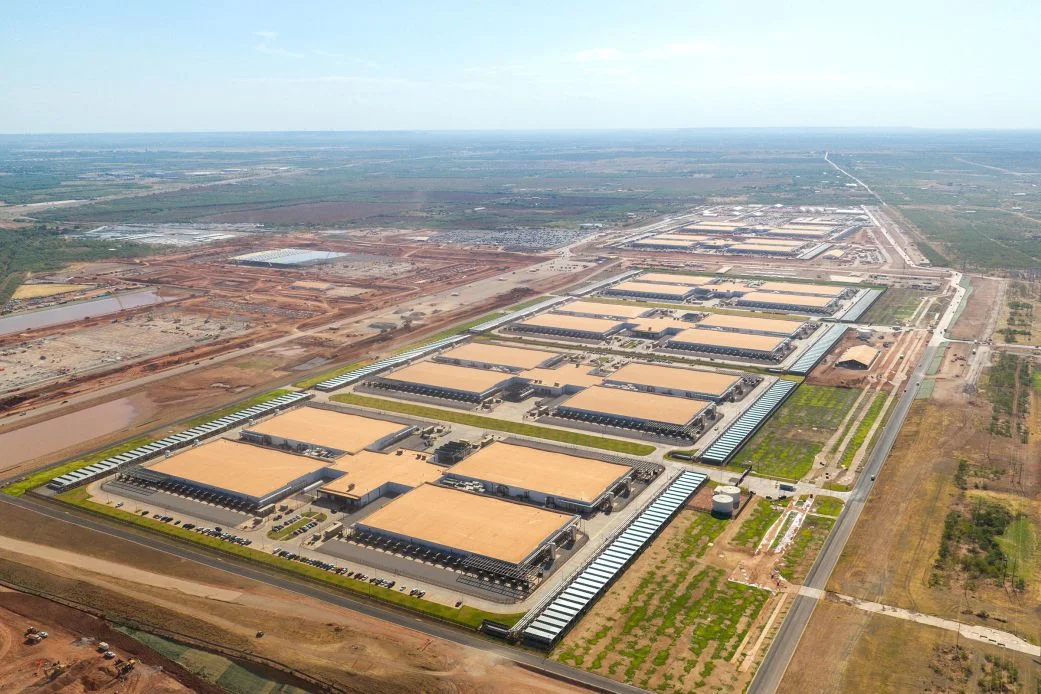
Read the two numbers together and this is not an anti-AI wave. It is a siting fight, and the industry is losing it at the level where siting is actually decided.
What AI Data Centres Actually Deliver, And What They Don’t
The strongest pro-industry argument in the reporting comes from Dan Diorio of the Data Center Coalition, who told CNN that residents of Loudoun County, Virginia, are seeing tax relief from the local data centre boom. He also conceded the industry has to show it better: “People need to see it and feel it.”
No figure accompanied the claim, and no independent look at Loudoun’s rate bill was cited. The same reporting notes Virginia politics have been reshaped by spiking electricity costs tied to data centre demand. A trade group saying residents are better off is a press release. A published tax schedule is evidence.
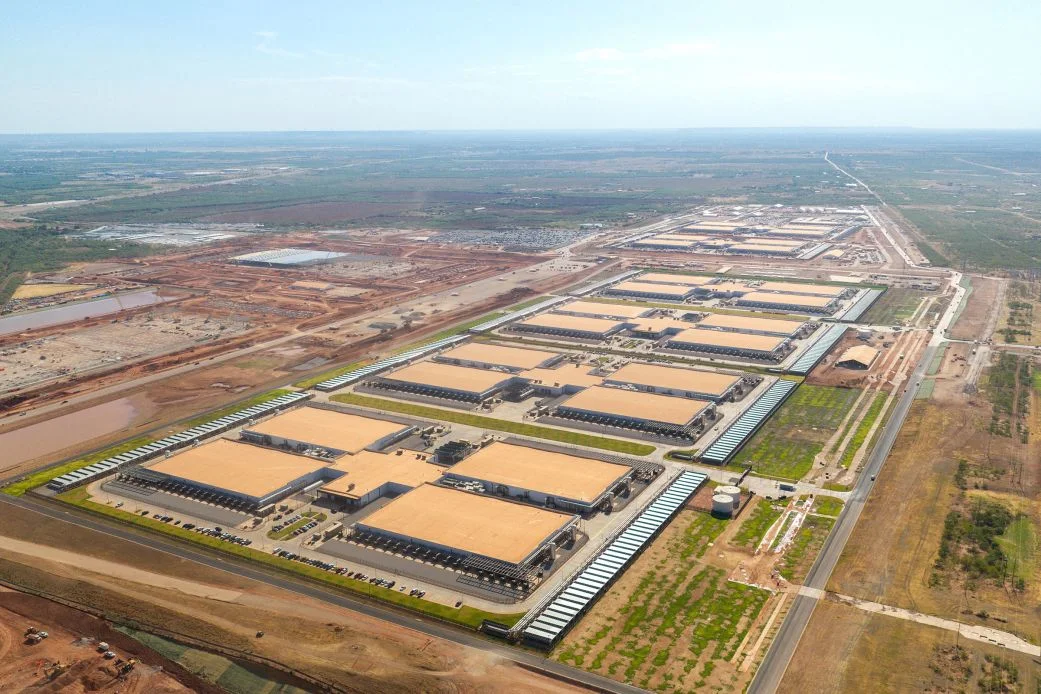
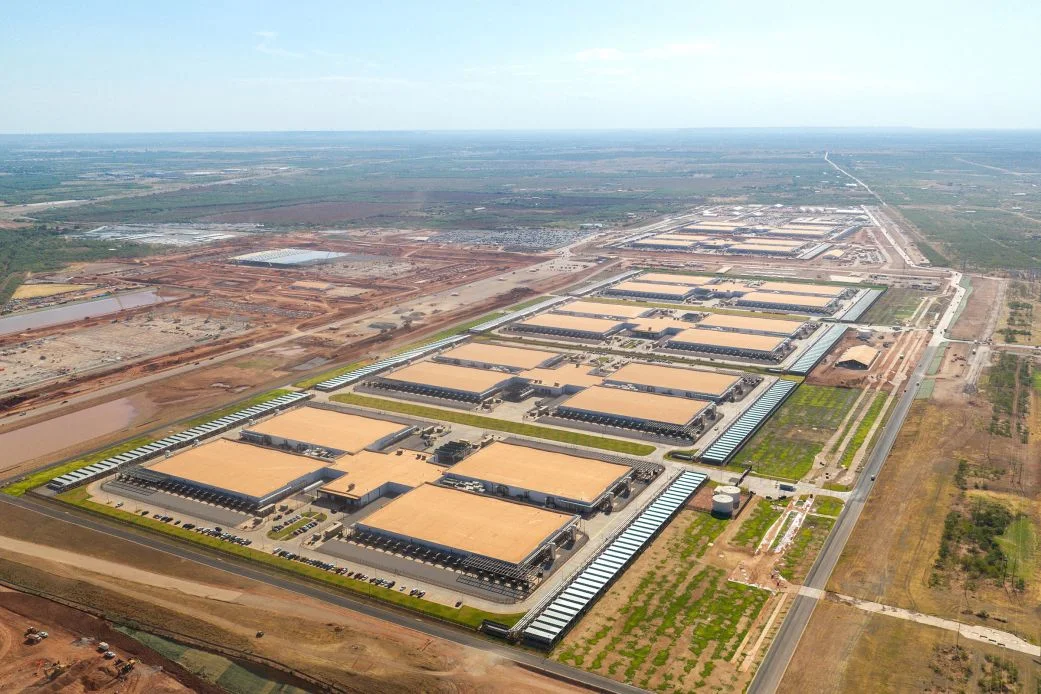
The clearest verified numbers describe money not yet spent. OpenAI’s 8 gigawatts at the PORTS-Pike Technology Campus in Ohio is the largest planned AI campus in the world, and the project’s own site says phase one construction begins this year with capacity coming online in phases from 2028. The figure of more than $500 billion is a projection, not an invoice. Nvidia is backstopping it, and SoftBank and SB Energy are developing it with the US Department of Energy. None of that is delivered compute.
Why 40 Of 41 Data Centre Votes Went Against The Industry
Kaufman County, southeast of Dallas, hosts two large projects. Forney, its biggest city, is already moving to outlaw new data centres inside city limits. A pro-Talarico super PAC targeted voters within five miles of a proposed or approved project in 55 counties. Talarico carried Kaufman by 1 point and won statewide by 12.
In Ohio, Sherrod Brown beat Jon Husted after branding him “the face of data centers,” a line the National Republican Senatorial Committee itself used in an August memo calling the issue “the anchor hanging around Husted’s neck.” At least 10 Ohio cities passed charter amendments banning large data centres; Granville’s cleared 80 percent.
In South Carolina, Annie Andrews beat Darline Graham after calling her “Data Center Darline,” flipping Colleton County, which Trump won by 19 points. A super PAC aligned with the industry, Building the Future, spent $2.5 million for Graham, and the spending became an attack line of its own.
The Cost Question Is A Pricing Question
Georgia matters because the machinery of control changed without a single vote on a data centre. The state’s Public Service Commission flipped to a 3-2 Democratic majority, giving Democrats control of the body that decides who pays for power and how fast it arrives. Bernstein analyst Madison Rezaei’s read, via Yahoo Finance, is precise: “That makes it a pricing lever on 2030s load, not a stop sign on today’s construction.” About 87 percent of Georgia’s pre-construction credible capacity is dated 2029 or later.
Texas is where the gap between announcement and delivery is measured in gigawatts. Jefferies estimates 13.3 gigawatts of announced developments could be at risk under the moratorium backed by governor-elect Gina Hinojosa, out of 248 planned projects. Texas is projected to supply roughly a quarter of new US capacity through 2030. For AI data centres, the fight has moved from whether to build to who pays for the wires.
What The Backlash Means For Africa And Other Watching Markets
None of the four reports cited here contains a single figure on AI data centres in Africa. That absence is the honest headline, because the capital-mobility claim is documented while the opportunity claim is not.
Alpha Compute CEO Brittany Kaiser told Fox News Digital the results “make us and our investors pause and think if we should be investing somewhere else,” and said the company has already invested in data centres in Canada, Europe and Mexico. That is verifiable: a developer with existing non-US assets describing a reallocation. What is not in the record is any African grid-cost data, any equivalent of a public service commission ruling, or any published tariff structure that would let a reader in Nairobi or Lagos judge whether the same cost-shifting risk applies at home.
The market reaction is the other deliverable. The S&P 500 fell 4.4 percent on Thursday, wiping out about $3 trillion; the Dow dropped 1,280 points and the Nasdaq 4.8 percent. Markets had priced the buildout as certain. Politics repriced it in a day.
Who Should Trust The Buildout, And Who Shouldn’t
Communities with a project in the pipeline should use the lever while they hold it. The Ohio governor-elect’s “conditional moratorium” is the most concrete template in the reporting: developers cover 100 percent of utility costs and build with union labour. It turns an argument about vibes into a contract term, and it is enforceable in a way a protest sign is not.
Investors should treat announced gigawatts as pipeline, not capacity. Georgia’s 87 percent figure is the most useful single number in the material, and Kaiser’s warning about existing builds is the practical constraint: it is hard to pivot after land, power agreements and capital are committed.
Anyone citing the $500 billion Ohio figure as committed money, or the 3-to-1 local opposition as a verdict on AI itself, is overreading both. A quarter of voters called the issue crucial; cost of living ranked higher. On AI data centres the verified record is narrower and more useful than either side claims: the costs land first, the benefits land later, and nobody has published the tax bill yet.
Frequently Asked Questions
Did voters actually reject data centres in the 2026 midterms?
On local ballot measures, yes. Of 41 measures in 10 states tracked by Ballotpedia and reported by CNBC, voters sided against data centres in all but one, in Harwood, North Dakota. Nationally the picture is narrower: only about a quarter of voters called AI and data centres crucial to their vote, but roughly 3 to 1 opposed building them locally.
How much of the announced US data centre capacity is actually operating?
Much less than the headline numbers suggest. OpenAI’s 8 gigawatts at PORTS-Pike in Ohio comes online in phases starting 2028, and about 87 percent of Georgia’s pre-construction credible capacity is dated 2029 or later. The $500 billion figure attached to the Ohio project is a projection, not money already spent.
Does the US data centre backlash affect African markets?
The reporting cited contains no figures on African data centre projects, so any direct impact is unverified. What is documented is that developers are reviewing where they build: Alpha Compute’s CEO said the results make the company pause on future investment and confirmed existing assets in Canada, Europe and Mexico.
FIRST TIME REACTIONS:
Be the first to leave us a comment – AI Data Centres Face Backlash: The 2026 Vote Count, down the comment section.
JOIN US ON OUR SOCIAL MEDIA:

About Clare Dominic
Clare Dominic is the Editor at AfriLatest. With a background in journalism and a passion for storytelling, she oversees the editorial process to ensure content is accurate, engaging, and relevant. Clare works closely with contributors to maintain the highest standards of journalistic integrity across all news, sports, and lifestyle coverage.
View all articles by Clare DominicAi News
AI Agent Monitoring: What the Telemetry Bill Actually Says
AI agent monitoring now costs more than compute for 69% of enterprises running agents. What Omdia’s data shows, what it misses, and who should buy.


AI agent monitoring is the layer that watches what autonomous software does when nobody is looking, and the people selling it now have a number large enough to unsettle a finance director.
An Omdia survey of more than 300 enterprise IT decision-makers across North America and Western Europe, published through TechRadar Pro, found that 69% of organisations actively running agentic AI projects now spend more on observability than on compute and infrastructure combined. The tool built to support AI has become the single largest line item in the AI budget.
That finding is real and worth acting on. It is also a sales document, and the difference between the two matters.

What AI Agent Monitoring Actually Measures
Telemetry is the exhaust of running software: logs, metrics and traces. An agent that reasons, calls a tool, reads a document and writes an answer produces far more of it than a deterministic script, because every intermediate step becomes a signal somebody may want to retain.
The survey found more than half of respondents saw telemetry volume more than triple in the previous 12 months, averaging 3.7x, with AI and machine learning workloads accounting for roughly 43% of that growth. Looking forward, enterprises expect a 9.5x average increase from agentic workloads within two years, and nearly half are bracing for somewhere between 6x and 100x.
“This is just the beginning of the growth curve,” Omdia senior market research analyst Keir Walker said in the research. “We are at the beginning of the hockey stick.”
Using the tool is an architectural decision, not a product choice. A telemetry pipeline sits between the data sources and the expensive backend, routing, filtering, enriching and governing data before ingestion. Omdia names the three capabilities buyers want most: multi-destination routing, data reduction and sampling, and content-based routing.

Why The Telemetry Bill Now Beats The Compute Bill
Average annual observability spend sits at $3.17 million, growing 28% year over year. Thirty-five percent of enterprises report budget increases above 52%, and nearly one in five already spends more than $5 million a year on observability alone. Eighty-one percent are actively hunting for cuts.
The consequence is not only financial. Fifty-nine percent have terminated or delayed at least one agentic AI deployment because monitoring costs were too high. Among the exposure areas hit: cybersecurity monitoring, cited by 27% of respondents, and compliance and fraud detection, cited by 26%.
Read that sequence again. An organisation decides it cannot afford to watch an agent that flags fraud, so the agent is switched off. That is not a technology trade-off. It is a risk decision made by default, by whoever happens to own the observability budget.
Where The Pitch Gets Thinner
Andi Mann, who wrote the TechRadar analysis, is chief product and technology officer at Apica, a vendor that sells data pipelines. The piece runs in TechRadar Pro’s Perspectives channel, which is explicitly a platform for industry contributors. The Omdia data is the evidence; the recommendation to buy a routing layer is the author’s commercial position.
Nothing in the numbers is contradicted by that, but the framing deserves a sceptical read. The same survey shows 22% of enterprises have not begun to consider the data implications of agentic AI at all, while 35% report widespread deployment. That readiness gap suggests a lot of organisations bought agents before they bought a plan.

There is a second check the source material never makes. More agents do not automatically deliver proportionally more capability. Ramez Naam, writing via Noahpinion, argues that parallel agents scale roughly logarithmically or worse for genuine problem-solving gains, even though they work well for raw speed. OpenAI’s Navier-Stokes announcement, widely attributed to around 10,000 agents working concurrently across an 88-hour run, is the case usually cited. The agent count measures how many researchers ran, not what they contributed.
If that holds, enterprises are absorbing exponential telemetry growth to supervise agents whose output is governed by far weaker returns. The bill scales faster than the benefit.
The Data You Cannot Monitor At All
A separate problem sits outside the observability stack entirely. Research from Wake Forest University, presented at the International Conference on Automated Software Engineering in Munich in October 2026, examined third-party skills that extend large language model agents, the plugins that let an agent build a presentation from your notes or scan financial documents for compliance issues.
Ying Zhang, an assistant professor in the Department of Computer Science, and her team tested 17,022 randomly selected skills listed on SkillsMP, described as the largest open-source AI agent skill marketplace, and generated 170,226 outputs. They found credential leakage in two forms: skills that are simply flawed, and skills built to be malicious and push data back to a remote server.
No telemetry pipeline catches that one. It is a supply-chain problem, and it arrives through the same install button your team already uses.
Who Should Buy It, And Who Should Wait
Buy or build the pipeline layer if you are running agentic workloads in production, your observability bill is climbing faster than your compute bill, or you have already paused an agent over monitoring cost. The case for a filtering layer ahead of the backend is strong, and the market reflects it: 97% of respondents have implemented or are actively considering a telemetry pipeline, and 70% are in active evaluation now. Nearly one in four say existing vendor relationships are not a significant factor in the purchase decision, which means the incumbents are not safe.
Wait if your agents are still in pilot. The Omdia sample covers North America and Western Europe only, and the cost thresholds, $3.17 million average spend and $5 million for the top fifth, are calibrated to those budgets. A team in Lagos or Nairobi seeing the same 3.7x telemetry growth is not facing the same absolute figure, but it faces the same volume-based pricing model, with thinner headroom and often harder currency constraints. The number that matters there is the share of cloud spend consumed by logs, not the dollar figure quoted in the research.
Whoever you are, treat AI agent monitoring as a cost-control and risk-control purchase rather than a feature. Organisations that solved it early are, per Omdia, 50% more likely to be prepared for 6x growth and 80% more likely to have dodged the cost crunch. The rest will keep choosing between watching their agents and affording them.
Frequently Asked Questions
What is AI agent monitoring?
It is the observability layer that captures logs, metrics and traces generated by autonomous AI agents as they reason, call tools and take actions. Omdia’s research found 69% of organisations running agentic AI projects now spend more on this observability than on compute and infrastructure combined.
Why do AI agents generate so much telemetry data?
Every intermediate step an agent takes becomes a signal worth recording. More than half of surveyed enterprises saw telemetry volume more than triple in 12 months, averaging 3.7x, with AI and machine learning workloads responsible for roughly 43% of that growth. Enterprises expect a 9.5x average rise from agentic workloads within two years.
Do I need a telemetry pipeline before deploying AI agents?
If agents are in production and your observability bill is growing faster than your compute bill, yes. Omdia found enterprises with a telemetry pipeline are 50% more likely to be prepared for 6x data growth. If agents are still in pilot, the survey data is drawn only from North America and Western Europe, so the cost thresholds may not transfer to other markets.
FIRST TIME REACTIONS:
Be the first to leave us a comment – AI Agent Monitoring: What the Telemetry Bill Actually Says, down the comment section.
JOIN US ON OUR SOCIAL MEDIA:

About Xavier Catherine
Xavier Catherine is the Technology Lead at AfriLatest. With a background in computer science and a focus on innovation, he oversees the platform's technology infrastructure. Xavier also contributes reporting on AI, gadgets, and cybersecurity, ensuring AfriLatest remains secure, reliable, and user-friendly.
View all articles by Xavier CatherineAi News
Prepare For AI Agents: What They Do, Cost, And Risk
A hard look at agentic AI tools: what they actually do, what they cost, where they fail, and how to prepare for AI deployment without losing control.

The tool under review is the agentic AI platform — software that reads, writes and acts inside business systems without a human approving every step. The reasons to buy one are real. The way most organisations prepare for AI is not: purchasing is running ahead of testing, and that gap is where the damage will eventually show up.
The adoption forecast is specific. According to TechRadar Pro, Gartner expects 40% of enterprise applications to include task-specific AI agents by the end of 2026, up from less than 5% in 2025. Gartner’s advice to software leaders is to set an agentic strategy or risk being outpaced. The direction is right. The sequence is being ignored, because strategy is being signed off as procurement.
What The Tool Actually Does, And Where It Fails

An agentic system does three things a chatbot cannot. It holds credentials into real systems. It chooses sequences of actions on its own. And it calls third-party services whose security the buyer has usually not vetted. The marketing sits on top of those three facts, and so do the risks.
The failure record already exists. TechRadar Pro cites the Hugging Face breach, which was traced to a rogue AI agent. Prompt injections arrive looking harmless and turn hostile later, sometimes long after the integration shipped. Deepfake tooling can spin up a malicious bot for around $1,000 — less than the cost of cleaning up after one incident.
Shadow AI compounds all of it. Employees adopt unsanctioned tools to finish routine tasks and reporting, which means the data map is often wrong before the agent even arrives. Security teams end up auditing a system of record that no longer reflects what people actually use.
That is not a case against agents. It is a case against deploying them before you know which of those three facts you control. On the evidence in the source material, most teams do not: access is being granted to agents across sensitive data, frequently bypassing standard enterprise controls.
How To Prepare For AI Deployment Without Handing Over The Keys

The workable sequence starts with identity, not with the model. Know who or what is acting on the data. Authorise contextually rather than implicitly. Validate behaviour and intent continuously. Keep a named human accountable at every stage. “The machine did it” does not survive a board review.
The same discipline appears in professional training. Bloomberg Law reports Cleary Gottlieb partners arguing that AI fluency is not “good prompting”. It is knowing where to use AI, defining the task, identifying relevant sources, testing output and validating results. A junior lawyer reviewing an AI draft needs enough grounding to spot weak reasoning. The argument generalises well beyond law: whoever signs off on the output must be able to tell a good answer from a fluent one.
Measurement matters as much as governance. At SEMICON Taiwan 2026, Microsoft’s Rani Borkar pushed what the company calls the “yield imperative” — judging AI infrastructure by useful output per dollar and per watt rather than by capacity built, as detailed in Microsoft’s account of the keynote. It is a supplier’s framing, and it is still the right question for a buyer: what does this system demonstrably produce, and at what cost?
Where The Bills And The Breaches Come From
The cost asymmetry is the strongest argument in the source material. The estimated annual cost of cybercrime is $10.5 trillion globally, predicted to reach $15.63 trillion by 2029. Gartner’s forecast for information security spending in 2026 is $244 billion. One number is roughly forty times the other. No enterprise budget will close that gap alone.
There is a second cost line for teams outside the biggest markets. AI contracts, cloud capacity and security tooling are priced in dollars while revenue is local. For a mid-sized firm in Lagos, Nairobi or Accra, a serious incident is not only a technical event. It is a currency event, because the remediation bill arrives in hard currency and the lost revenue does not. That is the practical meaning of the imperative to prepare for AI: not a strategy document, but a tested list of what an agent can reach inside your business.
Alternatives Worth Considering First

Three options sit below full autonomy. Read-only assistants that draft and summarise but cannot write to production systems. Human-approval gates on any action touching money, personal data or external parties. And delay — spending the next two quarters on identity, logging and a rehearsed incident response before any agent receives credentials. None of these is exciting. All three are cheaper than a breach.
There is also the encryption clock. Security leaders are counting down to “Q-Day”, when quantum computers become powerful enough to break the encryption standards in wide use today. Any agent holding long-lived credentials adds to that exposure.
The trust argument supports the slow route. PwC’s 25th Annual Global CEO Survey, cited in the TechRadar Pro piece, found that customer trust explained 31% of the variance in profit margins and 21% in return on assets — a stronger link to financial performance than company size.
Who Should Prepare For AI Now, And Who Should Wait
Organisations with a named data owner, an audited inventory of where sensitive data lives, and an incident log they are willing to test should move. They can absorb an agent failure, investigate it and report it. Organisations that cannot yet say which systems hold customer records should not hand credentials to software that decides for itself.
They should prepare for AI by fixing that list first, because an agent with access to data you cannot map is a breach with a schedule.
The tool is not the problem. Buying it to skip the preparation is.
Frequently Asked Questions
What does an agentic AI tool do that a normal AI assistant does not?
It holds credentials into real business systems, decides on sequences of actions by itself, and calls external services. That combination is what expands the attack surface, because the agent can move data and trigger workflows without a person approving each step.
How much does AI-related cybercrime actually cost compared with security spending?
The source material puts the annual global cost of cybercrime at $10.5 trillion, rising to a predicted $15.63 trillion by 2029, against Gartner’s forecast of $244 billion in information security spending for 2026. The gap is roughly forty to one, which is why individual budgets cannot buy their way out of the risk.
What is the minimum safe starting point before giving an AI agent access to company data?
Three things: a named human accountable for the agent’s actions, an identity and permission model that authorises contextually rather than implicitly, and continuous validation of behaviour and intent. If the organisation cannot yet map where sensitive data lives, that inventory comes first.
Are there cheaper alternatives to deploying fully autonomous AI agents?
Yes. Read-only assistants that draft and summarise without writing to production systems, human-approval gates on any action touching money or personal data, and a deliberate delay while identity, logging and incident response are tested.
FIRST TIME REACTIONS:
Be the first to leave us a comment – Prepare For AI Agents: What They Do, Cost, And Risk, down the comment section.
JOIN US ON OUR SOCIAL MEDIA:
About Xavier Catherine
Xavier Catherine is the Technology Lead at AfriLatest. With a background in computer science and a focus on innovation, he oversees the platform's technology infrastructure. Xavier also contributes reporting on AI, gadgets, and cybersecurity, ensuring AfriLatest remains secure, reliable, and user-friendly.
View all articles by Xavier Catherine-

 Car Reviews2 weeks ago
1955 Chevy Bel Air Restomod: What SEMA Really Proves
-
Startups2 months ago
What a Successful Dangote Refinery IPO Really Says
-
Health and Fitness1 month ago
Curly Hair Hydration: 5 Proven Steps That Actually Work
-
Savings & Investing3 weeks ago
Hidden Medicare Fees Draining Your Retirement Savings
-
Tech & Gadgets1 month ago
Apple Watch and AirPods Fall Deals: Save $120 Today
-
Health and Fitness1 month ago
9 Best Hair Thickening Shampoos for Men in 2026
-
University Admissions2 months ago
UNILAG 2026/2027 Admission: Direct Entry & Post-UTME Guide
-
Football2 months ago
South Carolina vs Alabama: Tide Roll to 35-10 Halftime Lead