World News
Jared Kushner Vanity Fair Dispute: ‘Outrageous Fabrications’
Jared Kushner Vanity Fair dispute: he calls Gulf bank-account claims ‘outrageous fabrications’ and his lawyer says all legal options remain open.

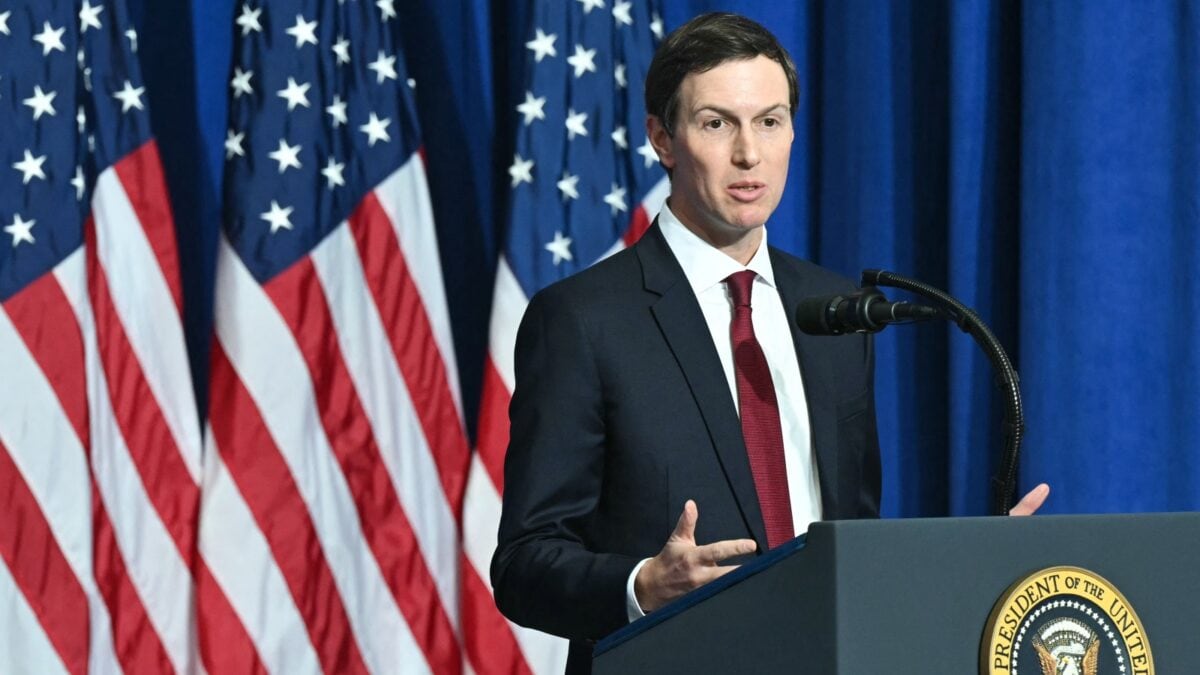
The Jared Kushner Vanity Fair dispute went public on 22 October 2026, when Donald Trump’s son-in-law and former senior White House adviser described a magazine excerpt about his finances as “outrageous fabrications.” Kushner, writing on X, said the claims were “completely insane and never happened” and accused the author of presenting “a mixture of fantasy, fiction, and advocacy” as investigative journalism. The News18 account of his statement also set out the allegations he was answering.
The claims originate in an excerpt Vanity Fair published from a forthcoming book by journalist Matthew Cole, titled Princes and Thieves: Jared Kushner and Mohamed bin Zayed’s Secret Plot to Remake the Middle East. That distinction matters. The book is announced rather than in general circulation, and the public record at this stage consists of the excerpt, Kushner’s rebuttal, and statements from his lawyer.
What The Report Alleges About A Hacked iPhone

According to the Vanity Fair account, the Netherlands Defence Intelligence and Security Service (MIVD) concluded in late 2017 that Russian military intelligence had compromised Kushner’s iPhone. The trail described begins with a GRU operative specialising in stolen banking data. Dutch officials reportedly approached the British government after learning the operative was travelling to the United Kingdom on an espionage mission, and with British cooperation offered him a choice between working for Dutch intelligence and arrest in Britain.
The operative agreed to cooperate and provided access to a GRU server in Rostov, Russia, where investigators allegedly found screenshots taken from Kushner’s phone. Dutch specialists then reportedly replicated the Russian access. By early 2018 they had identified a vulnerability that let them watch Kushner’s screen whenever he used the iPhone, though they could not take full control of the device.
During that surveillance, investigators allegedly observed Kushner accessing a UAE bank account that had received hundreds of millions of dollars from a bank in Azerbaijan.
The Account Named Alpha, And The Money Named Beta
The report states that roughly $750 million moved into an account at First Abu Dhabi Bank, the UAE’s largest lender, from 2017. The account, called “Alpha” in the excerpt, was held by the Watani Al Emarat Foundation, a UAE government-funded charity. The bank was chaired at the time by Tahnoon bin Zayed, brother of UAE President Mohamed bin Zayed Al Nahyan.
Kushner was allegedly made a signatory, giving him access to the funds and the potential to authorise transactions, though he was not the legal owner. The money reportedly came from Saudi and Emirati sources, was routed through an Azerbaijani bank, and landed in the UAE account in US dollars.
A wider arrangement is also described. The excerpt says Mohamed bin Zayed and Saudi Crown Prince Mohammed bin Salman initially discussed a fund worth more than $10 billion to support foreign policy objectives tied to the Trump administration. That proposal reportedly fell through, after which the Gulf leaders allegedly arranged for at least $2 billion to be deposited into two accounts associated with Kushner.
A second account, “Beta”, allegedly received about $1 billion routed through Azerbaijan to Israel by the spring of 2018 and was described to the magazine as intended for Kushner’s personal benefit. The excerpt claims Benjamin Netanyahu encouraged Kushner to place the money in Israel’s central bank, and that the then-US ambassador to Israel, David Friedman, relayed messages. Israel’s central bank does not operate personal accounts, and government account transactions require authorisation from two individuals.
Friedman denied any role. “I know absolutely nothing about any of these allegations,” he told Vanity Fair, adding that claims about his involvement were “100% false.” A third arrangement, described without an amount, was allegedly set up to cover emergency Israeli military assistance to the UAE in the event of a major Iranian attack.
How The Jared Kushner Vanity Fair Dispute Reached A Public Break
Kushner’s defence rests on the absence of documents. In his post on X, he wrote that “no bank statements, wire transfer records, account numbers, transaction dates, or other verifiable details were provided to support these extraordinary accusations.” He also pointed to the scrutiny he faced during Trump’s first term, including congressional inquiries and a special counsel investigation, saying he gave more than 30 hours of testimony and that the allegations never surfaced because “none of these events ever happened.”
His counsel had already told Vanity Fair that he had no knowledge of or connection to the alleged UAE and Israeli accounts, that he met applicable legal requirements in office, and that his contacts with foreign leaders were authorised by Trump and pursued in US interests. His attorney, Chad Mizelle, went further on X: “These are not questions of interpretation or competing recollections: there are no bank accounts. They don’t exist.” Asked whether litigation would follow, Mizelle replied that “all options are on the table.”
What Is Confirmed And What Remains Allegation
Three things are on the record. Kushner was a senior adviser with a Middle East portfolio. He denies the financial claims categorically. And a book excerpt making them has been published.
Everything else is contested. The Dutch finding, the British cooperation, the GRU server and the screen monitoring are described by the magazine but have not been confirmed on the record by any of the governments said to be involved. The account structure is attributed to unnamed sources and to a person described as briefed on the arrangement. The excerpt itself concedes that the ultimate destination and use of the Israel-linked funds remained unclear. No bank document has been published by either side, and the excerpt does not describe any regulatory inquiry into the accounts.
Why A Gulf Money Trail Is A Global Compliance Question
For banks far from Washington, the structure described is the part that travels. Saudi and Emirati money moved through an Azerbaijani bank into a UAE charity account, with a second leg reportedly passing through Cyprus, is the kind of routing that dollar-clearing banks in Africa, Asia and Europe are required to test under anti-money-laundering rules. Institutions holding correspondent relationships with Gulf lenders carry the screening obligation whether or not a political appointee is involved.
That makes the evidentiary gap consequential beyond the personalities. If the accounts exist, transaction records would settle the question quickly. If they do not, the reporting has a problem that a rebuttal alone will not close. Kushner’s team has staked its position on precisely that test.
Legacy Or Litigation
Kushner’s post-White House standing now depends less on the Gulf relationships he built than on whether a documentary trail appears. His lawyer has left open the possibility of action, which would move the Jared Kushner Vanity Fair dispute from social media into a forum where evidence is filed rather than described. Publication of Cole’s book will add detail. Until then, the confirmed record is narrow: a former adviser, a published excerpt, a flat denial, and an argument about proof that neither side has yet won.
Frequently Asked Questions
What did Jared Kushner say about the Vanity Fair report?
In a post on X dated 22 October 2026, Kushner called the allegations ‘outrageous fabrications’ and ‘completely insane,’ saying the author provided no bank statements, wire transfer records, account numbers or transaction dates. His attorney, Chad Mizelle, said the accounts ‘don’t exist’ and that all legal options remain open.
Has any evidence of the alleged bank accounts been published?
No. The Vanity Fair excerpt describes the alleged accounts, including one called ‘Alpha’ at First Abu Dhabi Bank, but attributes the details to unnamed sources. Neither the magazine nor Kushner’s representatives have published bank documentation, and the excerpt does not describe any regulatory inquiry.
Where do the allegations originally come from?
They are drawn from an excerpt of Princes and Thieves: Jared Kushner and Mohamed bin Zayed’s Secret Plot to Remake the Middle East, a forthcoming book by journalist Matthew Cole. The excerpt describes Dutch intelligence findings about a compromised iPhone and money movements through Azerbaijan, the UAE and Israel.
 Follow AFRILATEST on Google News
FIRST TIME REACTIONS:
Be the first to leave us a comment – Jared Kushner Vanity Fair Dispute: ‘Outrageous Fabrications’, down the comment section.
JOIN US ON OUR SOCIAL MEDIA:

About Clare Dominic
Clare Dominic is the Editor at AfriLatest. With a background in journalism and a passion for storytelling, she oversees the editorial process to ensure content is accurate, engaging, and relevant. Clare works closely with contributors to maintain the highest standards of journalistic integrity across all news, sports, and lifestyle coverage.
View all articles by Clare Dominic
World News
Dubai Police Fines Hit 7,735 as 1,630 Vehicles Impounded
Dubai Police fines reached 7,735 in nine months of 2026, with 1,630 vehicles impounded over noise and illegal modifications. Here is what the data proves.

Dubai Police issued 7,735 traffic fines and impounded 1,630 vehicles in the first nine months of 2026, enforcement figures released this week show, with excessive engine noise and unauthorised modifications accounting for every one of the impoundments.
The numbers, reported by Gulf News and carried by regional outlets including News.Az, split into two distinct categories. Patrols logged 2,045 violations for excessive vehicle noise, leading to 333 impoundments. A far larger cluster, 5,690 violations, involved unauthorised modifications to vehicle engines or chassis, producing 1,297 impoundments.
The totals are confirmed. What they mean is a separate question.

Under UAE traffic law the penalties are fixed and published. Driving a vehicle that produces excessive noise carries an AED 2,000 fine and 12 black points. Fitting an unauthorised modification to an engine or chassis draws AED 1,000, 12 black points and 30 days of impoundment.
Brigadier Juma Salem bin Suwaidan, director of the General Department of Traffic at Dubai Police, said additional measures may apply depending on the nature and severity of the offence under Dubai Decree No. 30 of 2023 on vehicle impoundment. Those measures can include vehicle release fees.
That last detail matters more than it appears. A fines campaign is one instrument. A fines-plus-impoundment-plus-release-fee regime is another one entirely.
What The Dubai Police Fines Actually Measure
The honest limit of the data is this: the force published a numerator of 7,735 violations without the denominators that would make it interpretable. The public record does not state how many vehicles are registered in Dubai, how many patrol hours went into noise enforcement, how many resident complaints were logged, or how many of the 1,630 impounded vehicles belonged to repeat offenders.
Without those figures, the count cannot be read as a trend. A rising number can mean more bad driving, more enforcement, or both at once. The material released so far carries no comparable nine-month total for 2025, so a year-on-year comparison is not possible from open sources.
What can be said without qualification is that the noise and modification caseload is the largest single block of enforcement Dubai Police have disclosed this year.
A Second Dataset That Widens The Frame
Five months into the year, the same department was publishing a different set of numbers. Dubai Eye 1038 reported on 28 June 2026 that officers recorded 3,589 vehicle safety violations between January and May, comprising 1,737 cases of vehicles failing to meet safety requirements, 1,026 unroadworthy vehicles and 826 driven on expired tyres. Brigadier bin Suwaidan used that release to warn against unauthorised aftermarket accessories, which he said can cause mechanical failures and are a major cause of vehicle fires.
Add the two categories together and Dubai Police disclosed more than 11,000 violations in nine months. That composite is arithmetic performed on two police statements. It is not a police claim, and it should not be quoted as one.
Why The Fatal Emirates Road Crash Belongs In This Story
The enforcement numbers do not stand alone in the force’s own messaging. On 8 June 2026 a minibus struck a broken-down truck stopped on Emirates Road. Seven people died and nine were injured, five of them critically, according to ARN News Centre.
Brigadier bin Suwaidan said preliminary investigations showed the truck had stopped because of a technical malfunction, and that the minibus driver failed to brake in time because he was not maintaining a safe distance. The force did not specify when the collision occurred. Stopping in the middle of the road carries an AED 1,000 fine and six black points, plus AED 500 for obstructing traffic.
No official has claimed that illegal modifications caused that crash. The connection is a regulatory posture, not a causal finding: Dubai treats the physical condition of a vehicle as a road-safety variable rather than a matter of personal taste.
That distinction is the part worth exporting, and the part that travels badly. In much of Africa’s fast-growing urban vehicle market, the used-import fleet is older, modification is often a repair strategy rather than a performance choice, and enforcement capacity is thin. The Dubai model presumes a vehicle registry, camera coverage, impound yards and a published fee schedule. Those are infrastructure, not willpower. A city that copies the fine without copying the apparatus gets friction, not safety.
What Is Confirmed And What To Watch
Confirmed: the 7,735 fines and 1,630 impoundments, the 2,045 and 5,690 split, the penalty schedule, Decree No. 30 of 2023, and the Emirates Road death toll of seven.
Attributed but not independently verified in the published material: the claim that aftermarket parts are a major cause of vehicle fires, and the characterisation of the campaign as protecting residents.
Missing entirely: registration base, complaint volumes, recidivism rates, and any neighbourhood-level distribution.
Watch for the full-year 2026 release, expected early next year, and for whether Dubai Police publish a 2025 comparator that would turn a snapshot into a trend. Watch also whether the release-fee schedule under Decree No. 30 of 2023 is published in full. That is the point where enforcement becomes fiscal policy, and where other Gulf regulators are most likely to follow.
Until then, the Dubai Police fines figure stands as what it verifiably is: a count of enforcement actions, not a measurement of how noisy or how dangerous Dubai’s roads have become.
Frequently Asked Questions
How many fines did Dubai Police issue for vehicle noise and modifications in 2026?
Dubai Police issued 7,735 traffic fines and impounded 1,630 vehicles in the first nine months of 2026. Of those, 2,045 violations concerned excessive vehicle noise and 5,690 concerned unauthorised engine or chassis modifications.
What is the penalty for excessive vehicle noise in Dubai?
Under UAE traffic regulations, driving a vehicle that produces excessive noise carries an AED 2,000 fine and 12 black points. An unauthorised modification to an engine or chassis carries AED 1,000, 12 black points and 30 days of impoundment.
Can Dubai Police charge extra fees to release an impounded vehicle?
Yes. Brigadier Juma Salem bin Suwaidan said additional measures may apply depending on the severity of the offence under Dubai Decree No. 30 of 2023 on vehicle impoundment, which can include vehicle release fees.
FIRST TIME REACTIONS:
Be the first to leave us a comment – Dubai Police Fines Hit 7,735 as 1,630 Vehicles Impounded, down the comment section.
JOIN US ON OUR SOCIAL MEDIA:
About Clare Dominic
Clare Dominic is the Editor at AfriLatest. With a background in journalism and a passion for storytelling, she oversees the editorial process to ensure content is accurate, engaging, and relevant. Clare works closely with contributors to maintain the highest standards of journalistic integrity across all news, sports, and lifestyle coverage.
View all articles by Clare DominicWorld News
Amex Airbnb Partnership Adds 1M Listings, US Cards Only
The Amex Airbnb partnership adds 1 million listings to Amex Travel and a $250 Experiences credit, but eligibility stops at US cardholders.

American Express opened its travel portal to more than one million Airbnb listings on Thursday, Oct. 22, placing home rentals inside a rewards platform built around hotels and attaching statement credits that only US cardholders can reach.
The Amex Airbnb partnership lets eligible members browse Airbnb inventory on AmexTravel.com and in the Amex Travel App, earn Membership Rewards points on prepaid stays, and apply the Platinum card’s $600 annual lodging credit to Airbnb Luxe bookings. It does not let anyone redeem points for an Airbnb stay. Earning is in. Redemption is not.
What the Amex Airbnb Partnership Actually Changes

The mechanics, confirmed in Airbnb’s announcement and detailed in The Points Guy’s breakdown of the card terms, are these. Consumer and Business Platinum cardmembers earn 5 points per dollar on prepaid Airbnb bookings made through Amex Travel. Consumer Classic Green cardmembers continue to earn 3 points per dollar on travel, including bookings made directly with Airbnb. All other eligible cardmembers earn 2 points per dollar on prepaid Airbnb bookings through Amex Travel.
The $600 Hotel Credit becomes the $600 Lodging Credit, delivered as two $300 statement credits, one per half-year. It can now be applied to prepaid Airbnb Luxe stays of two nights or more booked through Amex Travel. A separate credit of up to $250 a year for Airbnb Experiences unlocks once a qualifying Luxe stay is booked. The Experiences themselves are bought directly from Airbnb, carry no minimum spend, and must be purchased before the calendar year ends.
Scale is the point. Fine Hotels + Resorts and The Hotel Collection together cover more than 3,400 properties in 116 countries, according to Amex. One million listings against 3,400 properties is not a like-for-like expansion. It is a volume play bolted onto a curated one.
The Eligibility Line Runs Through the United States
Both companies describe the programme as serving US cardmembers. Airbnb’s release refers to “eligible US Card Members.” Travel + Leisure, citing an Amex spokesperson, reported that the portal carries a selection of Airbnb’s inventory rather than the full catalogue. Neither release states which countries the one million listings cover, and neither says whether Luxe properties outside the United States qualify for the lodging credit.
That gap is the story for anyone reading from outside the US. No part of the Amex Airbnb partnership announcement addresses non-US accounts. The credits are structured as US Consumer and Business Platinum benefits. A cardholder in Nairobi, Lagos or Accra scanning the release for what changed on their own account will not find an answer, because nothing was announced for them.
A second difference does not lead the marketing. Fine Hotels + Resorts and Hotel Collection bookings carry room upgrades, property credits and late checkout. Airbnb Luxe bookings carry none of that, according to Travel + Leisure. And while the stay appears inside Amex Travel, everything after booking, from messaging the host to changing dates to getting support, stays on Airbnb’s platform.
A Restriction Buried in an Expansion
From Jan. 1, 2027, every use of the Platinum lodging credit will require a stay of at least two nights: Fine Hotels + Resorts, The Hotel Collection and Airbnb Luxe alike. Fine Hotels + Resorts previously carried no minimum, which meant a single night could trigger a $300 credit.
One-night Fine Hotels + Resorts stays will still receive the programme’s full benefits after that date. They simply will not trigger the credit. Amex says the change standardises the rule across all three booking types. Members holding an unused 2026 credit can still apply it to a one-night Fine Hotels + Resorts stay before the rule takes effect.
So the same announcement that widened where the credit can be spent narrowed when it can be spent. CNBC frames the move against a premium-card arms race: Amex raised the Platinum annual fee to $895 last year and has been buying loyalty back with airport lounges and event access, including renovations at four existing Centurion Lounges and new ones planned for Newark Liberty International Airport, set to be the largest in the network, and London Heathrow.
Reaction and the Numbers Behind It
“Guests come to Airbnb for the variety — a loft for a solo trip, a house for a reunion, a Luxe villa for a milestone trip, and the experiences that fill the days in between,” Juan David Borrero, Airbnb’s head of partnerships, said in the joint release. Howard Grosfield, group president of US Consumer Services at American Express, said the partnership gives cardmembers “more choice while delivering the rewards, service, and exceptional value” the company claims.
Airbnb’s release also cites a survey in which more than 75% of respondents said travel purchases satisfy more when they earn rewards usable on future trips, and nearly four in five said earning rewards could prompt them to book. The release does not disclose the sample size, fieldwork dates or methodology. The figures should be read as company-supplied data, not independent research.
On demand, CNBC points to a Squaremouth study finding that more than half of Americans reported making no changes to their summer travel plans despite higher airfare, gas and hotel prices. Squaremouth is a travel insurance company, and the study measures sentiment, not booking volume.
What to Watch
Four items. Whether Amex extends the Airbnb credits beyond US cardholders, which would convert a domestic retention tool into a genuine global rewards change. Whether points redemption for Airbnb bookings follows the earning phase. How hotel partners inside the Fine Hotels + Resorts network respond to sharing a credit pool with home rentals. And whether the two-night minimum taking effect on Jan. 1, 2027 shifts how members calculate value against the $895 annual fee.
For now, the Amex Airbnb partnership is an earning story, not a redemption one, and a US story, not a global one. Those two limits define exactly how much it is worth.
Frequently Asked Questions
Can Amex members pay for Airbnb stays with Membership Rewards points?
No. The announcement covers earning points on prepaid Airbnb bookings made through Amex Travel. It does not allow members to redeem points against Airbnb bookings.
Who is eligible for the $600 lodging credit on Airbnb Luxe stays?
US Consumer and Business Platinum cardmembers, on prepaid Airbnb Luxe bookings of two nights or more made through AmexTravel.com or the Amex Travel App. Non-US accounts were not addressed in the announcement.
What changes on Jan. 1, 2027?
All uses of the Platinum lodging credit will require a minimum two-night stay, including Fine Hotels + Resorts, which previously had no minimum. One-night Fine Hotels + Resorts stays keep their benefits but will not trigger the credit.
FIRST TIME REACTIONS:
Be the first to leave us a comment – Amex Airbnb Partnership Adds 1M Listings, US Cards Only, down the comment section.
JOIN US ON OUR SOCIAL MEDIA:
About Clare Dominic
Clare Dominic is the Editor at AfriLatest. With a background in journalism and a passion for storytelling, she oversees the editorial process to ensure content is accurate, engaging, and relevant. Clare works closely with contributors to maintain the highest standards of journalistic integrity across all news, sports, and lifestyle coverage.
View all articles by Clare DominicWorld News
Table Energy: J.J. Martin’s Book On Italian Hosting
J.J. Martin’s Table Energy, from Vendome Press, turns Italian hosting into a $50 book and a La DoubleJ product line, with global release dates.

J.J. Martin, the Los Angeles-born editor turned entrepreneur who founded the Milan label La DoubleJ, has published her second book with Vendome Press: Table Energy: Entertaining With Italian Spirit. The 208-page coffee-table volume launched in the United States this week and is scheduled to reach the rest of the world from Nov. 5, beginning with Europe, at $50.
The book is a photographic record of Martin’s own hosting — Milanese aperitivos, alfresco lunches in Portofino and Taormina, weekend gatherings on Lake Como — built around an argument she sets out in the introduction: that in Italy the table is ‘never just a table.’
That is the thesis. What follows separates what the record confirms from what the publisher and the brand have so far only announced.

From A New York Ad Agency To A Label Called La DoubleJ
Martin’s route into Italian hospitality was not direct. She started as an account executive at an advertising agency in New York and San Francisco, then moved into marketing at Calvin Klein in New York. She relocated to Milan in 2001 and wrote for Harper’s Bazaar and Wallpaper before launching La DoubleJ in 2015 as a shoppable magazine that sold clothing and jewelry.
La DoubleJ has since expanded into tabletop collections, which appear throughout the book’s photographs. Martin describes the look as a blend of her California upbringing and a growing spiritual practice — ‘an unapologetically bold way of mixing and layering vivid color and swirling print,’ as she writes in the introduction.
What Table Energy Confirms, And What It Merely Announces
Confirmed: the book runs 208 pages, carries a foreword by Leandra Medine Cohen, retails at $50 and is sold through La DoubleJ stores and e-commerce, Vendome Press‘s online store, Amazon, and selected international bookshops — via Abrams in North America and Thames & Hudson in the rest of the world.
Scheduled but not yet delivered: a Power of Light candle collection set to debut Oct. 29, a capsule collection developed with Carolyn Murphy dropping Nov. 5, an event in Paris on Nov. 24, and a book signing at the brand’s Milan store on Dec. 1. Each of those is a plan on a calendar, not an accomplished fact, and the reporting around the title gives no confirmed sales, print-run or revenue figures.
That distinction matters for anyone reading Table Energy as a business story rather than a lifestyle one. The volume’s commercial logic — a $50 object that showcases tabletop products the reader can then buy — is a strategy, not a result. Claims about how well it works remain untested until the publisher or the brand releases numbers.
The Distribution Map Stops Short Of African Retail
The named channels are precise about North America and Europe and silent on most of the Global South. No African stockists, no local-currency pricing and no regional distribution partner appear in the release details. Readers in Lagos, Nairobi or Accra are pointed to Amazon or Vendome’s own online store, with shipping and import duty left unaddressed.
That is a gap in disclosure, not a controversy. It does, however, place the book in a familiar category: a European luxury-lifestyle imprint whose ‘rest of world’ agreement with Thames & Hudson is effectively an Anglo-American and Commonwealth arrangement rather than a genuinely global shelf presence.
Why The Second Book Carries More Commercial Weight Than The First
Table Energy follows Mamma Milano: Lessons From the Motherland, Martin’s 2023 debut with Vendome, which traced her early years in the city and profiled Italian tastemakers including Angela Missoni, Max Mara’s Laura Lusuardi, Rossella Jardini, Rossana Orlandi, Patricia Urquiola, Nina Yashar, Marie-Louise Sciò and Molly Molloy.
The first book was biography and scene-portrait. The second is instruction plus catalogue — tips, personal reflections and anecdotes, among them Martin’s first attempt at hosting in Milan after leaving Manhattan in 2001, when she accidentally set a Thanksgiving turkey on fire in a cramped ’70s oven. Her stated takeaway: ‘The more experience I got, the more I relaxed: less fancy food, less pomp, less formal help or service.’
Medine Cohen’s foreword describes the gatherings as ‘Thrilling and tender, bright and joyful. Full to the brim with taste,’ and recounts Martin calling this ‘the easiest book she’s ever created.’ That is a friend’s characterization, offered in a foreword, and should be read as such rather than as independent editorial judgment.
What The Book Says About Where La DoubleJ Goes Next
Martin’s framing is deliberately portable. My hope is that this book gives you permission to play,’ she writes, adding that readers should let ‘nothing but your own intuition and delight guide you in the creation of your own table energy back home.‘ The lowercase phrasing is a hint at intent: the title is meant to function as a concept the brand can keep selling, through candles, ceramics and capsule drops, long after the first print run clears.
Whether Table Energy becomes a durable franchise or a well-photographed seasonal title will be settled by figures neither Vendome Press nor La DoubleJ has published. Until then, the verifiable record is short and firm: a 208-page book, a $50 price, a U.S. launch this week, a European release on Nov. 5, and four dated promotional events stretching to Dec. 1. Everything past that is forecast.
Frequently Asked Questions
When is J.J. Martin’s Table Energy released?
Table Energy: Entertaining With Italian Spirit launched in the United States this week. Release in the rest of the world begins with Europe on Nov. 5, according to the publisher’s stated schedule.
How much does Table Energy cost and where is it sold?
The 208-page book retails at $50. It is available at La DoubleJ stores and e-commerce, on Vendome Press’s online store, on Amazon, and at selected international bookshops distributed by Abrams in North America and Thames & Hudson elsewhere.
Is Table Energy J.J. Martin’s first book?
No. It is her second publication with Vendome Press, following Mamma Milano: Lessons From the Motherland, released in 2023.
FIRST TIME REACTIONS:
Be the first to leave us a comment – Table Energy: J.J. Martin’s Book On Italian Hosting, down the comment section.
JOIN US ON OUR SOCIAL MEDIA:
About Clare Dominic
Clare Dominic is the Editor at AfriLatest. With a background in journalism and a passion for storytelling, she oversees the editorial process to ensure content is accurate, engaging, and relevant. Clare works closely with contributors to maintain the highest standards of journalistic integrity across all news, sports, and lifestyle coverage.
View all articles by Clare Dominic-

 Startups4 weeks ago
What a Successful Dangote Refinery IPO Really Says
-
Health and Fitness1 week ago
Curly Hair Hydration: 5 Proven Steps That Actually Work
-
Trending Entertainment News2 weeks ago
Taylor Swift Joins Beatles as Only Acts With 100 Weeks at No. 1
-
World News4 weeks ago
Carney Calls U.S. Tariffs a Miscalculation as Canada Retaliates
-
Tech & Gadgets2 weeks ago
Apple Watch and AirPods Fall Deals: Save $120 Today
-
Football4 weeks ago
Mexico vs Colombia 2026: Márquez Debut Ends in Defeat
-
Fintech4 weeks ago
OPay No Dey Comot Nigeria: How to Verify Fintech News
-
Fintech4 weeks ago
OPay Investing in People to Build a Better Nigeria