World News
US Hails Progress in Venezuela Transition Talks
Washington calls the first US flight to Caracas in seven years proof of progress in Venezuela transition talks. The election stage has not begun.

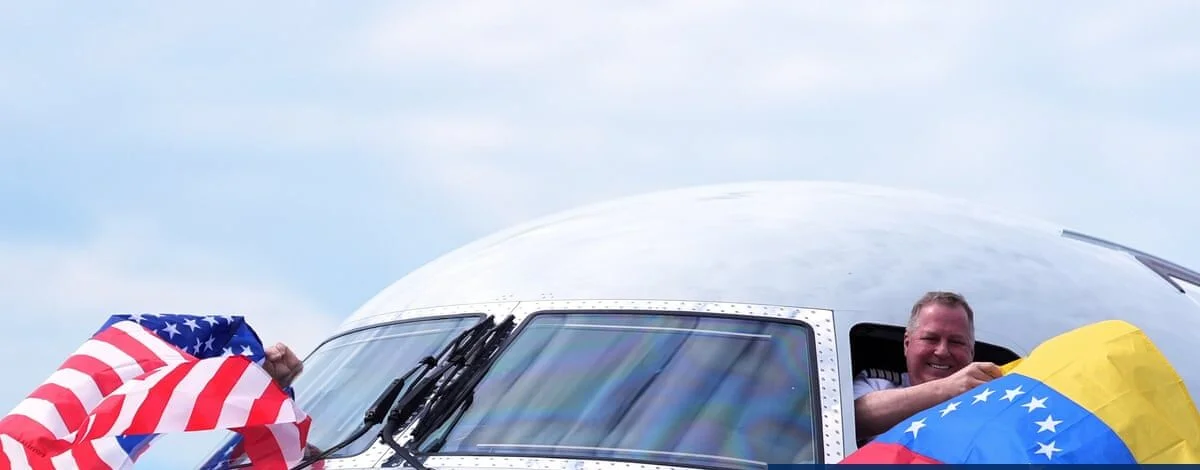
The first direct commercial flight between the United States and Venezuela in more than seven years landed in Caracas on Thursday, and Washington presented it as proof of momentum in the Venezuela transition talks — a process whose final stage, an actual transfer of power through elections, has not begun.
American Airlines Flight 3599 from Miami touched down at Simón Bolívar international airport at 1.15pm local time, The Guardian reported. The last US commercial flight left Caracas in March 2019, when relations collapsed during Donald Trump’s first term.
José Freig, the carrier’s vice-president of international operations, called it ‘a historic day’ before handing Venezuela’s transport minister, Jacqueline Faría, a model of one of his company’s planes. On the runway, Venezuelan passengers queued to board the return leg to Florida.
The US chargé d’affaires in Caracas, John Barrett, went further, calling the route ‘a direct result’ of a three-phase plan for post-Maduro Venezuela: stabilising the country, rebooting its economy, and ‘eventually securing a political transition back towards democracy. ‘We are only just getting started,’ he said.
What The Miami Flight Actually Confirms
The flight is evidence of phase two. Commercial ties are being rebuilt at speed, nearly four months after US special forces seized Nicolás Maduro in the capital and Delcy Rodríguez, his former vice-president, took power with Washington’s blessing.
It is not evidence that phase three has started. No election date has been published, and the official who would help organise one has publicly ruled it out for now. ‘It’s not time for elections,’ interior minister Diosdado Cabello said on the eve of the landing.
Faría framed the route in trade language: ‘This country wants to connect itself to the world.’ Félix Plasencia, Venezuela’s top diplomat in Washington, said it ‘should be the first one of many’.
Where The Venezuela Transition Talks Stand
The gap between the two governments’ language and the calendar is the story. Barrett describes a trajectory toward democracy. Rodríguez’s administration, according to the Guardian, appears in no rush to hold fresh elections.
John Feeley, a former US ambassador to Panama, described the arrangement bluntly as ‘a viceroyship’ — ‘a powerful king-like figure that extracts rent from overseas territories’, with Rodríguez ensuring ‘the king or the crown, or in this case Washington, gets its due’.
Feeley said he would not foreclose the possibility that the intervention ends up benefiting Venezuelans. He also said: ‘I’m pessimistic because of the track record of the Trump team and Donald Trump himself and his own attitudes towards democracy.’
Earlier in the year, Trump said he had held a ‘very good’ phone call with Rodríguez covering oil, minerals, trade and national security, writing on Truth Social that ‘we are making tremendous progress, as we help Venezuela stabilize and recover’, Kurdistan24 reported. No policy details accompanied that call.
Oil, Gold And What Has Not Been Published
The economic track has moved fastest and with the least transparency. Trump said Washington had struck a deal giving US interests control of more than 65 billion barrels of Venezuelan reserves — more than double American reserves, in his account, and enough to ‘substantially lower Gas Prices’. BBC News reported that Rodríguez put the term at 25 years, covering 17 fields, targeting 1.5 million barrels a day, with $100bn in investment and $209bn in taxes for Venezuela.
A US official told CBS News, the BBC’s US partner, that Washington would hold 55% of a joint venture with an ‘experienced private operator’, which was granted a 100-year concession. The text of the agreement has not been published.
David Goldwyn, president of Goldwyn Global Strategies, told Reuters there was ‘no precedent’ for the US government leasing Venezuelan oil fields and that it was ‘hard to see how this kind of arrangement would accelerate investment at any material scale’, citing political uncertainty, a weak power grid and limited export capacity.
Rachel Ziemba of the Center for a New American Security told the BBC the deal was ‘unlikely to have any material impact on global oil supplies in the next month or even the next year’. Venezuela’s crude is heavy and sour, costlier to refine than the light, sweet grades the US produces.
Britain, meanwhile, said in September it would upgrade its mission in Caracas to ambassador level, with Latin America minister Chris Elmore citing ‘an important opportunity’ for democracy and UK backing for ‘US-backed transition talks between the interim government and parts of the opposition’, Hürriyet Daily News reported. Venezuelan parties are separately negotiating the return of gold reserves frozen in London.
Why The Sequence Matters Beyond Caracas
The BBC noted the oil arrangement appears wider in scope than the US-led Coalition Provisional Authority’s control of Iraqi oil revenue after 2003. That comparison is the useful one: resource control can be arranged in weeks; legitimising a government takes institutions and a vote.
The sequence also explains why the Venezuela transition talks draw attention far beyond South America. Sanctions relief, diplomatic recognition and access to resources are moving in the same package, negotiated between two capitals, with allies such as Britain adjusting their posture afterwards. Governments that have spent years bargaining over sanctions and frozen assets will recognise the mechanics, even where the commodity differs.
The runway ceremony cost little and can be reversed. An electoral calendar cannot be improvised as easily.
What To Watch
Four checkpoints will separate progress from presentation. Whether the oil agreement’s full text is published. Whether the Chevron and Halliburton investment talks reported by the Wall Street Journal convert into signed contracts. Whether Cabello’s line on elections changes. And whether a British ambassador actually arrives in Caracas.
Until an electoral calendar appears, the Venezuela transition talks remain a framework with a flight schedule and no date for a vote.
Frequently Asked Questions
What did the US actually announce about the Venezuela transition talks?
The US chargé d’affaires in Caracas, John Barrett, said the first direct commercial flight in more than seven years was ‘a direct result’ of a three-phase plan: stabilising Venezuela, rebooting its economy, and eventually securing a political transition back towards democracy. He gave no timetable for the third phase, and no election date has been published.
Has Venezuela agreed to hold elections?
Not publicly. Interior minister Diosdado Cabello said on the eve of the flight that ‘it’s not time for elections’. The Guardian reported that Delcy Rodríguez’s administration appears in no rush to hold fresh elections. No electoral calendar has been announced in the reporting reviewed.
Why does the oil deal matter if the reserves are not being pumped yet?
Trump said the deal covers more than 65 billion barrels and would more than double US reserves. Analysts quoted by the BBC and Reuters said the text has not been published, there is no precedent for a US government lease of Venezuelan fields, and the arrangement is unlikely to affect global oil supplies in the next month or even the next year, given Venezuela’s heavy sour crude, weak grid and limited export capacity.
 Follow AFRILATEST on Google News
FIRST TIME REACTIONS:
Be the first to leave us a comment – US Hails Progress in Venezuela Transition Talks, down the comment section.
JOIN US ON OUR SOCIAL MEDIA:

About Clare Dominic
Clare Dominic is the Editor at AfriLatest. With a background in journalism and a passion for storytelling, she oversees the editorial process to ensure content is accurate, engaging, and relevant. Clare works closely with contributors to maintain the highest standards of journalistic integrity across all news, sports, and lifestyle coverage.
View all articles by Clare Dominic

World News
Oura Sues Ultrahuman Again: Inside the Ring Pro Patent Fight
Oura sues Ultrahuman again over Ring Pro patents in a Texas federal court, threatening the Indian startup’s US market comeback.

Mohit Kumar spent most of this year making an engineering argument. On Thursday, a federal court in Texas turned it into a legal one.
Oura filed a patent infringement complaint seeking to block US sales of Ultrahuman’s Ring Pro, the redesigned ring that carried Kumar’s Bengaluru company back into the American market only months after an import ban pushed it out. It is the second time Oura sues Ultrahuman in a US court, and the first aimed at the device the startup built specifically to get back in.
The complaint names Ultrahuman and SVTronics, a Plano, Texas electronics manufacturer that Oura says builds the Ring Pro under Ultrahuman’s direction and control. Oura is seeking monetary damages and a permanent injunction.

Kumar’s position is now double-edged. He runs a company valued at about $365 million after a $70 million raise in September that drew Qualcomm Ventures and Labcorp. He is also the defendant in a case that could remove his flagship product from the largest smart-ring market outside his home base.
Why Oura Sues Ultrahuman Again, Two Days After A New Patent
The timing is the detail worth pausing on. The complaint cites two Oura patents: D804,471, a design patent, and 12,769,363, which covers a ring architecture built around a curved battery, circuit board, magnets and sensors. The second was issued to Oura on 20 October, two days before the company filed suit.
Oura argues that the Customs decision which let the Ring Pro into the US covered only the patent at issue in the earlier dispute, not these two. “Ultrahuman has a history of copying Oura’s innovations, as demonstrated by the 2025 ITC ruling against the company,” an Oura spokesperson told TechCrunch. “Ultrahuman introduced a redesigned ring but failed to address continued infringement of Oura’s patents.”
Ultrahuman did not respond to TechCrunch’s request for comment. The company has not publicly answered the new filing.
From The Ring Air Ban To Ring Pro Clearance
The dispute dates to 2023, when Oura first sued Ultrahuman over the Ring Air. Oura then brought a case at the US International Trade Commission in 2024 and won a ruling in August 2025, which blocked imports of the Ring Air and its components. Wired reported that the ITC finding rested on a hardware patent covering layered internal and external components, a description broad enough to reach most rings on the market.
Ultrahuman’s answer was a redesign. It unveiled the Ring Pro in February, began selling globally, and in March received a favourable ruling from US Customs and Border Protection. CNET reported the clearance opened preorders at $349 for the first 1,000 buyers and $399 afterwards, with a charging case at $100 or $479 as a bundle. The ring claims 15 days of battery life, 45 with the case, and unlike Oura charges no subscription for core sleep, recovery and stress data.
“We’re delighted to be back in the US with Ring Pro,” Kumar said at the time. “Ultrahuman is an engineering company, and we believe that the company that leads with engineering will ultimately win in this space.”
The Delhi Counterclaim That Did Not Survive
Kumar’s company has fought back in court before, without success. In 2025 Ultrahuman filed its own infringement suit against Oura in the Delhi High Court, alleging Oura copied women’s health features, circadian tools and its glucose monitoring platform. The court dismissed the case on 1 September 2025, with Justice Manmeet Pritam Singh Arora presiding, Mashable reported. Ultrahuman said it would clarify and re-file.
Oura called that action meritless at the time and described the ITC outcome as decisive. Ultrahuman’s public case has rested on patent age rather than patent absence. “This isn’t a dispute over years of secret R&D,” the company wrote in a blog post about the litigation. “It’s about a very recent patent purchase now being wielded to limit the choices ring-wearers like you have.”
The pattern is now established: Oura sues Ultrahuman in US courts, and Ultrahuman counters where jurisdiction allows.
What The Ring Fight Means For Buyers Outside America
IDC expects global smart-ring shipments to rise 12.8% this year to 4.9 million units and reach about 6.3 million by 2030. Neither company breaks out Africa figures in the filings and statements described here, and that gap matters. Distributors and buyers on the continent sit at the end of an import chain that reacts to US legal outcomes: a permanent injunction would not simply shift American pricing, it would reshape which devices reach secondary markets and at what cost.
The commercial asymmetry is stark. Research firm Omnia put Oura at roughly 74% of the smart ring market last November and Ultrahuman at about 9%. Oura has converted several rivals into licensees, with RingConn and Circular agreeing to pay royalties, while cases against Samsung and Zepp Health continue. It has also shelved a $2.2 billion IPO, citing market “uncertainty,” just weeks before filing this complaint.
That context cuts both ways. A company preparing to return to public markets has reason to defend its patent portfolio loudly. A challenger that just raised $70 million and is co-developing a Qualcomm-powered ring has reason to keep selling.
Kumar’s wager, that engineering beats litigation, now waits on a judge in Texas. Whether Oura sues Ultrahuman again after this complaint, or settles into another royalty arrangement, will say more about the structure of the smart-ring market than any product launch. For buyers in Lagos, Nairobi or Johannesburg, the practical question is narrower: which ring, and at what price, survives the injunction stage.
Frequently Asked Questions
What patents does Oura say the Ultrahuman Ring Pro infringes?
Oura’s complaint cites two: design patent D804,471 and patent 12,769,363, which covers a ring design using a curved battery, circuit board, magnets and sensors. The second patent was issued to Oura on 20 October, two days before the suit was filed.
Why is SVTronics named in the lawsuit?
Oura alleges that SVTronics, a Plano, Texas electronics manufacturer, builds the Ring Pro under Ultrahuman’s direction and control, and that both companies infringe its patents through manufacture, importation and sale of the device in the US.
How did Ultrahuman return to the US market before this suit?
After the ITC import ban on its Ring Air, Ultrahuman redesigned the hardware as the Ring Pro, launched it in February, and received a favourable ruling from US Customs and Border Protection in March, which cleared it for US preorders.
FIRST TIME REACTIONS:
Be the first to leave us a comment – Oura Sues Ultrahuman Again: Inside the Ring Pro Patent Fight, down the comment section.
JOIN US ON OUR SOCIAL MEDIA:
About Clare Dominic
Clare Dominic is the Editor at AfriLatest. With a background in journalism and a passion for storytelling, she oversees the editorial process to ensure content is accurate, engaging, and relevant. Clare works closely with contributors to maintain the highest standards of journalistic integrity across all news, sports, and lifestyle coverage.
View all articles by Clare DominicWorld News
Lunai Bioworks Nasdaq Delisting Ends A Bid-Price Illusion
Lunai Bioworks Nasdaq delisting: LNAI exits on Nov 12 with a $9.02M equity deficit, two reverse splits and no OTC quoting plan.
The Lunai Bioworks Nasdaq delisting is no longer a risk disclosure. It is a calendar entry. On 21 October 2026 the Sacramento-based company received a letter from the Listing Qualifications Department of Nasdaq stating that it no longer complies with Listing Rule 5550(b)(1), which requires minimum stockholders’ equity of $2,500,000. Trading in LNAI is expected to be suspended at the opening of business on 30 October 2026. A Form 25 is due on or about 2 November 2026, with the delisting effective on or about 12 November 2026, followed by a Form 15 intended to suspend SEC reporting obligations.
The company did not contest the finding. Its board voted on 22 October 2026 to withdraw the common stock from Nasdaq voluntarily under Rule 12d2-2(c) of the Securities Exchange Act of 1934. The reason given was the staff determination and the company’s financial condition, with the board concluding that the cost of continued listing and SEC reporting is no longer justified.
Why The Lunai Bioworks Nasdaq Delisting Was Never A Bid-Price Story

The failure was on equity, not price. Lunai’s Annual Report on Form 10-K for the fiscal year ended 30 June 2026 reported a stockholders’ deficit of $(9,024,946). Against a $2.5 million minimum, that is a shortfall of roughly $11.5 million by simple arithmetic. The release also states the company does not meet Nasdaq’s alternative tests based on market value of listed securities or net income.
That detail matters because the public record around this ticker over the past year pointed the other way. In a separate SEC filing, Lunai disclosed that Nasdaq had confirmed it regained compliance with the exchange’s $1 minimum bid price requirement, following an initial notice on 20 April and extension letters on 12 May. Stocktwits reported that shares rose more than 100% in pre-market trading on a Wednesday after that disclosure, with retail sentiment flipping to “extremely bullish” and message volume up sharply.
Two Reverse Splits Did Not Build Equity
That bid-price compliance was manufactured, not earned. Shareholders at a special meeting on 8 May approved a reverse split within a 1-for-3 to 1-for-30 range, and the board settled on 1-for-8, effective 22 May. Outstanding shares fell from about 36.3 million to about 4.5 million. The company had already executed a 1-for-10 reverse split on 30 September 2025.
Stacked, those two actions mean an investor holding 80 shares before September 2025 would hold one share after May 2026, absent other issuance. A reverse split raises the quoted price arithmetically while leaving market capitalisation and stockholders’ equity unchanged. It cannot close a $9 million deficit. Nasdaq also placed Lunai under a one-year monitoring period, under which a renewed bid-price failure would not qualify for a standard compliance plan or extension.
Then came the procedural trap. Because Lunai was subject to a mandatory Hearings Panel Monitor under Nasdaq Listing Rule 5815(d)(4)(B), the release states that Nasdaq staff determined to delist rather than route the company through a fresh cure period. Lunai declined to request a hearing. The release does not itemise the listing and reporting costs the board weighed, and it does not give a figure for them.
An Exit With No Secondary Venue
What follows the delisting is unusually bare. Lunai says it does not intend to arrange for quotation of its common stock on any over-the-counter market, and cannot assure that any trading market will exist once Nasdaq trading stops. Its SEC reporting obligations continue unless and until they are terminated or suspended under SEC rules, and the company describes its own filings as forward-looking intentions subject to Nasdaq and SEC procedures.
This is not an isolated pattern. In the same month, SITE Centers Corp. (NYSE: SITC), a self-managed REIT based in Beachwood, Ohio, announced its intention to notify the New York Stock Exchange of a voluntary delisting, anticipating that a special distribution declared on 15 October 2026 would push its share price and market capitalisation toward levels triggering involuntary removal. Per the SITE Centers announcement, the delisting is expected before trading begins on 4 December 2026, and no listing, registration or Rule 15c2-11 quotation arrangement has been made elsewhere.
Set the two side by side and the contrast is instructive. One company is leaving to distribute capital; the other is leaving with negative equity. The mechanics are identical: a Form 25, an exchange exit, and no regulated venue for holders afterwards. The Lunai Bioworks press release makes no mention of its research programmes, headcount, financing plans or operations, so the effect of the exit on the underlying business cannot be assessed from the primary document.
What African And Global Issuers Should Read In It
For founders and investors in Africa and other emerging markets who treat a US exchange listing as a badge of maturity, the case separates two things that get conflated in headlines: listing compliance and financial health. A company can pass the price test, issue a triumphant press release about compliance, and fail the equity test months later without any change in its underlying position.
It also clarifies who carries the residual risk. Under the announced plan, the last regulated price becomes the last price. Holders using mobile brokerage apps in Lagos, Nairobi or London face the same outcome as institutional shareholders, with no OTC quotation to exit through, and no assurance from the company that any market will exist.
All of this is confirmed in the company’s own 22 October 2026 statement, corroborated by its earlier bid-price filing and by the parallel SITE Centers exit. What remains allegation or forecast: nothing in the record suggests misconduct, and none should be inferred. What remains unknown is the company’s post-delisting strategy, which the release does not address.
The big picture is a reminder that the Nasdaq floor is a compliance floor, not a solvency floor. The Lunai Bioworks Nasdaq delisting was scheduled within nine days of the Nasdaq letter, executed by board vote, and leaves no backstop market behind it. Read the equity line of a 10-K before the pre-market headline.
Frequently Asked Questions
Why is Lunai Bioworks delisting from Nasdaq?
Nasdaq’s Listing Qualifications Department notified the company on 21 October 2026 that it no longer complies with Listing Rule 5550(b)(1), which requires minimum stockholders’ equity of $2,500,000. Lunai reported a stockholders’ deficit of $(9,024,946) for the fiscal year ended 30 June 2026 and did not meet alternative market value or net income standards. Because the company was under a mandatory Hearings Panel Monitor, Nasdaq staff determined to delist.
When will LNAI stop trading on Nasdaq?
Trading is expected to be suspended at the opening of business on 30 October 2026. The company intends to file a Form 25 on or about 2 November 2026, with the delisting effective on or about 12 November 2026. It then intends to file a Form 15 to suspend SEC reporting obligations, to the extent it is eligible.
Will Lunai Bioworks shares trade over the counter after delisting?
No. The company stated it does not intend to arrange for quotation of its common stock on any over-the-counter market and cannot assure that any trading market will exist after Nasdaq trading is suspended. A comparable October 2026 announcement from SITE Centers Corp. also confirmed no alternative listing or Rule 15c2-11 quotation arrangement.
Did reverse stock splits cause the delisting?
They did not cause it, and they could not have prevented it. Lunai executed a 1-for-10 reverse split on 30 September 2025 and a 1-for-8 split effective 22 May 2026, reducing outstanding shares from roughly 36.3 million to about 4.5 million. A reverse split lifts the quoted share price arithmetically but leaves stockholders’ equity unchanged, so it addresses the $1 bid price rule rather than the $2.5 million equity requirement.
FIRST TIME REACTIONS:
Be the first to leave us a comment – Lunai Bioworks Nasdaq Delisting Ends A Bid-Price Illusion, down the comment section.
JOIN US ON OUR SOCIAL MEDIA:
About Clare Dominic
Clare Dominic is the Editor at AfriLatest. With a background in journalism and a passion for storytelling, she oversees the editorial process to ensure content is accurate, engaging, and relevant. Clare works closely with contributors to maintain the highest standards of journalistic integrity across all news, sports, and lifestyle coverage.
View all articles by Clare DominicWorld News
Trump Says Musk Restored Starlink Access For Ukraine
Trump says Musk restored Starlink access for Ukraine’s military, but no public record shows who ordered the speed caps or on what authority.

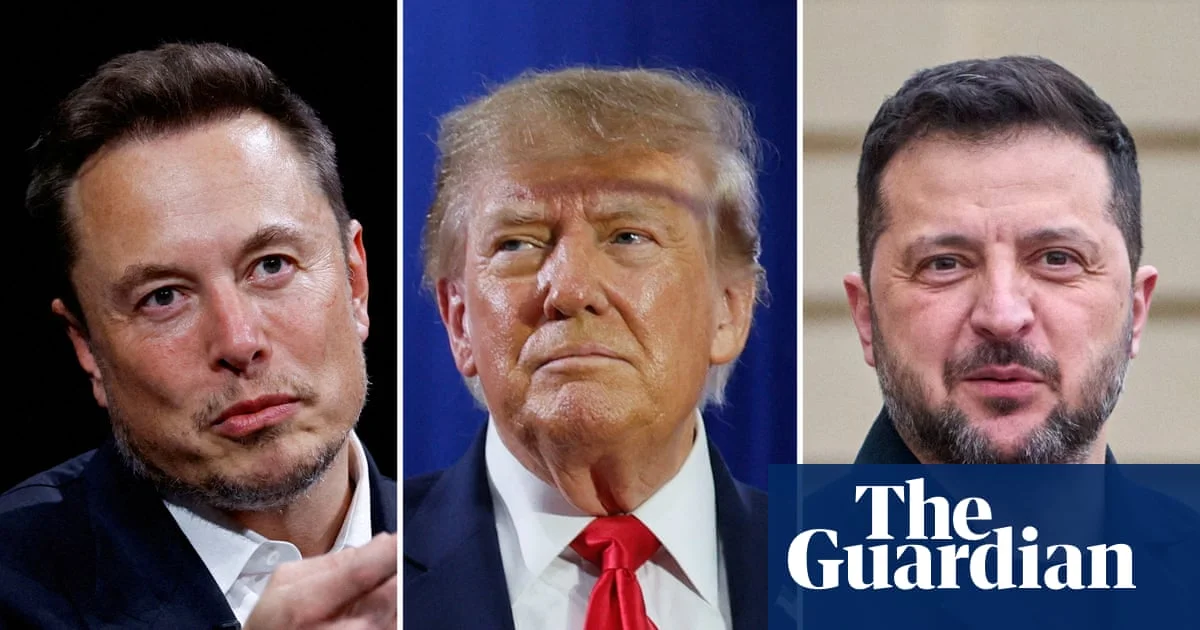
Elon Musk has restored Starlink access for Ukraine’s armed forces after speed caps degraded Kyiv’s ability to fly attack drones and intercept Russian strikes, US President Donald Trump said on Thursday. Trump declined to confirm whether he was the one who asked.
“Bottom line, he put it back,” Trump told reporters when asked about a Wall Street Journal report that he had phoned Musk to demand the limits be lifted. “I don’t want to comment on it, whether I called or whether somebody else called, doesn’t make any difference.”
The remark is the first on-the-record confirmation from the administration that restrictions existed at all. For the previous eight days, officials in Washington had said no such order was given.
What Is Confirmed About The Starlink Access Dispute
Two documented dates anchor the timeline. On 13 October, Ukrainian officials announced that sudden restrictions on the service had left the military scrambling, Al Jazeera reported. The BBC places Ukraine’s first report of an interruption to US intelligence sharing at 14 October.
Speaking before Trump’s remarks, President Volodymyr Zelensky said the speed available to Ukrainian forces “has not been restored to 400 [km/h; 250mph] yet”. He added: “We are working on it,” and said he was waiting on US Secretary of State Marco Rubio, who had promised information within 48 hours.
The Wall Street Journal then reported that Trump had called Musk and told him he was frustrated that speeds were still capped at around 160km/h, a limit that left Ukrainian offensive drones and interceptors unable to function against Russian attacks. The paper said the system was working more normally on Thursday, shortly after the conversation. The BBC has not verified that account and has contacted the White House and SpaceX.
Ukraine uses the civilian Starlink network and the more secure Starshield system. Both draw on roughly 10,000 satellites in low Earth orbit. Drone warfare depends on high-speed links, which is why a speed cap functions as a battlefield decision rather than a commercial one.
Two Parties, Two Accounts, No Paper Trail
The two parties closest to the switch have given accounts that do not fit together. Musk wrote on 14 October that Starshield is “owned and controlled by the US government” and that “any limits on speed or usage are decided by the US military and ultimately POTUS”.
Rubio said on Wednesday that neither the president nor anyone in the administration “ever requested that any changes to that system be made”. He said decisions about Starlink access are “governed by a private commercial contract as to how their stuff can be used and what speeds they’ll allow it to be used at”, adding that “the president has nothing to do with the decisions that are made by Starlink and Starshield and by Mr Musk”.
Each statement can be read as technically accurate, and that is the difficulty. No contract clause, Pentagon order or company statement has been published that establishes which party held the switch, or on what authority it was turned. The public record contains a denial, a social media post, a reported phone call and a one-line confirmation. It contains no decision trail.
John Cornyn, the Republican in his final weeks as US senator for Texas, told US media he did not believe Musk would have acted “without at least the acquiescence of the White House”. That is an assessment offered without documentation, not evidence.
The Diesel Rationale Has Not Been Shown To Hold
Trump’s pressure on Kyiv has been tied publicly to fuel prices. He has accused Ukraine of driving up diesel costs for Americans through its attacks on Russian refineries, and he faces midterm elections next month. His administration has waived some sanctions on Russia and agreed a deal to import Russian diesel, a move Ukraine and its European allies criticised.
The causal claim is thinner than the policy built on it. Analysis by the BBC, cited by the Guardian, found that the US-Israeli war on Iran and the resulting restrictions on oil exports from the Gulf likely had a greater effect on global diesel supplies than Ukrainian strikes did. No published US data has been presented to show that refinery attacks were the dominant driver of American pump prices.
What The Episode Reveals Beyond The Battlefield
Governments and humanitarian agencies outside the US alliance structure buy satellite connectivity as commercial customers. The dispute shows where their risk actually sits: not in the vendor’s goodwill, but in what a contract specifies about speed, uptime and grounds for interruption. Neither SpaceX nor the White House has disclosed those terms in this case.
That is the transferable lesson for markets in Africa and elsewhere where satellite internet is bought rather than built. A customer who is not party to the arrangement between a company and the Pentagon has no lever except escalation, and escalation requires a head of state willing to make a call. Ukraine had one. Most buyers do not.
The episode also sets a precedent that cuts both ways. If a speed cap can be applied and removed within eight days without a published order, the capability remains available for future use, and the absence of documentation makes it harder to establish accountability either way.
What To Watch
Zelensky said he expects Rubio’s answer within roughly 48 hours; whether that answer confirms or contradicts the Wall Street Journal account is the next verifiable data point. Watch also for any statement from the Pentagon, which Musk’s version of events places at the centre of the decision, and from SpaceX, which has so far said nothing publicly.
The durability of the restoration is untested. Zelensky’s own measure was a speed figure, not a press statement, and no independent monitoring of Starlink access in Ukrainian combat zones has been published. Until it is, the confirmed facts are narrow: restrictions were reported on 13 October, Trump says they are lifted, and the only documented explanation for either decision is a conversation nobody in the room will describe in full.
Frequently Asked Questions
Did Trump order the Starlink speed restrictions on Ukraine?
Trump has denied it, saying on Friday: “I don’t know if it was anybody, but it wasn’t me, and I don’t think it was Elon.” Secretary of State Marco Rubio said neither the president nor anyone in the administration requested changes. Musk said limits are decided by the US military and ultimately the president. No contract clause, Pentagon order or company statement has been published to settle the question.
What is the difference between Starlink and Starshield?
Starlink is the civilian satellite internet service. Starshield is the more secure, military-grade version designed for the Pentagon. Ukraine uses both depending on what communications are needed. Both networks rely on roughly 10,000 satellites in low Earth orbit.
Has Ukraine’s Starlink access been fully restored?
Trump said on Thursday that Musk “put it back”. Earlier the same day, Zelensky said the speed used by Ukraine’s military had not yet returned to 400 km/h and that he was waiting for information from Rubio. The Wall Street Journal reported service was closer to normal after Trump’s reported call to Musk, but the BBC has not verified that account.
FIRST TIME REACTIONS:
Be the first to leave us a comment – Trump Says Musk Restored Starlink Access For Ukraine, down the comment section.
JOIN US ON OUR SOCIAL MEDIA:
About Clare Dominic
Clare Dominic is the Editor at AfriLatest. With a background in journalism and a passion for storytelling, she oversees the editorial process to ensure content is accurate, engaging, and relevant. Clare works closely with contributors to maintain the highest standards of journalistic integrity across all news, sports, and lifestyle coverage.
View all articles by Clare Dominic-

 Startups4 weeks ago
What a Successful Dangote Refinery IPO Really Says
-
Health and Fitness1 week ago
Curly Hair Hydration: 5 Proven Steps That Actually Work
-
Trending Entertainment News2 weeks ago
Taylor Swift Joins Beatles as Only Acts With 100 Weeks at No. 1
-
World News4 weeks ago
Carney Calls U.S. Tariffs a Miscalculation as Canada Retaliates
-
Tech & Gadgets2 weeks ago
Apple Watch and AirPods Fall Deals: Save $120 Today
-
Football4 weeks ago
Mexico vs Colombia 2026: Márquez Debut Ends in Defeat
-
University Admissions4 weeks ago
UNILAG 2026/2027 Admission: Direct Entry & Post-UTME Guide
-
Fintech4 weeks ago
OPay No Dey Comot Nigeria: How to Verify Fintech News