Business & Finance
Singapore Airlines Business Class: What $12,500 Buys
Singapore Airlines business class sells for $5,000 to $12,500 on the Newark nonstop. Awards aside, here is what the fare buys, and what it does not.

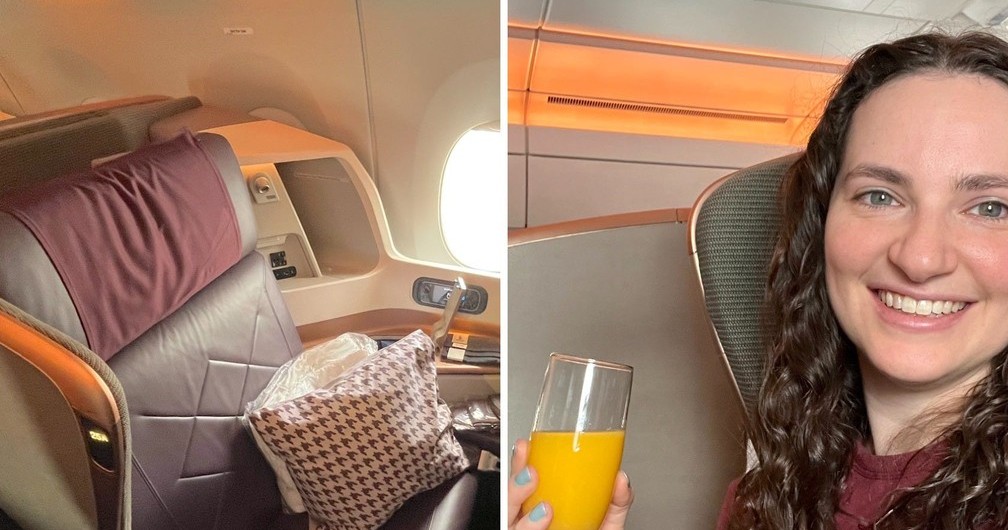
Singapore Airlines business class on the Newark-to-Singapore nonstop sold for between $5,000 and $12,500 in December, on a route the carrier flies with no economy cabin at all. The airline took the top spot in the 2026 World Airline Awards, and the trip reports that followed were, almost without exception, about the seat. The fare bill is the more revealing document.
Business Insider flew the 9,530-mile Newark Liberty International to Changi route, the world’s second-longest by distance, a few miles short of the airline’s own New York-JFK service. Wind, routing and weather can make Newark the longer flight by clock time. The reported airborne time was more than 19 hours.
The aircraft was an Airbus A350-900ULR with two cabins: business class and premium economy. That configuration is the business model, not a design flourish. Nineteen hours nonstop means carrying fuel, and fuel displaces paying seats. Strip out economy and each remaining seat has to carry more of the trip’s cost. The published fare range is what that arithmetic looks like at retail.

Why The Missing Economy Cabin Sets The Price
Singapore’s own executives frame the constraint as a comfort problem. “No matter how good the service or food is, we heard from our customers that comfort is really the most important thing,” Ong Wah Li, vice president of product experience, told Travel & Leisure. The airline also conceded a reversal on its outgoing product: “We had the widest business-class seat, perhaps too wide,” Ong said. The replacement, developed with seating specialist Recaro and BMW Designworks in Schwäbisch Hall, Germany, is narrower, adds lumbar and leg support, and introduces a sliding privacy door — the carrier’s first in business class.
Seats stay in service for a decade or more, which makes cabin design a capital commitment rather than a refresh cycle. Work on the new first-class suite began in 2018, ran through roughly 30 design iterations, and ended with London firm PriestmanGoode; the suites are manufactured by Collins Aerospace in Winston-Salem, North Carolina. Both products are slated for the ultra-long-range A350 fleet and, for first class, the incoming Boeing 777-9s.
Regulation sits underneath all of it. Every new seat, and every minor change to an existing one, must clear crash-safety requirements. Recaro opened its own crash-test facility in 2021, and during a behind-the-scenes visit a mannequin strapped into a business suite was accelerated down a track and stopped abruptly, with seat and dummy emerging intact. That test is the reason a sliding door can exist at 40,000 feet.
What The Singapore Airlines Business Class Fare Actually Buys

Documented, the seat delivers. Business Insider described a lie-flat bed, a private enclosure and restaurant-standard meals, and reported not watching a single film across the 19 hours. Travel creator Adam Lovick, flying the JFK-Singapore SQ24 service, put it plainly to NDTV: “This flight is a breeze in business. Felt like a sick kid home from school. Movies, food, naps, and no WiFi.” He added: “The real challenge is adjusting to the time change when you get home.”
The Wi-Fi line is not a joke. On a 19-hour sector with no economy cabin behind the curtain, connectivity separates a working day from a lost one. Its absence sits awkwardly beside an award for the world’s best airline. Premium pricing is easier to defend when the product is complete.
An Award Measures One Flight, Not A Fleet
Upgraded Points rates Air France’s A350-900 suite and Virgin Atlantic’s A350-1000 Upper Class above most transatlantic rivals, and flags British Airways Club World for $800 to $1,000 or more per person in taxes and fees on award bookings. Lufthansa’s older 2-2-2 layout draws a pass. Singapore scores well there too — on the 777-300ER fifth-freedom JFK-Frankfurt route, where the seat converts to a bed manually and the crew does it for you.
Consistency is the point. A ranking built on one flight says little about what a passenger receives when the aircraft is swapped or the cabin is three years old. Singapore’s own record shows movement: one account in the source material places it second in Skytrax’s 2025 ranking, before the 2026 first place.
Two caveats on the reviews themselves. Business Insider paid a discounted media rate for a ticket that retails at $5,000 to $12,500, so the experience described is not the one most paying passengers buy at list price. And none of the material reviewed for this article includes an African carrier in any ranking or comparison. The premium-density model described here rests on aircraft range, traffic rights and airport slots that the sources do not examine for West African operators. A Lagos-origin traveller reaches this cabin through a connection, on a dollar fare, and pays the same published price.
What To Watch

Three things. First, whether the new business suite reaches the A350-900ULR fleet on schedule, and whether 777-9 delivery delays push it back. Second, whether connectivity improves on the ultra-long sectors, where the gap between the marketing and the delivered product is thinnest. Third, whether premium density survives a fuel-price move — the model has no economy cabin to absorb it.
For now, the Singapore Airlines business class fare buys a documented product at a documented price, on an aircraft built specifically to make the route possible. The award is a separate claim, voted on by people who fly the cabin once. The seat is documented. The connectivity, on at least one passenger’s account, is not.
Frequently Asked Questions
How much does Singapore Airlines business class cost on the Newark to Singapore route?
Business Insider reported that business-class tickets from Newark to Singapore ranged from $5,000 to $12,500 in December. The publication paid a discounted media rate, so that figure reflects the retail range rather than what the reviewer was charged.
Why does the Newark to Singapore flight have no economy cabin?
The route is flown by an Airbus A350-900ULR configured with only business class and premium economy. A nonstop of more than 19 hours requires carrying large amounts of fuel, and fuel displaces seats, so the airline sells fewer seats at higher fares instead of filling the back of the aircraft.
Is Singapore Airlines ranked first by Skytrax?
Business Insider refers to Singapore Airlines’ 2026 designation as the world’s best airline by Skytrax. A separate account in the same source material places the carrier second in Skytrax’s 2025 ranking, which shows how much the annual position can move.
 Follow AFRILATEST on Google News
FIRST TIME REACTIONS:
Be the first to leave us a comment – Singapore Airlines Business Class: What $12,500 Buys, down the comment section.
JOIN US ON OUR SOCIAL MEDIA:

About Paul Nwogo
Paul Nwogo is an engineer, published author, and the Head Manager at AfriLatest. He has written numerous books available on Amazon covering a diverse range of topics, including health, personal finance, relationships, work ethics, and scam survival. With his technical background and passion for writing, Paul now oversees the editorial direction of AfriLatest, delivering practical, accurate, and engaging content on trending news, music, and global lifestyle topics.
View all articles by Paul Nwogo

Nigerian Business
Dangote Refinery Petrol Price: What the IPO Never Says
The Dangote refinery petrol price claim deserves scrutiny: the N5.85tn IPO prices shares, not fuel. Here is what the filings and coverage leave out.

The money is settled. The fuel question is not.
Dangote Petroleum Refinery’s public offer drew applications worth about N5.85tn, roughly $4.3bn, against a target of $1.6bn to $2.1bn, according to BusinessDay. Reuters reported the offer was increased by up to 30 per cent to about $2.1bn, with allotment of up to 5.33 billion shares including an overallotment option.
That is a capital-markets story. Ordinary Nigerians are being sold a different one: that the Dangote refinery petrol price is, or will soon be, the reason their transport fare and generator budget fall. The two claims are not the same, and the coverage cited here does not connect them.
What The Dangote Refinery Petrol Price Debate Actually Measures
At N525 per share, the refinery is valued at about N65.2tn, or $47.8bn, per Punch. One per cent of the company is worth roughly N652bn. Reuters puts the naira at N1,342.60 to the dollar.
Those numbers price future cash flows from a 650,000-barrel-per-day plant in the Lekki Free Trade Zone. They do not price a litre at a filling station. A shareholder buying at N525 is buying a claim on refining margins, export earnings and dividends. A driver buying petrol is paying for crude, freight, depot handling, haulage, levies and a retailer’s markup, each converted at the same exchange rate.
The refinery gate price and the pump price are separated by that chain. Nothing in the offer documents summarised in these reports discloses a gate price for petrol, and nothing discloses a pump price. Any claim that the Dangote refinery petrol price has been fixed at a specific figure cannot be tested against this material, because the figure is not there.
Where Refinery Gate Prices Stop And Retail Prices Begin
A refinery sells at its gate, in bulk, to marketers. Between that gate and a station forecourt sit depot charges, bridging costs for moving product inland, statutory levies and the margin the dealer needs to stay open. Each layer is priced in naira that somebody must buy with dollars. When the exchange rate moves, the pump price moves even if the refinery’s own efficiency improves.
This is why a refinery running at full rate can coexist with expensive fuel. Processing more crude lowers the cost of conversion. It does not cancel the crude bill, the haulage bill or the tax bill.
Small businesses feel this in the least glamorous places. A laundry in Surulere buying diesel, a cold-room operator in Kano, a bus operator on the Lagos-Ibadan corridor. Their cost line is the pump, not the share price. The IPO prospectus, as reported, has nothing to say to them.
Who Got Shares, And Who Got Nothing
The allocation table is where the practical trade-offs are visible. Retail investors are expected to receive all the shares they applied for, and domestic pension funds allocations close to what they requested, per Reuters. Foreign institutions bear most of the scaling back. “The guys that won’t get all their allotment are the offshore guys,” one lead adviser said.
South Africa’s Public Investment Corporation, which manages almost $220bn, sought about $500m of shares. Pan-African Refinery Investment SPV committed up to $400m, about 19 per cent of the enlarged offer. Nearly four million unique subscriptions came from investors in 120 countries, including every African country.
Aliko Dangote holds about 87.3 per cent now. That falls to roughly 84.4 per cent after the base offer and 83.6 per cent with the full over-allotment exercised; Reuters puts his post-IPO holding near 83.5 per cent, with NNPC Ltd down to about 6.5 per cent. A secondary sale of his personal stock, under discussion with the Securities and Exchange Commission, would cut it further. I don’t mind to be diluted as much as possible because I want people to actually be part of this good journey,” Dangote told ARISE News on 14 September.
The refinery had already raised about $2.5bn through two private placements covering 7.2 billion shares before the public offer. A Dangote spokesman declined to comment on the proposed secondary sale. The SEC postponed publishing allotments, due 17 November, to consider the transaction.
The Kenya Bill That Consumers Will Eventually Pay
Kenya plans tax exemptions for a proposed $16bn Dangote refinery at Lamu designed to process 700,000 barrels daily. Treasury Secretary John Mbadi told Citizen TV that capital goods would qualify for relief on value-added tax, excise duty and railway development levies, with taxes already paid on imported equipment refundable on claim.
Kenya’s tax expenditure stood at 262.6 billion shillings, about $2.02bn, or 1.5 per cent of GDP, last year, per ARISE. Exemptions are a cost carried by other taxpayers. That is the trade-off behind every refinery-for-fuel-price bargain, and it rarely appears in the price at the pump.
What To Watch Next
The allotment list is the first real test. A published list, a listing date and a disclosed gate price would let consumers and analysts measure something other than sentiment.
Dangote Cement hit the Exchange’s 10 per cent daily loss limit on 5 November and again on 17 November, a reminder that enthusiasm for the group’s paper can reverse quickly. The refinery’s valuation will not shield a transport operator from a fuel increase, and cheaper fuel will not rescue a shareholder from a bad entry price.
The forecast is narrow: expect strong subscription data, a pro-rata squeeze on offshore funds, and continued silence on retail pricing. Until the refinery publishes gate prices alongside its share allotments, the Dangote refinery petrol price remains a promise with no denominator, and the people who need the number most are the ones least able to read it in a prospectus.
Frequently Asked Questions
Will the Dangote refinery lower petrol prices at the pump?
The source material does not contain a gate price or a pump price, so no figure can be verified. Refining margin is one input among crude cost, freight, depot fees, haulage, levies and dealer margin. A refinery can cut conversion costs without cancelling the other layers, especially when the naira-dollar rate moves.
Why is Dangote selling part of his personal stake?
To meet institutional demand the IPO could not fully satisfy. Applications worth about N5.85tn came in against a target of $1.6bn to $2.1bn. The sale is under discussion with the Securities and Exchange Commission, which postponed the allotment list due on 17 November.
How much of the refinery will Dangote and NNPC own after listing?
Dangote’s 87.3 per cent falls to about 84.4 per cent after the base offer and 83.6 per cent with the full over-allotment, before any personal secondary sale. Reuters puts his post-IPO stake near 83.5 per cent and NNPC Ltd’s at about 6.5 per cent.
FIRST TIME REACTIONS:
Be the first to leave us a comment – Dangote Refinery Petrol Price: What the IPO Never Says, down the comment section.
JOIN US ON OUR SOCIAL MEDIA:
About Paul Nwogo
Paul Nwogo is an engineer, published author, and the Head Manager at AfriLatest. He has written numerous books available on Amazon covering a diverse range of topics, including health, personal finance, relationships, work ethics, and scam survival. With his technical background and passion for writing, Paul now oversees the editorial direction of AfriLatest, delivering practical, accurate, and engaging content on trending news, music, and global lifestyle topics.
View all articles by Paul NwogoFintech
How to Save Money When the Sources Publish No Rate
How to save money advice from three new sources, and what they omit: no naira costs, no exchange rate, no lending rate for households to test.

There is no exchange rate in this story, and no interest rate either. A rate update on how to save money has to begin with that admission, because the three documents behind this guide — a holiday travel guide from Ally Financial, a Vermont library report, and BBC-sourced debt charity guidance — carry no naira figure, no lending rate and no savings rate. What they carry is behaviour: lists, caps, borrowed equipment, and a warning that some parents will skip meals so their children get a Christmas dinner with the trimmings.
The absence matters more than it first looks. Saving advice becomes testable only when it is priced. Without a rate or a cost attached, a reader can agree with every recommendation and still be unable to check whether it works for a household earning a fixed monthly sum.
What The Three Sources Actually Measure

The Ally Financial guide, distributed by Stacker through Richmond News, offers two survey shares and no money at all. It reports that 44% of consumers intend to travel for the holidays, and that 34% anticipate spending a little extra on holiday travel this year. Those are counts of intent, not costs. They do not say what a flight costs, what accommodation charges, or what a reader saves by flying at an off-peak hour.
The guide’s most concrete travel instruction — that early-morning or late-night flights, or a flight on Christmas or Thanksgiving, could mean lower prices and fewer crowds — is hedged with could and potentially. That is the honest wording when no fare data sits behind the claim. The remaining suggestions, from group rates to travel agents to rewards cards to travel insurance, arrive without a single price attached.
The BBC report on StepChange guidance shows a different kind of precision. The charity’s advice carries a date instead of an amount: finish a shopping list before Black Friday on 27 November, because it is only a discount if you were going to buy it anyway. That one sentence is the most verifiable line in the whole set, and it costs nothing to check.
The rest of the list is practical and unpriced. Budget for Christmas in full — presents, food and drink, travel, parties, postage, decorations and extras. Spread the cost beyond the December paypacket. Book train travel now, since advance tickets are cheaper when available. Cap the socialising bill. Check cupboards, fridge and freezer before the big food shop. Ask whether the repayments are affordable before buying on credit. Vikki Brownridge, StepChange’s chief executive, frames the problem around January rather than December.
Hold onto the distributional fact, because it is the only one offered. Barnardo’s warns that some parents will skip meals so their kids get a Christmas dinner with the trimmings. No percentage accompanies that warning. It identifies who absorbs the squeeze, but leaves the household to work out where it sits.
How A Vermont Library Puts A Number On Not Buying
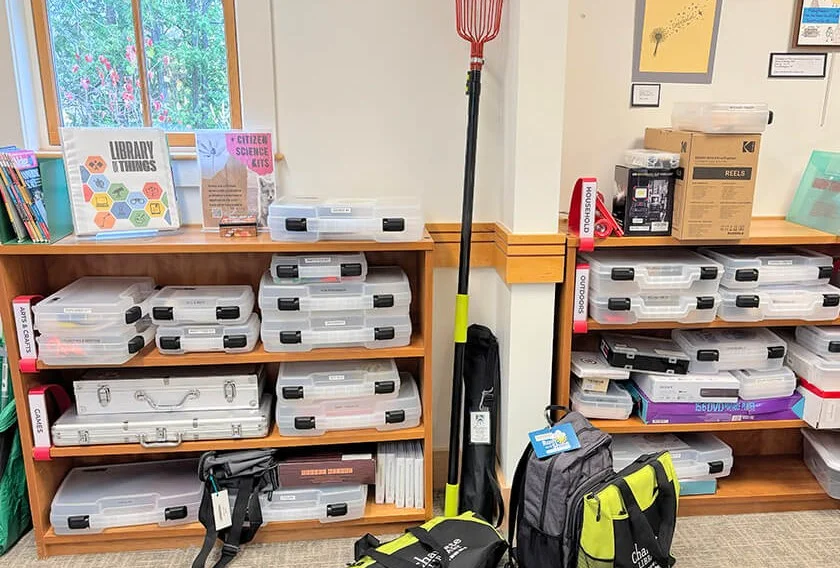
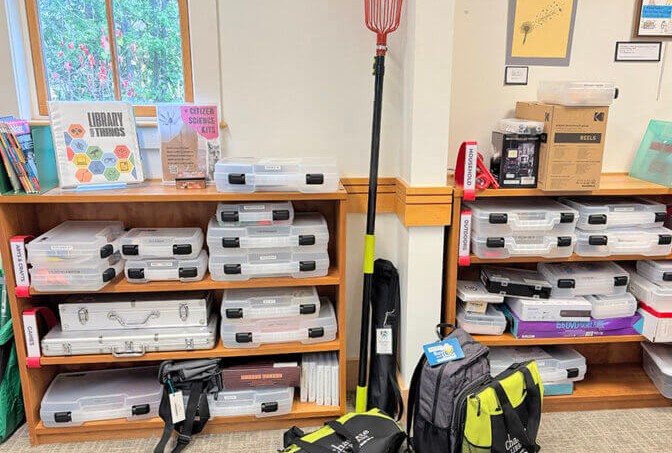
The Charlotte News report, dated 19 November 2026, is the only document in the set that attaches a figure to a method of saving. Charlotte Public Library’s Library of Things, which took shape around 2020 under director Margaret Woodruff, lends equipment to card holders for one week, renewable for a second week, against a signed waiver covering lost or damaged items.
The popular items are the ones a household uses once or twice. A food dehydrator. A canning set. An Extractigator for pulling buckthorn and honeysuckle. An induction cooktop that covers a broken stove, or lets a resident trial a replacement before buying. A Kill A Watt electricity monitor funded by the town’s Energy and Climate Action Committee. Selectboard member Lee Krohn borrowed a metal detector and found a survey marker buried for more than 30 years, then a water shutoff lost in his yard for decades.
Even here, the number is public rather than personal. A July 2026 town purchasing document shows Charlotte sought bids for $21,790 in equipment funded through the Vermont Land Access and Opportunity Board’s Community Resilience Hub Grant, with proposed kits possibly containing a shop vac, carpet cleaner, electric drill and hand truck, and a pressure washer under review depending on storage space. That $21,790 buys community access. What it saves an individual household is left for the household to calculate.
Where Naira Costs And Rates Go Missing
Readers in Lagos or Abuja get nothing direct from these documents. No exchange rate, official or market, appears in any of them. No bank fee, no loan rate, no naira price. A Nigerian household cannot use this material to weigh borrowing a canning set against buying one, or to judge what a December loan costs when the repayment lands in January.
Separating general education from individualized advice is the second gap. The MoneyHelper signposting in the BBC report is general education: free debt advice directories, tools to check benefit and grant entitlements, budget templates. None of it is a recommendation aimed at a specific person. The Ally guide’s suggestion to earn rewards on other purchases assumes a cardholder who clears the balance monthly, a condition it never states.
How To Save Money Without A Published Rate
Three actions survive the missing data. Write the full list before the discount event, and treat anything absent from that list as full price. Cap the category before spending starts, not after the statements arrive. And when a rate is the deciding factor, take it from the institution that publishes it, with a date attached, rather than from a lifestyle guide that never mentions one.
That is a thin return for a rate update, and it is the accurate one. A reader trying to learn how to save money in a market where published rates move daily should notice when the guidance, however sensible, never names a number.
Frequently Asked Questions
Do these sources give an exchange rate or an interest rate?
No. None of the three documents carries a naira exchange rate, official or market, a lending rate or a savings rate. The Ally Financial guide counts travel intentions, the StepChange guidance lists budgeting steps, and the Charlotte library report gives borrowing terms. A reader who needs a rate must take it from the institution that publishes it, with a timestamp.
How long can Charlotte residents borrow Library of Things equipment?
One week, with the option to renew for a second week, according to the Charlotte News report of 19 November 2026. Borrowers sign a waiver agreeing to use equipment responsibly and to cover the cost of items lost or damaged, and equipment must be returned directly to library staff during open hours.
What deadline does the StepChange guidance set?
Black Friday, 27 November, for completing a shopping list before discounts begin. The stated reason is that a reduction only counts as a discount if the item was already going to be bought. The same guidance recommends booking advance train tickets early, since those fares are cheaper when available.
FIRST TIME REACTIONS:
Be the first to leave us a comment – How to Save Money When the Sources Publish No Rate, down the comment section.
JOIN US ON OUR SOCIAL MEDIA:
About Paul Nwogo
Paul Nwogo is an engineer, published author, and the Head Manager at AfriLatest. He has written numerous books available on Amazon covering a diverse range of topics, including health, personal finance, relationships, work ethics, and scam survival. With his technical background and passion for writing, Paul now oversees the editorial direction of AfriLatest, delivering practical, accurate, and engaging content on trending news, music, and global lifestyle topics.
View all articles by Paul NwogoBusiness & Finance
Konga Shows Tech-Enabled Retail Platforms Can Complement Care
Konga Health’s La Roche-Posay Living Lab tests whether tech-enabled retail platforms can complement conventional dermatology care in Nigeria.

Konga Health’s skin-science event in Lagos, staged with La Roche-Posay, is the most concrete recent test of whether tech-enabled retail platforms can complement conventional care rather than simply sell alongside it. The Living Lab offered free consultations with certified dermatologists, a walkthrough of common skin conditions, and five product ranges on display. It did not publish a single figure on attendance, consultation volume, conversion to sales, or repeat purchase.
That gap is the story. The claim that retail can complement healthcare is an access claim, and access claims are settled with numbers, not with shelves.
What The Konga And La Roche-Posay Partnership Actually Delivered
La Roche-Posay, a brand under L’Oréal Dermatological Beauty, partnered with Konga Health, described in the announcement as its official distributor in Nigeria. According to Vanguard, the partnership was sealed in Lagos and framed around dermatological science, product authenticity and informed skincare choices.
The format was part clinic, part store. Visitors worked through hyperpigmentation, acne, damaged skin barriers, dryness and ultraviolet damage. Dr Ayesha Akinkugbe, a dermatologist and vice-president of the Nigerian Association of Dermatologists, and Dr Folakemi Cole-Adeife were among the specialists consulting, alongside members of L’Oréal Dermatological Beauty’s MedSquad. Five franchises were on show: Cicaplast, Mela B3, Anthelios, Lipikar and Effaclar.
Leo Stan Ekeh, chairman of Zinox Group, said at the event that the commercial opportunities in Nigeria’s beauty and personal-care market are enormous, and that bringing globally recognised brands closer to Nigerian consumers cannot be overstated. Anaïs Routhiau, business development manager at LID LDB SSA, described the Living Lab as a way to put La Roche-Posay’s dermatological science directly in front of consumers so they understand the products they use.
The room also held Prince Nnamdi Ekeh, chief executive of Konga Group; Chioma Ekeh, group CEO of TD Africa; Yvonne Enwerem, vice-president of Konga Health; actor Osas Ighodaro as Chief Living Lab Officer; health educator Dr Chinonso Egemba, known as Aproko Doctor; Mimi Onalaja; and beauty entrepreneur Subuola Oyeleye.
Why Tech-Enabled Retail Platforms Can Complement Clinic Waiting Rooms
The strongest case for the Konga model is triage. A shopper who walks into a retail space with a rash does not book a specialist appointment; she buys a cream, often the wrong one, sometimes twice. Put a certified dermatologist beside the shelf and the first purchase becomes a screening moment. That is a real function, and it moves faster than a hospital queue in a system where specialist time is scarce.
Nigeria’s specialist supply is not quantified anywhere in the announcement. No figure is given for practising dermatologists in the country, for waiting times, or for how many of the free consultations converted into a correct diagnosis rather than a sale. Those omissions are not trivial. They separate a health intervention from a well-executed sampling exercise.
The trade-off sits in the recommendation itself. Inside a retail environment, the consultation ends at a product the host sells. That is not misconduct, and free advice from named specialists carries genuine value for people who would otherwise self-medicate. But the incentive is commercial, and the number the retailer will track is basket size, not skin cleared at twelve weeks.
Few tech-enabled retail platforms in Nigeria have attached credentialed clinicians to a storefront this visibly. Konga has now done so once, in one city, for a limited run. One event is a pilot, not a delivery model.
The Retail Maths Konga And L’Oréal Did Not Disclose
The operating numbers that decide whether health-adjacent retail survives were absent. No inventory turnover figure, no shrinkage rate, no sell-through on the five franchises, no markdown exposure on products carrying shelf lives, no rent per square metre for the Living Lab footprint, and no price list measured against inflation.
Those four pressures, stock that ages, stock that disappears, space that reprices every lease cycle, and a shelf price that has to chase the exchange rate while household income does not, are what actually determine whether a partnership reaches a second city. A launch that omits them cannot settle the access argument in either direction.
Authenticity is the second claim, and it is the more testable one. Konga Health says authorised distribution reduces exposure to counterfeit products and unreliable sellers. The problem is documented globally: the World Health Organization maintains a fact sheet on substandard and falsified medical products. But the announcement offers no estimate of counterfeit prevalence in Nigerian skincare, no verification method, no batch-tracing detail. Authenticity without an audit trail is a marketing position, not a guarantee.
Where Konga Sits, And What The Record Does Not Show
The disclosed position is narrow. Konga is identified as one of Nigeria’s composite e-commerce companies; Konga Health is its health-facing arm; L’Oréal supplies the brands through its dermatological division. The source material does not state Konga’s revenue, order volumes, gross merchandise value, or the commercial terms of the La Roche-Posay arrangement. Nothing here should be read as evidence of Konga’s financial performance, and a brand partnership is not revenue.
What is visible is ecosystem overlap. Zinox Group’s chairman spoke, Konga Group’s chief executive attended, TD Africa’s group chief executive attended. For negotiating distribution rights with global brands, that concentration of related retail and logistics interests is an advantage. For anyone assessing independence, it is a governance question worth asking out loud.
The Next Test For Tech-Enabled Retail Platforms
A follow-up will be easy to spot and hard to fake: published consultation counts, a second city, a named verification standard for authenticity, and any disclosure of sell-through or markdowns on the five franchises. If dermatologists keep appearing inside Konga’s channel a year from now, the complement claim will have survived contact with the P&L.
The argument that tech-enabled retail platforms can complement conventional healthcare delivery will be proved or weakened by operating data, not by a Lagos launch. Convenience and specialist access are real gains for a consumer who would otherwise buy blind. They are also the cheapest part of the story to advertise and the most expensive part to sustain once rent, shrinkage and inflation take their cut.
Frequently Asked Questions
What did Konga Health and La Roche-Posay actually launch in Lagos?
A skin-science event called the Living Lab, which combined free consultations with certified dermatologists and MedSquad members, education on conditions such as hyperpigmentation, acne and UV damage, and displays of five La Roche-Posay ranges. Konga Health is described as La Roche-Posay’s official distributor in Nigeria.
Does the partnership prove retail can replace conventional dermatology care?
No. The announcement provides no consultation counts, diagnosis outcomes, conversion rates or repeat purchase data. It demonstrates that a retail channel can host specialist screening, but it does not measure whether outcomes improved or whether the model is financially sustainable after rent, shrinkage and inflation.
How does Konga Health address counterfeit skincare products?
The company argues that authorised distribution through its e-commerce and retail network reduces consumer exposure to counterfeit products and unreliable sellers. The announcement does not publish a verification method, batch-tracing detail, or any estimate of counterfeit prevalence in the Nigerian market.
FIRST TIME REACTIONS:
Be the first to leave us a comment – Konga Shows Tech-Enabled Retail Platforms Can Complement Care, down the comment section.
JOIN US ON OUR SOCIAL MEDIA:
About Paul Nwogo
Paul Nwogo is an engineer, published author, and the Head Manager at AfriLatest. He has written numerous books available on Amazon covering a diverse range of topics, including health, personal finance, relationships, work ethics, and scam survival. With his technical background and passion for writing, Paul now oversees the editorial direction of AfriLatest, delivering practical, accurate, and engaging content on trending news, music, and global lifestyle topics.
View all articles by Paul Nwogo-

 Car Reviews2 weeks ago
1955 Chevy Bel Air Restomod: What SEMA Really Proves
-
Savings & Investing3 weeks ago
Hidden Medicare Fees Draining Your Retirement Savings
-
Car Reviews4 weeks ago
Ford Bronco ORV Package: $18,995 Ownership Reality Check
-
JAMB & WAEC4 weeks ago
JAMB Admission Process: What Changed And What Is Still Talk
-
Movies & TV4 weeks ago
Silo Season 1 Ending Explained: What the Showrunner Said
-
Movies & TV3 weeks ago
Wizkid Starboy Desire Ft Banky W Shaydee: Fact Or Fan Fiction?