World News
DC’s Villainous Green Lantern Sinestro Takes Center Stage
DC’s Lanterns finale trailer puts a villainous Green Lantern, Sinestro, at the centre of the DCU’s cosmic future. What is confirmed, what is forecast.


Sinestro has been placed at the centre of DC’s television universe, and the company is doing it with the closest thing its catalogue offers to a villainous Green Lantern. The trailer for the Lanterns finale, posted on September 28, 2026, sets Aaron Pierre’s John Stewart against Ulrich Thomsen’s Sinestro on an alien planet. The episode airs October 4 on HBO Max.
The confirmed evidence is narrow, and the narrowness is the story. GamesRadar reports the trailer gives Sinestro two lines of dialogue: “The Lantern Corps thinks that fear makes you weak. They couldn’t be more wrong,” and “Fear can be the most powerful force in the universe.”
Earlier official material, catalogued by The Direct, showed Sinestro in a confined prison setting, confronted by Kyle Chandler’s Hal Jordan. Flashbacks tie the two men together as mentor and protege. Thomsen’s casting was confirmed before the show launched; Mark Strong played the same character in the 2011 Green Lantern film.
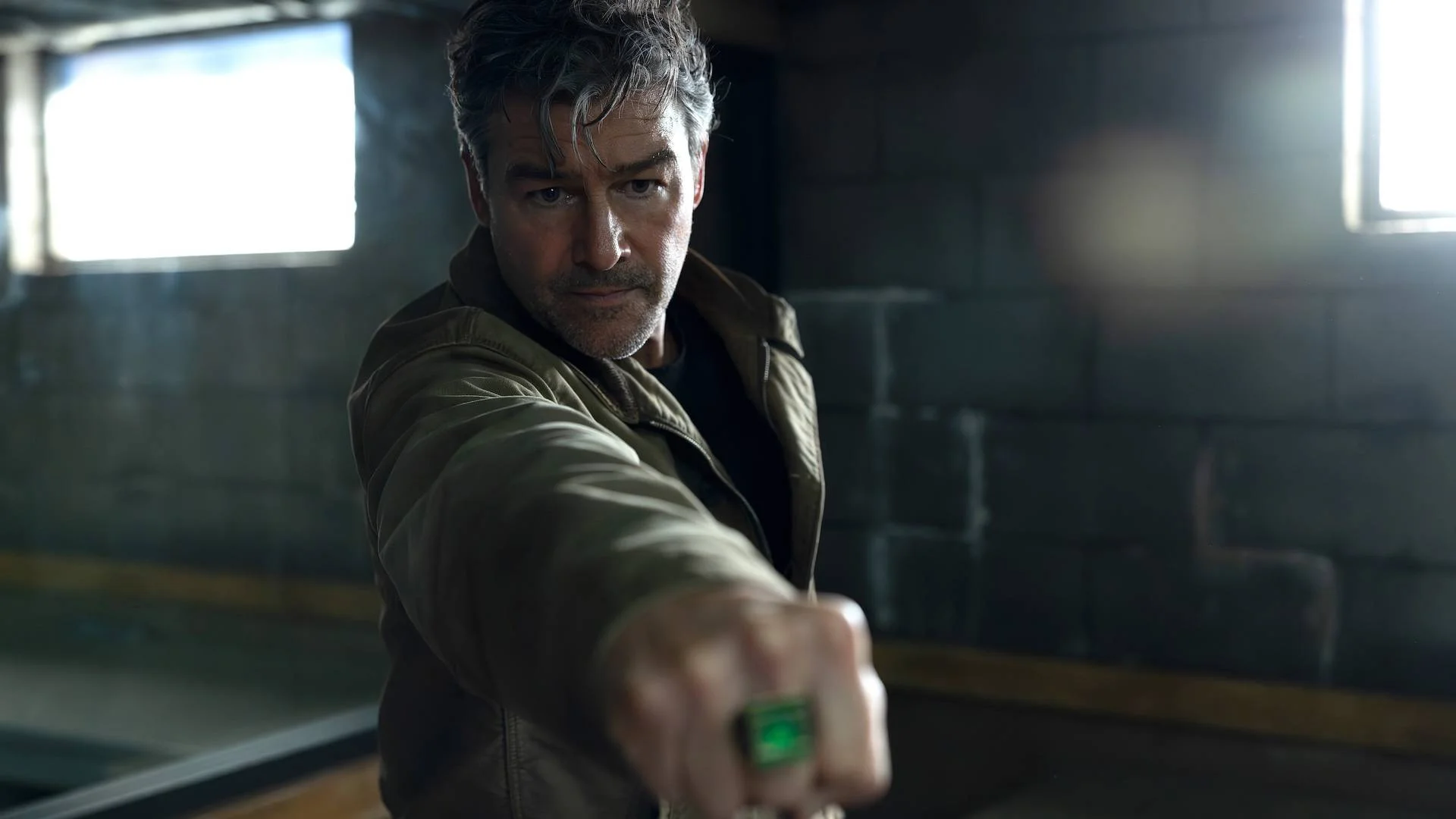
Beyond those frames, almost everything in circulation is forecast. A Sinestro Corps, a Parallax possession, a Legion of Doom: each is extrapolation from comic precedent, not something the show has aired. The distinction matters because the finale trailer resolves a murder mystery — who killed Hal Jordan — and a solved mystery is not the same thing as an announced cosmic antagonist.
How The Villainous Green Lantern Reached The Finale
The timeline is short and checkable. Lanterns premiered on August 16, 2026, according to The Direct, and has run weekly on HBO Max. The finale trailer landed September 28. The finale airs October 4. Between those dates, the only new narrative information released is a conversation on an alien planet and a stated doctrine about fear.
Season two is not confirmed, but it is being built. Showrunner Chris Mundy told The Hollywood Reporter he is several weeks into mapping the next season: “The question is whether [season 2] is a story people are interested in. If that’s the case, then we’ll get to do another one. We’ll tell it in a slightly different way, so that it feels fresh, with characters you know and care about.”
Fear, Succession And The Manhunters Rivalry
Sinestro’s comic history explains why the character reads as a villainous Green Lantern rather than a conventional foe. He became a Yellow Lantern after wielding a power ring that tapped fear, and the fear entity known as Parallax later took over Hal Jordan’s body, causing destruction and death across the galaxy, per GamesRadar.
A competing threat exists. Polygon notes the Manhunters have appeared in Green Lantern comics since the 1970s as the precursors to the Corps, replaced after they rebelled against the Guardians of the Universe. The latest Lanterns episode teased them, and Polygon describes them as “a season-spanning threat” fitting the show’s themes of replacement and succession.
Both candidates are succession stories. Neither has been confirmed as the settled big bad. DC has, in effect, released two competing signals and left the hierarchy unresolved: a villainous Green Lantern in a prison cell and a machine army referenced but not yet shown in full.
What Absolute Green Lantern Says About A Villainous Green Lantern Turn
The comics side offers a cautionary parallel. Bam Smack Pow reports that Absolute Green Lantern No. 16 ended with the debut of Absolute Jessica Cruz, who appeared to side with Mogo, a living planet being used to destroy worlds. It read as a villainous Green Lantern origin.
Issue 17 reversed the reading. Cruz wanted to free Mogo from Thaal’s control, and after Jo Mullein and Tomar-Re destroyed his machine, she touched a dead animal bone on the planet’s surface. Plant life grew, a blue atmosphere formed, and Mogo resembled a planet rather than an instrument of destruction. The apparent turn was a misdirect.
Issue 18 then introduced the Manhunters to that series, written by Al Ewing. The Absolute Universe is built on Darkseid’s design, which is why those antagonists carry different weight there than in the main DC continuity.
That continuity is separate from the HBO show. No verified link joins the Absolute comics line to the screen universe, and treating the two as one storyline is a reader’s assumption, not a studio statement.
For audiences outside the United States, the practical question is distribution rather than lore. HBO Max carriage varies by market, and in territories without the service, the finale’s reach depends on local licensing arrangements that DC has not detailed publicly.
Pierre’s future is clearer than Sinestro’s. He appears in the Superman sequel Man of Tomorrow, and told GamesRadar+ that filming Lanterns first was decisive: “He was like, ‘Congratulations, man. You filmed for 106 days out of 112.’ Just on that note, to have 106 days with a character before going on in the DC cinematic universe is a gift.”
What remains is a company betting that a villainous Green Lantern can carry a franchise without yet showing what he does. The trailer sells a philosophy of fear and a face in a cell. Whether Sinestro becomes the DCU’s defining antagonist, or shares that role with the Manhunters, will be settled by episodes that have not aired.
Frequently Asked Questions
Who plays Sinestro in DC’s Lanterns?
Danish actor Ulrich Thomsen plays Sinestro, per The Direct. Mark Strong played the character in the 2011 Green Lantern film. The finale airs October 4, 2026 on HBO Max.
Has DC confirmed Sinestro as the main villain of the DCU?
No. The finale trailer shows Sinestro confronting John Stewart and stating that fear is the most powerful force in the universe. A Sinestro Corps, Parallax or Legion of Doom storyline has not been announced. Those are forecasts drawn from comic precedent.
What are the Manhunters and why do they matter to Lanterns?
The Manhunters are the precursors to the Green Lantern Corps in DC comics, replaced after rebelling against the Guardians of the Universe. Polygon reports the latest Lanterns episode teased them as a season-spanning threat, and they appeared in the 2011 tie-in game Green Lantern: Rise of the Manhunters.
 Follow AFRILATEST on Google News
FIRST TIME REACTIONS:
Be the first to leave us a comment – DC’s Villainous Green Lantern Sinestro Takes Center Stage, down the comment section.
JOIN US ON OUR SOCIAL MEDIA:

About Clare Dominic
Clare Dominic is the Editor at AfriLatest. With a background in journalism and a passion for storytelling, she oversees the editorial process to ensure content is accurate, engaging, and relevant. Clare works closely with contributors to maintain the highest standards of journalistic integrity across all news, sports, and lifestyle coverage.
View all articles by Clare Dominic

World News
Sunshine Biopharma Reverse Stock Split Set for October 26
Sunshine Biopharma reverse stock split cuts shares 1-for-20 on October 26, 2026, to regain Nasdaq bid compliance. What changes, what does not.

Sunshine Biopharma Inc. will cut its issued share count by 95 percent at the market open on Monday, October 26, 2026, when a one-for-twenty Sunshine Biopharma reverse stock split takes effect.
The Fort Lauderdale, Florida pharmaceutical company, which trades on Nasdaq under the ticker SBFM, announced the move on October 22, 2026. Issued and outstanding common stock falls from 15,219,383 shares to approximately 760,969 shares.
The company gave one reason: to regain compliance with Nasdaq’s minimum bid price requirement for continued listing. That rule sets the price floor a stock must hold to stay on the exchange.

The announcement does not state the share price before or after the split, the date Nasdaq notified the company of any deficiency, or whether a cure period or hearings process came first. Those details are absent from the source material.
What The Sunshine Biopharma Reverse Stock Split Actually Changes
Fifteen million two hundred nineteen thousand three hundred eighty-three divided by twenty is 760,969.15. The company’s stated figure of approximately 760,969 matches that arithmetic, which points to rounding rather than any new issuance of stock.
A reverse split reprices existing equity; it does not raise capital. The share count falls by the same factor the price per share rises, so market value is unchanged by the mechanics alone. What moves is the nominal price Nasdaq measures against its listing standard.
A TradingView summary of the announcement, produced by its automated analyst tool, calls the move a late-stage step to address ongoing bid-price noncompliance and notes that a smaller float can increase price volatility and widen trading spreads. It adds that the outcome depends on the post-split price holding.
That framing is consistent with the company’s own description. It is also a forecast, not a result. No post-split trading data exists yet, and none is contained in either document.
The Evidence Trail Is Short, And That Matters
Two documents describe this corporate action. One is the company’s press release, carried by Yahoo Finance and distributed through ACCESS Newswire. The other is the TradingView summary, which states plainly that it is based on the original press release from Sunshine Biopharma distributed by the same wire.
That means the share figures, the effective date and the compliance rationale trace back to a single disclosure. This report could not verify from the available material whether a separate U.S. Securities and Exchange Commission filing restates the same numbers. Until such a document is examined, the split details rest on the company’s own account.
The release also carries standard safe harbor language covering forward-looking statements about drug development activities, financial performance and future growth, with the company cautioning that actual results could differ materially. That caution applies to the growth claims made in the same release.
The Drug Portfolio Behind The Ticker
According to the announcement, Sunshine Biopharma has 60 generic prescription drugs on the market in Canada and approximately 12 additional drugs scheduled for launch in the remainder of 2026.
The company also describes a proprietary development program with two parts. K1.1 mRNA is an mRNA-lipid nanoparticle targeted at liver cancer. PLpro is a protease inhibitor, described as a small molecule for treating SARS Coronavirus infections.
The release gives no trial phase, enrollment figure, regulatory status or timeline for either program. That gap is significant: the two development candidates are the part of the business most likely to move the share price over time, and the disclosure offers no milestone a reader can date.
For a company whose near-term commercial activity sits in Canadian generics, the split leaves the portfolio, the launch schedule and the development programs untouched. It changes the ticker’s arithmetic only.
What Holders Outside The United States Should Note
For investors in Africa and other regions holding Nasdaq-listed microcaps, a split of this kind is a mechanical adjustment applied to the position and the quoted price at the open, not a change in the underlying security. Access to U.S. microcaps from most African markets runs through brokers offering American market execution.
This report could not verify how individual brokers in the region handle notification or any fractional residue from a one-for-twenty adjustment. Holders should confirm the treatment with their own custodian rather than assume a standard process. The company’s own contact for investor enquiries is its chief financial officer, Camille Sebaaly, listed in the release.
What To Watch After October 26
Three checkpoints sit ahead. The first is whether the post-split price holds above Nasdaq’s minimum bid threshold long enough to satisfy the exchange. The second is whether Nasdaq issues a written compliance determination; the release does not say how or when the company would announce one.
The third is operational. Roughly 12 generic launches are scheduled for the rest of 2026, and the company has flagged no timeline for K1.1 mRNA or the PLpro program. Any disclosure on either front would carry more weight than the share-count change.
Investors can also track the company’s own materials at sunshinebiopharma.com.
The Sunshine Biopharma reverse stock split settles a listing question. It does not settle a revenue question. Only the generic launch cadence and the development milestones can do that, and neither is dated in this announcement.
Frequently Asked Questions
When does the Sunshine Biopharma reverse stock split take effect?
At the market open on Monday, October 26, 2026, according to the company’s announcement of October 22, 2026. The ratio is one new share for every twenty existing shares.
How many shares will Sunshine Biopharma have after the split?
Issued and outstanding common stock falls from 15,219,383 shares to approximately 760,969 shares. That figure is consistent with dividing the existing count by twenty and rounding.
Why is Sunshine Biopharma doing the split?
The company states the split was undertaken to regain compliance with Nasdaq’s minimum bid price requirement for continued listing. The release does not disclose the share price, the date of any Nasdaq deficiency notice, or whether a cure period preceded the decision.
Does the split change the value of the company or its drug business?
No. A reverse split lowers the share count while raising the price per share, so market value is unchanged by the mechanics. The 60 generic prescription drugs on the Canadian market, the approximately 12 planned launches for the rest of 2026, and the K1.1 mRNA and PLpro development programs are unaffected.
FIRST TIME REACTIONS:
Be the first to leave us a comment – Sunshine Biopharma Reverse Stock Split Set for October 26, down the comment section.
JOIN US ON OUR SOCIAL MEDIA:
About Clare Dominic
Clare Dominic is the Editor at AfriLatest. With a background in journalism and a passion for storytelling, she oversees the editorial process to ensure content is accurate, engaging, and relevant. Clare works closely with contributors to maintain the highest standards of journalistic integrity across all news, sports, and lifestyle coverage.
View all articles by Clare DominicWorld News
Walmart Membership Bundle at $120 Takes Aim at Amazon, Costco
Walmart’s $120 membership bundle pairs Walmart+ with Sam’s Club Plus to pressure Amazon and Costco. What’s confirmed, what’s estimated, what comes next.

Walmart put a price on its challenge to Amazon and Costco this week: $120 a year. On Tuesday the retailer launched a Walmart membership bundle that folds Walmart+ and Sam’s Club Plus into a single subscription, according to Reuters. The timing is deliberate. The offer lands just before the holiday shopping season, in a year when Walmart’s own sales growth has slowed to its weakest pace in six years.
The mechanics are simple. Shoppers pay $120 annually for both tiers, a structure Business Insider reports means existing Sam’s Club Plus members effectively receive Walmart+ at no extra charge, while Walmart+ members can add the premium club membership for an additional $22.
What Is Confirmed Inside The Walmart Membership Bundle

Three elements are confirmed by the company: the $120 annual price, the pairing of the two Plus tiers, and the delivery promise attached to both. Walmart says Plus orders fulfilled from stores and clubs arrive in as little as 30 minutes, with some orders delivered in under 10 minutes.
That delivery speed is the actual product. Streaming entertainment, pharmacy services and partner deals are supporting perks, but the operational claim — that a store or club can function as a same-hour distribution node — is what Walmart is selling.
Walmart does not disclose membership counts or fee revenue. Every figure describing the size of these programs is an outside estimate, and should be labelled as such.
Furner’s Fee Comparison Is Framing, Not A Like-For-Like Price
CEO John Furner did not name competitors in his statement, but the reference was not subtle. “Consider what people may be paying today: $139 for a retail membership with delivery. $130 for a warehouse club,” he said. Business Insider identified those figures as the fees charged by Amazon and Costco respectively.
Two cautions apply. First, a fee comparison is not a value comparison; the $139 and $130 buy bundles of benefits that differ from Walmart’s. Second, the standalone Sam’s Club Plus fee is not stated in the published material, which makes the savings claim difficult to check independently. Reuters describes the bundle as offering a discount of nearly $100 versus buying the subscriptions separately, while Walmart’s own framing compares its $120 against rival fees of $139 and $130. Those are different arithmetic exercises, and readers should not treat them as interchangeable.
The one number that requires no estimate is the price: $120 for both.
Walmart Attacks From A Slowing Base
The context matters more than the press release. Reuters reports Walmart enters the holiday season amid weak consumer spending, particularly among lower- and middle-income households, and that Walmart, Target and Kroger have cut prices on thousands of items this year to attract budget-conscious shoppers.
Walmart reported its slowest quarterly comparable sales growth in six years in August, with average spend per visit also softening year over year. Costco and discount grocers such as Aldi have drawn stronger US traffic as shoppers hunt for convenience and value.
A separate Yahoo Finance report puts the second-quarter US same-store sales growth at 2.6%, the weakest since the fourth quarter of 2020, with grocery still the majority of US sales and private-label share up 1.3 percentage points year over year.
The scale gap is stark. Mizuho estimates roughly 25 million Walmart+ members and 30 million Sam’s Club members, with about 10% overlap between the two. Globally, Costco reported more than 150 million membership cardholders, and Amazon is estimated to hold more than 220 million Prime members. On those estimates, the $22 add-on targets a relatively narrow band of existing Walmart+ shoppers — which suggests the bundle is as much about retention and basket size as about recruiting new members.
Mizuho analyst David Bellinger framed it that way in a note: “The bundled offering screens as another signal of WMT pushing more value into its overall ecosystem, and highlighting its rapid delivery capabilities.”
Why African Retailers Should Watch The Fees, Not Copy The Model
The published reporting contains no detail on international availability. Both sources describe a US holiday season, US traffic patterns and US fee levels. No market outside the United States is named, and no non-US pricing is disclosed.
That absence is the relevant fact for readers in Africa and other regions. The 30-minute delivery claim depends on dense store and club networks plus last-mile capacity — infrastructure conditions that vary enormously by market. A $120 membership bundle built on that base is not a portable template; it is a US-specific play.
What travels is the pricing signal. Walmart, Target and Kroger cutting prices on thousands of items is evidence of a defensive posture in a soft spending environment. Suppliers and exporters who track US retail demand should read the bundle as a margin story rather than a growth story.
What To Watch Before The Holidays
Whether Walmart breaks its silence on membership counts. Whether Amazon or Costco adjust fees or bundle their own tiers in response. And whether the holiday quarter’s comparable sales figures show the bundle moving baskets or merely protecting existing ones. None of those outcomes is confirmed yet; all three are open questions.
The Big Picture
The Walmart membership bundle is best understood as a fee war dressed as a discount. Membership fees are recurring, high-margin revenue that funds delivery capacity, and Walmart is using its two-tier structure to compete on price against rivals whose combined scale it does not match. Furner’s statement sets the terms of that contest on Walmart’s chosen ground: the annual fee. Whether the $120 bundle changes shopping behaviour, or simply re-prices loyalty Walmart already had, will only become clear in the quarterly numbers that follow the holiday season.
Frequently Asked Questions
How much does the Walmart membership bundle cost?
Walmart launched the bundle at $120 per year, covering both Walmart+ and Sam’s Club Plus. Reuters reports that represents a discount of nearly $100 versus buying the two subscriptions separately.
Does Walmart disclose how many Walmart+ or Sam’s Club members it has?
No. Walmart does not disclose membership counts or fee revenue. The figures of roughly 25 million Walmart+ members and 30 million Sam’s Club members are estimates from Mizuho, which also estimated about 10% overlap between the two groups.
Is the Walmart membership bundle available outside the United States?
The published reporting does not say. Both Reuters and Business Insider describe the offer in the context of the US holiday shopping season, and no international markets or non-US pricing are mentioned in the source material.
Receive alerts for Walmart membership bundle and more like it.
FIRST TIME REACTIONS:
Be the first to leave us a comment – Walmart Membership Bundle at $120 Takes Aim at Amazon, Costco, down the comment section.
JOIN US ON OUR SOCIAL MEDIA:
World News
Skechers Kizik Patent Dispute: Both Sides Claim Victory
The Skechers Kizik patent dispute over hands-free shoes ends in a Munich ruling both sides call a win. Here is what the UPC ordered and what comes next.
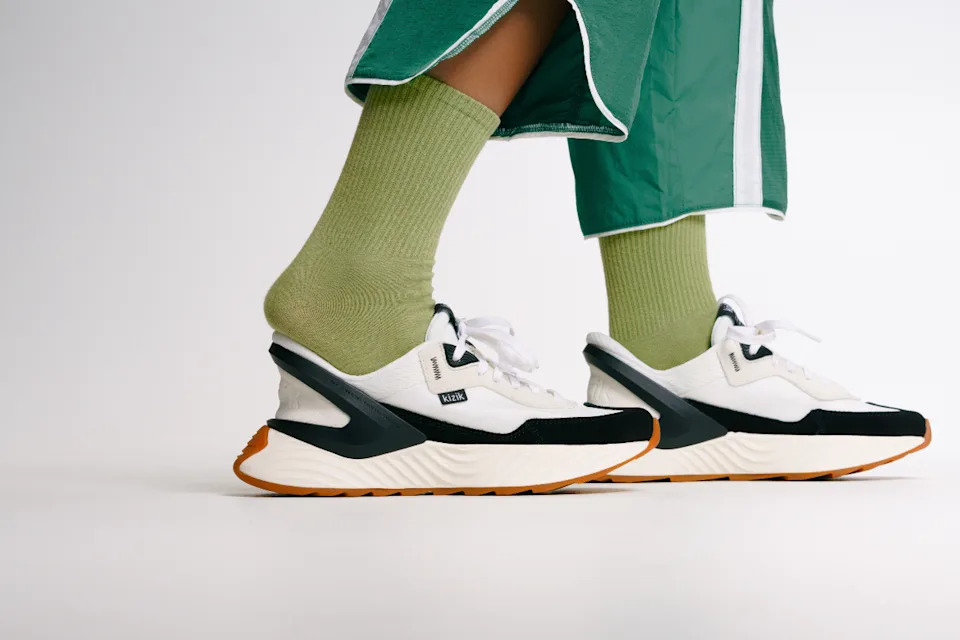
Skechers and Kizik both claimed victory this week after judges at the Unified Patent Court in Munich ruled that a narrow set of Skechers step-in shoes infringes a patent owned by Kizik’s parent company, and ordered Skechers to stop making, distributing and selling those styles in 18 European countries.
The ruling was issued on Oct. 17 and confirmed through company statements over the following days. The Skechers Kizik patent dispute began in 2025, when Fast IP, LLC, the intellectual property holding company of HandsFree Labs, filed at the Munich court against Skechers’ Hands Free Slip-Ins range. The complaint also named Skechers’ German, Swiss, Belgian, Italian and French operations.
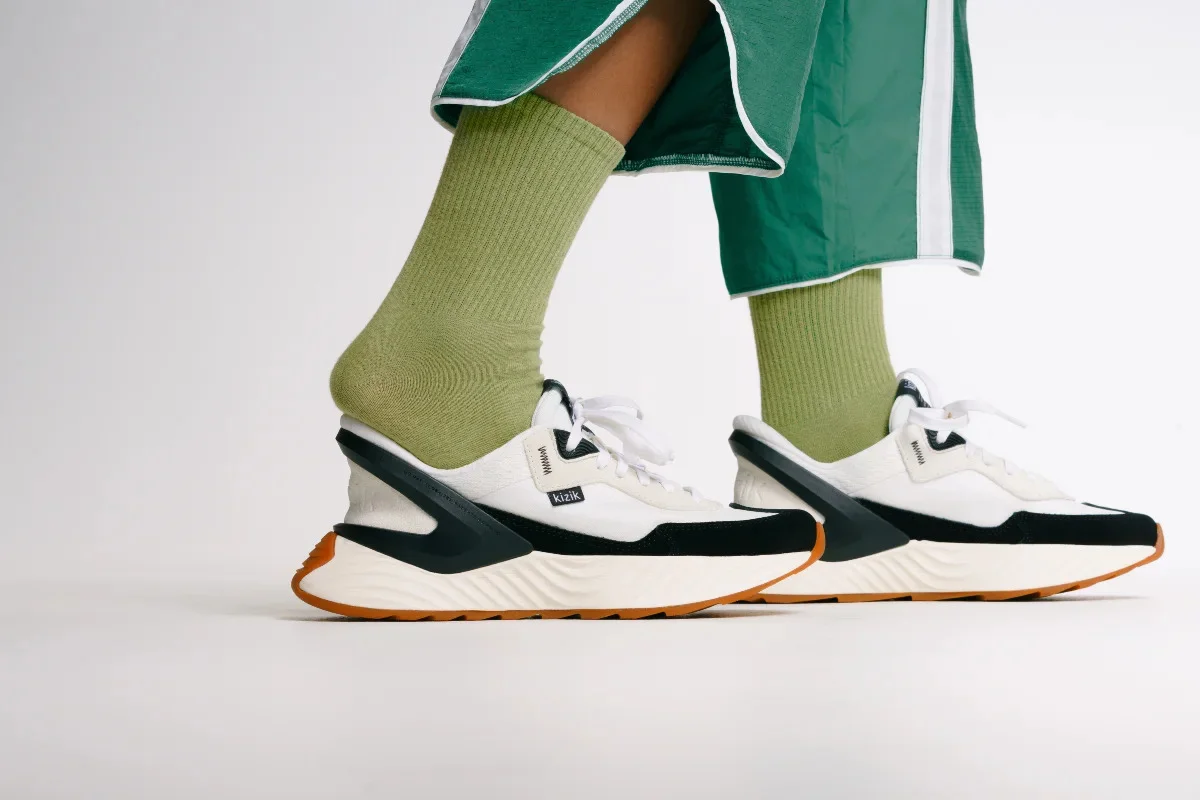
Hands-free footwear has become an increasingly important category for Skechers since the company introduced Slip-ins in December 2021. Skechers describes itself as the third-largest footwear company in the world. Kizik sells on the same premise: a shoe that goes on without hands.
What The Munich Court Actually Ordered
The panel did not hand Kizik everything it asked for. According to a copy of the decision reviewed by Footwear News, the injunction covers only sneakers built with a specific design combining elastic side panels and a heel stabilizer. Claims against certain other Skechers styles named in the original complaint were rejected.
The order binds Skechers across the 18 EU states participating in the court’s system: Belgium, Bulgaria, Denmark, Germany, Estonia, Finland, France, Italy, Latvia, Lithuania, Luxembourg, Malta, the Netherlands, Austria, Portugal, Romania, Slovenia and Sweden. Damages were also awarded. Either side can appeal.
When the case was filed in August 2025, the disputed amount carried a preliminary estimate of about 1 million euros, with 200,000 euros in provisional damages requested, according to FashionUnited. Set against Skechers’ $9.42 billion sale to 3G Capital, the money is minor. The injunction is the prize.
Why Both Sides Read The Skechers Kizik Patent Dispute As A Win
Both readings have support in the ruling, which is why the two statements do not contradict each other so much as describe different halves of the same document.
Gareth Hosford, chief executive of HandsFree Labs and Kizik, said the outcome “shows that the system works,” adding: “We’re pleased the court recognized the strength of our patent, and we’ll keep defending the technology our team built.
Skechers, in its own statement, counted the styles. “Skechers won on three of the four styles, with the fourth being a minor and commercially insignificant style for Skechers,” the company said in a release carried by Business Wire. It also quoted the court’s language that Kizik’s infringement claims were “largely unfounded.”
Both claims can hold at once. A finding of infringement on one commercially small style is still a finding of infringement, and it still carries a sales ban in the bloc. A rejection on three is still a rejection.
The Patent Counts Do Not Match
The two companies describe their patent portfolios in figures that have shifted over the life of the case. In July 2025, Skechers said it held more than 140 hands-free utility and design patents worldwide. By its October 2026 statement, that figure had become more than 300. HandsFree Labs, in the period when it filed, described holding more than 200 patents and applications worldwide.
Neither figure is independently verified in the material the companies released. The gap matters because Skechers has said it will “aggressively challenge both the validity of the patents and the infringement claims.” A validity fight turns on which specific claims survive review, not on portfolio totals cited in press releases.
What The Order Leaves Untouched
The injunction’s reach stops at the court’s participating states. Skechers says it sells in approximately 180 countries and territories through department and specialty stores, its website and more than 5,300 own retail stores. The banned styles can still be made and sold outside the 18-state bloc, subject to whatever other courts decide.
The complaint named Skechers’ Swiss arm, and Switzerland is not among the 18 states covered by the judgment. The enforcement map is drawn by treaty membership, not by where a company’s subsidiaries sit.
For buyers and distributors in Africa, Asia and Latin America, nothing in the Munich order changes the availability of the affected styles. What changes is European inventory. Kizik’s original complaint sought a recall of product placed on the market since July 9, 2025; the companies’ statements on the judgment do not specify how the court treated that request.
The American Case Is Still Open
The European action was a follow-on. HandsFree Labs filed a US suit on July 24, 2025, in the federal district court for the Eastern District of Texas, and that litigation remains ongoing. Skechers has argued its footwear uses its own technology and that Kizik’s patents are invalid.
Skechers president Michael Greenberg said in 2025 that the timing of the claims followed the 3G Capital deal: “We believe that, after all these years of silence, the true motivation for this lawsuit might be found right on the face of Kizik’s complaint, where they state that they are looking for a share of the $9.42 billion being paid for Skechers, money Kizik did not earn and does not deserve.”
That is an allegation by Skechers, not a court finding. No judgment has addressed motive, and Kizik has not conceded the point in any statement reviewed here.
What To Watch
Three markers will show whether the Skechers Kizik patent dispute changes the hands-free market or only its paperwork. First, whether Skechers appeals the Munich order and seeks a stay of the injunction while an appeal runs. Second, how the Texas case treats patent validity, since a European finding does not bind a US court. Third, whether the ruling pulls other step-in sellers into the Unified Patent Court’s reach. The court’s 18-state jurisdiction is now a tested venue for footwear patents, and both companies have said they intend to keep enforcing and challenging.
Frequently Asked Questions (Skechers Kizik patent dispute)
Did Skechers win or lose the Munich patent case?
Both outcomes are in the same ruling. Judges found that a limited set of Skechers step-in shoes infringed a HandsFree Labs patent and ordered those styles off the European market, while rejecting claims against other Skechers styles named in the original complaint. Skechers says it won on three of four styles; HandsFree Labs says the court recognized the strength of its patent.
Which countries does the ruling cover?
The judgment applies to the 18 EU states participating in the Unified Patent Court system, including Germany, France, Italy, the Netherlands, Belgium, Austria, Portugal and Sweden. Switzerland, where Skechers has a named subsidiary, is not among them.
Can Skechers still sell the affected shoes outside Europe?
Yes. The order is limited to the court’s 18 participating states. Skechers says it sells in roughly 180 countries and territories, so distribution outside that bloc is unaffected by this judgment, though the separate US lawsuit remains open.
Is the US lawsuit between Kizik and Skechers resolved?
No. HandsFree Labs filed in the Eastern District of Texas on July 24, 2025, and that case is still ongoing. A European ruling does not bind a US court, and Skechers has said it will challenge both the validity of the patents and the infringement claims.
Receive alerts for Skechers Kizik patent dispute and more like it.
FIRST TIME REACTIONS:
Be the first to leave us a comment – Skechers Kizik Patent Dispute: Both Sides Claim Victory, down the comment section.
JOIN US ON OUR SOCIAL MEDIA:
About Clare Dominic
Clare Dominic is the Editor at AfriLatest. With a background in journalism and a passion for storytelling, she oversees the editorial process to ensure content is accurate, engaging, and relevant. Clare works closely with contributors to maintain the highest standards of journalistic integrity across all news, sports, and lifestyle coverage.
View all articles by Clare Dominic-

 Startups4 weeks ago
What a Successful Dangote Refinery IPO Really Says
-
Trending Entertainment News2 weeks ago
Taylor Swift Joins Beatles as Only Acts With 100 Weeks at No. 1
-
World News4 weeks ago
Carney Calls U.S. Tariffs a Miscalculation as Canada Retaliates
-
Tech & Gadgets2 weeks ago
Apple Watch and AirPods Fall Deals: Save $120 Today
-
Football4 weeks ago
Mexico vs Colombia 2026: Márquez Debut Ends in Defeat
-
Fintech4 weeks ago
OPay No Dey Comot Nigeria: How to Verify Fintech News
-
Fintech4 weeks ago
OPay Investing in People to Build a Better Nigeria
-
Phone Reviews4 weeks ago
iPhone 18 Pro Max Review: Price, Specs, Verdict