World News
Walmart Membership Bundle at $120 Takes Aim at Amazon, Costco
Walmart’s $120 membership bundle pairs Walmart+ with Sam’s Club Plus to pressure Amazon and Costco. What’s confirmed, what’s estimated, what comes next.

Walmart put a price on its challenge to Amazon and Costco this week: $120 a year. On Tuesday the retailer launched a Walmart membership bundle that folds Walmart+ and Sam’s Club Plus into a single subscription, according to Reuters. The timing is deliberate. The offer lands just before the holiday shopping season, in a year when Walmart’s own sales growth has slowed to its weakest pace in six years.
The mechanics are simple. Shoppers pay $120 annually for both tiers, a structure Business Insider reports means existing Sam’s Club Plus members effectively receive Walmart+ at no extra charge, while Walmart+ members can add the premium club membership for an additional $22.
What Is Confirmed Inside The Walmart Membership Bundle

Three elements are confirmed by the company: the $120 annual price, the pairing of the two Plus tiers, and the delivery promise attached to both. Walmart says Plus orders fulfilled from stores and clubs arrive in as little as 30 minutes, with some orders delivered in under 10 minutes.
That delivery speed is the actual product. Streaming entertainment, pharmacy services and partner deals are supporting perks, but the operational claim — that a store or club can function as a same-hour distribution node — is what Walmart is selling.
Walmart does not disclose membership counts or fee revenue. Every figure describing the size of these programs is an outside estimate, and should be labelled as such.
Furner’s Fee Comparison Is Framing, Not A Like-For-Like Price
CEO John Furner did not name competitors in his statement, but the reference was not subtle. “Consider what people may be paying today: $139 for a retail membership with delivery. $130 for a warehouse club,” he said. Business Insider identified those figures as the fees charged by Amazon and Costco respectively.
Two cautions apply. First, a fee comparison is not a value comparison; the $139 and $130 buy bundles of benefits that differ from Walmart’s. Second, the standalone Sam’s Club Plus fee is not stated in the published material, which makes the savings claim difficult to check independently. Reuters describes the bundle as offering a discount of nearly $100 versus buying the subscriptions separately, while Walmart’s own framing compares its $120 against rival fees of $139 and $130. Those are different arithmetic exercises, and readers should not treat them as interchangeable.
The one number that requires no estimate is the price: $120 for both.
Walmart Attacks From A Slowing Base
The context matters more than the press release. Reuters reports Walmart enters the holiday season amid weak consumer spending, particularly among lower- and middle-income households, and that Walmart, Target and Kroger have cut prices on thousands of items this year to attract budget-conscious shoppers.
Walmart reported its slowest quarterly comparable sales growth in six years in August, with average spend per visit also softening year over year. Costco and discount grocers such as Aldi have drawn stronger US traffic as shoppers hunt for convenience and value.
A separate Yahoo Finance report puts the second-quarter US same-store sales growth at 2.6%, the weakest since the fourth quarter of 2020, with grocery still the majority of US sales and private-label share up 1.3 percentage points year over year.
The scale gap is stark. Mizuho estimates roughly 25 million Walmart+ members and 30 million Sam’s Club members, with about 10% overlap between the two. Globally, Costco reported more than 150 million membership cardholders, and Amazon is estimated to hold more than 220 million Prime members. On those estimates, the $22 add-on targets a relatively narrow band of existing Walmart+ shoppers — which suggests the bundle is as much about retention and basket size as about recruiting new members.
Mizuho analyst David Bellinger framed it that way in a note: “The bundled offering screens as another signal of WMT pushing more value into its overall ecosystem, and highlighting its rapid delivery capabilities.”
Why African Retailers Should Watch The Fees, Not Copy The Model
The published reporting contains no detail on international availability. Both sources describe a US holiday season, US traffic patterns and US fee levels. No market outside the United States is named, and no non-US pricing is disclosed.
That absence is the relevant fact for readers in Africa and other regions. The 30-minute delivery claim depends on dense store and club networks plus last-mile capacity — infrastructure conditions that vary enormously by market. A $120 membership bundle built on that base is not a portable template; it is a US-specific play.
What travels is the pricing signal. Walmart, Target and Kroger cutting prices on thousands of items is evidence of a defensive posture in a soft spending environment. Suppliers and exporters who track US retail demand should read the bundle as a margin story rather than a growth story.
What To Watch Before The Holidays
Whether Walmart breaks its silence on membership counts. Whether Amazon or Costco adjust fees or bundle their own tiers in response. And whether the holiday quarter’s comparable sales figures show the bundle moving baskets or merely protecting existing ones. None of those outcomes is confirmed yet; all three are open questions.
The Big Picture
The Walmart membership bundle is best understood as a fee war dressed as a discount. Membership fees are recurring, high-margin revenue that funds delivery capacity, and Walmart is using its two-tier structure to compete on price against rivals whose combined scale it does not match. Furner’s statement sets the terms of that contest on Walmart’s chosen ground: the annual fee. Whether the $120 bundle changes shopping behaviour, or simply re-prices loyalty Walmart already had, will only become clear in the quarterly numbers that follow the holiday season.
Frequently Asked Questions
How much does the Walmart membership bundle cost?
Walmart launched the bundle at $120 per year, covering both Walmart+ and Sam’s Club Plus. Reuters reports that represents a discount of nearly $100 versus buying the two subscriptions separately.
Does Walmart disclose how many Walmart+ or Sam’s Club members it has?
No. Walmart does not disclose membership counts or fee revenue. The figures of roughly 25 million Walmart+ members and 30 million Sam’s Club members are estimates from Mizuho, which also estimated about 10% overlap between the two groups.
Is the Walmart membership bundle available outside the United States?
The published reporting does not say. Both Reuters and Business Insider describe the offer in the context of the US holiday shopping season, and no international markets or non-US pricing are mentioned in the source material.
Receive alerts for Walmart membership bundle and more like it.
 Follow AFRILATEST on Google News
FIRST TIME REACTIONS:
Be the first to leave us a comment – Walmart Membership Bundle at $120 Takes Aim at Amazon, Costco, down the comment section.
JOIN US ON OUR SOCIAL MEDIA:

World News
Trump Says Musk Restored Starlink Access For Ukraine
Trump says Musk restored Starlink access for Ukraine’s military, but no public record shows who ordered the speed caps or on what authority.


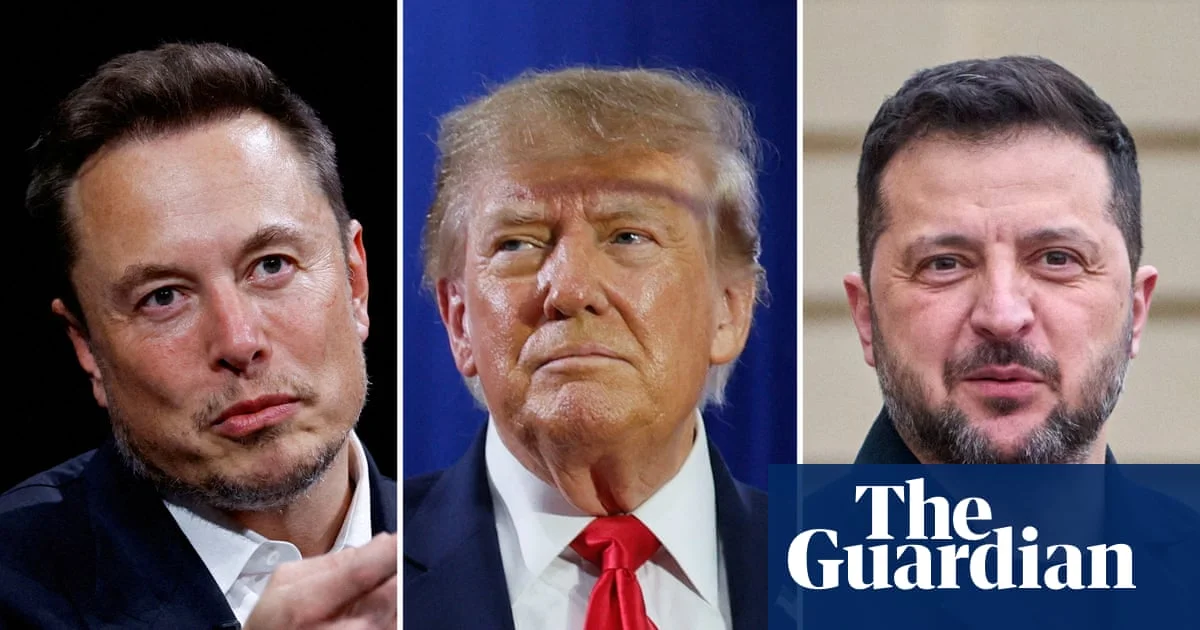
Elon Musk has restored Starlink access for Ukraine’s armed forces after speed caps degraded Kyiv’s ability to fly attack drones and intercept Russian strikes, US President Donald Trump said on Thursday. Trump declined to confirm whether he was the one who asked.
“Bottom line, he put it back,” Trump told reporters when asked about a Wall Street Journal report that he had phoned Musk to demand the limits be lifted. “I don’t want to comment on it, whether I called or whether somebody else called, doesn’t make any difference.”
The remark is the first on-the-record confirmation from the administration that restrictions existed at all. For the previous eight days, officials in Washington had said no such order was given.
What Is Confirmed About The Starlink Access Dispute
Two documented dates anchor the timeline. On 13 October, Ukrainian officials announced that sudden restrictions on the service had left the military scrambling, Al Jazeera reported. The BBC places Ukraine’s first report of an interruption to US intelligence sharing at 14 October.
Speaking before Trump’s remarks, President Volodymyr Zelensky said the speed available to Ukrainian forces “has not been restored to 400 [km/h; 250mph] yet”. He added: “We are working on it,” and said he was waiting on US Secretary of State Marco Rubio, who had promised information within 48 hours.
The Wall Street Journal then reported that Trump had called Musk and told him he was frustrated that speeds were still capped at around 160km/h, a limit that left Ukrainian offensive drones and interceptors unable to function against Russian attacks. The paper said the system was working more normally on Thursday, shortly after the conversation. The BBC has not verified that account and has contacted the White House and SpaceX.
Ukraine uses the civilian Starlink network and the more secure Starshield system. Both draw on roughly 10,000 satellites in low Earth orbit. Drone warfare depends on high-speed links, which is why a speed cap functions as a battlefield decision rather than a commercial one.
Two Parties, Two Accounts, No Paper Trail
The two parties closest to the switch have given accounts that do not fit together. Musk wrote on 14 October that Starshield is “owned and controlled by the US government” and that “any limits on speed or usage are decided by the US military and ultimately POTUS”.
Rubio said on Wednesday that neither the president nor anyone in the administration “ever requested that any changes to that system be made”. He said decisions about Starlink access are “governed by a private commercial contract as to how their stuff can be used and what speeds they’ll allow it to be used at”, adding that “the president has nothing to do with the decisions that are made by Starlink and Starshield and by Mr Musk”.
Each statement can be read as technically accurate, and that is the difficulty. No contract clause, Pentagon order or company statement has been published that establishes which party held the switch, or on what authority it was turned. The public record contains a denial, a social media post, a reported phone call and a one-line confirmation. It contains no decision trail.
John Cornyn, the Republican in his final weeks as US senator for Texas, told US media he did not believe Musk would have acted “without at least the acquiescence of the White House”. That is an assessment offered without documentation, not evidence.
The Diesel Rationale Has Not Been Shown To Hold
Trump’s pressure on Kyiv has been tied publicly to fuel prices. He has accused Ukraine of driving up diesel costs for Americans through its attacks on Russian refineries, and he faces midterm elections next month. His administration has waived some sanctions on Russia and agreed a deal to import Russian diesel, a move Ukraine and its European allies criticised.
The causal claim is thinner than the policy built on it. Analysis by the BBC, cited by the Guardian, found that the US-Israeli war on Iran and the resulting restrictions on oil exports from the Gulf likely had a greater effect on global diesel supplies than Ukrainian strikes did. No published US data has been presented to show that refinery attacks were the dominant driver of American pump prices.
What The Episode Reveals Beyond The Battlefield
Governments and humanitarian agencies outside the US alliance structure buy satellite connectivity as commercial customers. The dispute shows where their risk actually sits: not in the vendor’s goodwill, but in what a contract specifies about speed, uptime and grounds for interruption. Neither SpaceX nor the White House has disclosed those terms in this case.
That is the transferable lesson for markets in Africa and elsewhere where satellite internet is bought rather than built. A customer who is not party to the arrangement between a company and the Pentagon has no lever except escalation, and escalation requires a head of state willing to make a call. Ukraine had one. Most buyers do not.
The episode also sets a precedent that cuts both ways. If a speed cap can be applied and removed within eight days without a published order, the capability remains available for future use, and the absence of documentation makes it harder to establish accountability either way.
What To Watch
Zelensky said he expects Rubio’s answer within roughly 48 hours; whether that answer confirms or contradicts the Wall Street Journal account is the next verifiable data point. Watch also for any statement from the Pentagon, which Musk’s version of events places at the centre of the decision, and from SpaceX, which has so far said nothing publicly.
The durability of the restoration is untested. Zelensky’s own measure was a speed figure, not a press statement, and no independent monitoring of Starlink access in Ukrainian combat zones has been published. Until it is, the confirmed facts are narrow: restrictions were reported on 13 October, Trump says they are lifted, and the only documented explanation for either decision is a conversation nobody in the room will describe in full.
Frequently Asked Questions
Did Trump order the Starlink speed restrictions on Ukraine?
Trump has denied it, saying on Friday: “I don’t know if it was anybody, but it wasn’t me, and I don’t think it was Elon.” Secretary of State Marco Rubio said neither the president nor anyone in the administration requested changes. Musk said limits are decided by the US military and ultimately the president. No contract clause, Pentagon order or company statement has been published to settle the question.
What is the difference between Starlink and Starshield?
Starlink is the civilian satellite internet service. Starshield is the more secure, military-grade version designed for the Pentagon. Ukraine uses both depending on what communications are needed. Both networks rely on roughly 10,000 satellites in low Earth orbit.
Has Ukraine’s Starlink access been fully restored?
Trump said on Thursday that Musk “put it back”. Earlier the same day, Zelensky said the speed used by Ukraine’s military had not yet returned to 400 km/h and that he was waiting for information from Rubio. The Wall Street Journal reported service was closer to normal after Trump’s reported call to Musk, but the BBC has not verified that account.
FIRST TIME REACTIONS:
Be the first to leave us a comment – Trump Says Musk Restored Starlink Access For Ukraine, down the comment section.
JOIN US ON OUR SOCIAL MEDIA:

About Clare Dominic
Clare Dominic is the Editor at AfriLatest. With a background in journalism and a passion for storytelling, she oversees the editorial process to ensure content is accurate, engaging, and relevant. Clare works closely with contributors to maintain the highest standards of journalistic integrity across all news, sports, and lifestyle coverage.
View all articles by Clare DominicWorld News
Starshield Restrictions: US Offers Kyiv Mixed Messages
Washington’s Starshield restrictions on Ukraine produced five contradictory accounts in a week. What the record confirms, and what remains disputed.

The Starshield restrictions placed on Ukraine’s battlefield communications last week have stopped being a technical story. They are now a story about who controls a privately built satellite network that a sovereign military depends on, and the US government cannot produce one consistent answer.
Start with what is confirmed. Starshield is SpaceX’s military-grade version of the Starlink satellite internet service and, according to France 24, the backbone of Ukraine’s drone operations and battlefield communication. The limits were applied without warning. Ukrainian commanders reported lost drones and disrupted missions. Kyiv has received no clear official explanation of who ordered the caps, or why.
Everything after that point is contested, including whether the restrictions are still in place at all.

Who Ordered The Starshield Restrictions? The Public Record Offers Five Answers
On October 14, Elon Musk posted on X that Starshield systems are owned and controlled by the US government, and that any limits on speed or usage are decided by the US military and ultimately the president.
Defence Secretary Pete Hegseth, speaking on the Tuesday, denied any American pullback. “We haven’t pulled anything back,” he said, before adding that “there are terms of service that ultimately need to be complied to” and that “Starlink has the option to make those decisions.” He did not say which terms Ukraine had allegedly breached.
Secretary of State Marco Rubio, in India on the Wednesday, said for the third time in four days that neither the president nor anyone in the administration requested changes to the system. “The president has nothing to do with the decisions that are made by Starlink and Starshield and by Mr. Musk,” he said. “That’s a private company.”
Vice President JD Vance, in Cincinnati on the Thursday, described Musk as the head of a private corporation who reasonably does not want to be caught “in the middle of what is a war between two state actors without the United States government effectively directing him on what to do.” He closed by reframing the issue: “I think it’s fundamentally what is America’s policy in Ukraine and Russia going to be.”
President Donald Trump said on the Thursday that the service was back at full speed. By the Friday he was distancing himself further. “Well, I don’t know if it was anybody, but it wasn’t me, and I don’t think it was Elon,” he told reporters. “And from what I understand, it’s the same as it’s always been.”
Read together, those statements cannot all be accurate. Musk assigns authority to the Pentagon and the president. Rubio and Hegseth assign it to a private company. Vance describes a private company while locating the real decision in US foreign policy. Trump denies ordering anything and doubts Musk did either.
One Trump remark is more revealing than the denials. Asked whether he had called to lift the cap, he replied: “You know, whether I called or whether somebody else called, doesn’t make any difference. I guess the bottom line, he put it back.” That answer treats authorship of a military-relevant decision as immaterial.
A Speed Cap That Two Sides Describe Differently
Trump says the system is restored. A senior European official familiar with conditions on the ground, speaking on Thursday on condition of anonymity, said nothing has changed, with the cap still set at about 100mph (160kph), as reported by France 24 and the Associated Press, whose account also ran in The Daily Star.
Ukrainian President Volodymyr Zelensky told a bipartisan group of US lawmakers on the Monday that “we still face speed restrictions on Starlink and Starshield services in different parts of the front, and we still have no explanation for this. Just different strange stories.” In a Wednesday interview on Fox & Friends he said connectivity remained limited, and that Rubio had told him he would work to “unblock” the slowdown.
These accounts are incompatible. Either restoration happened and did not reach the front line, or it did not happen. Neither the Pentagon nor SpaceX has published a timeline, an order, or a technical notice. That absence is the finding.
Two further items belong in the allegation column, not the confirmed one. Zelensky has called the throttling “a planned operation,” noting that no EU country faces similar limits. He has published no supporting evidence. Democratic Senator Richard Blumenthal has announced a new inquiry into how the technology was slowed for Ukraine’s defences; its scope and powers have not been made public.
What The Starshield Restrictions Mean For Buyers Outside NATO
The practical lesson for governments far from this war is contractual. A state that leases commercial satellite capacity does not acquire control of it. It acquires a service agreement, and the vendor answers to its own home government and regulator. Hegseth’s undefined reference to “terms of service” is the hinge of the entire episode: the operating conditions of a wartime communications network are being treated as a private commercial matter that no one will specify.
The pattern is not unique to Ukraine. Defense News reported that as 25 Indo-Pacific armies met in Auckland in late September for the 50th Indo-Pacific Armies Management Seminar, Trump was hosting Chinese leader Xi Jinping in Washington, where Ambassador David Perdue disclosed an offer to sell military weapons to Beijing. Washington officials later said no plans existed. Ryan Hass of the Brookings Institution wrote that the disclosure “puts the question to rest” on how Trump views China as a security threat. Different file, same mechanics: declaratory signals and operational decisions running on separate tracks.
Three outcomes are plausible. A congressional inquiry extracts documents and fixes accountability. The ambiguity hardens into policy, with no formal finding either way. Or Ukraine absorbs the dependency and plans around a vendor whose government will not confirm what it ordered.
The Big Picture
What separates this episode from an ordinary outage is not the speed cap. It is that a president, a vice president, a secretary of state, a defence secretary and a billionaire contractor gave five accounts of the same decision within four days, and no institution has reconciled them. The Starshield restrictions were applied to a sovereign state’s military infrastructure without a published order, and they have been discussed since without a published record. For any government weighing reliance on foreign-owned satellite constellations, that is the operative fact. Access in wartime is granted by contract and withdrawn by discretion, and the discretion does not have to be explained.
Frequently Asked Questions
Who ordered the Starshield restrictions on Ukraine?
No official document or statement has established that. Musk said on October 14 that Starshield is controlled by the US government and that limits are decided by the US military and ultimately the president. Rubio and Hegseth denied any administration role and pointed to SpaceX. Ukraine says it has never received a clear explanation.
Have the speed limits on Starshield been lifted?
That is disputed. President Trump said on the Thursday that the service is running at full speed. A senior European official said the same day that nothing had changed and the cap remained at about 100mph (160kph). Zelensky said on the Wednesday that connectivity was still limited on parts of the front.
Why does Starshield matter for countries outside NATO?
Starshield illustrates that leased commercial satellite capacity comes with operating conditions set by the vendor and its home government, not by the customer. The US defence secretary referenced ‘terms of service’ without specifying them, showing that wartime access can be restricted without a public legal finding.
FIRST TIME REACTIONS:
Be the first to leave us a comment – Starshield Restrictions: US Offers Kyiv Mixed Messages, down the comment section.
JOIN US ON OUR SOCIAL MEDIA:
About Clare Dominic
Clare Dominic is the Editor at AfriLatest. With a background in journalism and a passion for storytelling, she oversees the editorial process to ensure content is accurate, engaging, and relevant. Clare works closely with contributors to maintain the highest standards of journalistic integrity across all news, sports, and lifestyle coverage.
View all articles by Clare DominicWorld News
Jared Kushner Vanity Fair Dispute: ‘Outrageous Fabrications’
Jared Kushner Vanity Fair dispute: he calls Gulf bank-account claims ‘outrageous fabrications’ and his lawyer says all legal options remain open.
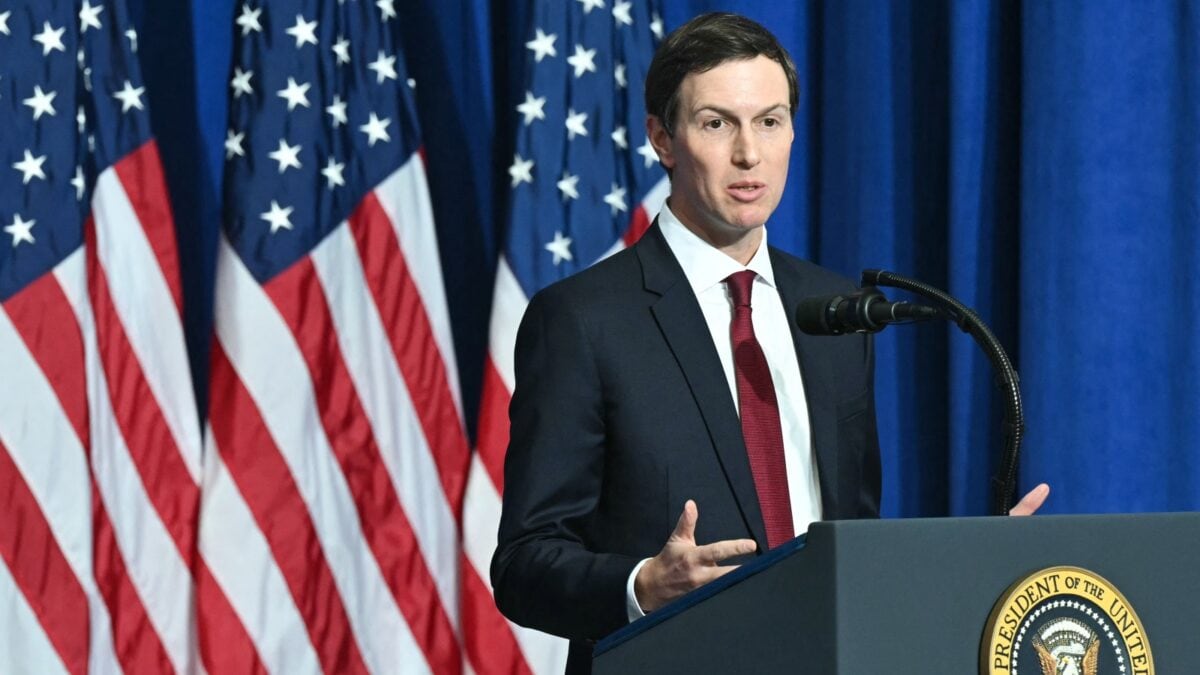
The Jared Kushner Vanity Fair dispute went public on 22 October 2026, when Donald Trump’s son-in-law and former senior White House adviser described a magazine excerpt about his finances as “outrageous fabrications.” Kushner, writing on X, said the claims were “completely insane and never happened” and accused the author of presenting “a mixture of fantasy, fiction, and advocacy” as investigative journalism. The News18 account of his statement also set out the allegations he was answering.
The claims originate in an excerpt Vanity Fair published from a forthcoming book by journalist Matthew Cole, titled Princes and Thieves: Jared Kushner and Mohamed bin Zayed’s Secret Plot to Remake the Middle East. That distinction matters. The book is announced rather than in general circulation, and the public record at this stage consists of the excerpt, Kushner’s rebuttal, and statements from his lawyer.
What The Report Alleges About A Hacked iPhone
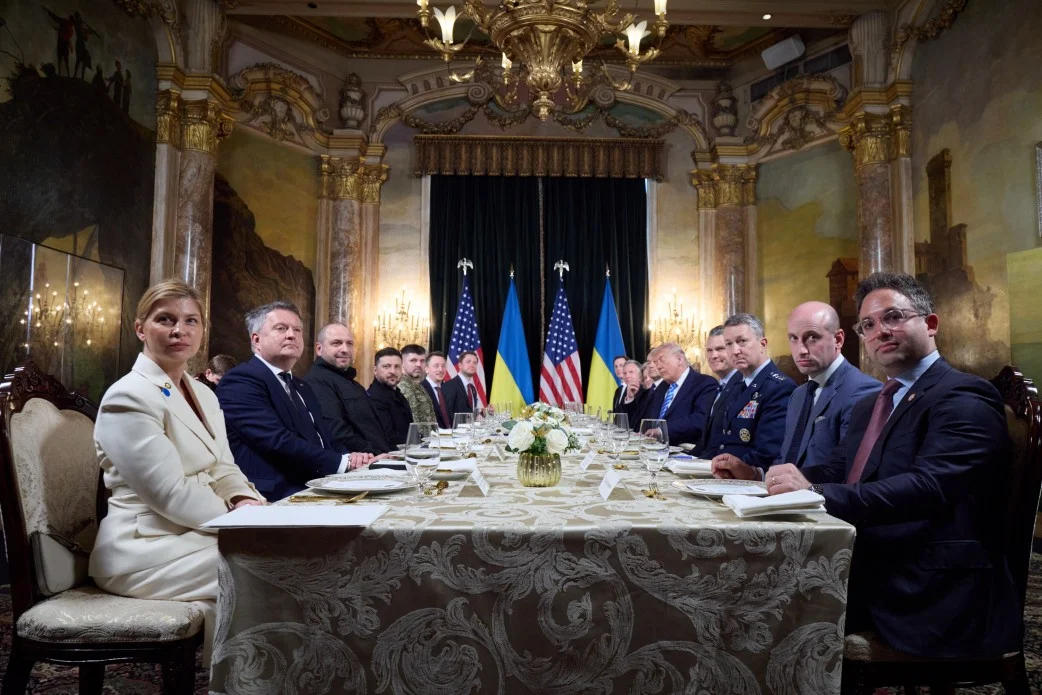
According to the Vanity Fair account, the Netherlands Defence Intelligence and Security Service (MIVD) concluded in late 2017 that Russian military intelligence had compromised Kushner’s iPhone. The trail described begins with a GRU operative specialising in stolen banking data. Dutch officials reportedly approached the British government after learning the operative was travelling to the United Kingdom on an espionage mission, and with British cooperation offered him a choice between working for Dutch intelligence and arrest in Britain.
The operative agreed to cooperate and provided access to a GRU server in Rostov, Russia, where investigators allegedly found screenshots taken from Kushner’s phone. Dutch specialists then reportedly replicated the Russian access. By early 2018 they had identified a vulnerability that let them watch Kushner’s screen whenever he used the iPhone, though they could not take full control of the device.
During that surveillance, investigators allegedly observed Kushner accessing a UAE bank account that had received hundreds of millions of dollars from a bank in Azerbaijan.
The Account Named Alpha, And The Money Named Beta
The report states that roughly $750 million moved into an account at First Abu Dhabi Bank, the UAE’s largest lender, from 2017. The account, called “Alpha” in the excerpt, was held by the Watani Al Emarat Foundation, a UAE government-funded charity. The bank was chaired at the time by Tahnoon bin Zayed, brother of UAE President Mohamed bin Zayed Al Nahyan.
Kushner was allegedly made a signatory, giving him access to the funds and the potential to authorise transactions, though he was not the legal owner. The money reportedly came from Saudi and Emirati sources, was routed through an Azerbaijani bank, and landed in the UAE account in US dollars.
A wider arrangement is also described. The excerpt says Mohamed bin Zayed and Saudi Crown Prince Mohammed bin Salman initially discussed a fund worth more than $10 billion to support foreign policy objectives tied to the Trump administration. That proposal reportedly fell through, after which the Gulf leaders allegedly arranged for at least $2 billion to be deposited into two accounts associated with Kushner.
A second account, “Beta”, allegedly received about $1 billion routed through Azerbaijan to Israel by the spring of 2018 and was described to the magazine as intended for Kushner’s personal benefit. The excerpt claims Benjamin Netanyahu encouraged Kushner to place the money in Israel’s central bank, and that the then-US ambassador to Israel, David Friedman, relayed messages. Israel’s central bank does not operate personal accounts, and government account transactions require authorisation from two individuals.
Friedman denied any role. “I know absolutely nothing about any of these allegations,” he told Vanity Fair, adding that claims about his involvement were “100% false.” A third arrangement, described without an amount, was allegedly set up to cover emergency Israeli military assistance to the UAE in the event of a major Iranian attack.
How The Jared Kushner Vanity Fair Dispute Reached A Public Break
Kushner’s defence rests on the absence of documents. In his post on X, he wrote that “no bank statements, wire transfer records, account numbers, transaction dates, or other verifiable details were provided to support these extraordinary accusations.” He also pointed to the scrutiny he faced during Trump’s first term, including congressional inquiries and a special counsel investigation, saying he gave more than 30 hours of testimony and that the allegations never surfaced because “none of these events ever happened.”
His counsel had already told Vanity Fair that he had no knowledge of or connection to the alleged UAE and Israeli accounts, that he met applicable legal requirements in office, and that his contacts with foreign leaders were authorised by Trump and pursued in US interests. His attorney, Chad Mizelle, went further on X: “These are not questions of interpretation or competing recollections: there are no bank accounts. They don’t exist.” Asked whether litigation would follow, Mizelle replied that “all options are on the table.”
What Is Confirmed And What Remains Allegation
Three things are on the record. Kushner was a senior adviser with a Middle East portfolio. He denies the financial claims categorically. And a book excerpt making them has been published.
Everything else is contested. The Dutch finding, the British cooperation, the GRU server and the screen monitoring are described by the magazine but have not been confirmed on the record by any of the governments said to be involved. The account structure is attributed to unnamed sources and to a person described as briefed on the arrangement. The excerpt itself concedes that the ultimate destination and use of the Israel-linked funds remained unclear. No bank document has been published by either side, and the excerpt does not describe any regulatory inquiry into the accounts.
Why A Gulf Money Trail Is A Global Compliance Question
For banks far from Washington, the structure described is the part that travels. Saudi and Emirati money moved through an Azerbaijani bank into a UAE charity account, with a second leg reportedly passing through Cyprus, is the kind of routing that dollar-clearing banks in Africa, Asia and Europe are required to test under anti-money-laundering rules. Institutions holding correspondent relationships with Gulf lenders carry the screening obligation whether or not a political appointee is involved.
That makes the evidentiary gap consequential beyond the personalities. If the accounts exist, transaction records would settle the question quickly. If they do not, the reporting has a problem that a rebuttal alone will not close. Kushner’s team has staked its position on precisely that test.
Legacy Or Litigation
Kushner’s post-White House standing now depends less on the Gulf relationships he built than on whether a documentary trail appears. His lawyer has left open the possibility of action, which would move the Jared Kushner Vanity Fair dispute from social media into a forum where evidence is filed rather than described. Publication of Cole’s book will add detail. Until then, the confirmed record is narrow: a former adviser, a published excerpt, a flat denial, and an argument about proof that neither side has yet won.
Frequently Asked Questions
What did Jared Kushner say about the Vanity Fair report?
In a post on X dated 22 October 2026, Kushner called the allegations ‘outrageous fabrications’ and ‘completely insane,’ saying the author provided no bank statements, wire transfer records, account numbers or transaction dates. His attorney, Chad Mizelle, said the accounts ‘don’t exist’ and that all legal options remain open.
Has any evidence of the alleged bank accounts been published?
No. The Vanity Fair excerpt describes the alleged accounts, including one called ‘Alpha’ at First Abu Dhabi Bank, but attributes the details to unnamed sources. Neither the magazine nor Kushner’s representatives have published bank documentation, and the excerpt does not describe any regulatory inquiry.
Where do the allegations originally come from?
They are drawn from an excerpt of Princes and Thieves: Jared Kushner and Mohamed bin Zayed’s Secret Plot to Remake the Middle East, a forthcoming book by journalist Matthew Cole. The excerpt describes Dutch intelligence findings about a compromised iPhone and money movements through Azerbaijan, the UAE and Israel.
FIRST TIME REACTIONS:
Be the first to leave us a comment – Jared Kushner Vanity Fair Dispute: ‘Outrageous Fabrications’, down the comment section.
JOIN US ON OUR SOCIAL MEDIA:
About Clare Dominic
Clare Dominic is the Editor at AfriLatest. With a background in journalism and a passion for storytelling, she oversees the editorial process to ensure content is accurate, engaging, and relevant. Clare works closely with contributors to maintain the highest standards of journalistic integrity across all news, sports, and lifestyle coverage.
View all articles by Clare Dominic-

 Startups4 weeks ago
What a Successful Dangote Refinery IPO Really Says
-
Health and Fitness1 week ago
Curly Hair Hydration: 5 Proven Steps That Actually Work
-
Trending Entertainment News2 weeks ago
Taylor Swift Joins Beatles as Only Acts With 100 Weeks at No. 1
-
World News4 weeks ago
Carney Calls U.S. Tariffs a Miscalculation as Canada Retaliates
-
Tech & Gadgets2 weeks ago
Apple Watch and AirPods Fall Deals: Save $120 Today
-
Football4 weeks ago
Mexico vs Colombia 2026: Márquez Debut Ends in Defeat
-
University Admissions4 weeks ago
UNILAG 2026/2027 Admission: Direct Entry & Post-UTME Guide
-
Fintech4 weeks ago
OPay No Dey Comot Nigeria: How to Verify Fintech News