World News
Zadok Yohanna Returns to Brighton Training Before Man City
Zadok Yohanna is back in Brighton training before the Manchester City match, but Fabian Hürzeler has not confirmed his availability.


There is a difference between a player training and a player being available, and Brighton & Hove Albion have kept that distinction intact this week. Zadok Yohanna is back on the grass. Whether the Nigerian winger is in Fabian Hürzeler’s squad for the Manchester City fixture is a question the club has not answered.
Hürzeler, speaking at his pre-match press conference on Thursday, placed the 19-year-old among the recovering players. “Regarding the other players who have been out for a long time, Zadok Yohanna is back on the training pitch, also Stefanos Tzimas after his ACL, so plenty of positives,” the German coach said, as reported by Premium Times. That is the whole of the confirmed record. No date, no bench place, no minutes plan, no medical bulletin beyond one sentence.
What Brighton Confirmed About Zadok Yohanna
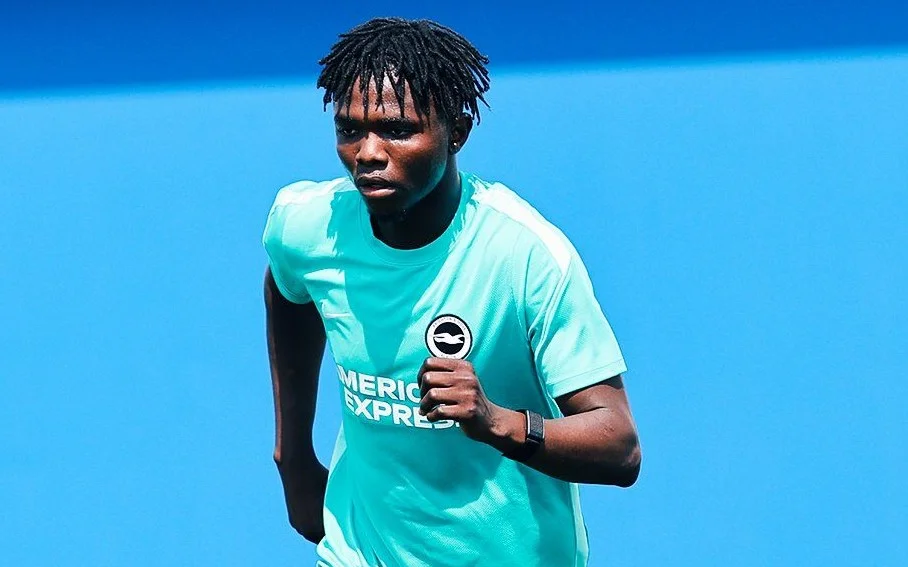
The training-pitch return is real and it is multiple weeks in the making. Brighton had already indicated he would be available again once the international window closed, and reporting from club-covering outlets has tracked a slow reintroduction rather than a sudden recovery.
The absence is the harder number. Premium Times reports that the winger has missed 11 consecutive matches and has made three appearances in total for Brighton, the last of them against Norwegian side Tromsø in the UEFA Conference League qualifiers. The same report says he has not featured in the Premier League since the opening day of the season.
Earlier accounts are not identical. We Are Brighton wrote during the Coventry City build-up that he was out until October and had not yet played a single minute of Premier League football. A later team-news report carried by Yahoo Sports described the problem as a minor knock, with a scan in London finding nothing serious. Both descriptions can be partly right, but they cannot both be complete, and no reader has been given the version that reconciles them.
Injury classifications are not housekeeping. A minor knock and an eleven-match absence imply very different things about a teenage winger adjusting to the physical demands of the Premier League, and about how quickly he can be expected to hold a starting place.
Why Reported Fee For Zadok Yohanna Still Doesn’t Match
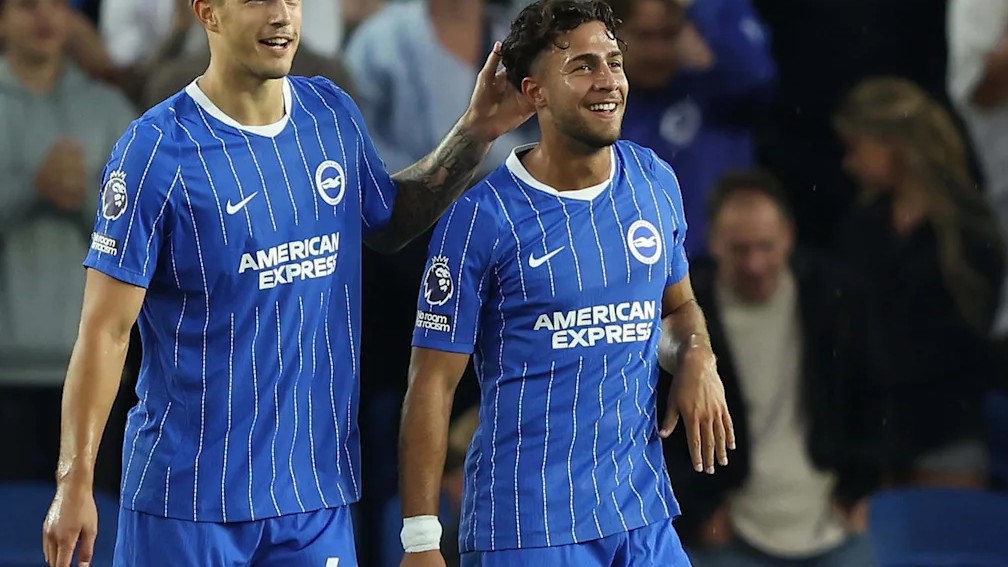
Three accounts circulating this season give three prices. Premium Times says the move from Swedish club AIK was reportedly worth €28 million and describes it as a record sale. We Are Brighton puts the deal at £21.5 million from AIK Stockholm. SussexWorld gives £21 million.
The spread is not a rounding error, and none of the reports attributes the figure to a club disclosure. Euro and sterling numbers are not interchangeable, the presence or absence of add-ons changes the headline, and a record-sale framing in Stockholm and a transfer-fee framing in Brighton pull the same transaction in different directions.
For a 19-year-old, this matters. A price tag sets expectations before a player has trained consistently, and in Nigeria the number tends to travel further and faster than the medical detail attached to it.
Why Nigeria Is Reading The Same Training Report Differently
Yohanna is a Super Eagles invitee, and the source reporting confirms the injury also ruled him out of Nigeria’s back-to-back 2027 Africa Cup of Nations qualifying encounters against Madagascar and Guinea-Bissau. The report does not state whether he would have been selected, and no claim of a guaranteed starting role should be inferred.
What it does show is a structural dependence. Nigeria’s national-team planning relies on fitness information generated and released by a Premier League club, on the club’s timetable, in the club’s phrasing. There is no independent medical verification available to the federation, and the same is true of every African squad that draws on European-based players.
Brighton’s own situation explains the urgency. Hürzeler’s squad has been without Kaoru Mitoma, Yankuba Minteh, Evan Ferguson, Stefanos Tzimas, Mats Wieffer, Jack Hinshelwood and Pascal Struijk at various points, and no fresh update was given this week on fellow Nigerian winger Femi Azeez, a deadline-day signing still awaiting his competitive debut. SussexWorld reported that Hürzeler has filled wide roles unconventionally in the meantime, and the addition of UEFA Conference League fixtures has stretched the playing group further.
What The Big Picture Says About Training Ground Reports
Hürzeler’s own language cautions against a dramatic reading. He has said players need time to adapt to the intensity of the Premier League and that Yohanna is an example of that, adding: “We have to be careful with him.” A manager who says that does not usually throw a returning teenager into a fixture against Manchester City.
The forecast, then, is a gradual reintegration, not instant selection. Even that is a forecast, and it should be labelled as one.
The verified record is narrower and more useful. Zadok Yohanna returned to training before the Manchester City fixture, his manager confirmed it publicly on Thursday, and Brighton have declined to say whether he will play. Everything beyond that, the fee, the injury classification, the national-team impact, remains reported rather than confirmed, and separating those categories is the difference between covering a recovery and inventing one.
Frequently Asked Questions
Has Zadok Yohanna returned to full training at Brighton?
Yes. Manager Fabian Hürzeler said at his Thursday pre-match press conference that Yohanna is back on the training pitch, alongside Stefanos Tzimas. He did not confirm whether the winger would be available for selection against Manchester City.
How long has Zadok Yohanna been out injured?
Premium Times reports he has missed 11 consecutive matches, with his last appearance coming against Tromsø in the UEFA Conference League qualifiers — his third outing since joining. Club-covering outlets had earlier said he would be back after the international break.
How much did Brighton pay for Zadok Yohanna?
Reported figures differ. Premium Times cites a deal reportedly worth €28 million from AIK, We Are Brighton gives £21.5 million, and SussexWorld gives £21 million. None of the reports attributes the figure to a confirmed club disclosure.
 Follow AFRILATEST on Google News
FIRST TIME REACTIONS:
Be the first to leave us a comment – Zadok Yohanna Returns to Brighton Training Before Man City, down the comment section.
JOIN US ON OUR SOCIAL MEDIA:

About Clare Dominic
Clare Dominic is the Editor at AfriLatest. With a background in journalism and a passion for storytelling, she oversees the editorial process to ensure content is accurate, engaging, and relevant. Clare works closely with contributors to maintain the highest standards of journalistic integrity across all news, sports, and lifestyle coverage.
View all articles by Clare Dominic


World News
ICJ Genocide Ruling: Myanmar, Reparations And Enforcement
The ICJ genocide ruling found Myanmar responsible for atrocities against the Rohingya. Why it matters for African states and what enforcement still requires.

Can a court verdict stop a genocide that has already happened? That is the practical question sitting behind the ICJ genocide ruling issued at The Hague on Thursday, when the International Court of Justice found, by nine votes to six, that Myanmar committed genocide against its Rohingya minority during the 2017 military crackdown. The case was not brought by a superpower or a European capital. Gambia, a West African state and ECOWAS member with a fraction of Nigeria’s population, carried it. That single fact is the first reason the verdict belongs in front of a Nigerian audience.
The ruling is unprecedented in the court’s history. According to Al Jazeera, it is the first time the ICJ has found a state responsible for genocide, and only the fourth time since the Nazi Holocaust that any international court has concluded the crime was committed. Court President Yuji Iwasawa read the findings over three hours.
The numbers behind the verdict are grim. Evidence showed Myanmar’s security forces killed at least 10,000 Rohingya, committed widespread sexual violence, used extreme violence against children and attacked civilians as they fled in large numbers. More than 730,000 Rohingya crossed into Bangladesh during the 2017 crackdown.
What The ICJ Genocide Ruling Actually Decided
The court did not rule on isolated battlefield incidents. It ruled on intent, the hardest element to prove in any genocide case. Iwasawa said the only reasonable inference from the pattern of atrocities was that Myanmar intended to destroy a substantial part of the Rohingya group. The judges also found Myanmar violated its duty to prevent genocide, because it should have known the risk when armed civilians joined the military campaign.
Myanmar’s defence was that the crackdown answered attacks on police posts by Arakan Rohingya Salvation Army fighters. The court did not accept that framing as justification for what followed.
The remedies are specific. Myanmar must facilitate the safe and voluntary return of Rohingya, return or replace collective property it damaged, help families search for the disappeared and ensure proper burials, provide physical and psychological rehabilitation for those injured, and protect the population from further persecution.
Why A West African State Carried The Case
Gambia’s suit ran for years with limited diplomatic reward and no guarantee of success. On Thursday it called the outcome “a historic day for international justice” and urged Myanmar to comply “fully and without delay”. Yanghee Lee of the Special Advisory Council for Myanmar described it as “a deeply emotional day for all Rohingya people”, then added the line that matters most: “justice has been decided, but not yet delivered”.
For African governments, the mechanics are the lesson. A single state party to the Genocide Convention can put another state on trial without waiting for the Security Council to authorise anything first. That route is now proven in practice. Countries that have struggled to get sustained attention for mass atrocities inside their own regions have a working template, slow and expensive as it is.
The Enforcement Gap The Court Cannot Close
An ICJ judgment binds the parties in law. The court has no police, no inspectors and no power to compel a government. Enforcement runs through the Security Council, where permanent members hold vetoes and sustained attention is scarce.
The United Kingdom moved quickly. Foreign Secretary Ed Miliband said Britain would expel Myanmar’s defence attache and called for an urgent Security Council session on the judgment. International human rights lawyer Toby Cadman told Al Jazeera that the outcome now depends on what follows: sanctions, further orders, or nothing at all.
That gap is not a Myanmar peculiarity. It is the structural weakness at the centre of the ICJ genocide ruling and every verdict like it.
Putin, The Kerch Bridge And The Same Problem
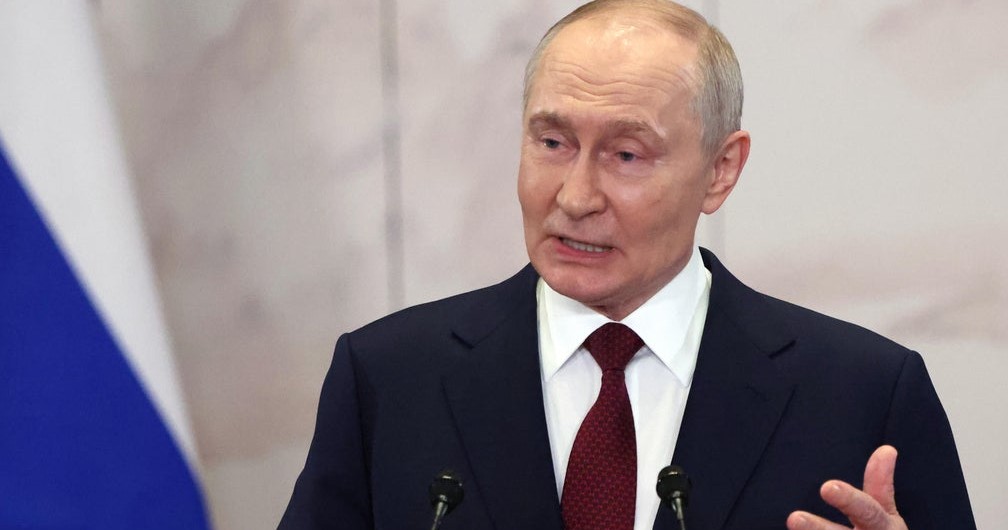
On Thursday, President Vladimir Putin said Russia would not negotiate a limited ceasefire with Ukraine, citing this week’s Ukrainian missile strike on the Kerch Bridge. Speaking to reporters in Shenzhen after meetings with Donald Trump and Xi Jinping, Putin said Moscow “will not make agreements after strikes on the Crimean Bridge”, according to CBS News.
The 12-mile bridge, which Putin opened himself in 2018, links the Russian mainland to Crimea. Ukraine has targeted it before; this strike inflicted severe damage. Russia struck two major bridges in Kyiv the same day.
Diplomacy continued in parallel. Jared Kushner and US special envoy Steve Witkoff met President Volodymyr Zelenskyy and European leaders in Germany. Germany’s Friedrich Merz dismissed the China summit as a photo-op that “will not bring peace”. Nigeria does not sit at that table, but Nigerian households feel these conflicts indirectly, through energy and freight costs that rarely fall as fast as they rise.
Two theatres, one pattern: verdicts, condemnations and summit photographs do not by themselves move the parties.
What Reparations Would Require In Practice
More than 1.3 million Rohingya remain displaced across South and Southeast Asia, including 1.2 million in camps in Cox’s Bazar, Bangladesh, according to the UN. Conflict, shrinking humanitarian aid and dangerous sea crossings keep the community vulnerable.
The court ordered obligations, not a schedule. Thursday’s three-hour readout set out what restitution should look like but offered no compliance timetable, and the source material does not indicate any mechanism beyond the Security Council route and whatever pressure individual states apply.
Amnesty International welcomed the judgment and said all crimes under international law “must be effectively investigated and those suspected of responsibility brought to justice”. That is a prosecutorial ask, separate from the state-level finding the court delivered.
Separating Confirmed Facts From Forecasts
Confirmed: the 9-6 finding, the intent conclusion, the violation of the duty to prevent genocide, and the listed reparations. Confirmed: the death toll evidence of at least 10,000 and the flight of more than 730,000 people.
Allegation and defence: Myanmar’s claim that the crackdown responded to ARSA attacks on police posts. Forecast, not fact: whether the ruling produces prosecutions, sanctions or the return of a single refugee. No one has demonstrated that yet, and the men who ordered the 2017 campaign remain in power.
What The Verdict Changes For African Litigants
Africa’s diplomatic weight at the UN has often been exercised in blocks and resolutions. Gambia’s case shows a narrower, harder tool: treaty-based litigation that survives changes of government in The Hague even when attention at home shifts.
The cost is time. The Rohingya waited roughly a decade for this verdict, and the camps at Cox’s Bazar are still full. Any African government weighing a similar claim should count that decade before celebrating a filing.
The ICJ genocide ruling settles a legal question that took years to answer: whether a state can be named a genocidaire by the world’s highest court. It does not settle what happens next. That part still runs through capitals, vetoes and budgets, and for the Rohingya in the camps of Bangladesh, the distance between a ruling read aloud in The Hague and a safe return home remains the only measurement that counts.
Frequently Asked Questions
What did the ICJ rule on Myanmar?
In a 9-6 decision read by President Yuji Iwasawa, the court found Myanmar committed genocide against the Rohingya in northern Rakhine State during the 2017 crackdown, violated its duty to prevent genocide, and must provide restitution and compensation. Evidence showed at least 10,000 Rohingya were killed.
Why does an ICJ case brought by Gambia matter to African countries?
Gambia, a West African ECOWAS member, used its status as a party to the Genocide Convention to put another state on trial without prior Security Council authorisation. It is the first time the ICJ has found a state responsible for genocide, giving other African governments a tested route for atrocity claims.
Can the ruling be enforced?
The judgment binds Myanmar in law, but the court has no enforcement arm. Pressure runs through the UN Security Council, where the UK has requested an urgent session, and through sanctions or further orders. No compliance timetable was set out in the verdict.
FIRST TIME REACTIONS:
Be the first to leave us a comment – ICJ Genocide Ruling: Myanmar, Reparations And Enforcement, down the comment section.
JOIN US ON OUR SOCIAL MEDIA:
About Clare Dominic
Clare Dominic is the Editor at AfriLatest. With a background in journalism and a passion for storytelling, she oversees the editorial process to ensure content is accurate, engaging, and relevant. Clare works closely with contributors to maintain the highest standards of journalistic integrity across all news, sports, and lifestyle coverage.
View all articles by Clare DominicWorld News
FBI Cyber Attack Hits NCIC Crime Database Again
A fresh FBI cyber attack has struck the National Crime Information Center, the second breach since September. What it means for Nigeria and the diaspora.

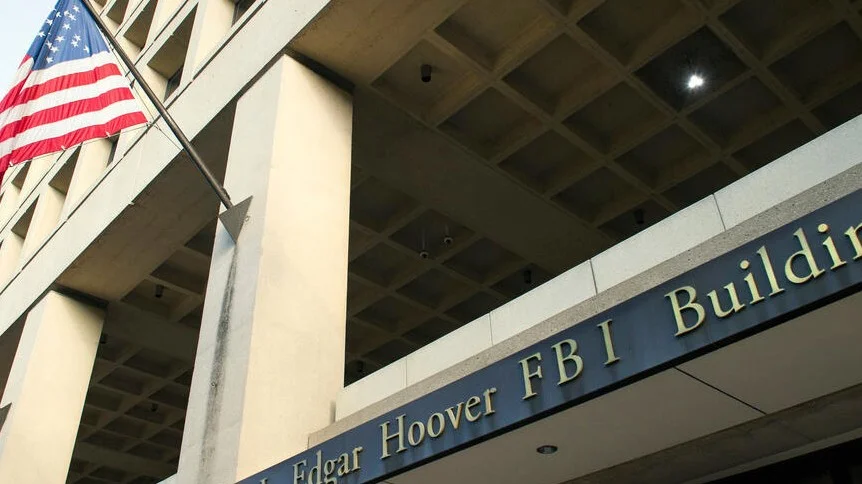
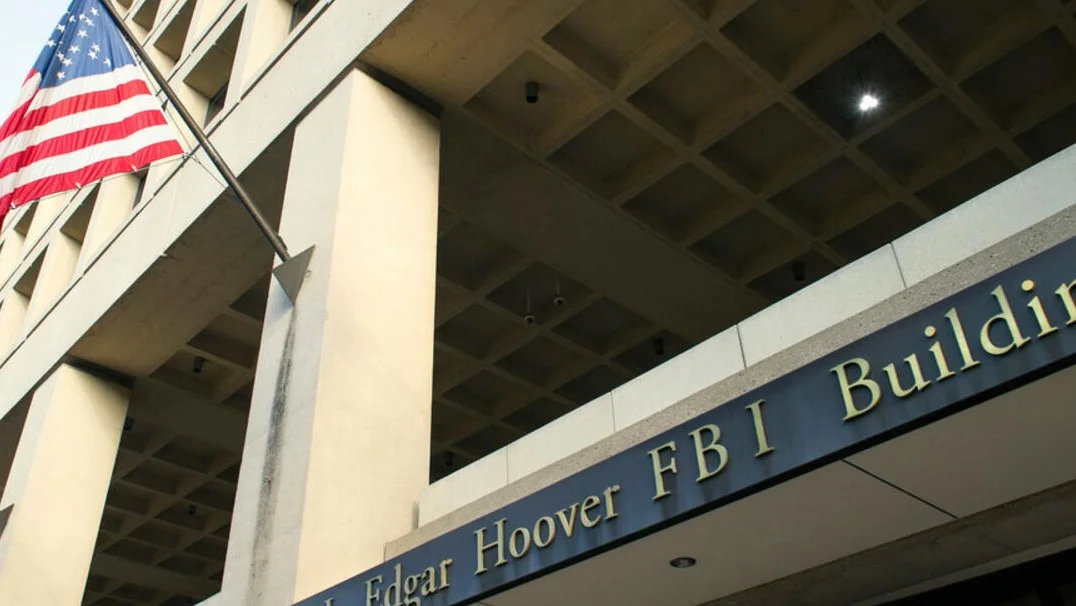
The FBI is investigating an apparent breach of the National Crime Information Center, the database that connects federal, state and local police across the United States, two people briefed on the investigation told CNN and NBC News on Friday.
It is the second intrusion into an FBI system in roughly two months. The bureau has neither confirmed nor denied it. For a Nigerian reader, the distance is shorter than it looks. NCIC feeds the criminal-history and background checks that sit inside US visa processing and diaspora travel, and the same week produced a Microsoft outage that took hundreds of millions of users offline worldwide — a reminder of how much banking, aviation and payments traffic in Nigeria runs on foreign infrastructure the country does not control.
That is the substance beneath the FBI cyber attack headlines. Not the hacking itself, but the dependency it maps.
What The FBI Cyber Attack On NCIC Actually Confirmed
Very little, on the record. CNN and NBC both attributed their reporting to two people briefed on the investigation. CNBC, citing CNN’s report, noted the FBI did not respond to a Reuters request for comment. AFP said it had contacted both the FBI and the USDA without a public response.
What is established is the target: NCIC, described by a former FBI official as one of the most critical information-sharing systems in American law enforcement. “Every day, officers across the country rely on NCIC to identify wanted fugitives, check for outstanding warrants, and access information that can directly impact officer and public safety,” the former official told CNN.
That official’s stated worry was not theft but integrity: whether hackers “could compromise the accuracy of the information that officers rely on.” A warrant deleted, a record altered, a name swapped. That is an operational risk before it is a privacy one.
Not established: who carried out the intrusion, whether data left the network, and whether it connects to a separate attack on the US Department of Agriculture reported the same week.
The USDA Breach Sitting Beside It
NBC reported, citing two former USDA officials, that employees were told on Thursday that a system used to pay farmers had been targeted, and that hackers could use the payments system as a backdoor into more sensitive material. The USDA has not commented publicly.
One former official framed the exposure around research rather than money: the department handles “a bunch of scary biologic issues,” and an adversary with access to the same material “could use our own research against us.”
Why The FBI Cyber Attack Reaches Lagos And Abuja
Nothing in the reporting ties the FBI cyber attack to Nigeria. The exposure is indirect, through what NCIC feeds. US visa applications, immigration checks and some corporate due-diligence processes draw on American criminal-justice data. A Nigerian applicant whose record is queried abroad sits downstream of systems like this one.
The structural lesson is sharper. Nigeria is digitising identity, policing and payments at speed, and much of the hosting sits with foreign providers. The integrity question the former FBI official raised applies as much in Abuja as in Washington: a compromised record does more damage in a country where a police extract or a court affidavit can decide a job, a loan or an election petition.
Hacks And Outages Are Two Different Problems
Washington spent the week blurring a distinction that matters for anyone assessing risk.
The outages were technical, not criminal, according to officials. They included a global Microsoft disruption affecting hundreds of millions of users, a nationwide halt to air travel that disrupted more than 18,000 flights, and a multi-day outage on a classified National Security Agency network that NBC’s sources said began during maintenance. Senator Mark Warner, the top Democrat on the Senate Intelligence Committee, said evidence showed the outages were not caused by cyberattacks, though he warned AI could have worsened the underlying vulnerabilities.
President Donald Trump urged the public to “relax.” The White House fired National Cyber Director Sean Cairncross this week; Trump said he was not good enough. The BBC reported the dismissal against mounting criticism of the outage response.
The timing drew attention. According to CNN, after bureau officials learned of the latest incident on Thursday, FBI Director Kash Patel appeared on Fox News to tout Operation Winter Shield — an operation completed months earlier — describing it as though still in progress and crediting his administration for system updates. “Other administrations could have made these updates, but they didn’t,” he said.
There is precedent for scepticism about transparency. After the September breach of an FBI jobs website by a group called ShinyHunters, roughly 38,000 staff records were said to have been taken. A Canadian cybersecurity researcher was arrested and faces charges related to that breach. Employees later complained they were left in the dark about whether they were affected and underwhelmed by the support offered.
What To Watch
Three markers matter. First, whether the FBI moves from silence to confirmation, and whether it discloses scope. Second, whether the USDA payments intrusion is linked to the NCIC case — the reporting says that remains unclear and no evidence yet ties them. Third, whether the ShinyHunters pattern repeats: a claim of stolen data, a slow official acknowledgement, then an arrest far from the original victims.
For Nigerian regulators, lenders and telecom operators, the test is less dramatic and more useful. The FBI cyber attack will be resolved or quietly buried in Washington. The question that travels is whether Nigeria’s own record systems are built to detect tampering, not merely theft — and whether anyone here has a working plan for the week a foreign cloud provider goes dark.
What To Watch
Frequently Asked Questions
What exactly was breached in the latest FBI cyber attack?
The target was the National Crime Information Center (NCIC), a database used by federal, state and local law enforcement to share information on warrants, criminal histories and background checks. CNN and NBC News both reported the apparent breach, citing two people briefed on the investigation. The FBI has not publicly confirmed the intrusion.
Is the FBI hack connected to the Microsoft outage and grounded flights?
No link has been established. Officials and Senator Mark Warner said evidence showed the recent outages were not caused by cyberattacks. The blackouts at Microsoft, the FAA’s air traffic system and a classified NSA network were described as technical failures, while the FBI and USDA incidents were described as hacks.
Why should Nigerians care about a US law enforcement database breach?
NCIC data feeds background and criminal-history checks used in US visa processing and some corporate due diligence, so Nigerian applicants and diaspora travellers are downstream of these systems. The wider lesson concerns data integrity: a tampered record can matter more than a stolen one, a risk that applies equally to Nigeria’s own digitising police and identity systems.
FIRST TIME REACTIONS:
Be the first to leave us a comment – FBI Cyber Attack Hits NCIC Crime Database Again, down the comment section.
JOIN US ON OUR SOCIAL MEDIA:
About Clare Dominic
Clare Dominic is the Editor at AfriLatest. With a background in journalism and a passion for storytelling, she oversees the editorial process to ensure content is accurate, engaging, and relevant. Clare works closely with contributors to maintain the highest standards of journalistic integrity across all news, sports, and lifestyle coverage.
View all articles by Clare DominicWorld News
Best Airbnbs In Paris 2026: What Airbnb Actually Confirmed
Airbnb’s 2026 release adds boutique hotels in Paris, AI planning tools and new services. What the best Airbnbs in Paris 2026 list really contains.

The most practical question about Paris in 2026 is not where to eat. It is where to sleep, and who is allowed to sell you the room. Anyone compiling a list of the best Airbnbs in Paris 2026 now has to account for a change the company itself announced: Airbnb wants to sell you a hotel, in the same app, on the same search results page.
That is not speculation. It sits in Airbnb’s own 2026 summer release, published on the company newsroom and attributed to co-founder and chief executive Brian Chesky.
What Airbnb Has Confirmed For Paris In 2026, And What It Has Not
According to Airbnb’s 2026 summer release, the company is bringing thousands of boutique and independent hotels onto the platform across 20 destinations, and Paris is named explicitly, alongside New York, London, Madrid, Rome and Singapore. The stated selection criteria are neighbourhood location, design and hospitality, with no big chains.
Confirmed alongside it: a price match guarantee. Find a lower price for the same hotel anywhere else and Airbnb returns the difference as Airbnb credit, not cash. Guests who book a featured hotel can receive up to 15% credit toward a future Airbnb home.
Paris also appears in the Experiences expansion. Airbnb is adding more than 2,500 food culture experiences and more than 3,000 landmark experiences, and it names Paris’s De Vie, described as one of the world’s best bars, for a cocktail session run through a Chef’s Table partnership. Airbnb states its experiences average 4.93 out of 5 stars.
The app upgrades are less settled. AI review highlights, which synthesise a listing’s guest reviews around location, amenities and family-friendliness, are described as live. The AI-powered comparison view for saved homes is, in Airbnb’s own words, available later this year. That is a plan, not a shipped feature.
What Airbnb has not published is any ranked list. There is no official top-25 of anything. Every such ranking is editorial curation, and the published material behind this one is thin on verified short-let inventory.

Why The Best Airbnbs In Paris 2026 List Now Includes Hotels
Time Out’s Paris team sends readers from its restaurant guide straight to a combined link for Paris’s best hotels and best Airbnbs. One link, two product categories, no distinction drawn. That editorial merging mirrors what the platform is doing commercially.
Urban List’s Eiffel Tower view guide makes the drift concrete. Its two most detailed Paris recommendations are the Hôtel Plaza Athénée, where the Eiffel Suite starts at 95 square metres, and the five-star Hotel Bowmann in the 8th arrondissement, where the Prestige Eiffel Suite carries a private terrace and the Bowmann Suite a private hot tub. Both are hotels. Neither is a hosted short-let with a kitchen.
The premium for a tower view is therefore being supplied by properties with concierge desks, star ratings and staff, which is exactly the inventory Airbnb now wants to list and price-match. The features that once separated the platform from a hotel, a kitchen and a resident host, become one option among several rather than the whole proposition.
For a traveller, the practical consequence is that search results for a Paris stay are no longer a clean comparison. A hotel room with a view and an apartment in the 11th arrondissement are different products, with different cancellation terms, different local taxes and different levels of service.
Where Nigerian Travellers Meet The Paris 2026 Booking Shift
For a Nigerian reader, most of what was announced does not apply. Grocery delivery with zero delivery fees and $10 off a $50 order is limited to more than 25 United States cities through Instacart. No naira pricing appears anywhere in the announcements. No Africa-specific service was disclosed.
Two additions do travel. Airport pickups through Welcome Pickups are available in more than 160 cities worldwide, with 20% off for Airbnb guests, and luggage storage through Bounce covers more than 15,000 locations in 175 cities with 15% off. For a diaspora traveller running a multi-city European trip, those are usable. For a single Paris booking, they are marginal.
The bigger variable remains what the neighbourhood delivers. Time Out’s Paris editors name Chez Jeanette as the best budget option, Recoin as the best bistro, Vaisseau as the best with a Michelin star, and Blanc as the best near the Eiffel Tower. A listing within walking distance of any of those does more for a trip than an AI-generated review summary.
Note also that the hotel side is running its own promotions. Condé Nast Traveler’s deals roundup tracks a fourth night free at the Ocean Club in the Bahamas for stays through December 2027, and a spending credit of up to $500 at the Four Seasons in Puerto Rico. Neither covers Paris. The deals being marketed hardest for late 2026 are Caribbean and American, not European, and no Paris hotel promotion of that scale appears in the verified material.
The verified picture for anyone hunting the best Airbnbs in Paris 2026 is narrower than the listicles suggest. Airbnb has confirmed that boutique hotels are entering its Paris inventory, that a price match guarantee and credit scheme sit alongside them, and that Paris features in its food-experience expansion. Everything beyond that, the rankings, the top-25 framing, the claim that a particular flat is the best value in the city, is editorial judgment or forecast rather than company data. Nigerian travellers should book on the confirmed terms: what the property actually is, what the cancellation policy says, and whether the discount arrives as cash or as credit. The rest is marketing.
Frequently Asked Questions
Has Airbnb published an official list of the 25 best Airbnbs in Paris for 2026?
No. Airbnb’s 2026 summer release contains no ranked list of properties in Paris or anywhere else. Rankings of the best Airbnbs in Paris 2026 come from travel publications and editors, not from Airbnb data.
Why would a hotel appear on a list of the best Airbnbs in Paris 2026?
Because Airbnb announced it is adding thousands of boutique and independent hotels across 20 destinations, with Paris named explicitly. Travel guides now treat hotels and short-lets as one booking category, so hotel suites appear alongside apartments.
What parts of the Paris 2026 Airbnb changes apply to Nigerian travellers?
Airport pickups through Welcome Pickups in more than 160 cities and luggage storage through Bounce in 175 cities are available worldwide. Grocery delivery is limited to more than 25 US cities, and no naira pricing or Africa-specific service was announced.
FIRST TIME REACTIONS:
Be the first to leave us a comment – Best Airbnbs In Paris 2026: What Airbnb Actually Confirmed, down the comment section.
JOIN US ON OUR SOCIAL MEDIA:
About Clare Dominic
Clare Dominic is the Editor at AfriLatest. With a background in journalism and a passion for storytelling, she oversees the editorial process to ensure content is accurate, engaging, and relevant. Clare works closely with contributors to maintain the highest standards of journalistic integrity across all news, sports, and lifestyle coverage.
View all articles by Clare Dominic-

 Car Reviews2 weeks ago
1955 Chevy Bel Air Restomod: What SEMA Really Proves
-
Savings & Investing3 weeks ago
Hidden Medicare Fees Draining Your Retirement Savings
-
Car Reviews4 weeks ago
Ford Bronco ORV Package: $18,995 Ownership Reality Check
-
JAMB & WAEC4 weeks ago
JAMB Admission Process: What Changed And What Is Still Talk
-
Movies & TV4 weeks ago
Silo Season 1 Ending Explained: What the Showrunner Said
-
Movies & TV3 weeks ago
Wizkid Starboy Desire Ft Banky W Shaydee: Fact Or Fan Fiction?