World News
Sunshine Biopharma Reverse Stock Split Set for October 26
Sunshine Biopharma reverse stock split cuts shares 1-for-20 on October 26, 2026, to regain Nasdaq bid compliance. What changes, what does not.


Sunshine Biopharma Inc. will cut its issued share count by 95 percent at the market open on Monday, October 26, 2026, when a one-for-twenty Sunshine Biopharma reverse stock split takes effect.
The Fort Lauderdale, Florida pharmaceutical company, which trades on Nasdaq under the ticker SBFM, announced the move on October 22, 2026. Issued and outstanding common stock falls from 15,219,383 shares to approximately 760,969 shares.
The company gave one reason: to regain compliance with Nasdaq’s minimum bid price requirement for continued listing. That rule sets the price floor a stock must hold to stay on the exchange.

The announcement does not state the share price before or after the split, the date Nasdaq notified the company of any deficiency, or whether a cure period or hearings process came first. Those details are absent from the source material.
What The Sunshine Biopharma Reverse Stock Split Actually Changes
Fifteen million two hundred nineteen thousand three hundred eighty-three divided by twenty is 760,969.15. The company’s stated figure of approximately 760,969 matches that arithmetic, which points to rounding rather than any new issuance of stock.
A reverse split reprices existing equity; it does not raise capital. The share count falls by the same factor the price per share rises, so market value is unchanged by the mechanics alone. What moves is the nominal price Nasdaq measures against its listing standard.
A TradingView summary of the announcement, produced by its automated analyst tool, calls the move a late-stage step to address ongoing bid-price noncompliance and notes that a smaller float can increase price volatility and widen trading spreads. It adds that the outcome depends on the post-split price holding.
That framing is consistent with the company’s own description. It is also a forecast, not a result. No post-split trading data exists yet, and none is contained in either document.
The Evidence Trail Is Short, And That Matters
Two documents describe this corporate action. One is the company’s press release, carried by Yahoo Finance and distributed through ACCESS Newswire. The other is the TradingView summary, which states plainly that it is based on the original press release from Sunshine Biopharma distributed by the same wire.
That means the share figures, the effective date and the compliance rationale trace back to a single disclosure. This report could not verify from the available material whether a separate U.S. Securities and Exchange Commission filing restates the same numbers. Until such a document is examined, the split details rest on the company’s own account.
The release also carries standard safe harbor language covering forward-looking statements about drug development activities, financial performance and future growth, with the company cautioning that actual results could differ materially. That caution applies to the growth claims made in the same release.
The Drug Portfolio Behind The Ticker
According to the announcement, Sunshine Biopharma has 60 generic prescription drugs on the market in Canada and approximately 12 additional drugs scheduled for launch in the remainder of 2026.
The company also describes a proprietary development program with two parts. K1.1 mRNA is an mRNA-lipid nanoparticle targeted at liver cancer. PLpro is a protease inhibitor, described as a small molecule for treating SARS Coronavirus infections.
The release gives no trial phase, enrollment figure, regulatory status or timeline for either program. That gap is significant: the two development candidates are the part of the business most likely to move the share price over time, and the disclosure offers no milestone a reader can date.
For a company whose near-term commercial activity sits in Canadian generics, the split leaves the portfolio, the launch schedule and the development programs untouched. It changes the ticker’s arithmetic only.
What Holders Outside The United States Should Note
For investors in Africa and other regions holding Nasdaq-listed microcaps, a split of this kind is a mechanical adjustment applied to the position and the quoted price at the open, not a change in the underlying security. Access to U.S. microcaps from most African markets runs through brokers offering American market execution.
This report could not verify how individual brokers in the region handle notification or any fractional residue from a one-for-twenty adjustment. Holders should confirm the treatment with their own custodian rather than assume a standard process. The company’s own contact for investor enquiries is its chief financial officer, Camille Sebaaly, listed in the release.
What To Watch After October 26
Three checkpoints sit ahead. The first is whether the post-split price holds above Nasdaq’s minimum bid threshold long enough to satisfy the exchange. The second is whether Nasdaq issues a written compliance determination; the release does not say how or when the company would announce one.
The third is operational. Roughly 12 generic launches are scheduled for the rest of 2026, and the company has flagged no timeline for K1.1 mRNA or the PLpro program. Any disclosure on either front would carry more weight than the share-count change.
Investors can also track the company’s own materials at sunshinebiopharma.com.
The Sunshine Biopharma reverse stock split settles a listing question. It does not settle a revenue question. Only the generic launch cadence and the development milestones can do that, and neither is dated in this announcement.
Frequently Asked Questions
When does the Sunshine Biopharma reverse stock split take effect?
At the market open on Monday, October 26, 2026, according to the company’s announcement of October 22, 2026. The ratio is one new share for every twenty existing shares.
How many shares will Sunshine Biopharma have after the split?
Issued and outstanding common stock falls from 15,219,383 shares to approximately 760,969 shares. That figure is consistent with dividing the existing count by twenty and rounding.
Why is Sunshine Biopharma doing the split?
The company states the split was undertaken to regain compliance with Nasdaq’s minimum bid price requirement for continued listing. The release does not disclose the share price, the date of any Nasdaq deficiency notice, or whether a cure period preceded the decision.
Does the split change the value of the company or its drug business?
No. A reverse split lowers the share count while raising the price per share, so market value is unchanged by the mechanics. The 60 generic prescription drugs on the Canadian market, the approximately 12 planned launches for the rest of 2026, and the K1.1 mRNA and PLpro development programs are unaffected.
 Follow AFRILATEST on Google News
FIRST TIME REACTIONS:
Be the first to leave us a comment – Sunshine Biopharma Reverse Stock Split Set for October 26, down the comment section.
JOIN US ON OUR SOCIAL MEDIA:

About Clare Dominic
Clare Dominic is the Editor at AfriLatest. With a background in journalism and a passion for storytelling, she oversees the editorial process to ensure content is accurate, engaging, and relevant. Clare works closely with contributors to maintain the highest standards of journalistic integrity across all news, sports, and lifestyle coverage.
View all articles by Clare Dominic

World News
Starshield Restrictions: US Offers Kyiv Mixed Messages
Washington’s Starshield restrictions on Ukraine produced five contradictory accounts in a week. What the record confirms, and what remains disputed.

The Starshield restrictions placed on Ukraine’s battlefield communications last week have stopped being a technical story. They are now a story about who controls a privately built satellite network that a sovereign military depends on, and the US government cannot produce one consistent answer.
Start with what is confirmed. Starshield is SpaceX’s military-grade version of the Starlink satellite internet service and, according to France 24, the backbone of Ukraine’s drone operations and battlefield communication. The limits were applied without warning. Ukrainian commanders reported lost drones and disrupted missions. Kyiv has received no clear official explanation of who ordered the caps, or why.
Everything after that point is contested, including whether the restrictions are still in place at all.

Who Ordered The Starshield Restrictions? The Public Record Offers Five Answers
On October 14, Elon Musk posted on X that Starshield systems are owned and controlled by the US government, and that any limits on speed or usage are decided by the US military and ultimately the president.
Defence Secretary Pete Hegseth, speaking on the Tuesday, denied any American pullback. “We haven’t pulled anything back,” he said, before adding that “there are terms of service that ultimately need to be complied to” and that “Starlink has the option to make those decisions.” He did not say which terms Ukraine had allegedly breached.
Secretary of State Marco Rubio, in India on the Wednesday, said for the third time in four days that neither the president nor anyone in the administration requested changes to the system. “The president has nothing to do with the decisions that are made by Starlink and Starshield and by Mr. Musk,” he said. “That’s a private company.”
Vice President JD Vance, in Cincinnati on the Thursday, described Musk as the head of a private corporation who reasonably does not want to be caught “in the middle of what is a war between two state actors without the United States government effectively directing him on what to do.” He closed by reframing the issue: “I think it’s fundamentally what is America’s policy in Ukraine and Russia going to be.”
President Donald Trump said on the Thursday that the service was back at full speed. By the Friday he was distancing himself further. “Well, I don’t know if it was anybody, but it wasn’t me, and I don’t think it was Elon,” he told reporters. “And from what I understand, it’s the same as it’s always been.”
Read together, those statements cannot all be accurate. Musk assigns authority to the Pentagon and the president. Rubio and Hegseth assign it to a private company. Vance describes a private company while locating the real decision in US foreign policy. Trump denies ordering anything and doubts Musk did either.
One Trump remark is more revealing than the denials. Asked whether he had called to lift the cap, he replied: “You know, whether I called or whether somebody else called, doesn’t make any difference. I guess the bottom line, he put it back.” That answer treats authorship of a military-relevant decision as immaterial.
A Speed Cap That Two Sides Describe Differently
Trump says the system is restored. A senior European official familiar with conditions on the ground, speaking on Thursday on condition of anonymity, said nothing has changed, with the cap still set at about 100mph (160kph), as reported by France 24 and the Associated Press, whose account also ran in The Daily Star.
Ukrainian President Volodymyr Zelensky told a bipartisan group of US lawmakers on the Monday that “we still face speed restrictions on Starlink and Starshield services in different parts of the front, and we still have no explanation for this. Just different strange stories.” In a Wednesday interview on Fox & Friends he said connectivity remained limited, and that Rubio had told him he would work to “unblock” the slowdown.
These accounts are incompatible. Either restoration happened and did not reach the front line, or it did not happen. Neither the Pentagon nor SpaceX has published a timeline, an order, or a technical notice. That absence is the finding.
Two further items belong in the allegation column, not the confirmed one. Zelensky has called the throttling “a planned operation,” noting that no EU country faces similar limits. He has published no supporting evidence. Democratic Senator Richard Blumenthal has announced a new inquiry into how the technology was slowed for Ukraine’s defences; its scope and powers have not been made public.
What The Starshield Restrictions Mean For Buyers Outside NATO
The practical lesson for governments far from this war is contractual. A state that leases commercial satellite capacity does not acquire control of it. It acquires a service agreement, and the vendor answers to its own home government and regulator. Hegseth’s undefined reference to “terms of service” is the hinge of the entire episode: the operating conditions of a wartime communications network are being treated as a private commercial matter that no one will specify.
The pattern is not unique to Ukraine. Defense News reported that as 25 Indo-Pacific armies met in Auckland in late September for the 50th Indo-Pacific Armies Management Seminar, Trump was hosting Chinese leader Xi Jinping in Washington, where Ambassador David Perdue disclosed an offer to sell military weapons to Beijing. Washington officials later said no plans existed. Ryan Hass of the Brookings Institution wrote that the disclosure “puts the question to rest” on how Trump views China as a security threat. Different file, same mechanics: declaratory signals and operational decisions running on separate tracks.
Three outcomes are plausible. A congressional inquiry extracts documents and fixes accountability. The ambiguity hardens into policy, with no formal finding either way. Or Ukraine absorbs the dependency and plans around a vendor whose government will not confirm what it ordered.
The Big Picture
What separates this episode from an ordinary outage is not the speed cap. It is that a president, a vice president, a secretary of state, a defence secretary and a billionaire contractor gave five accounts of the same decision within four days, and no institution has reconciled them. The Starshield restrictions were applied to a sovereign state’s military infrastructure without a published order, and they have been discussed since without a published record. For any government weighing reliance on foreign-owned satellite constellations, that is the operative fact. Access in wartime is granted by contract and withdrawn by discretion, and the discretion does not have to be explained.
Frequently Asked Questions
Who ordered the Starshield restrictions on Ukraine?
No official document or statement has established that. Musk said on October 14 that Starshield is controlled by the US government and that limits are decided by the US military and ultimately the president. Rubio and Hegseth denied any administration role and pointed to SpaceX. Ukraine says it has never received a clear explanation.
Have the speed limits on Starshield been lifted?
That is disputed. President Trump said on the Thursday that the service is running at full speed. A senior European official said the same day that nothing had changed and the cap remained at about 100mph (160kph). Zelensky said on the Wednesday that connectivity was still limited on parts of the front.
Why does Starshield matter for countries outside NATO?
Starshield illustrates that leased commercial satellite capacity comes with operating conditions set by the vendor and its home government, not by the customer. The US defence secretary referenced ‘terms of service’ without specifying them, showing that wartime access can be restricted without a public legal finding.
FIRST TIME REACTIONS:
Be the first to leave us a comment – Starshield Restrictions: US Offers Kyiv Mixed Messages, down the comment section.
JOIN US ON OUR SOCIAL MEDIA:
About Clare Dominic
Clare Dominic is the Editor at AfriLatest. With a background in journalism and a passion for storytelling, she oversees the editorial process to ensure content is accurate, engaging, and relevant. Clare works closely with contributors to maintain the highest standards of journalistic integrity across all news, sports, and lifestyle coverage.
View all articles by Clare DominicWorld News
Jared Kushner Vanity Fair Dispute: ‘Outrageous Fabrications’
Jared Kushner Vanity Fair dispute: he calls Gulf bank-account claims ‘outrageous fabrications’ and his lawyer says all legal options remain open.
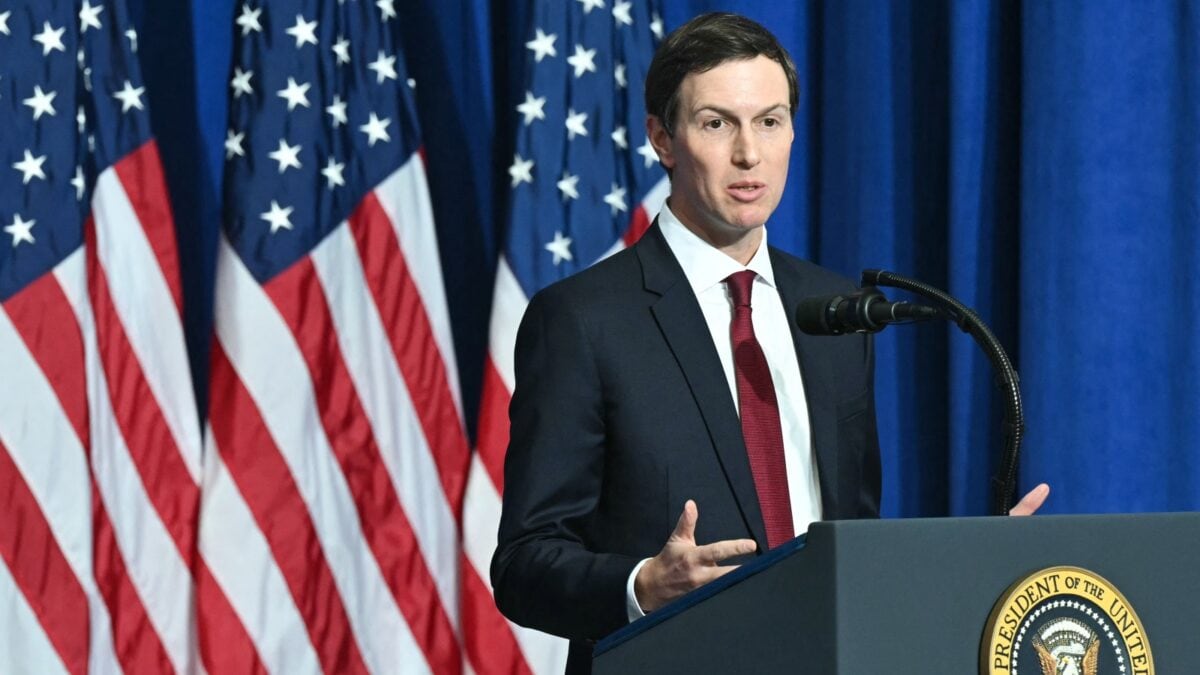
The Jared Kushner Vanity Fair dispute went public on 22 October 2026, when Donald Trump’s son-in-law and former senior White House adviser described a magazine excerpt about his finances as “outrageous fabrications.” Kushner, writing on X, said the claims were “completely insane and never happened” and accused the author of presenting “a mixture of fantasy, fiction, and advocacy” as investigative journalism. The News18 account of his statement also set out the allegations he was answering.
The claims originate in an excerpt Vanity Fair published from a forthcoming book by journalist Matthew Cole, titled Princes and Thieves: Jared Kushner and Mohamed bin Zayed’s Secret Plot to Remake the Middle East. That distinction matters. The book is announced rather than in general circulation, and the public record at this stage consists of the excerpt, Kushner’s rebuttal, and statements from his lawyer.
What The Report Alleges About A Hacked iPhone
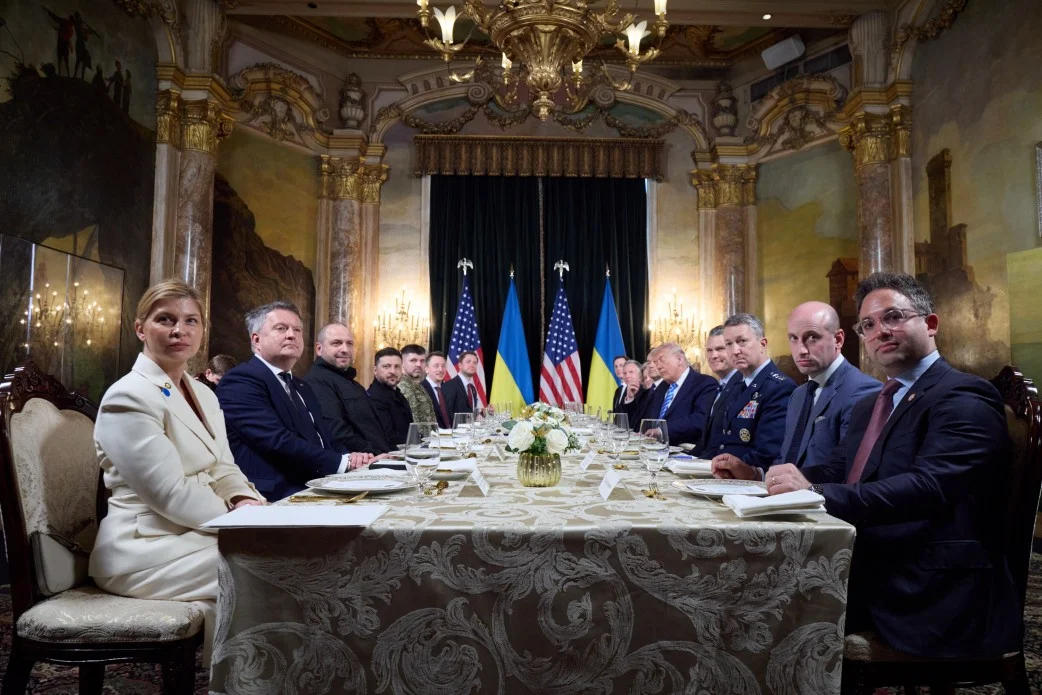
According to the Vanity Fair account, the Netherlands Defence Intelligence and Security Service (MIVD) concluded in late 2017 that Russian military intelligence had compromised Kushner’s iPhone. The trail described begins with a GRU operative specialising in stolen banking data. Dutch officials reportedly approached the British government after learning the operative was travelling to the United Kingdom on an espionage mission, and with British cooperation offered him a choice between working for Dutch intelligence and arrest in Britain.
The operative agreed to cooperate and provided access to a GRU server in Rostov, Russia, where investigators allegedly found screenshots taken from Kushner’s phone. Dutch specialists then reportedly replicated the Russian access. By early 2018 they had identified a vulnerability that let them watch Kushner’s screen whenever he used the iPhone, though they could not take full control of the device.
During that surveillance, investigators allegedly observed Kushner accessing a UAE bank account that had received hundreds of millions of dollars from a bank in Azerbaijan.
The Account Named Alpha, And The Money Named Beta
The report states that roughly $750 million moved into an account at First Abu Dhabi Bank, the UAE’s largest lender, from 2017. The account, called “Alpha” in the excerpt, was held by the Watani Al Emarat Foundation, a UAE government-funded charity. The bank was chaired at the time by Tahnoon bin Zayed, brother of UAE President Mohamed bin Zayed Al Nahyan.
Kushner was allegedly made a signatory, giving him access to the funds and the potential to authorise transactions, though he was not the legal owner. The money reportedly came from Saudi and Emirati sources, was routed through an Azerbaijani bank, and landed in the UAE account in US dollars.
A wider arrangement is also described. The excerpt says Mohamed bin Zayed and Saudi Crown Prince Mohammed bin Salman initially discussed a fund worth more than $10 billion to support foreign policy objectives tied to the Trump administration. That proposal reportedly fell through, after which the Gulf leaders allegedly arranged for at least $2 billion to be deposited into two accounts associated with Kushner.
A second account, “Beta”, allegedly received about $1 billion routed through Azerbaijan to Israel by the spring of 2018 and was described to the magazine as intended for Kushner’s personal benefit. The excerpt claims Benjamin Netanyahu encouraged Kushner to place the money in Israel’s central bank, and that the then-US ambassador to Israel, David Friedman, relayed messages. Israel’s central bank does not operate personal accounts, and government account transactions require authorisation from two individuals.
Friedman denied any role. “I know absolutely nothing about any of these allegations,” he told Vanity Fair, adding that claims about his involvement were “100% false.” A third arrangement, described without an amount, was allegedly set up to cover emergency Israeli military assistance to the UAE in the event of a major Iranian attack.
How The Jared Kushner Vanity Fair Dispute Reached A Public Break
Kushner’s defence rests on the absence of documents. In his post on X, he wrote that “no bank statements, wire transfer records, account numbers, transaction dates, or other verifiable details were provided to support these extraordinary accusations.” He also pointed to the scrutiny he faced during Trump’s first term, including congressional inquiries and a special counsel investigation, saying he gave more than 30 hours of testimony and that the allegations never surfaced because “none of these events ever happened.”
His counsel had already told Vanity Fair that he had no knowledge of or connection to the alleged UAE and Israeli accounts, that he met applicable legal requirements in office, and that his contacts with foreign leaders were authorised by Trump and pursued in US interests. His attorney, Chad Mizelle, went further on X: “These are not questions of interpretation or competing recollections: there are no bank accounts. They don’t exist.” Asked whether litigation would follow, Mizelle replied that “all options are on the table.”
What Is Confirmed And What Remains Allegation
Three things are on the record. Kushner was a senior adviser with a Middle East portfolio. He denies the financial claims categorically. And a book excerpt making them has been published.
Everything else is contested. The Dutch finding, the British cooperation, the GRU server and the screen monitoring are described by the magazine but have not been confirmed on the record by any of the governments said to be involved. The account structure is attributed to unnamed sources and to a person described as briefed on the arrangement. The excerpt itself concedes that the ultimate destination and use of the Israel-linked funds remained unclear. No bank document has been published by either side, and the excerpt does not describe any regulatory inquiry into the accounts.
Why A Gulf Money Trail Is A Global Compliance Question
For banks far from Washington, the structure described is the part that travels. Saudi and Emirati money moved through an Azerbaijani bank into a UAE charity account, with a second leg reportedly passing through Cyprus, is the kind of routing that dollar-clearing banks in Africa, Asia and Europe are required to test under anti-money-laundering rules. Institutions holding correspondent relationships with Gulf lenders carry the screening obligation whether or not a political appointee is involved.
That makes the evidentiary gap consequential beyond the personalities. If the accounts exist, transaction records would settle the question quickly. If they do not, the reporting has a problem that a rebuttal alone will not close. Kushner’s team has staked its position on precisely that test.
Legacy Or Litigation
Kushner’s post-White House standing now depends less on the Gulf relationships he built than on whether a documentary trail appears. His lawyer has left open the possibility of action, which would move the Jared Kushner Vanity Fair dispute from social media into a forum where evidence is filed rather than described. Publication of Cole’s book will add detail. Until then, the confirmed record is narrow: a former adviser, a published excerpt, a flat denial, and an argument about proof that neither side has yet won.
Frequently Asked Questions
What did Jared Kushner say about the Vanity Fair report?
In a post on X dated 22 October 2026, Kushner called the allegations ‘outrageous fabrications’ and ‘completely insane,’ saying the author provided no bank statements, wire transfer records, account numbers or transaction dates. His attorney, Chad Mizelle, said the accounts ‘don’t exist’ and that all legal options remain open.
Has any evidence of the alleged bank accounts been published?
No. The Vanity Fair excerpt describes the alleged accounts, including one called ‘Alpha’ at First Abu Dhabi Bank, but attributes the details to unnamed sources. Neither the magazine nor Kushner’s representatives have published bank documentation, and the excerpt does not describe any regulatory inquiry.
Where do the allegations originally come from?
They are drawn from an excerpt of Princes and Thieves: Jared Kushner and Mohamed bin Zayed’s Secret Plot to Remake the Middle East, a forthcoming book by journalist Matthew Cole. The excerpt describes Dutch intelligence findings about a compromised iPhone and money movements through Azerbaijan, the UAE and Israel.
FIRST TIME REACTIONS:
Be the first to leave us a comment – Jared Kushner Vanity Fair Dispute: ‘Outrageous Fabrications’, down the comment section.
JOIN US ON OUR SOCIAL MEDIA:
About Clare Dominic
Clare Dominic is the Editor at AfriLatest. With a background in journalism and a passion for storytelling, she oversees the editorial process to ensure content is accurate, engaging, and relevant. Clare works closely with contributors to maintain the highest standards of journalistic integrity across all news, sports, and lifestyle coverage.
View all articles by Clare DominicWorld News
Dubai Police Fines Hit 7,735 as 1,630 Vehicles Impounded
Dubai Police fines reached 7,735 in nine months of 2026, with 1,630 vehicles impounded over noise and illegal modifications. Here is what the data proves.

Dubai Police issued 7,735 traffic fines and impounded 1,630 vehicles in the first nine months of 2026, enforcement figures released this week show, with excessive engine noise and unauthorised modifications accounting for every one of the impoundments.
The numbers, reported by Gulf News and carried by regional outlets including News.Az, split into two distinct categories. Patrols logged 2,045 violations for excessive vehicle noise, leading to 333 impoundments. A far larger cluster, 5,690 violations, involved unauthorised modifications to vehicle engines or chassis, producing 1,297 impoundments.
The totals are confirmed. What they mean is a separate question.
Under UAE traffic law the penalties are fixed and published. Driving a vehicle that produces excessive noise carries an AED 2,000 fine and 12 black points. Fitting an unauthorised modification to an engine or chassis draws AED 1,000, 12 black points and 30 days of impoundment.
Brigadier Juma Salem bin Suwaidan, director of the General Department of Traffic at Dubai Police, said additional measures may apply depending on the nature and severity of the offence under Dubai Decree No. 30 of 2023 on vehicle impoundment. Those measures can include vehicle release fees.
That last detail matters more than it appears. A fines campaign is one instrument. A fines-plus-impoundment-plus-release-fee regime is another one entirely.
What The Dubai Police Fines Actually Measure
The honest limit of the data is this: the force published a numerator of 7,735 violations without the denominators that would make it interpretable. The public record does not state how many vehicles are registered in Dubai, how many patrol hours went into noise enforcement, how many resident complaints were logged, or how many of the 1,630 impounded vehicles belonged to repeat offenders.
Without those figures, the count cannot be read as a trend. A rising number can mean more bad driving, more enforcement, or both at once. The material released so far carries no comparable nine-month total for 2025, so a year-on-year comparison is not possible from open sources.
What can be said without qualification is that the noise and modification caseload is the largest single block of enforcement Dubai Police have disclosed this year.
A Second Dataset That Widens The Frame
Five months into the year, the same department was publishing a different set of numbers. Dubai Eye 1038 reported on 28 June 2026 that officers recorded 3,589 vehicle safety violations between January and May, comprising 1,737 cases of vehicles failing to meet safety requirements, 1,026 unroadworthy vehicles and 826 driven on expired tyres. Brigadier bin Suwaidan used that release to warn against unauthorised aftermarket accessories, which he said can cause mechanical failures and are a major cause of vehicle fires.
Add the two categories together and Dubai Police disclosed more than 11,000 violations in nine months. That composite is arithmetic performed on two police statements. It is not a police claim, and it should not be quoted as one.
Why The Fatal Emirates Road Crash Belongs In This Story
The enforcement numbers do not stand alone in the force’s own messaging. On 8 June 2026 a minibus struck a broken-down truck stopped on Emirates Road. Seven people died and nine were injured, five of them critically, according to ARN News Centre.
Brigadier bin Suwaidan said preliminary investigations showed the truck had stopped because of a technical malfunction, and that the minibus driver failed to brake in time because he was not maintaining a safe distance. The force did not specify when the collision occurred. Stopping in the middle of the road carries an AED 1,000 fine and six black points, plus AED 500 for obstructing traffic.
No official has claimed that illegal modifications caused that crash. The connection is a regulatory posture, not a causal finding: Dubai treats the physical condition of a vehicle as a road-safety variable rather than a matter of personal taste.
That distinction is the part worth exporting, and the part that travels badly. In much of Africa’s fast-growing urban vehicle market, the used-import fleet is older, modification is often a repair strategy rather than a performance choice, and enforcement capacity is thin. The Dubai model presumes a vehicle registry, camera coverage, impound yards and a published fee schedule. Those are infrastructure, not willpower. A city that copies the fine without copying the apparatus gets friction, not safety.
What Is Confirmed And What To Watch
Confirmed: the 7,735 fines and 1,630 impoundments, the 2,045 and 5,690 split, the penalty schedule, Decree No. 30 of 2023, and the Emirates Road death toll of seven.
Attributed but not independently verified in the published material: the claim that aftermarket parts are a major cause of vehicle fires, and the characterisation of the campaign as protecting residents.
Missing entirely: registration base, complaint volumes, recidivism rates, and any neighbourhood-level distribution.
Watch for the full-year 2026 release, expected early next year, and for whether Dubai Police publish a 2025 comparator that would turn a snapshot into a trend. Watch also whether the release-fee schedule under Decree No. 30 of 2023 is published in full. That is the point where enforcement becomes fiscal policy, and where other Gulf regulators are most likely to follow.
Until then, the Dubai Police fines figure stands as what it verifiably is: a count of enforcement actions, not a measurement of how noisy or how dangerous Dubai’s roads have become.
Frequently Asked Questions
How many fines did Dubai Police issue for vehicle noise and modifications in 2026?
Dubai Police issued 7,735 traffic fines and impounded 1,630 vehicles in the first nine months of 2026. Of those, 2,045 violations concerned excessive vehicle noise and 5,690 concerned unauthorised engine or chassis modifications.
What is the penalty for excessive vehicle noise in Dubai?
Under UAE traffic regulations, driving a vehicle that produces excessive noise carries an AED 2,000 fine and 12 black points. An unauthorised modification to an engine or chassis carries AED 1,000, 12 black points and 30 days of impoundment.
Can Dubai Police charge extra fees to release an impounded vehicle?
Yes. Brigadier Juma Salem bin Suwaidan said additional measures may apply depending on the severity of the offence under Dubai Decree No. 30 of 2023 on vehicle impoundment, which can include vehicle release fees.
FIRST TIME REACTIONS:
Be the first to leave us a comment – Dubai Police Fines Hit 7,735 as 1,630 Vehicles Impounded, down the comment section.
JOIN US ON OUR SOCIAL MEDIA:
About Clare Dominic
Clare Dominic is the Editor at AfriLatest. With a background in journalism and a passion for storytelling, she oversees the editorial process to ensure content is accurate, engaging, and relevant. Clare works closely with contributors to maintain the highest standards of journalistic integrity across all news, sports, and lifestyle coverage.
View all articles by Clare Dominic-

 Startups4 weeks ago
What a Successful Dangote Refinery IPO Really Says
-
Health and Fitness1 week ago
Curly Hair Hydration: 5 Proven Steps That Actually Work
-
Trending Entertainment News2 weeks ago
Taylor Swift Joins Beatles as Only Acts With 100 Weeks at No. 1
-
World News4 weeks ago
Carney Calls U.S. Tariffs a Miscalculation as Canada Retaliates
-
Tech & Gadgets2 weeks ago
Apple Watch and AirPods Fall Deals: Save $120 Today
-
Football4 weeks ago
Mexico vs Colombia 2026: Márquez Debut Ends in Defeat
-
University Admissions4 weeks ago
UNILAG 2026/2027 Admission: Direct Entry & Post-UTME Guide
-
Fintech4 weeks ago
OPay No Dey Comot Nigeria: How to Verify Fintech News