Entertainment TV & Film
Faith-Based Movies 2026: 6 Must-See Hits Ranked
From Mahershala Ali’s hitman drama to Nollywood’s N71M record-breaker, here are the faith-based movies of 2026 you can’t afford to miss.

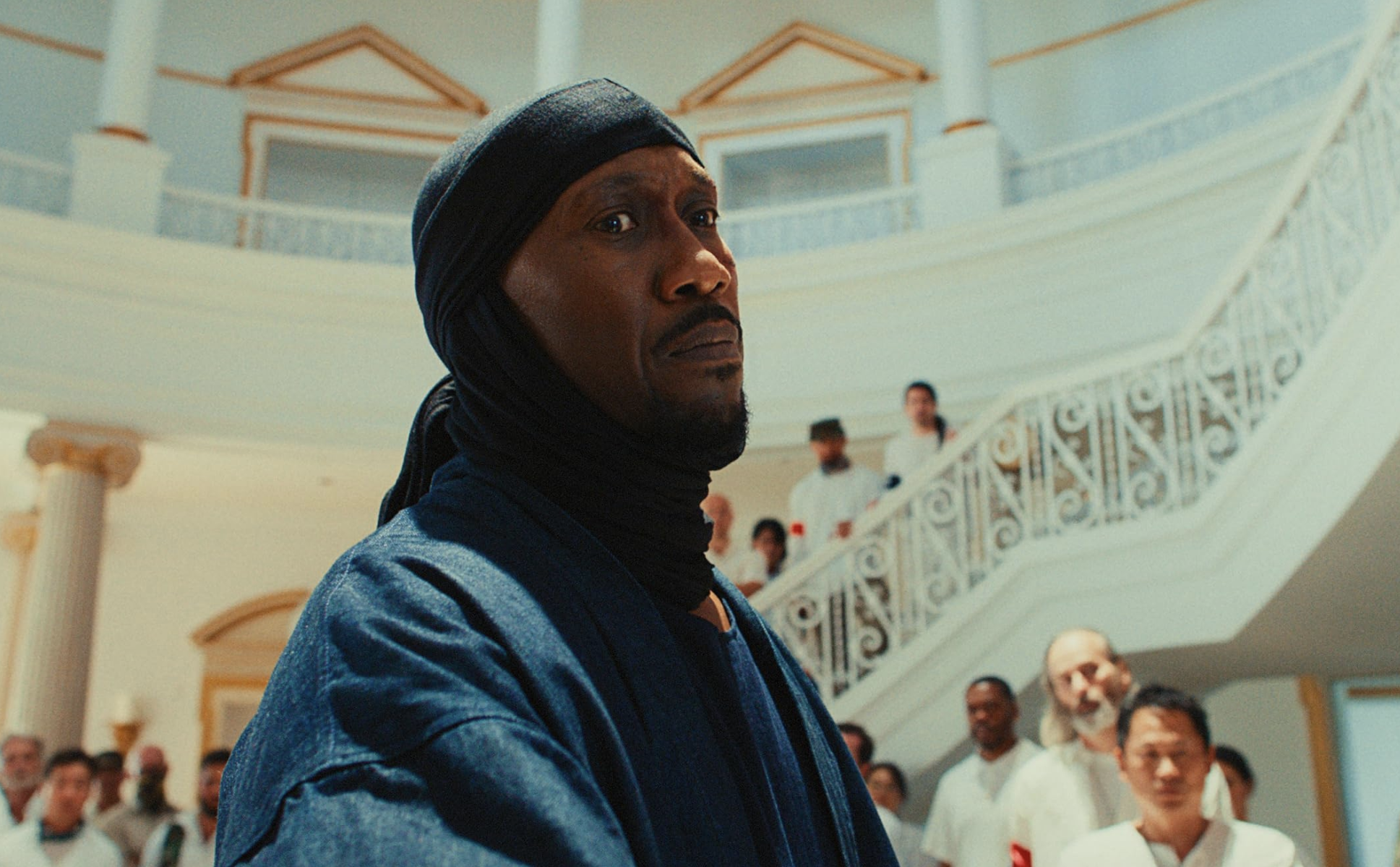
Faith-based movies in 2026 are not playing it safe anymore. A Muslim hitman wrestling with jihad and fatherhood. A Yoruba Christian classic returning after 33 years to break box office records. A Nativity epic from the director of Sound of Freedom. This fall’s slate is the most interesting the genre has looked in years, and one entry might be the best faith-based film ever made.
Here are six faith-based movies worth your ticket money, ranked by how badly you need to see them.
1. Your Mother Your Mother Your Mother (In Theaters Now)

Mahershala Ali plays Latif, a devout Muslim hitman in Houston trying to balance work, faith, and fatherhood. When his wife dies, he fights to protect his kids from a gang war between his old crew and a radical Christian vigilante group led by John Cho. Yes, you read that correctly.
According to Religion Unplugged, the film blends John Wick-style action with genuine spiritual struggle, and it absolutely works. Director Bassam Tariq and Ali are both Muslim, and it shows in every frame. The film handles the five daily prayers, the Hadith quote about mothers that gives the movie its title, and the internal meaning of jihad with a care Hollywood rarely manages.
The satire cuts both ways. Latif’s son plays video games where the bad guys are ISIS and watches Rambo. His antagonist wears a cowboy outfit in American flag colors with crosses where the stars should be. It is sharp, subtle, and it never preaches. This one is in limited release now and opens wide October 9. Do not wait for streaming.
2. Agbara Nla: The Return (Already Breaking Records)
Nollywood just proved faith-based movies are big business. Agbara Nla: The Return pulled in over N71 million from preview screenings alone, selling more than 12,000 tickets before its official release. According to Brandcom, that is the biggest preview admission figure for any film in 2026 and the highest single day preview revenue ever reported in West Africa.
This is a Yoruba Christian film returning to cinemas 33 years after the original became a landmark of Nigeria’s faith-based industry. Lagos alone accounted for 50.8 percent of revenue, with the South West region driving about 76.7 percent of the total. It even beat Star Lomo and Avengers: Endgame: Encore during the same period.
The takeaway for fans: faith-based movies are not a niche anymore. They are the main event.
3. Zero A.D.: The Birth of Christ (December 11)
Angel Studios is going big for Christmas. Director Alejandro Monteverde, who made Sound of Freedom, is tackling the Nativity story and Herod’s slaughter of the innocents from the Gospel of Matthew. The cast is stacked: Jim Caviezel, Sam Worthington, Gael Garcia Bernal, Ben Mendelsohn, and Deva Cassel.
This is the holiday epic to circle on your calendar. Angel Studios has a track record of turning faith stories into theatrical events, and this one has the budget and cast to match.
4. Flywheel: Ignition of the Soul (October 16)
Sony’s Affirm Films is releasing a Brazilian remake of the Kendrick Brothers’ 2003 debut. The story follows Noah Silva, a smooth-talking used-car salesman in Rio de Janeiro whose do-whatever-it-takes attitude starts wrecking his home life. It was made in Portuguese and will be dubbed and subtitled for US theaters.
The original Flywheel launched the Kendrick Brothers’ entire filmmaking ministry. Seeing it reimagined through a Brazilian lens is a genuinely interesting experiment.
5. Conceivable (October 16)
This PG-13 drama from Hawk Hill Pictures stars Dean Cain and Daniel Roebuck as a midlife couple facing an unexpected pregnancy. It tests their beliefs and their relationship, and it is inspired by director Beth Caulfield’s own story. It opens in select theaters, so check local listings.
6. Sight & Sound Presents: JOSHUA-Live! (October 30)
A filmed version of the Sight & Sound stage production, with Joshua leading Israel toward the Promised Land. It runs about two hours and fifteen minutes and plays in theaters nationwide. Tickets went on sale October 6. If you have never seen a Sight & Sound production, this is the easiest way to catch one without traveling to Lancaster.
Why Faith-Based Movies Are Finally Getting Interesting
Here is the uncomfortable truth the industry keeps dancing around: for years, the only faith-based movies that successfully crossed into action genres were non-Christian ones. Monkey Man did it with Hinduism. Guns & Moses did it with a Jewish revenge story. Now Your Mother Your Mother Your Mother is doing it with Islam, and doing it better than almost anyone.
Why? One theory from the Religion Unplugged review is that Christianity’s founder was so nonviolent that it is harder to integrate violence while still feeling distinctly Christian. Islam’s founder, by contrast, was adept in both peace and war. That is not a knock on either faith. It is a storytelling observation, and it explains why these films feel fresher.
What makes Your Mother stand out is that it does not treat faith as set dressing. Latif prays. His imam calls him out. His daughter reads Hadith aloud. The film also implies that God hears prayers from Muslims and non-Christians alike, which will likely spark debate in Muslim communities just as similar questions do among Christians.
That is a good thing. Faith-based movies should make people argue a little.
The Best Pick Overall
If you only see one faith-based movie this fall, make it Your Mother Your Mother Your Mother. It is the rare film that respects its audience’s intelligence, delivers genuine action, and treats faith as something lived rather than something preached. Mahershala Ali is doing career-best work, and the genre will be chasing what this film accomplished for years.
For pure box office spectacle, Agbara Nla: The Return is the story to watch. For Christmas tradition, Zero A.D. is your ticket. But for the film that will still be talked about in five years, Your Mother wins.
Faith-based movies in 2026 are not asking for your pity or your charity. They are asking for your ticket, and for the first time in a long time, they have earned it.
Frequently Asked Questions
What is the best faith-based movie of 2026?
Your Mother Your Mother Your Mother, starring Mahershala Ali as a Muslim hitman balancing faith and fatherhood, is the standout. It is in limited release now and opens wide October 9.
When does Zero A.D.: The Birth of Christ come out?
Zero A.D. opens December 11. It is directed by Alejandro Monteverde and stars Jim Caviezel, Sam Worthington, and Gael Garcia Bernal.
Did Agbara Nla: The Return break box office records?
Yes. It earned over N71 million from preview screenings, the biggest preview admission figure for a film in 2026 and the highest single day preview revenue reported in West Africa.
Related Articles
- Senator Adeola Awards 5,312 Scholarships and Bursaries to Ogun Students
- Spare Parts Price Lagos 2026: What You’ll Pay and Why
- LCCI Urges Faster Reforms to Cut Business Costs in Nigeria
- WAEC Appoints Kum as New Head of Nigeria Office
- OPay Tackles Fraud With 5 Free Tools You Can Activate Today
 Follow AFRILATEST on Google News
FIRST TIME REACTIONS:
Be the first to leave us a comment – Faith-Based Movies 2026: 6 Must-See Hits Ranked, down the comment section.
JOIN US ON OUR SOCIAL MEDIA:



Entertainment TV & Film
I Am Helen Trailer: Nicola Coughlan’s Dark Channel 4 Turn
The I Am Helen trailer puts Nicola Coughlan and Joe Cole inside Dominic Savage’s toxic masculinity drama. What the verified evidence shows.


The first I Am Helen trailer landed this week, and one line is doing the heavy lifting. A masculine confidante tells Joe Cole’s Steve that “it’s tough for blokes. You’re made to be the bad guy.” As Deadline reported, that exchange frames the two-parter’s real subject: toxic masculinity, observed from the woman’s side of the room.
Look past the moody grade and the clip is selling something narrower than “dark”. It is selling authorship. Nicola Coughlan is not only the lead here. She helped build the story.
What the I Am Helen Trailer Actually Sells
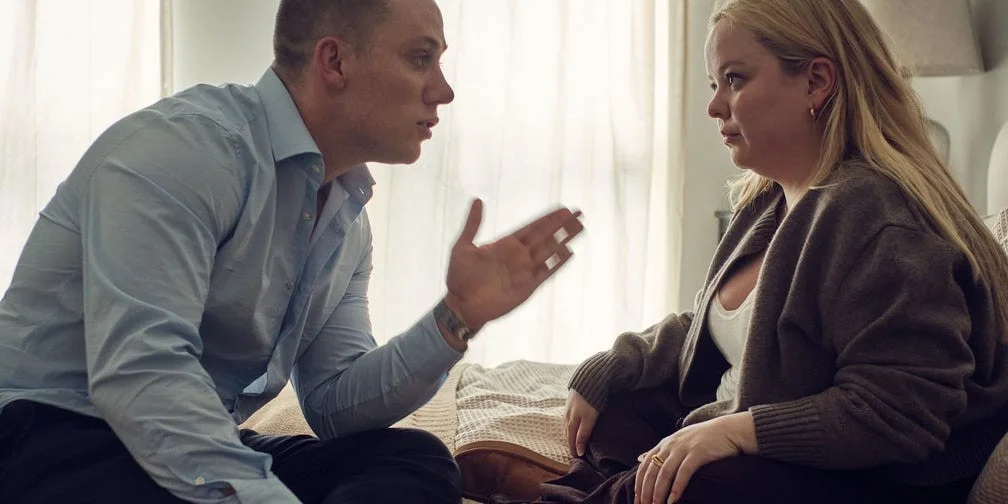
Per Digital Spy, the footage opens with Helen describing her relationship with Steve as having hit a “rough patch” after five years. He then begins voicing disturbing beliefs. Helen softens the truth when she talks to a friend. Steve’s behaviour turns controlling, then dangerous, and Helen is left weighing a decision about her own safety. Nothing in that description goes beyond what Channel 4 has chosen to show, so there is no spoiler risk yet.
The craft signal matters more than the plot beat. Dominic Savage’s I Am… episodes are built as collaborations with the actor carrying them, and Coughlan co-developed this one with Savage, with Cole alongside as co-star. Stylist, which debuted the trailer, confirms she helped develop the story.
That is a different proposition from a star simply taking a role. Coughlan arrived with Derry Girls and Bridgerton goodwill and a comic register. The trailer asks audiences to accept her in a mode Channel 4 has spent seven years training viewers to associate with Kate Winslet and Suranne Jones.
Channel 4’s commissioning editor for drama, Gemma Boswell, called Savage and Coughlan a “powerhouse” team and the story a “powerful and timely portrait of our times”. Commissioning editors say that about most things. The useful test is the franchise’s record.
Why This Franchise Has No Box Office Ledger
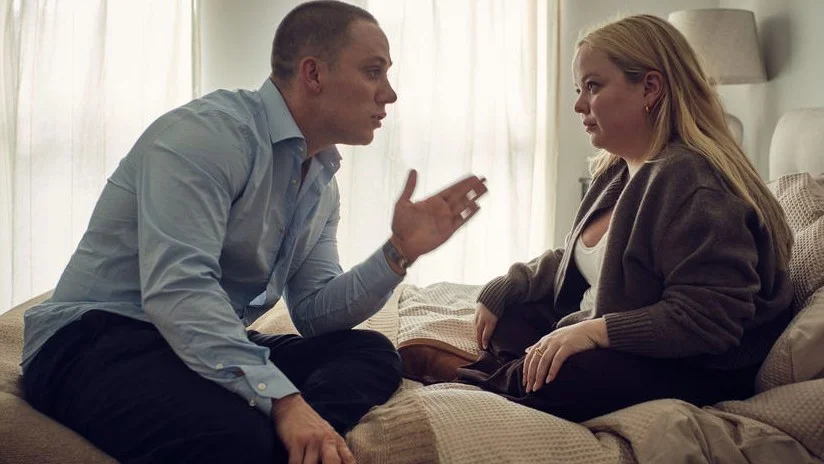
Here is where the usual frame breaks. I Am Helen is a two-part Channel 4 drama, not a theatrical release. No budget has been disclosed. No ratings exist yet. There is no opening weekend to rank against rivals, and any figure claiming otherwise would be invented.
The closest thing to a ledger is the anthology’s history. Stylist reports that I Am… became the most successful new 10pm drama in six years when it debuted in August 2019. I Am Ruth, the feature-length 2022 instalment with Winslet, collected multiple BAFTA and RTS awards including best single drama; Deadline notes it won Winslet a BAFTA.
That is the return Channel 4 is underwriting: awards, press, and the international presale value that follows both. Eight leads have now cycled through the format, from Vicky McClure and Gemma Chan to Letitia Wright and Lesley Manville, with Savage writing and directing every episode.
Set against that record, the four-year gap since I Am Ruth is the number that should concern fans most. Anthologies lose heat fast, and a returning strand has to re-earn attention it once had by default.
Stylist notes the series has previously covered mental health, fertility and coercive relationships. Coercive control is not new ground for Savage. What is new is the trailer’s decision to give the defensive male line the first word, then let two hours of Helen’s experience answer it. That is a writing choice, and it will be judged as one.
The Credits, the Money and the Global Question
Me+You Productions is behind I Am Helen. Krishnendu Majumdar produces; Savage is credited as producer as well as writer-director by Deadline, while Digital Spy lists Majumdar and Josh Hyams as producers. The variation is minor and unresolved in the public record, so treat the producer credit as unsettled.

The financing explains the global path. Sky Studios co-funds I Am, and NBCUniversal Global TV Distribution handles international sales. This is not a show that lives or dies on one British broadcast slot. It is a catalogue asset with a sales agent attached from the start.
For audiences in Africa and elsewhere outside the UK, that matters practically. Channel 4 has not announced a release date; Digital Spy reports it will air and stream later this year, while Stylist notes no official date has been confirmed. No African broadcaster or streaming pickup has been announced either. Any claim of one is speculation.
A cluster of manosphere drama now surrounds this release. Deadline places I Am Helen alongside Netflix’s Adolescence and Louis Theroux’s Inside the Manosphere. That comparison flatters the trailer and burdens the show. Adolescence had a formal hook to sell. I Am Helen has two hours and a familiar domestic-threat structure.
Its advantage is the anthology’s house style: long, unadorned scenes, actors given room, no tidy resolution promised. Its disadvantage is that “toxic masculinity” has hardened into a press-release phrase. The trailer hints at the harder question, which is how a woman talks herself out of what she already knows.
The Takeaway
The I Am Helen trailer is not evidence of quality. It is evidence of positioning: a two-hander built with its star, part-funded by Sky Studios, sold internationally by NBCUniversal, aimed squarely at the awards corridor the franchise already occupies.
Watch the episode-one ratings, then watch whether the international sale lands. The awards conversation follows only if the writing holds. Fans should note the calendar as well: with no confirmed date, the I Am Helen trailer is a signal, not a schedule.
Frequently Asked Questions
When does I Am Helen air on Channel 4?
No official release date has been confirmed. Digital Spy reports it will air and stream on Channel 4 later this year, while Stylist states that Channel 4 has yet to announce a date.
Who stars in I Am Helen and who made it?
Nicola Coughlan plays Helen and Joe Cole plays Steve. Dominic Savage created, wrote and directed the two-parter, with Coughlan credited as co-developing the story. Me+You Productions is behind it, with Krishnendu Majumdar among the producers.
Will I Am Helen be available outside the UK?
No international broadcaster or streaming pickup has been announced. Sky Studios co-funds the I Am strand and NBCUniversal Global TV Distribution handles international sales, so a rollout outside the UK would be a separate commercial deal.
FIRST TIME REACTIONS:
Be the first to leave us a comment – I Am Helen Trailer: Nicola Coughlan’s Dark Channel 4 Turn, down the comment section.
JOIN US ON OUR SOCIAL MEDIA:

About Rose Green
Rose Green is an entertainment and lifestyle author at AfriLatest. With a passion for storytelling, she contributes creative and thought-provoking content, capturing the imagination of readers. Rose specializes in entertainment news, celebrity updates, and lifestyle trends, sparking meaningful conversations across diverse topics.
View all articles by Rose GreenEntertainment TV & Film
Clayface Ending Explained: What the Film Confirms
Clayface ending explained: no credits scene, no Batman, and a Matt Hagen who survives. What sources confirm, what remains forecast.

The question arriving in search bars is not who Clayface is. It is whether the film’s last ten minutes close Matt Hagen’s story or simply park it until the DCU needs a villain. The Clayface ending explained coverage now circulating gives a clear answer, and it is narrower than most headlines suggest: the movie ends, the man does not.
Three separate accounts — IGN’s spoiler breakdown, MovieWeb’s unanswered-questions piece, and George Bate’s 22 October 2026 recap for The Holo Files — agree on the sequence of events. They diverge, and openly so, on what those events mean for James Gunn and Peter Safran’s slate. That divergence is the story.
What the Clayface Ending Explained Coverage Actually Confirms

Confirmed across all three sources: there is no mid-credits or post-credits scene. Hagen (Tom Rhys Harries), a recently Oscar-nominated actor disfigured on the orders of Gotham crime boss Markos Szabo, has used an experimental nanobot treatment from Dr. Caitlyn Corr (Naomi Ackie) to rebuild his face and, inadvertently, to gain the ability to reshape his body.
He kills his way through the people who wronged him, then murders Corr’s fiancé, Gotham Police detective John Borrelli (Max Minghella), and waits inside Borrelli’s form. Corr tasers him through a window. According to IGN, the electricity destabilises the nanites long enough for her to trigger a self-destruct sequence. Hagen, briefly human again and begging to die, melts into puddles that drain into the sewer.
The epilogue undoes the death. Corr, walking home, sees a homeless man perform a bow she recognises. She follows him. The film reveals Hagen has rebuilt both himself and a copy of Corr out of clay, living out the romance she refused. The fantasy collapses and he screams.
MovieWeb reads the scene as symbolic: the Matt Hagen the audience knew is gone, and Clayface is born. That is analysis, not reported fact, and should be labelled as such.
Why Batman Was Kept Out of the Frame
The most-searched question around the film’s final act is whether Batman appears. He does not, and he is never mentioned. One scene is set at the Wayne Community Centre; nothing more is made of it.
Director James Watkins addressed the absence directly at the film’s press junket. “I would say Batman exists in this world, but it’s just not his story. It’s Matt Hagen’s story. So, it’s just like in Joker,” he told IGN. That is an on-record filmmaker statement and the strongest evidence available.
The DCU timeline is consistent with it. Both Clayface and the animated series Creature Commandos sit before Superman, which is set in 2025. Lanterns references Batman only in sequences set in 2026. The reading offered by IGN — that this Batman began operating in Gotham sometime after 2016 and before 2024 — is inference from those markers, not a studio announcement.
One gap is flagged and then dropped. Corr hands her research to police and faces no apparent consequence for unauthorised human experimentation or for her role in the deaths. IGN raises the point; no source in this material resolves it.
The Nanites and the Unfinished City
Two threads are forecast rather than finished. The first is the technology. Corr describes unleashing the nanites as a Pandora’s Box. MovieWeb notes that Gunn’s Superman features nanite-infused humans, most prominently The Engineer. Whether this is a deliberate bridge or shared visual vocabulary is confirmed by nobody on record.
The second is Gotham’s criminal hierarchy. Szabo’s death leaves a vacuum, and MovieWeb’s suggestion that the Falcones and Maronis may fill it is speculation grounded in comics history, not in anything the film states. The same piece cites DC Studios co-head Peter Safran as confirming Batman is active in Gotham at this point, and reads the Flying Graysons posters as evidence Dick Grayson has not yet become Robin.
MovieWeb also concedes the Creature Commandos problem. That series’ Clayface, voiced by Alan Tudyk, looks and behaves nothing like this one, and no reconciliation has been offered beyond Gunn’s stated preference for variety over strict canon. On origins, the sources agree the film is a hybrid: the original comics Clayface, Basil Karlo, was an actor in a clay mask with no powers, while the later Matt Hagen was a treasure hunter transformed in an underwater cavern. This version swaps the supernatural mechanism for nanotechnology and invents Corr and Szabo outright.
What the Ending Explainer Cannot Tell You
For readers outside the United States, the practical gap is access. IGN states only that Clayface is now playing in theatres. No source in this material gives a market-by-market schedule for Africa, South Asia or Latin America. That matters: a full-spoiler Clayface ending explained piece published on 22 October 2026 reaches audiences who may not yet have a confirmed screening date. The spoiler economy runs ahead of distribution, and the coverage rarely says so.
There is also the Aaron Paul problem. MovieWeb reports that Hagen momentarily transforms into Paul during the final fight with Szabo’s goons, a cameo most viewers missed. Whether the role means anything remains unconfirmed, and MovieWeb says as much.
The Verdict
Sorted by evidentiary weight, the record looks like this. Confirmed on screen: no credits scene, Hagen survives, Corr is complicit and unpunished, the city is left open. Confirmed on the record: Batman exists in this world but is not in this film, and Safran says he is active in Gotham. Analysis: that the ending births the true Clayface, and that a power vacuum follows. Forecast: a nanite link to Superman, a future Batman confrontation, a role for Paul.
None of those forecasts is sourced to a studio decision. The film’s final image — a man rebuilding a woman who rejected him, then weeping when the clay will not hold — is a complete thought about vanity and possession. The Clayface ending explained coverage keeps reaching past it for a franchise roadmap, and the roadmap is the part nobody has verified.
Frequently Asked Questions (clayface ending explained)
Is there a post-credits scene in Clayface?
No. IGN confirms there are no mid-credits or post-credits scenes. The film’s final reveal plays out in the last scenes before the credits.
Does Batman appear in Clayface?
No. Batman is never shown and never mentioned, though a scene is set at the Wayne Community Centre. Director James Watkins said Batman exists in this world but the film tells Matt Hagen’s story.
Does Matt Hagen die at the end of Clayface?
His body is apparently destroyed, but the epilogue shows he survived by rebuilding himself from clay. He is alive at the film’s close, living as a homeless man in Gotham.
FIRST TIME REACTIONS:
Be the first to leave us a comment – Clayface Ending Explained: What the Film Confirms, down the comment section.
JOIN US ON OUR SOCIAL MEDIA:
About Rose Green
Rose Green is an entertainment and lifestyle author at AfriLatest. With a passion for storytelling, she contributes creative and thought-provoking content, capturing the imagination of readers. Rose specializes in entertainment news, celebrity updates, and lifestyle trends, sparking meaningful conversations across diverse topics.
View all articles by Rose GreenEntertainment TV & Film
Silo Season 1 Ending Explained: What the Showrunner Said
Silo season 1 ending explained through verified showrunner interviews: why the finale leaned forward, and what Season 3 later confirmed.

Most people who finish the first season of Apple TV’s Silo go looking for one thing: a straight answer about that final shot. Search “silo season 1 ending explained” and the results arrive with total confidence. They disagree with each other, and many were written before anyone who makes the show had spoken on the record.
The verifiable account is narrower, and it begins with showrunner Graham Yost. In an interview with Deadline timed to the Season 3 finale, Yost described the first season’s closing beat in plain terms: the audience was left asking whether Juliette Nichols, played by Rebecca Ferguson, would live or die. His own read was dry. Ferguson’s face was on the poster, so she was probably going to survive.
That is the whole of the Season 1 cliffhanger as the show’s creator frames it. Not a code to crack. A held breath.

Why Most Silo Season 1 Ending Explained Posts Miss The Point
Yost draws a line between his show and the cliffhanger habit. Season 2, he told Deadline, ended with Juliette and Bernard (Tim Robbins) burning up in an airlock, then cut to two characters the audience had never met. A Pez dispenser in that final scene told viewers it was an origin story. Leaning forward, he called it. That approach “really became our thing.”
So the Season 1 finale was never built to be solved by a viewer with a pause button. It was a handoff. The answers were meant to arrive years later, and in Season 3 they largely did.
The plan itself predates production. Yost recalled a writers’ mini-room in early 2020 where author Hugh Howey, whose novels the series adapts, told them the architects of the silos are “not perfect” and that “things don’t work perfectly, but they do have this plan.” Yost described the series as an exercise in finding out what that plan is and how it has been carried out.
Season 3’s structure made the handoff visible. Yost said he proposed splitting one oversized script into episodes 9 and 10, and the writers’ room “revolted,” throwing things at a screen, because the split meant uniting the two timelines that had run in parallel all season: Juliette’s in Silos 17 and 18, and the Before Times thread with journalist Helen Drew (Jessica Henwick) and engineer-turned-politician Daniel Keene (Ashley Zuckerman). The cost was building Silo 1 a season early. “We had Nicole Northridge and her incredible team doing production design,” Yost said.
He was blunt about the alternative. Ending the season on the bomb, he argued, would have made Silo “a cliffhanger show,” and that is not what the first two seasons did.
What The Season 3 Finale Actually Confirmed
The Season 3 finale, titled “Troy” and written by Fred Golan, delivered the mechanism behind the whole silo system. Daniel wakes in Silo 1 under the name Troy, cryogenically preserved alongside Senator Thurman (Laura Innes) and others after a nuclear detonation near the newly built silos in Atlanta, Georgia.
Variety reports that Juliette regains her memories in the finale and declares war on Silo 1, after her team caps the safeguard — a pipe that would otherwise have flooded Silo 18 with toxic gas and killed nearly 10,000 residents. The alliance behind that move, among Juliette, Camille Sims (Alexandria Riley), Robert Sims (Common), Knox (Shane McRae), Shirley (Remmie Milner) and Sheriff Billings (Chinaza Uche), was described by Yost as tentative and uneasy.
Two details in that finale reach backwards. First, the memory wipe is real. Yost confirmed the founders remove memory and issue new names while preserving skills, and he cited an Oliver Sacks case to illustrate it: a patient with severe short-term memory loss who could still play an entire piano concerto. In Daniel’s case a residue survives. “The persistence of memory is love,” Yost said. “It’s Helen.”
Second, the voice in the vault is not a machine in the way viewers assumed. Yost said The Algorithm is ultimately a person speaking, filtered through an AI construct so that it sounds identical in every silo’s contact room. And the rulebook known as The Pact, Mashable reported, was drafted by Anna Thurman and Dr. Crnkovich — with help. “To be honest, AI wrote it,” Crnkovich says in episode 9. “We just did some editing.”
Where Confirmed Fact Ends And Fan Theory Begins
Some points are on the record. Others are silent, and the gap is where recaps blur.
Confirmed on screen: the silos were engineered for a nuclear strike. A tour guide in episode 9 tells Helen that Silo 18 was built to withstand a 30-megaton explosion as close as two miles. Confirmed by the showrunner: memory alteration, new identities and retained skills are all part of the founders’ design, and the architects knew something was coming.
Not confirmed: who launched the weapon. Episode 8 has trillionaire Per Stensen (Colin Hanks) insisting Iran and the United States are at war over Iranian nanoweapons, and he separately treats nanotechnology as the primary threat to humanity. Neither establishes responsibility for the blast, and Mashable noted the question remains unanswered.
Also not confirmed: bloodlines. Mashable raised the possibility that Helen, pregnant during the Before Times thread, could be an ancestor of present-day Silo 18 residents. The publication labelled that a guess, and it should be read as one.
This matters because of how the show is consumed. New Season 3 episodes dropped each Friday, per Mashable, which means recaps published within hours frequently preceded any public comment from the showrunner. That is how a reasonable theory gets filed as a plot summary, and it is why the Season 1 finale still generates confident, contradictory readings years after it aired.
What Season 4 Will And Will Not Settle
Yost has been explicit about the shape of the final season: “Season 4 is war.” He has also been coy about the nuclear question, deflecting a direct query about whether the bomb was part of the founders’ plan.
The honest state of play is this. A silo season 1 ending explained properly is not a list of reveals. It is a record of what the makers have said on the record, what the episodes have shown, and what remains open. Season 1 ended on a held breath. Seasons 2 and 3 explained why the breath was being held. Season 4 decides what happens when it is released.
Frequently Asked Questions
What actually happens at the end of Silo Season 1?
According to showrunner Graham Yost, the first-season finale leaves the audience asking whether Juliette Nichols, played by Rebecca Ferguson, survives. Yost described the ending as a deliberate lean forward rather than a puzzle to be decoded, and noted that Ferguson’s presence on the poster made her survival the expected outcome.
Does Silo Season 3 explain the Season 1 ending?
Season 3 confirms several mechanisms the earlier seasons only hinted at. Yost confirmed that the founders remove memories and assign new names while preserving skills, and that the voice known as The Algorithm is a person speaking through an AI filter. The Season 3 finale also shows Daniel Keene waking in Silo 1 as Troy.
Has Silo revealed who launched the nuclear bomb?
No. Episode 8 includes Per Stensen’s claim that Iran and the United States are at war over Iranian nanoweapons, but neither that episode nor the finale establishes who was responsible for the detonation. Yost declined to confirm whether the bomb was part of the founders’ plan.
FIRST TIME REACTIONS:
Be the first to leave us a comment – Silo Season 1 Ending Explained: What the Showrunner Said, down the comment section.
JOIN US ON OUR SOCIAL MEDIA:
About Rose Green
Rose Green is an entertainment and lifestyle author at AfriLatest. With a passion for storytelling, she contributes creative and thought-provoking content, capturing the imagination of readers. Rose specializes in entertainment news, celebrity updates, and lifestyle trends, sparking meaningful conversations across diverse topics.
View all articles by Rose Green-

 Startups4 weeks ago
What a Successful Dangote Refinery IPO Really Says
-
Health and Fitness2 weeks ago
Curly Hair Hydration: 5 Proven Steps That Actually Work
-
Trending Entertainment News2 weeks ago
Taylor Swift Joins Beatles as Only Acts With 100 Weeks at No. 1
-
World News1 month ago
Carney Calls U.S. Tariffs a Miscalculation as Canada Retaliates
-
Tech & Gadgets3 weeks ago
Apple Watch and AirPods Fall Deals: Save $120 Today
-
University Admissions4 weeks ago
UNILAG 2026/2027 Admission: Direct Entry & Post-UTME Guide
-
Football1 month ago
Mexico vs Colombia 2026: Márquez Debut Ends in Defeat
-
Fintech1 month ago
OPay No Dey Comot Nigeria: How to Verify Fintech News