Entertainment TV & Film
James McAvoy reveals which film paid him bonkers residuals
James McAvoy reveals which film paid him bonkers residuals. The actor opens up about his most lucrative paycheck and the role that keeps paying.

James McAvoy reveals which film paid him bonkers residuals, and the answer might surprise you. The actor recently sat down for an interview where he opened up about the wildest paycheck of his career. It wasn’t a blockbuster superhero flick or a prestige drama. It was a movie that, by his own admission, didn’t exactly light the box office on fire. But the residuals? Bonkers. McAvoy didn’t hold back when describing just how much money kept rolling in from one particular project. He called the residual checks “bonkers,” a word that feels almost too casual for what he was describing. For an actor who’s been in everything from X-Men to Split, that’s saying something.
So Which Film Was It
The film in question is none other than 2006’s Starter for 10, a coming-of-age comedy set in the 1980s about a working-class kid trying to make it onto a university quiz team. It starred McAvoy alongside Rebecca Hall, Alice Eve, and Benedict Cumberbatch. The movie was based on the novel by David Nicholls and directed by Tom Vaughan. It didn’t set the world on fire theatrically. It made a modest splash, got decent reviews, and then largely disappeared from the conversation. But here’s the thing about residuals: they’re not about box office. They’re about how often something gets watched, rented, streamed, or broadcast. And Starter for 10 apparently became a quiet, persistent favorite. McAvoy explained that the film kept getting played on television in the UK, year after year, and every time it aired, he got paid. Not a little. A lot. “Bonkers” amounts.
Why Residuals Work That Way
Residuals are the payments actors, writers, and directors receive when their work is reused, whether that’s a TV rerun, a DVD sale, a streaming play, or an international broadcast. For a film like Starter for 10, which had a small budget and a niche audience, the residual structure was likely more favorable to the actors than a massive tentpole would be. Big movies often have actors negotiate huge upfront fees, which can mean smaller residual percentages. Smaller films sometimes offer back-end points or better residual terms because the upfront pay is lower. McAvoy’s experience isn’t unique, but it’s a sharp reminder that the movie that pays your rent for decades isn’t always the one that made the most noise. It’s the one that keeps finding new eyeballs.
What This Means For Fans And Actors
For fans, this is a fun peek behind the curtain. It also raises a question: if Starter for 10 was such a residual goldmine, what other cult favorites are quietly making their casts rich? The answer is probably more than you’d think. For actors, the lesson is about longevity. A flop can become a staple. A small role can become a pension. And a movie you almost forgot about can end up being the best financial decision of your career. McAvoy’s story isn’t just a fun anecdote. It’s a window into how the entertainment industry actually sustains its talent, often in ways that have nothing to do with opening weekend.
A Quick Note On Other Hollywood Paydays
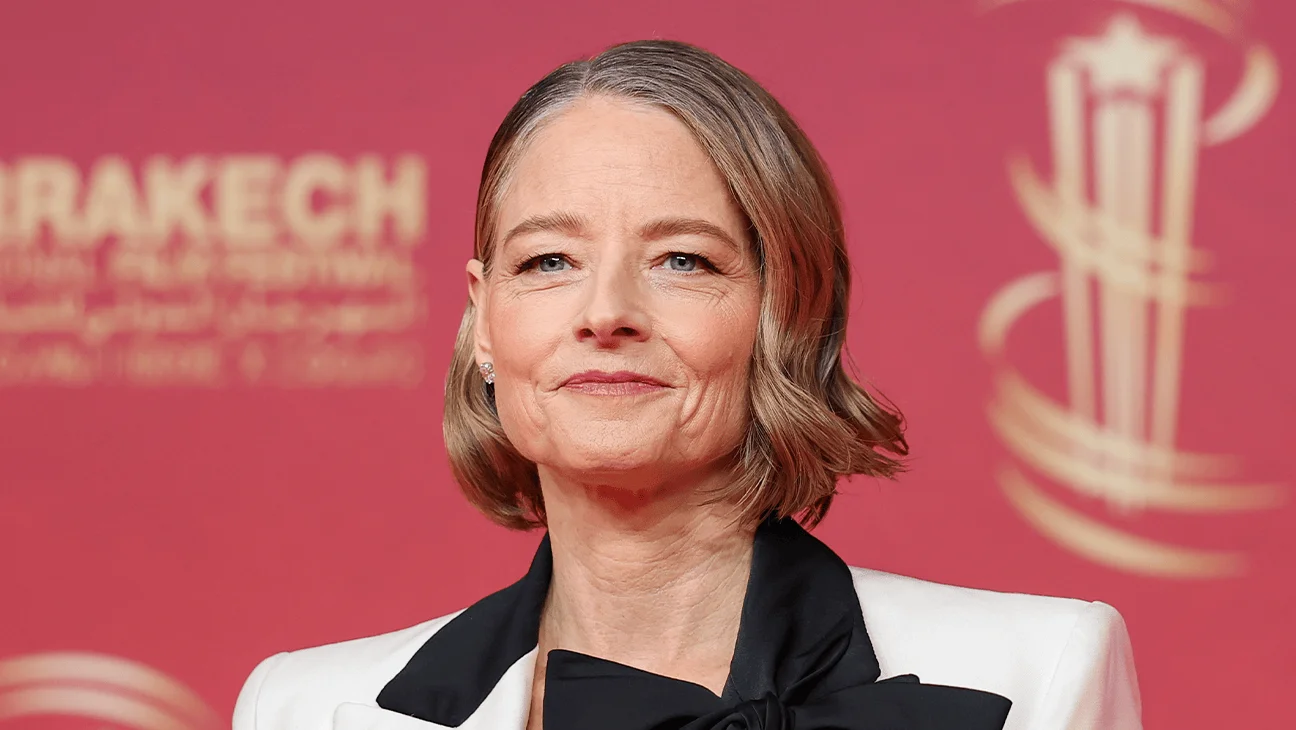
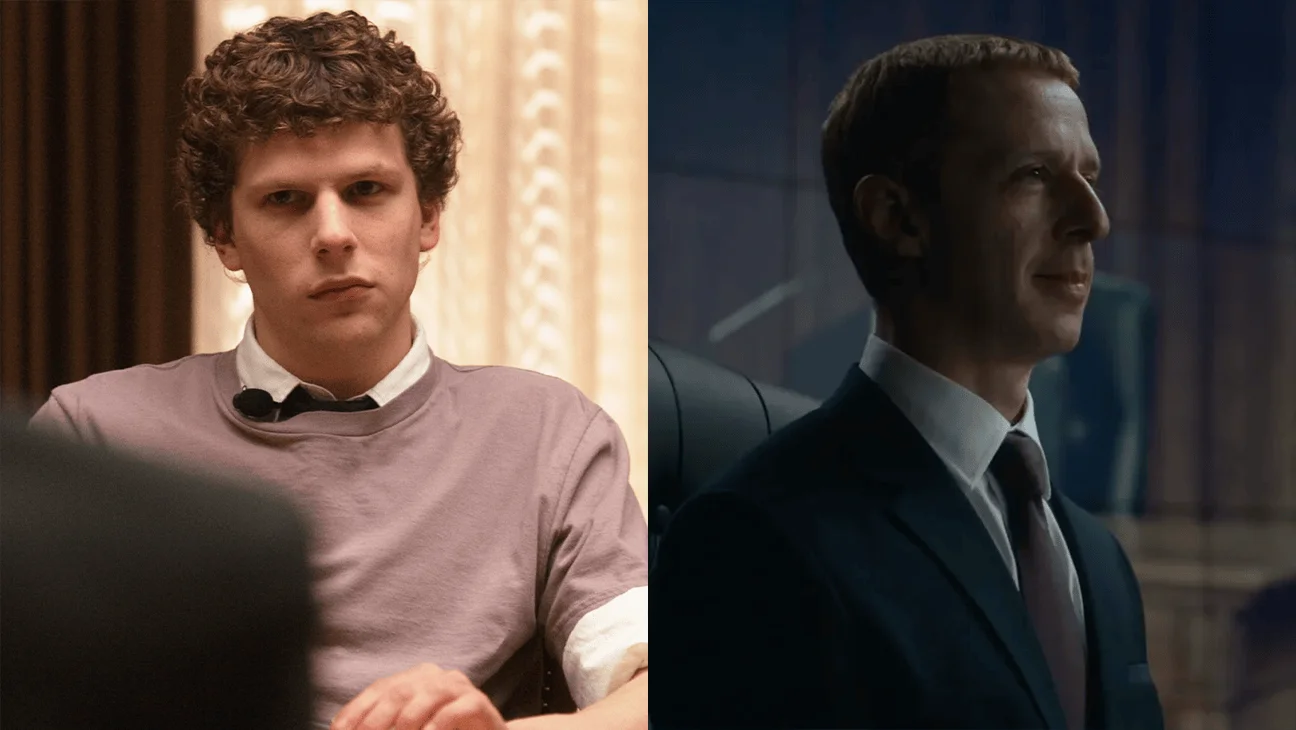
McAvoy isn’t the only actor with a surprising residual story. Jodie Foster recently recalled a terrifying on-set incident while filming Napoleon and Samantha, but she’s also spoken about the strange ways Hollywood money works. Meanwhile, Aaron Sorkin revealed why Jesse Eisenberg refused to return for The Social Reckoning, partly because he didn’t want to be forever tied to Mark Zuckerberg. Different actors, different choices, but all of them navigating a system where a single role can define your bank account for years. For McAvoy, that role is a quiz-team comedy that most people probably haven’t thought about in a decade. For him, it’s a gift that keeps on giving.
The Verdict: Should You Watch Starter for 10?
If you’re a McAvoy fan, absolutely. It’s a charming, low-key film with a great cast and a script that’s sharper than its reputation suggests. If you’re here for the residual drama, it’s worth a watch just to see the movie that made him “bonkers” money. But don’t go in expecting a masterpiece. It’s a solid, likable British comedy that happens to have become a financial unicorn for its lead actor. And that’s a story worth telling.
Who Should Buy It (Or Stream It)
Buy or stream Starter for 10 if you like coming-of-age stories, British humor, or early McAvoy. Skip it if you need explosions, superheroes, or high-stakes drama. But even if you skip it, remember this: the next time you see a random movie playing on TV at 2 a.m., someone might be getting paid. And if that someone is James McAvoy, he’s probably smiling.
James McAvoy reveals which film paid him bonkers residuals, and it’s a reminder that in Hollywood, the quiet ones sometimes pay the loudest.
Frequently Asked Questions
Which film paid James McAvoy bonkers residuals?
James McAvoy said the 2006 film Starter for 10 paid him ‘bonkers’ residuals, thanks to its frequent TV airings in the UK.
Why did Starter for 10 generate so much in residuals?
The film became a persistent favorite on British television, and each broadcast triggered residual payments to the actors.
What are residuals in the film industry?
Residuals are payments made to actors, writers, and directors when their work is reused, such as TV reruns, DVD sales, or streaming plays.
Related Articles
- Big Walk Dev Explains Lack of Xbox: A Masterstroke or Missed Opportunity?
- Amazon Bee AI Devices: Frontier vs Eclipse Compared
- Billy Joel Health Update: Hydrocephalus Tests Before Tour
- Grian Chatten Solo Album: Will It Be Festival-Ready?
- Pro Dota 2 Player Claims He Had to Play a Match to Prove Identity
 Follow AFRILATEST on Google News
FIRST TIME REACTIONS:
Be the first to leave us a comment – James McAvoy reveals which film paid him bonkers residuals, down the comment section.
JOIN US ON OUR SOCIAL MEDIA:











Entertainment TV & Film
Diewait Ikpechukwu: What Nollywood Fans Should Know
Diewait Ikpechukwu died at 71. What official tributes confirm about the Nollywood actor’s career, the gaps in the record, and why fans should care.


The Kaduna International Film Festival has joined the tributes for Diewait Ikpechukwu, the veteran Nollywood actor who died at 71 on 5 November after what the Actors Guild of Nigeria and his family describe as a prolonged illness. The guild’s national president, Alhaji Abubakar Sanusi-Yakubu, announced the death in an Instagram tribute on 6 November.
KADIFF director-general Israel Audu issued a condolence message in Kaduna the following day, calling the passing “a painful loss, particularly to those of us who recognise the importance of preserving and celebrating the contributions of our creative pioneers.” The statement was carried by the News Agency of Nigeria and republished by the Gazette.
That much is confirmed about Diewait Ikpechukwu. What is more useful to fans than the condolences themselves is the career those tributes describe, and the gaps the record leaves behind.
What Diewait Ikpechukwu’s Filmography Actually Documents
He made his feature debut in Evil Men (1998) as a traditional ruler, in a production that also featured Pete Edochie, Alex Usifo and Liz Benson, according to Leadership. The credited titles that follow are Royal Palace (2005), The Guilty (2006), Across the River (2006) and Python King (2007), then, after a long silence in the published lists, Omera (2019), A Dance to Forget (2020), Emecheta (2021), Nwando (2021) and Ije Love (2022).
Read that list as a timeline rather than a filmography and it says something specific. The 1998 to 2007 run belongs to the straight-to-video era built around Lagos and Enugu. The 2019 to 2022 cluster belongs to the streaming and cinema-facing production boom.
A character actor who appears credibly in both is evidence that the industry’s craft base survived a change of format, not that he was idle in between. Published credits are incomplete by nature. Absence from a list is not absence from a set, and any fan using these titles as a definitive record should treat them as a starting point.
The Royal Father Was A Craft Role, Not A Prop

Both the NAN report and Leadership’s profile agree on the type he was cast to play: kings, traditional rulers, elderly statesmen, men whose authority the plot leans on. That is a narrow lane, and it is harder than it looks. The screen presence required is stillness, vocal control, and the discipline to hold a frame while younger leads carry the story.
Audu’s tribute frames Diewait Ikpechukwu as “more than an actor; he was a committed professional whose experience, passion and contributions helped shape the Nigerian film industry.” Strip the funeral cadence and a concrete claim remains: he worked repeatedly in the part of Nollywood that builds the world around the star.
Where the Record Thins Out
A few details in circulation do not fully line up, and the difference matters for anyone building an accurate picture. Leadership and the NAN copy both place him at the defunct Nigerian Telecommunications Limited as a business office manager; Legit.ng renders the same job as “business office manager at Nike.” The NITEL version appears in two independent reports and is almost certainly the accurate one.
Leadership describes him as pioneer chairman of the AGN’s Enugu State chapter. The NAN copy says he chaired the chapter and mentored younger actors there. Both can be true; neither says when he served.
There is also a date question. Leadership and Legit.ng both place the death on 5 November 2026, while the NAN copy carried by the Gazette gives 5 November without a year in the text.
The illness itself is not disclosed. That is the family’s business and should stay that way. What is confirmed: he studied Marketing at Kaduna Polytechnic, completed his NYSC service at Ahmadu Bello University, Zaria, and worked as a footballer and sports commentator before acting. Legit.ng also lists The August Meeting among his credits; the other reports do not, so treat that title as unconfirmed.

Fan Reaction and a Cluster of Losses
For a certain generation of Nigerian viewers, Diewait Ikpechukwu’s face was more recognisable than his name. He turned up in the video titles that circulated through the 2000s, usually in the role that settled a dispute or pronounced a judgement, and then appeared again two decades later in titles fans encountered on streaming platforms. That is the particular grief of a character actor: the work is familiar, the biography is not.
Legit.ng reports that his death lands weeks after those of Francis Duru and Cjay Nwoks, and notes that an old prophecy about deaths in Nollywood resurfaced online after Duru’s passing. That prophecy material is fan discourse, not verified reporting, and should be read as such.
What to Expect Next
No funeral arrangements have been announced. The family is expected to release them, and nothing further has been confirmed. KADIFF has said it believes the contributions of those who built the creative industry must not be forgotten, but the festival has not announced a specific tribute programme, screening, or award in his name.
The most useful thing fans can do with Diewait Ikpechukwu’s death is watch the work with credits in mind. Note the name in the supporting role, not just the star above the title. The industry’s memory is currently held together by guild Instagram posts and festival condolence messages, which is thin scaffolding for 25 years of labour.
Until Nollywood has a proper credit archive, the films are the archive, and the audience is the one keeping it.
Frequently Asked Questions
How did Diewait Ikpechukwu die?
The Actors Guild of Nigeria and reports carried by NAN and Leadership say he died on 5 November after a prolonged illness. The specific illness has not been disclosed, and no cause of death has been officially confirmed beyond that.
What films was Diewait Ikpechukwu known for?
His credited titles include Evil Men (1998), Royal Palace (2005), The Guilty (2006), Across the River (2006), Python King (2007), Omera (2019), A Dance to Forget (2020), Emecheta (2021), Nwando (2021) and Ije Love (2022). Legit.ng also lists The August Meeting, which the other reports do not mention.
Has a funeral date been announced for Diewait Ikpechukwu?
No. Reports say funeral arrangements are expected to be announced by his family, but as of the condolence statements from KADIFF and the Actors Guild of Nigeria, no date or venue has been confirmed.
FIRST TIME REACTIONS:
Be the first to leave us a comment – Diewait Ikpechukwu: What Nollywood Fans Should Know, down the comment section.
JOIN US ON OUR SOCIAL MEDIA:

About Rose Green
Rose Green is an entertainment and lifestyle author at AfriLatest. With a passion for storytelling, she contributes creative and thought-provoking content, capturing the imagination of readers. Rose specializes in entertainment news, celebrity updates, and lifestyle trends, sparking meaningful conversations across diverse topics.
View all articles by Rose GreenEntertainment TV & Film
Heysel 85: Teodora Ana Mihai’s Disaster Film Tests Europe’s Reach
Heysel 85, Teodora Ana Mihai’s film on the 1985 Brussels stadium disaster, hits Tokyo, Belgium and the UK. What is confirmed, and what is not.

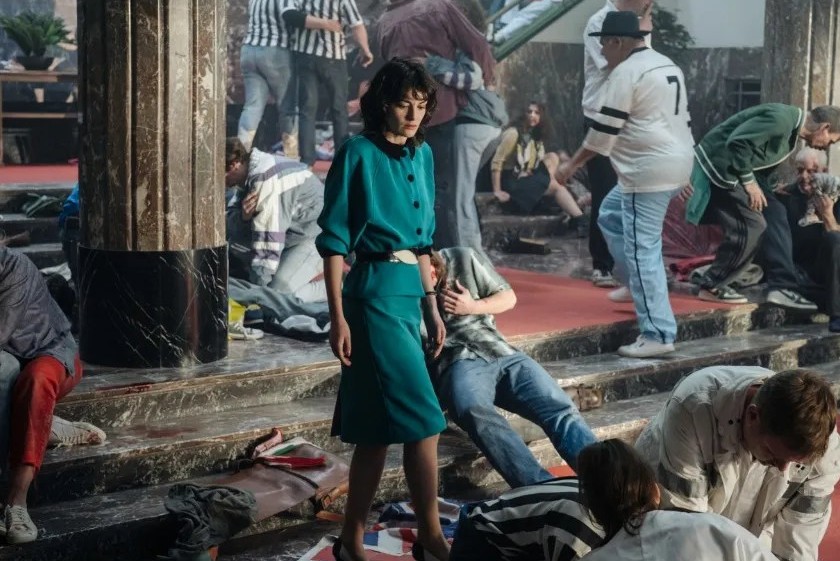
Teodora Ana Mihai’s Heysel 85 has begun its international life, and the terms of that life are worth stating plainly. The film had its Asian premiere at the Tokyo Film Festival this week, roughly eight months after its debut in Berlin, and it reaches cinemas in Belgium on 18 November through Kinepolis and in the UK on 20 November through Icon. The open question is not whether the film is well made. It is whether a European art film built around a 1985 stadium disaster can travel beyond the two countries that lived through it.
The underlying facts are not in dispute. Thirty-nine people died at Heysel Stadium in Brussels ahead of the 1985 European Cup Final between Liverpool and Juventus. Heysel 85 does not linger on restaging those deaths. It interrogates the structural flaws that allowed them to happen, built from a mix of archival footage of the disaster and live-action sequences shot on 16mm.
The plot compresses that failure into two people. Marie, the mayor’s daughter played by Violet Braeckman, has to step in for her father when he is too drunk and too overwhelmed to take command. Luca, a journalist of Italian origin played by Matteo Simoni, keeps reporting for Italian television while searching for his family in the chaos. Politicians and police face a single question: cancel the match, or let it go on.
Why Heysel 85 Works As An Institutional Autopsy
Mihai wrote the screenplay with Lode Desmet and Isabelle Darras. She places the disaster at the centre of Belgian memory. “This is one of those moments in Belgium that’s comparable to 9/11 in the US,” she told Deadline. “It was a huge event; people were shocked.” She added that the country’s divided language communities are united on one point: what happened there should not have happened.
She nearly turned the project down. Her producer, Hans Everaert, brought her material on the disaster. “I didn’t jump at it right away,” she said. “I wondered, ‘Am I the right person to tell this story?’” She names the discomfort itself as the reason she took it on, along with football’s “metaphorical potential” as a backdrop for saying something existential.
The look of Heysel 85 was a technical decision with a budget consequence. Cinematographer Marius Panduru, whom Mihai calls one of Romania’s best, argued for celluloid so the new footage would sit beside the archive without visible seams in texture. “If you want the archive to look as close as possible to what we’re going to film, 16mm is the way to go,” she recalled him saying. Shooting on 16mm forced her to cut days from the schedule to control cost. “I really believe the production looks better than the money we had available,” she said.
What Is Confirmed About Heysel 85, And What Is Not

The verified record is narrow and specific. The film premiered in Berlin, screened in Tokyo, was written by Mihai with Desmet and Darras, stars Braeckman and Simoni, and opens in Belgium on 18 November via Kinepolis and in the UK on 20 November via Icon. The Tokyo Film Festival runs until 4 November.
Everything else is forecast. No box office figure, audience score or Tokyo prize for the film appears in the reporting, and the festival has not closed. Deadline’s description of a “buzzy” Berlin debut is a characterization by the trade press, not a measured result. Mihai herself refuses to convert buzz into certainty. “There’s been a lot of positive buzz, but you can never know until it’s out there,” she said, noting that her distributor chose the autumn window deliberately because Belgian audiences prefer the sun to the cinema in summer.
The same caution applies to the film’s central argument. That the 1985 deaths were produced by decisions taken before kick-off is the film’s thesis, staged through fictional officials who weigh cancellation against the cost of stopping a European final. The thesis is not a court finding. It is a reading of the record that the film asks audiences to accept.
The Distribution Assumption That African Cinema Cannot Make
Heysel 85 enters an infrastructure that already works. A Belgian distributor holds screens; a UK distributor holds a date. Neither has to be built. That is the invisible precondition of the film’s international launch, and it is the precise thing missing in most African markets, where financing and distribution are negotiated together rather than assumed.
That gap is now being addressed with capital. The Cairo-based African Export-Import Bank launched a $1 billion Pan-African Film Fund through its development arm, FEDA, with publishing veteran Lavaille Lavette as chief executive, according to the fund announcement. The bank said the fund will invest across content production, infrastructure and distribution, prioritising “commercially viable” and “export-oriented” projects, and will lend to expand streaming, exhibition and post-production capacity on the continent. One title it has backed, Arie and Chuko Esiri’s Clarissa, debuted in Cannes’ Directors’ Fortnight and will be released by Neon.
The distinction matters for how this story is read in Lagos, Nairobi or Accra. A film like Heysel 85 is financed as a cultural project and distributed as a commercial routine. The African fund is designed to make distribution part of the financing question, because for most African productions it is the binding constraint rather than the afterthought.

Mihai is not waiting on any of this. She is already at work on her fourth feature, Two Lives, a chamber piece about two brothers and their families. It opens as a repeated summer holiday, then one brother dies, and the film follows his widow as she holds together for two teenage boys. “It’s a very uncomfortable project. I love it,” she said.
The larger point sits with the timeline. Heysel 85 preserves a sequence of decisions — a stadium judged unfit, a match allowed to proceed, a command structure that collapsed — and asks who signed off on each step. That question travels. It applies to any country where crowd safety is weighed against broadcast revenue and the cost of cancellation, and it is why the film’s Belgian and British release dates are a test worth watching rather than a formality.
Frequently Asked Questions
When and where does Heysel 85 open?
The film opens in Belgium on 18 November through Kinepolis and in the UK on 20 November through Icon, following its Berlin debut and an Asian premiere at the Tokyo Film Festival.
What is Heysel 85 about?
It is inspired by the 1985 Heysel Stadium disaster in Brussels, where 39 people died before the European Cup Final between Liverpool and Juventus. The story follows the mayor’s daughter, Marie, and an Italian-origin journalist, Luca, as officials decide whether to cancel the match.
Who wrote and directed Heysel 85?
Teodora Ana Mihai directed and co-wrote the screenplay with Lode Desmet and Isabelle Darras. Marius Panduru was the cinematographer. The cast includes Violet Braeckman and Matteo Simoni.
FIRST TIME REACTIONS:
Be the first to leave us a comment – Heysel 85: Teodora Ana Mihai’s Disaster Film Tests Europe’s Reach, down the comment section.
JOIN US ON OUR SOCIAL MEDIA:

About stephen Douglas
Stephen Douglas is a gaming and entertainment author at AfriLatest. With a background in social media management and community building, he covers the latest trends in the gaming industry, esports, and digital culture. Stephen creates engaging content that keeps readers connected and informed about the games and entertainment they love.
View all articles by stephen DouglasEntertainment TV & Film
Lil Frosh ‘Kole Re Body’: Mayorkun Feature Still Unverified
Lil Frosh’s ‘Kole Re Body’ with Mayorkun lacks primary evidence in available reporting. What Nigerian Afrobeats sources do confirm about both artists.
The record titled ‘Kole Re Body’ attributed to Lil Frosh with a Mayorkun feature is, on the evidence reviewed, a claim without a paper trail. The reporting available for this analysis carries no release notice, producer credit, distribution listing, label statement or playable audio for a song under that name. That absence is not proof of non-existence. It is proof that the claim has not yet met the threshold for publication as confirmed fact, and in Nigeria’s fast-moving Afrobeats market that distinction is routinely lost.
Evidence standards for a music release are not exotic. A confirmed single normally leaves at least one trace: an artist or label announcement, a streaming or distribution listing carrying credit and identifier metadata, a producer’s confirmation, or a review with embedded audio. The material reviewed here offers none of these for the collaboration in question. What it does offer is substantial documentation of both artists’ separately verifiable activity.
The timelines are also unstable. The two TooXclusive pages reviewed are dated 27 and 28 October 2026, yet their body text describes releases framed as arriving in 2020 and 2021. That internal inconsistency is not a scandal; it is a reminder that aggregator pages are frequently re-dated, syndicated or republished, and that a title appearing on such a page is not by itself an issuance record.
The Documentation Gap Around Kole Re Body
None of this means fans are inventing a rumour from nothing. It means the claim is currently ahead of its receipts. Confirmation would typically arrive in one of three forms, and each would change the story’s classification.
First, a label or distributor statement would convert this from an unverified title into a release story, with a date, a producer credit and territory availability. Second, a denial from either camp would reclassify it as a misinformation story, which in a market where leaked tracklists circulate widely is a routine outcome. Third, the appearance of a demo or unfinished file would raise rights questions rather than release questions, since studio sessions in Lagos frequently produce material that never clears for commercial issue.
Until one of those occurs, the correct framing is conditional: reported, not confirmed.
What The Sources Do Confirm About Both Artists

Lil Frosh’s documented run is specific. According to TooXclusive’s entry on the record, he released ‘Denge Pose’ featuring Mohbad, produced by Niphkeys, described as his second 2021 single and a follow-up to ‘Omo Ologo’, which featured Zinoleesky and was produced by Rexxie. The entry characterises ‘Denge Pose’ as a mid-tempo record blending Afrobeat with Fuji-pop, and places Frosh within the Marlian circle alongside Mohbad and Zinoleesky.
Mayorkun’s documented activity sits in a different commercial lane. Per TooXclusive’s report on Dremo’s ‘E Be Tins’, the artist billed as The Mayor of Lagos guested on that record, produced by Fresh VDM and described as a heavy amapiano track blended with Afrobeat. That report frames it as Dremo’s first single after his Codename album, released in April of that cycle.
The only documented overlap between Lil Frosh and Mayorkun runs through Dremo, not through a duet. Frosh appears on the feature list of Codename, Vol 2, a 12-track set whose guests also include Davido, Falz, Naira Marley, Sinzu, Peruzzi, Idowest, The Flowolf and Knucklez, with production from Benjamz, Alpha Ojini, Fresh VDM, Vsix, Zhyno, Mosess, Nackademus and Samfire. Mayorkun appears on ‘E Be Tins’. Two artists orbiting the same collaborator is a plausible seed for a rumoured pairing.
Structural Reasons Nigerian Features Spread Without Receipts
The wider pattern is structural rather than personal. Nigerian pop runs on features, and the Afrobeats ecosystem has spent the past several years absorbing amapiano rhythms into a formula that rewards fast, cross-artist releases. A collaboration between a Marlian-era act and a Lagos mainstream headliner is commercially logical, which is precisely why unverified titles in that shape spread so quickly.
The supply chain compounds it. Sessions are frequent, producers hold multiple versions, and snippets circulate through private groups before any distributor is engaged. When a plausible title surfaces, it matches an audience’s expectations closely enough that verification feels unnecessary. That is a distribution problem masquerading as a music problem.
There is also a reputational asymmetry. A false positive costs a fan nothing, while a correct early report costs an outlet nothing either. The cost lands on the artists, who must either confirm a record they may not have finished or deny one they may have recorded and shelved.

Possible Outcomes And What To Watch
Three scenarios remain open. The first is confirmation, most likely through a distributor listing or an artist post, which would make this a straightforward release story with credits to verify. The second is quiet non-arrival, the most common fate of circulating titles. The third is denial, which would place the story alongside the broader problem of unverified music claims in West African entertainment coverage.
Readers should watch for metadata rather than hype. A producer tag, a confirmed date, an International Standard Recording Code, or a label statement does more evidentiary work than any number of aggregation pages repeating the same unverified title.
The Big Picture
The case is less about one song than about how African pop is covered. A title like Kole Re Body travels because the ecosystem around it is real, busy and commercially rational, and because the reporting infrastructure that should gate its publication is thin. The verified record shows two artists with distinct, documented trajectories and one shared collaborator in Dremo. Everything beyond that remains a claim awaiting evidence, and until a primary source appears, the honest headline is that the collaboration is reported and unconfirmed.
Frequently Asked Questions
Has Lil Frosh released a song called ‘Kole Re Body’ featuring Mayorkun?
It cannot be confirmed from the source material reviewed. No release notice, producer credit, distribution listing, label statement or playable link for a record under that title appears in the available reporting, so the collaboration should be treated as reported but unverified.
What releases by Lil Frosh are documented in the sources?
TooXclusive documents ‘Omo Ologo’ featuring Zinoleesky and produced by Rexxie, followed by ‘Denge Pose’ featuring Mohbad and produced by Niphkeys, described as his second 2021 single and a mid-tempo Afrobeat and Fuji-pop blend.
How are Lil Frosh and Mayorkun connected in verified reporting?
Through Dremo. Lil Frosh appears on the feature list of Dremo’s Codename, Vol 2, while Mayorkun guests on Dremo’s ‘E Be Tins’, produced by Fresh VDM. No documented direct collaboration between Lil Frosh and Mayorkun appears in the sources.
Receive alerts for Kole Re Body and more like it.
FIRST TIME REACTIONS:
Be the first to leave us a comment – Lil Frosh ‘Kole Re Body’: Mayorkun Feature Still Unverified, down the comment section.
JOIN US ON OUR SOCIAL MEDIA:
About stephen Douglas
Stephen Douglas is a gaming and entertainment author at AfriLatest. With a background in social media management and community building, he covers the latest trends in the gaming industry, esports, and digital culture. Stephen creates engaging content that keeps readers connected and informed about the games and entertainment they love.
View all articles by stephen Douglas-

 Startups1 month ago
What a Successful Dangote Refinery IPO Really Says
-
Savings & Investing2 weeks ago
Hidden Medicare Fees Draining Your Retirement Savings
-
Health and Fitness3 weeks ago
Curly Hair Hydration: 5 Proven Steps That Actually Work
-
Tech & Gadgets1 month ago
Apple Watch and AirPods Fall Deals: Save $120 Today
-
University Admissions1 month ago
UNILAG 2026/2027 Admission: Direct Entry & Post-UTME Guide
-
Football1 month ago
South Carolina vs Alabama: Tide Roll to 35-10 Halftime Lead
-
World News1 month ago
Carney Calls U.S. Tariffs a Miscalculation as Canada Retaliates
-
Trending Entertainment News4 weeks ago
Taylor Swift Joins Beatles as Only Acts With 100 Weeks at No. 1